Nuclear War Now! Productions VIII
2026-01-28
by Niklas Göransson
Enthusiasm had carried Nuclear War Now! through its formative years, but the mid-2000s brought contact with reality. Administrative pressure, licensing complexities, and the sheer scale of releases stoked tension between devotion and obligation.
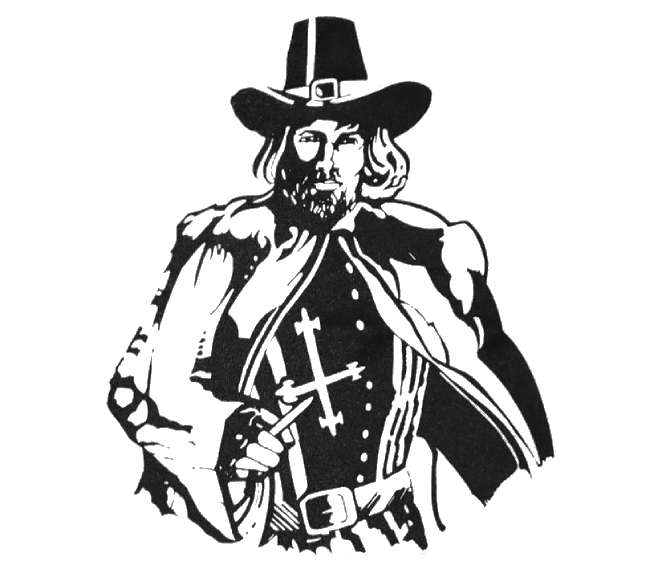
YOSUKE KONISHI: I briefly had one of those free text-only Yahoo websites, which is about as far as it went in terms of internet presence. The main reason was simply my lack of technical knowledge; it wasn’t until 2005 that a friend of mine, Todd Meister, built a proper home page for N.W.N!.
An archived snapshot of the newly launched nwnprod.com serves as a time capsule. The front-page manifesto presents Nuclear War Now! as a hobby elevated into a devotional vocation – explicitly not a corporate venture.
Yosuke has described the early 2000s as an era driven more by enthusiasm than infrastructure. He deliberately avoided standard business practices, treating contracts and intellectual property concerns as needless bureaucracy. However, the label’s growth meant increased tension between his anti-commercial stance and the practical realities of running an operation on that scale.
YOSUKE: Around 2005, N.W.N! got audited by the IRS. Thankfully, the auditors quickly realised the label was basically run out of a bedroom – not some serious enterprise moving large amounts of money. In the end, they fined us a few thousand dollars and told me to clean up the accounting.
Bookkeeping and tax returns truly are the perpetual bane of small business owners.
YOSUKE: Yeah, our accounting is still messy; it’s just not something I’m interested in. I understand the necessity, but leaning too hard into the business side of things taints my appreciation for music, so I try to keep it all at arm’s length. Contracts are one area I probably should get in order, though.
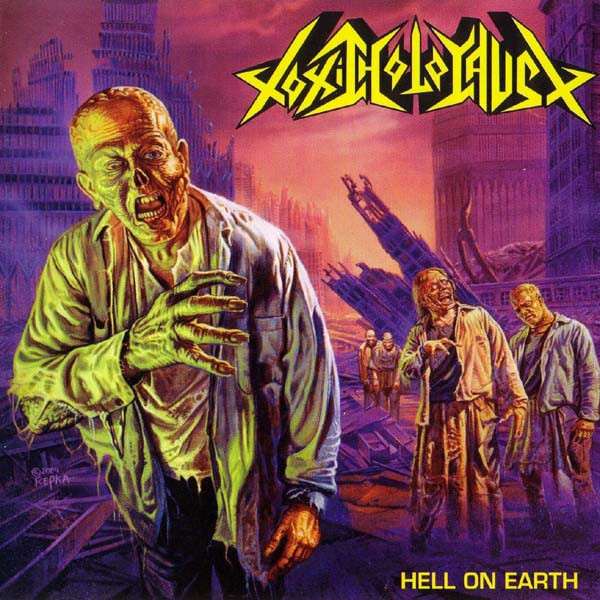
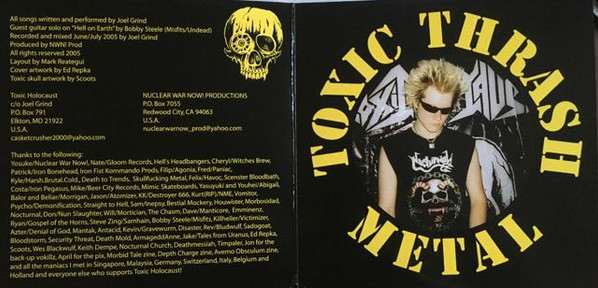
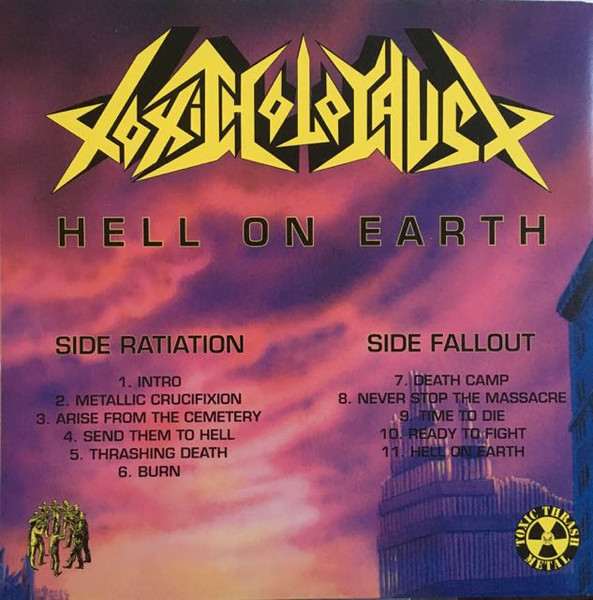
In the fall of 2005, Nuclear War Now! released TOXIC HOLOCAUST’s second album, “Hell on Earth”. Like the 2003 debut, “Evil Never Dies”, multi-instrumentalist Joel Grind handled everything himself – aside from a guitar solo by Bobby Steele of MISFITS fame.
YOSUKE: When “Hell on Earth” came out, the band was already extremely popular. They’d crossed over into a different realm altogether – punk rockers, skateboarders, and other people who weren’t really metal fans had started listening to TOXIC HOLOCAUST, similar to what happened with LEVIATHAN or DESASTER.
In addition to its foundation of black/thrash, Germany’s DESASTER carries a clear punk streak – something the band openly acknowledges, citing influences like THE EXPLOITED – which has often landed them on mixed bills before non-metal audiences.
YOSUKE: Joel also had this clever idea of using satellite bands – his material was simple enough that almost any competent musician could play it, which meant touring costs stayed incredibly low. I remember an Australian line-up with people from… hm, TRENCH something?
TRENCH HELL?
YOSUKE: Yes, those guys stepped in as session members. So, even early on, he’d fly into different countries and already have a local band lined up. Joel was doing the same thing for South American and European tours – and that definitely contributed to the rise of TOXIC HOLOCAUST.
Since “Hell on Earth” was self-recorded on an eight-track reel-to-reel, I assume studio costs weren’t a major concern. The cover by Ed Repka – an American graphic artist known for his work with MEGADETH, NUCLEAR ASSAULT, and DARK ANGEL – on the other hand, must have been a significant expense.
YOSUKE: We had many discussions about budgets and ownership, since TOXIC HOLOCAUST were pretty much at the height of their popularity – or at least close to it. I remember going over who’d pay for what, and Joel insisted on covering the artwork himself because he wanted to retain the album rights.
The same arrangement applied to “Evil Never Dies” – Joel Grind financed everything, retained ownership, and licensed it to Nuclear War Now! and Witches Brew.
YOSUKE: Looking back, I should have bought both records outright, since they sold extremely well. I think the “Hell on Earth” LP went through five pressings on N.W.N!. For a small label still finding its footing – especially one focused on vinyl – five thousand copies of a single title was a big deal.
“Hell on Earth” would be the final TOXIC HOLOCAUST title released by Nuclear War Now!. When Relapse Records put out the third album, “An Overdose of Death…”, in 2008, they also reissued the first two on both CD and LP.
YOSUKE: Honestly, I don’t mind – Joel deserved it more than I did. TOXIC HOLOCAUST funded a lot of obscure N.W.N! projects, so I’m genuinely grateful he allowed me to release his work. That said, I didn’t actually learn anything from the situation, and I probably should have.
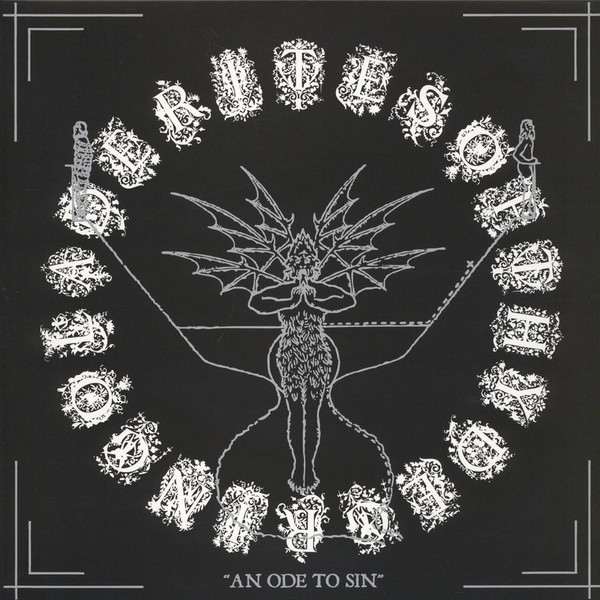
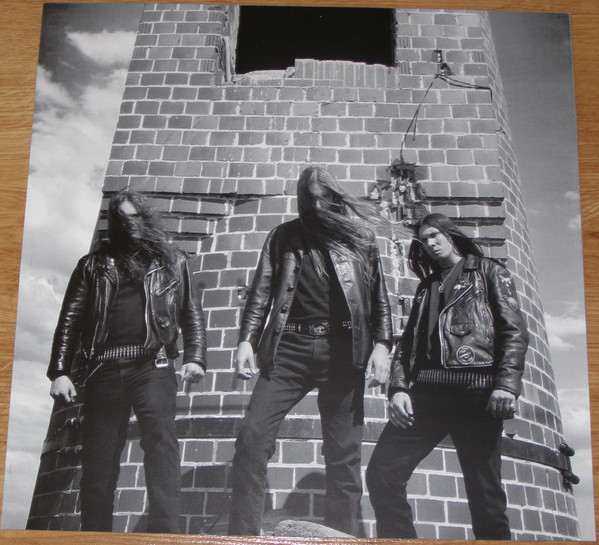
When Edmonton trio SACRAMENTARY ABOLISHMENT dissolved in 1998, its strain of Canadian black/death metal splintered in two distinct directions. AXIS OF ADVANCE honed the martial element, pushing it toward something epic, triumphant, almost cinematic. RITES OF THY DEGRINGOLADE – formed by drummer Paulus Kressman – by contrast, leaned more into technical eccentricity and the warped, angular logic of VOIVOD.
After a self-released debut album in 2000, with Kressman handling vocals and all instruments, RITES OF THY DEGRINGOLADE brought in guitarist J. Wroth and issued “Totality” through Realms of Darkness Productions the following year.
YOSUKE: I think “Totality” was the first RITES OF THY DEGRINGOLADE record I heard, and the entire thing struck me as magnificent – especially the opening track. The way it comes in immediately, just erupting out of the void… I loved that kind of direct approach to songwriting.
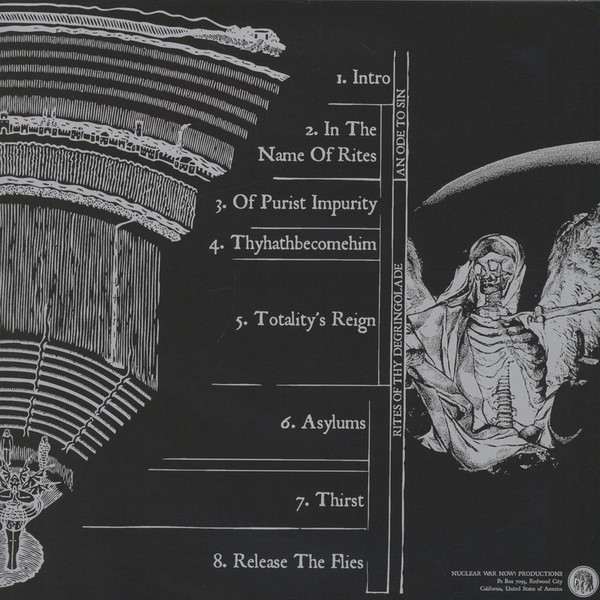
In the autumn of 2005, N.W.N! released the band’s third album, “An Ode to Sin”, on both CD and LP. With Kressman’s frenzied drumming and compositional intricacies on full display, it’s an impressive record – but not an easy listen.
YOSUKE: “An Ode to Sin” is unconventional and highly original. The technicality doesn’t come across as amorphous – like PORTAL or something along those lines – but feels much more linear, while still remaining complex. That’s how I perceive it at least, from my non-musician’s perspective.
Part of it may stem from the fact that “An Ode to Sin” – like most RITES OF THY DEGRINGOLADE recordings – was engineered and produced by Wes Sontag of DISCIPLES OF POWER, a late-1980s Edmonton act known for intricate, progressive, and inventive thrash/death metal.
Much as VOIVOD’s lack of commercial success is often attributed to their status as ‘musicians’ metal’, I get the sense that RITES OF THY DEGRINGOLADE’s technical density has left them somewhat overshadowed by contemporary Canadian bands.
YOSUKE: To be honest, aside from “Totality”, none of their records really performed that well. As you said, RITES OF THY DEGRINGOLADE probably resonated more with musicians than the broader metalhead fanbase. Still, I release what I like – and Paulus’ meticulously arranged black/death appeals to me.
Given your inclination toward order and structure, do you find a particular allure in extreme music rooted in discipline and control, as opposed to pure barbarism?
YOSUKE: I’ve never thought about this in philosophical terms, but maybe. It’s difficult to pin down, because I might sit there listening to the vicious grindcore of NECROK.I.L.L.DOZER, then switch to something far more complex, like STARGAZER – only to jump back into CONQUEROR’s cacophony. It probably comes down to how I’m feeling in the moment.
STARGAZER – wouldn’t they fall into a similar category as RITES OF THY DEGRINGOLADE?
YOSUKE: Yes – they are another band that’s highly respected within the scene, especially among musicians, but the audience at large hasn’t fully caught on in the same way. I mean, both of them definitely have fans out there, but neither name tends to come up when people are skimming the genre’s surface.
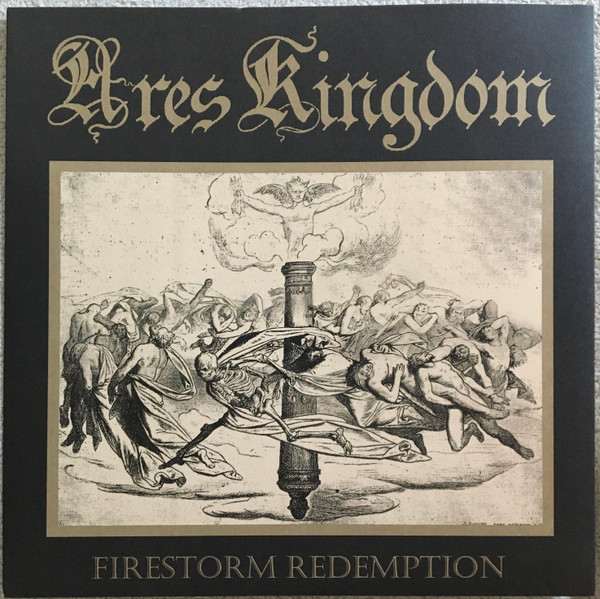
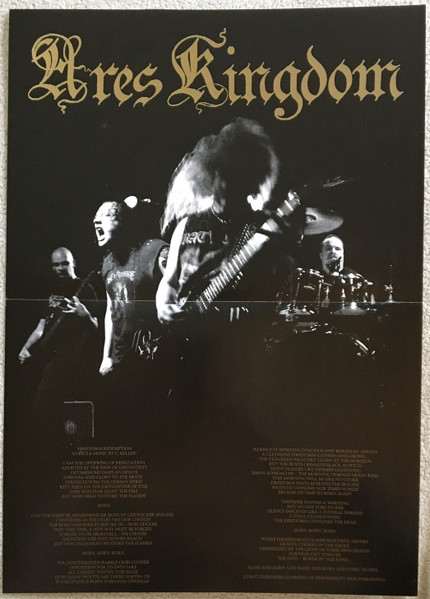
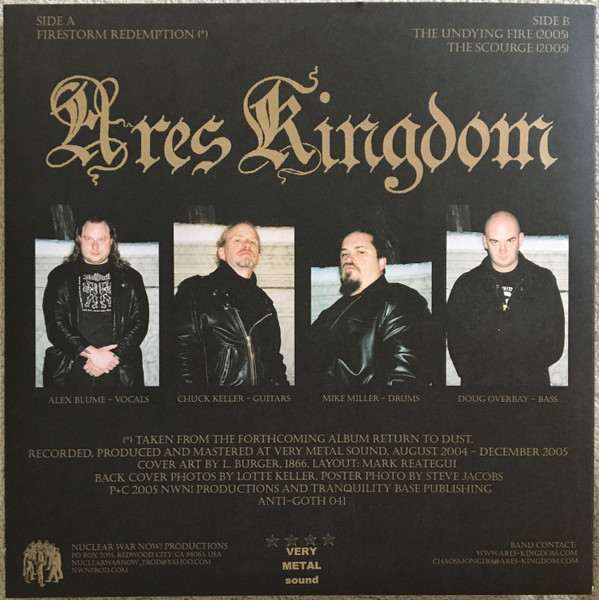

With the 2005 “Firestorm Redemption” twelve-inch, ARES KINGDOM formally entered Nuclear War Now!’s roster, reaffirming the label’s devotion to extreme metal well beyond the bestial realm.
When Kansas City death metal trio ORDER FROM CHAOS split up in 1995, frontman Pete Helmkamp formed ANGELCORPSE with Gene Palubicki. Meanwhile, O.F.C. guitarist Chuck Keller and drummer Mike Miller started ARES KINGDOM, releasing a three-song demo in 1997.
YOSUKE: I bought the ARES KINGDOM demo through Moribund Records and was instantly hooked. Chuck handled the vocals on that recording, and they are just perfect. I’ve always loved his raspy, clearly BATHORY-influenced delivery – which makes sense, given how close he and Quorthon were.
Keller’s long-running friendship with Quorthon began as letter correspondence in the late 1980s and eventually earned him a dedication as ‘brother by blood through thunder’ on BATHORY’s “Hammerheart”.
Following a post-demo hiatus, ARES KINGDOM returned in 2003 with “Chaosmongers Alive” – three songs tracked live in the studio and released through Agonia Records. In September 2005, after completing an album’s worth of material, they recorded a two-track promo, which is what caught Yosuke’s attention.
YOSUKE: At the time, I was actively searching for thrashier-sounding bands, so it really hit the spot. Now, I don’t actually remember how I first got in touch with Chuck… either way, we started talking about working together and soon agreed that N.W.N! would handle not only “Firestorm Redemption” but also the full-length.
“Firestorm Redemption” was conceived as a teaser for the upcoming “Return to Dust”. Released by Nuclear War Now! in May 2006, ARES KINGDOM’s debut album delivers eight tracks of what Chuck Keller describes as ‘infernal thrashing death metal’.
YOSUKE: That perfectly sums up what I’d been looking for: something rooted in traditional ‘80s metal but pushed further into extremity. Back then, I was completely hooked on death/thrash, so ARES KINGDOM fit perfectly. While reminding me somewhat of ORDER FROM CHAOS, it wasn’t as chaotic or aggressive.
“Return to Dust” clearly builds on foundations laid by Chuck and Mike’s former band. For instance, “Failsafe” is not far removed from “An Ending in Fire”, while “Ironclad” recalls “There Lies Your Lord!”. The title track itself is a reworked version of ORDER FROM CHAOS’ final composition, “Imperium”, originally released on the 1996 mini-CD “And I Saw Eternity”.
YOSUKE: I wouldn’t go so far as to call it a continuation of ORDER FROM CHAOS – not without Pete Helmkamp’s involvement, since he played such a crucial role in shaping the imagery, lyrical direction, and overall philosophy. ARES KINGDOM is entirely Chuck and Mike’s lineage, carried forward in their own way.
log in to keep reading
The second half of this article is reserved for subscribers of the Bardo Methodology online archive. To keep reading, sign up or log in below.
Related reading