Nuclear War Now! Productions XII
2026-02-11
by Niklas Göransson
By 2007, Nuclear War Now! Productions had moved beyond association and into full custodianship of the Ross Bay legacy – even as parallel work on American cult act Goatlord revealed the darker costs of preservation.
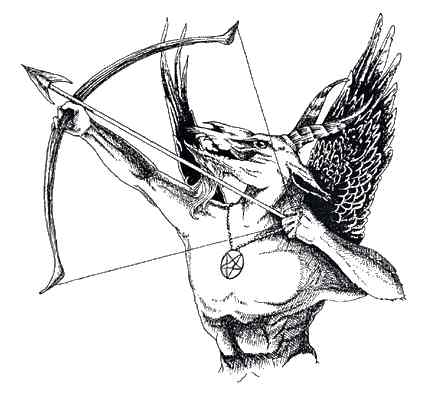
YOSUKE KONISHI: I remember sitting in my office, wearing a button-up shirt and the usual corporate attire, when an email from Caller of the Storms came through. Ever since “Live Ritual…”, I’d been bugging BLASPHEMY about licensing “Fallen Angel of Doom.…”, and now he wanted a phone call.
The return of BLASPHEMY initially showed real momentum, yet their revival imploded almost as quickly as it began.
Following Nuclear War Now!’s “Live Ritual – Friday the 13th” LP in 2001, Caller of the Storms’ house – which doubled as the band’s practice space – was raided by law enforcement under suspicion of a grow operation. No illicit plants were found, but the incident spooked drummer 3 Black Hearts to the extent that he refused to set foot there again.
YOSUKE: Caller had this almost mythical, intimidating persona – people talked him up as incredibly abrasive and harsh – so I was pretty anxious going into that conversation. But he turned out to be very nice and straightforward; we struck a deal without any trouble and then met in person soon after.
In December 2006, Yosuke returned to Vancouver for the first time in five years, staying with his old friend, BLASPHEMY guitarist Ryan Förster.
YOSUKE: I pitched the trip to my wife as a vacation – something like going to see real Canadian hockey or whatever – but the whole thing functioned as a cover for the fact that I needed archive material for the BLASPHEMY reissue. Having those guys scan anything can be such an ordeal.
This sounds very familiar. When BLASPHEMY were featured in Bardo Methodology #5, getting the band to provide even a handful of usable photos required as much effort as preparing the interview itself.
YOSUKE: Oh, yeah – absolutely. There’s no way you’ll get them to send anything over; it’s just impossible, so I decided to fly up there and gather everything myself. I brought my own laptop and a scanner so we could move from place to place and digitise material on the spot.
I’m guessing your wife loved that ‘holiday’.
YOSUKE: Yeah, that’s something I tend to do: I drag my family along and frame it as a vacation when it’s really work. You probably do the same thing <laughs>. I mean, our honeymoon in Japan ended up being spent following SABBAT around for the entirety of their twentieth anniversary tour.
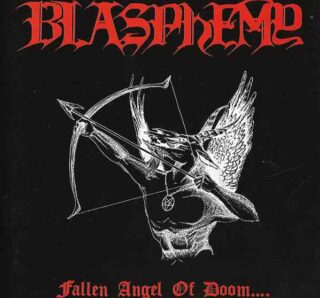
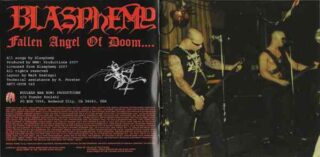
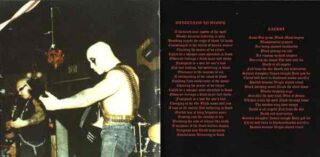
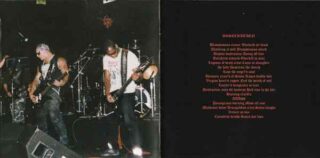
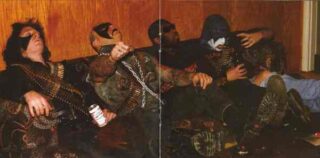
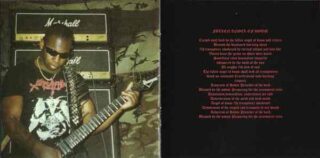
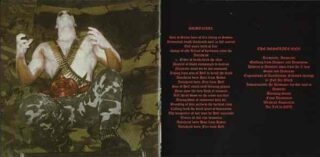
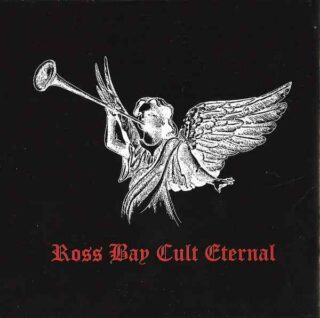
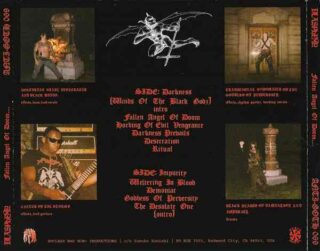
Nuclear War Now!’s CD reissue of “Fallen Angel of Doom.…” – the first official edition since Wild Rags’ original 1990 release – arrived in May 2007. A website announcement noted that trades would be limited during the initial pressing in order to expedite BLASPHEMY’s royalty payments.
The LP followed in June, with European distribution handled by Finland’s Hammer of Hate. A thirty-six-page booklet – full of old photos and ‘zine clippings – firmly positioned N.W.N! as the principal custodian of the Ross Bay legacy. All Die Hard and picture-disc editions sold out within days.
YOSUKE: By then, people were really starting to latch onto BLASPHEMY. The band had reached this almost legendary status. From 2001 through 2007, they hadn’t done anything beyond “Live Ritual…”, yet expectations kept building. So, once the reissue finally happened, I fully expected it to sell out very quickly.
One stated goal was to correct decades of poorly sourced unofficial releases and degraded represses. Ironically, Yosuke’s edition also ended up bootlegged with a counterfeit CD digibook bearing the N.W.N! logo.
YOSUKE: I don’t have any concrete proof, but the most likely culprit is a certain Greek label known for this kind of behaviour. I should add that several bootlegs of “Live Ritual…” circulated in the early 2000s. The Brazilian Immigrant Darkness version was basically a near-replica – just a slightly altered cover.
‘Immigrant Darkness’?
YOSUKE: I can only assume it was meant as a joke, since I’m an immigrant to the US. Terrible vinyl quality, of course – very much on the same level as the old Cogumelo Records pressings. Still, there’s something amusing about a Brazilian bootleg existing at all.
Wasn’t there also a bootleg of the rehearsal material that came with your Die Hard version of “Live Ritual…”?
YOSUKE: Yes, it was done by Azter from Horror Records. He actually asked me for permission first, so I guess you could call that one an ‘official bootleg.’ I told him I didn’t really care one way or the other – just to send me a copy if he went ahead with it.
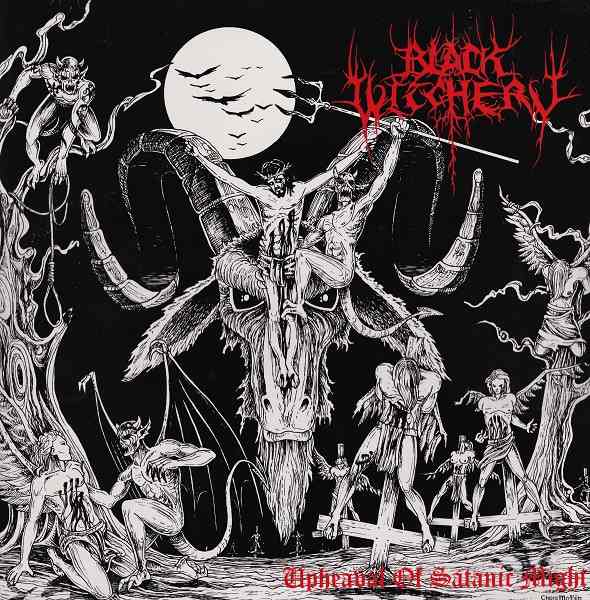
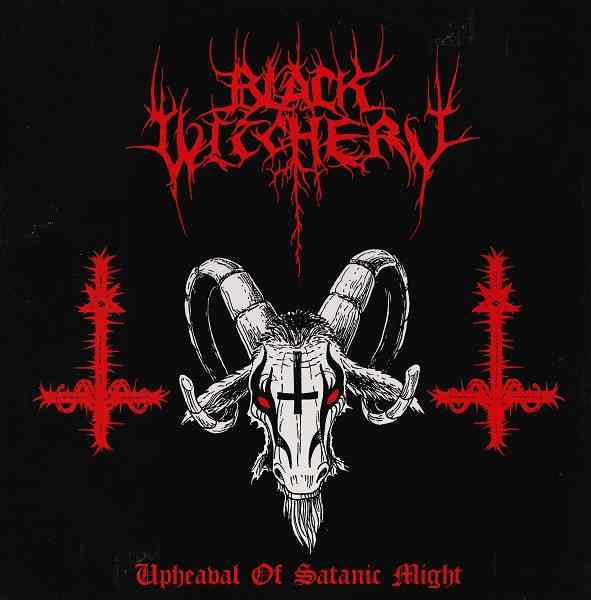
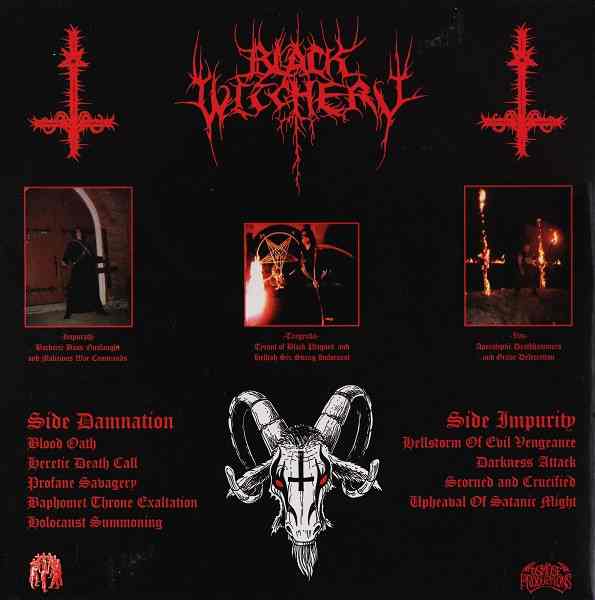
2007 saw a simultaneous Floridian strike rooted in the Ross Bay lineage, as N.W.N! issued BLACK WITCHERY’s “Upheaval of Satanic Might” on vinyl. The album had already appeared on LP and CD through Osmose Productions – with a US CD edition via Red Stream – two years earlier.
YOSUKE: I remember talking with Impurath about how useful a US vinyl version would be. For American listeners, it meant not having to hunt down copies from Osmose, whose titles weren’t widely distributed over here. By then, BLACK WITCHERY were probably at the height of their popularity.
When Akhenaten of JUDAS ISCARIOT brought BLACK WITCHERY to Europe in 2002, the shows were relatively intimate, as the band had yet to gain much traction across the Atlantic. By the time they returned in 2007 for a co-headlining tour with ARCHGOAT, the landscape had shifted dramatically – as Yosuke discovered when he travelled to Berlin, Germany, in October of that year.
After years of written correspondence, this became his first in-person meeting with Patrick Kremer of Iron Bonehead Productions.
YOSUKE: I hadn’t realised just how small Iron Bonehead actually was. I remember going to Patrick’s apartment, and his entire distribution setup amounted to one corner of a tiny bedroom. That came as a real surprise; I’d assumed the label operated on a much larger scale.
To be fair, despite having been active for a decade, Iron Bonehead didn’t become a full-time operation until 2007.
YOSUKE: It’s difficult to gauge the size of a label when all interaction happens via email, and you’re simply seeing a steady stream of releases coming out. From that perspective, it felt much bigger. I’d imagined something far more substantial, but the reality turned out to be pretty modest.
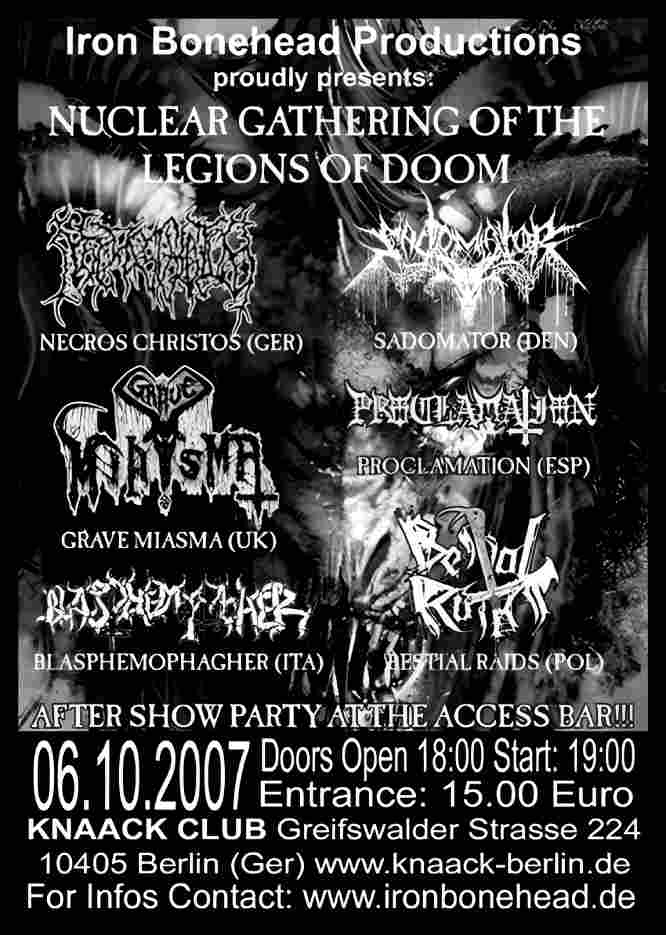
Beyond expanding the distro, Iron Bonehead had begun organising gigs. Yosuke’s Berlin visit coincided with one such event – featuring acts like NECROS CHRISTOS, GRAVE MIASMA, BESTIAL RAIDS, and PROCLAMATION – which Patrick has since described as historically significant.
YOSUKE: I got to see two bands I was working with at the time – BESTIAL RAIDS and PROCLAMATION – and they absolutely killed on stage, which made it a moment of genuine pride for me. But from my American perspective, I can’t really place it within the broader historical context of European gigs.
For years, there simply wasn’t enough interest to sustain even a one-day festival built entirely around the bestial sound. You could book one – maybe two – harsher bands, but the rest of the bill usually had to be padded out with acts from other subgenres. This event, however, filled a four-hundred-capacity venue.
YOSUKE: Seeing NECROS CHRISTOS share a bill with PROCLAMATION, BESTIAL RAIDS, and whoever else was involved didn’t strike me as unusual. Travel within the continent is much easier, so I figured European bands were constantly playing alongside similar acts.
The evening was billed as Nuclear Gathering of the Legions of Doom, suggesting that even the terminology associated with ‘war metal’ had reached Europe.
YOSUKE: <laughs> Yeah, the goat metal thing had already started getting out of hand. Even back then, there were so many bands – and that trend has only continued – just stringing together random words lifted straight from BLASPHEMY lyrics and naming themselves after song titles.
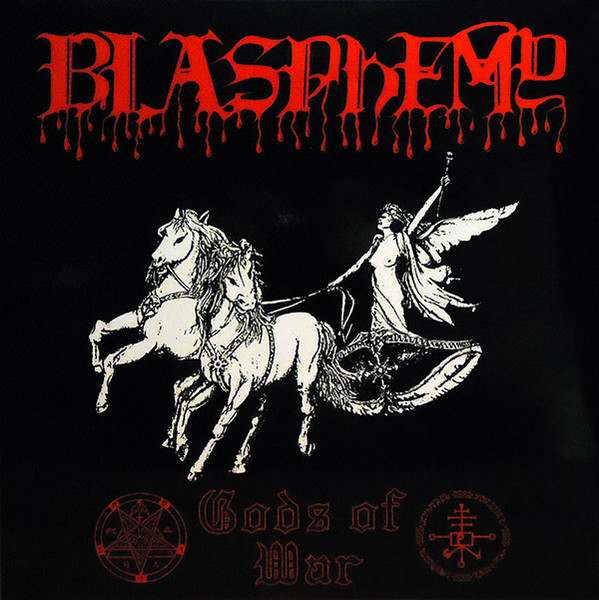
YOSUKE: While preparing the “Fallen Angel of Doom….” reissue, I approached Osmose about a co-release of BLASPHEMY’s second album, “Gods of War”. As per my suggestion, I handled all the design work, and they took half of the copies. Hervé was really easy to work with – and still is.
In late October 2007, two weeks after the Berlin show, Nuclear War Now! and Osmose Productions reissued BLASPHEMY’s second album, “Gods of War”, as a double-LP.
When Osmose originally released “Gods of War” back in ’93, it came bundled with their 1989 demo, “Blood Upon the Altar”, as bonus material. Despite a combined running time of only forty-two minutes, the 2007 edition split the two titles into individual records.
YOSUKE: It didn’t make much sense to pair both recordings on a single disc; they’re separated by a couple of years, with another album in between, so I never fully understood the reasoning behind that in the first place. I figured, ‘Why not present them as two records within a double LP?’
I couldn’t help but chuckle at the promo line touting both records as ‘mastered at 45 RPM for the best fidelity.’ High fidelity isn’t necessarily the first association one makes with “Blood Upon the Altar”, so I assumed this was another manifestation of that understated, deadpan Japanese sense of humour.
YOSUKE: No, I was probably being completely serious. The original Osmose CD had those one-second gaps between songs that were supposed to run together, which always bugged the fuck out of me. I had my version remastered and fixed so the tracks flow properly into each other, making it sound fuller.
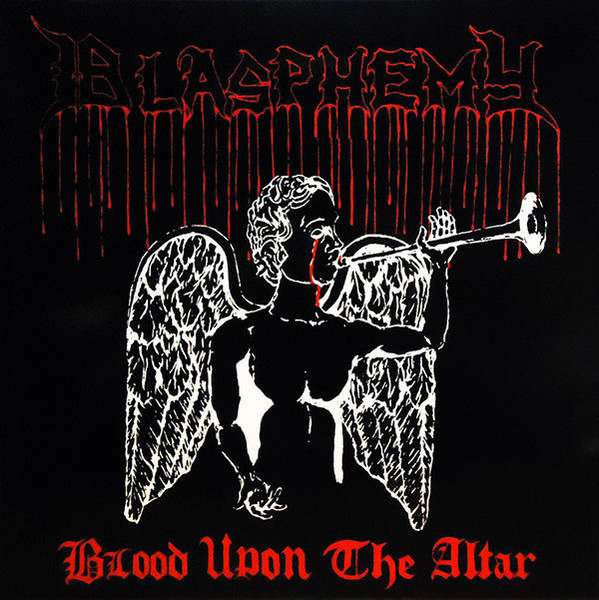
Yosuke has often spoken about his appreciation for primal music paired with crude aesthetics as a unified artistic expression. Few releases embody this better than “Blood Upon the Altar”, which boasts artwork by former BLASPHEMY guitarist Black Priest.
YOSUKE: The angel holding a trumpet, with all its limbs and details completely fucked up, looks like something drawn by a right-handed person using their left hand. Nevertheless, it perfectly captures the brutal, primitive nature of that demo. Undeniably caveman-level – but prehistoric cave paintings are still regarded as art.

YOSUKE: Joe Frankulin and I exchanged a couple of letters over the years, but we didn’t maintain close contact until the GOATLORD reissue campaign really got going. He was a troubled person with serious mental illness, which made communication difficult at times.
When Nuclear War Now! formalised its archival collaboration with GOATLORD in 2007, Yosuke had already been writing to the band’s co-founder and guitarist, Joe Frankulin, for over a decade
YOSUKE: GOATLORD were extremely important to me. Not just because it was an American band, but because they created something unique. The sound felt like a collision of BATHORY and HELLHAMMER-style black metal with DREAM DEATH–type doom, Paul Chain, and their own warped, idiosyncratic approach.
Originally released by Turbo Music and J.L. America, then reissued by Metal Age Recordings in 1995, GOATLORD’s sole full-length album, “Reflections of the Solstice”, had long been out of print. Recorded in 1991 but dating back as far as 1987, the material stands out as an early hybrid of doom mixed with proto-death and black metal – all fused into a suffocating, noxious atmosphere.
YOSUKE: GOATLORD were doing something completely original, and the members’ reputations for being total degenerates only added to their mystique. Then you have songs like “Chicken Dance”, which are demented in a way no other band was even attempting.
Not to mention those band photos.
YOSUKE: Yeah, it’s like a bunch of homeless people hanging around behind a 7-Eleven. The members didn’t look the part at all; everything about them felt strange and compelling. I became obsessed with GOATLORD, so when it came time to reissue their material, I was excited to discover Joe had unreleased recordings sitting around.
Released by N.W.N! in 2007, “The Last Sodomy of Mary” compiles rehearsal material originally intended for the band’s second album. The music suggests a move away from the doom-heavy approach towards faster, more overt black/death metal.
YOSUKE: Some of that material was unfinished, so we placed those tracks on a second LP included in the Die Hard version. The completed material wasn’t as strong as “Reflections of the Solstice” – but even so, I felt it was an important artefact and something deserving of preservation.
log in to keep reading
The second half of this article is reserved for subscribers of the Bardo Methodology online archive. To keep reading, sign up or log in below.
Related reading