Nuclear War Now! Productions XV
2026-02-19
by Niklas Göransson
This final instalment closes the first chapter of Nuclear War Now! Productions. The inaugural festival transformed the label from a curatorial force into a physical gathering point – testing the limits of conviction while exposing the cost of ambition.
YOSUKE KONISHI: The Berlin show in 2007 – where PROCLAMATION and BESTIAL RAIDS played with NECROS CHRISTOS – lit a spark in me. Someone remarked, ‘This feels almost like an N.W.N! festival’, and that comment lodged itself in my brain. It triggered the impulse to organise something centred entirely around the label.
Beyond being a memorable night, the Nuclear Gathering of the Legions of Doom signalled a shift. For years, the bestial strain of black/death metal couldn’t sustain a full bill on its own; promoters usually had to dilute the line-up to ensure a decent turnout. Yet this one filled a venue holding roughly four hundred people.
The promoter, Patrick Kremer of Iron Bonehead Productions, mentioned that Yosuke proposed a collaboration shortly after returning home.
YOSUKE: We hit it off right away, and the conversation evolved into the idea of collaborating on N.W.N! Fest. At the time, no underground label had done anything quite like it – deliberately showcasing its own roster live, rather than simply booking bands that guarantee ticket sales.
On March 2, 2009, nwnprod.com announced the first Nuclear War Now! Fest: a two-day gathering in Berlin, Germany, co-presented with Iron Bonehead Productions.
YOSUKE: The initial reaction was very positive. Well, I do remember some scepticism about whether all the bands would actually show up – mainly because gatherings of this size weren’t as common then. Underground indoor festivals existed, sure, but nothing quite on that scale.
The line-up brought together an impressive cross-section of the label, spanning generations and continents: ARES KINGDOM, BONE AWL, MIDNIGHT, REVENGE, VILLAINS, MORBOSIDAD, PROCLAMATION, BLASPHEMOPHAGHER, TERRORAMA, EMBRACE OF THORNS, HELLIAS, DEAD CONGREGATION, NOCTURNAL GRAVES, IGNIVOMOUS, and ABIGAIL.
YOSUKE: Most festivals, if we’re being honest, operate as business ventures. You secure a major headliner for each day, and the lower-billed acts essentially fill the gaps. That wasn’t our intention. We wanted to represent the entire N.W.N! roster – established names and smaller bands alike – on equal footing.
What was the division of labour like?
YOSUKE: I took care of everything related to the bands – booking flights, coordinating schedules, and staying in constant contact with everyone involved. Patrick handled the groundwork in Berlin: backline, drinks, and the full spectrum of local logistics.
Patrick strikes me almost like a German counterpart to you – disciplined and driven, a real workhorse.
YOSUKE: Yeah, that became obvious pretty quickly once the festival planning was underway. He’s extremely methodical and detail-oriented. I think there’s a reason why Germans and Japanese tend to get along; both cultures place a strong emphasis on hard work and seeing things through to completion.
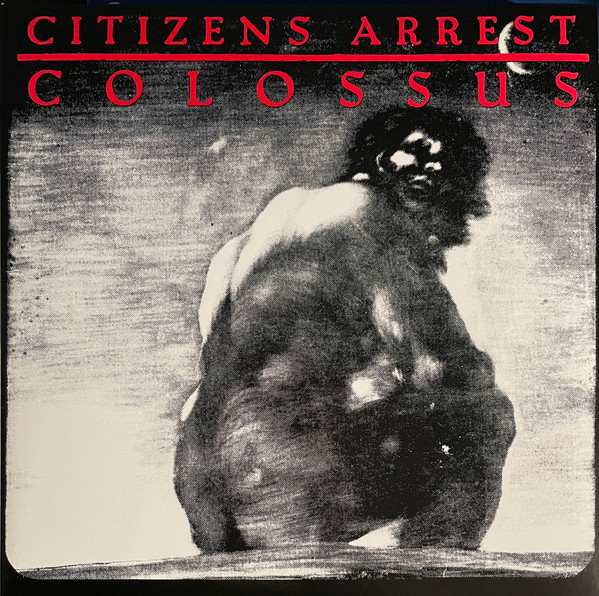
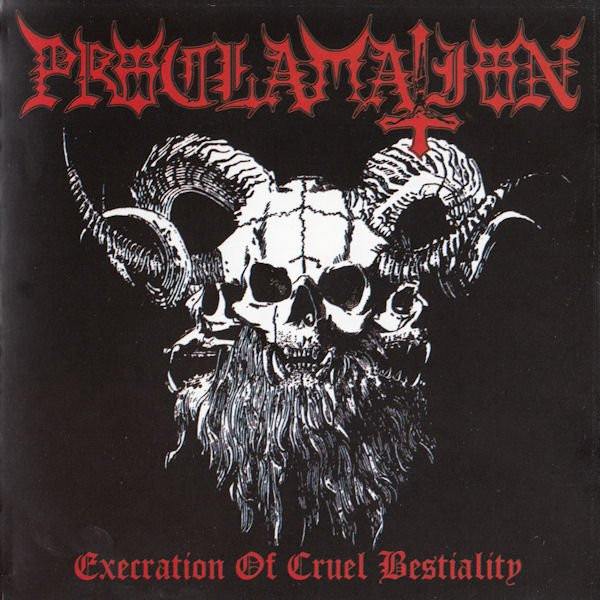
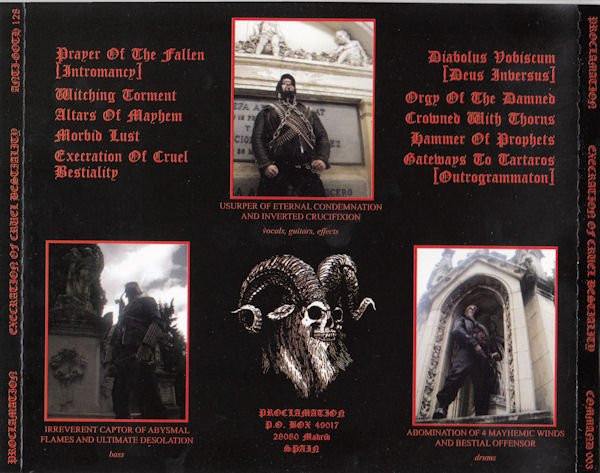
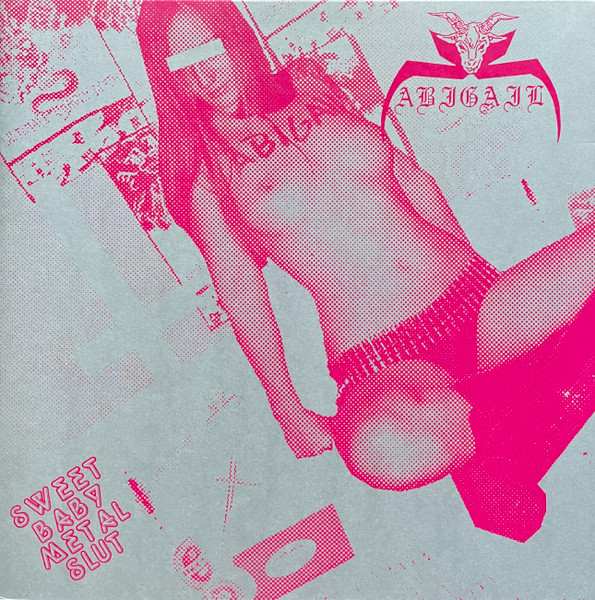
Over the months following the festival announcement, Nuclear War Now! maintained its characteristically busy release schedule, including a double-LP compiling the entire CITIZENS ARREST discography, new full-lengths from PROCLAMATION and ABIGAIL, and a VON repress.
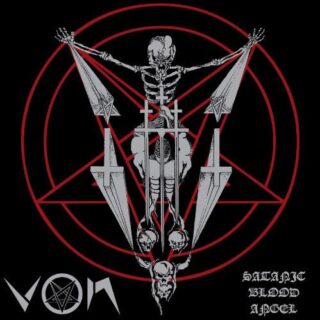
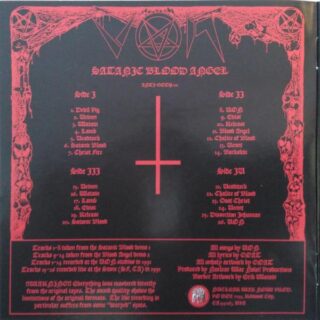
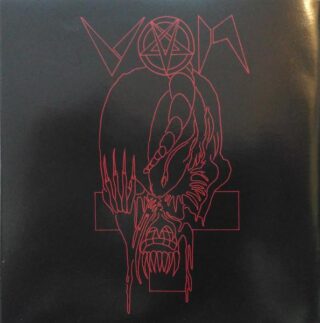
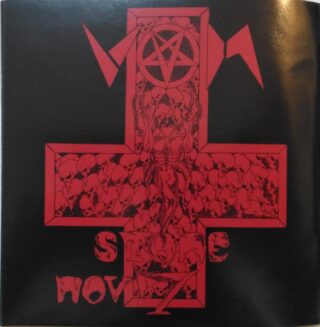
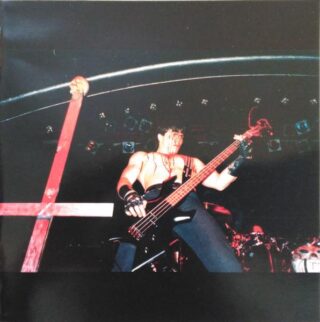
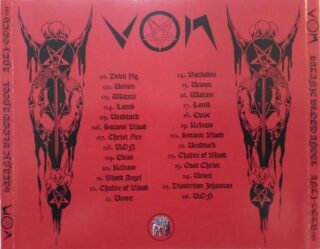
Back in the early 2000s, when N.W.N! issued “Satanic Blood Angel”, VON still carried an almost mythical aura in the underground. The band’s backstory was a mystery, as were its members: Goat, Kill, and Snake. After locating bassist Joe ‘Kill’ Trevisano through Bay Area contacts, Yosuke secured permission to not only reissue the 1992 demo but also include previously unreleased material from the same studio session.
Following the 2003 release of “Satanic Blood Angel”, it became apparent that Kill was not part of VON’s original line-up, and the compilation agreement had left the band’s founders out of the loop. In preparation for the repress, Yosuke hoped to rectify this.
YOSUKE: Goat had been deep into heroin and effectively homeless for much of the ‘90s, but Joe eventually managed to track him down. I wanted to handle everything properly, so I drove to Los Angeles to formalise the contract and deliver the royalties in person. From a licensing perspective, I truly believed the situation was resolved.
What about Snake, the drummer?
YOSUKE: I have no idea what he’s doing now – but back then, Snake worked as a yoga teacher and had left the whole Satanic black metal lifestyle behind. I guess he didn’t want that kind of energy trailing him into the next phase of his life, so he consciously distanced himself from VON.
Once the repress landed, Yosuke learned of yet another founding member: Venien, who was VON’s original bassist from the band’s 1987 formation on O’ahu, Hawaii, until 1990, when Goat and Snake relocated to California.
In 2009, the former bassist launched Von Records and publicly denounced the N.W.N! compilation as an unauthorised bootleg, arguing that he had never been consulted.
YOSUKE: I had no knowledge of this history at all. Initially, I was sceptical, because Venien doesn’t appear on “Satanic Blood” or “Blood Angel”. But then he produced the “Satanic” recording from ‘89 – the very first VON demo, which nobody ever mentioned to me – and apparently he played on that.
Recorded in 1989 while the band was still based in Hawaii, “Satanic” contains early versions of material later re-recorded for the “Satanic Blood” and “Blood Angel” demos.
YOSUKE: I’m in touch with Venien now, and we’re on good terms. Actually, there was an additional VON demo they never released. That one featured Goat, Kill, and a different drummer, recorded sometime after “Satanic Blood” and “Blood Angel”. It’s mostly mid-paced and sounds even more minimalistic.
I’m not sure how anything can be more minimalistic than VON.
YOSUKE: The material still sounds like VON, yet is… it’s difficult to explain – almost non-metal in a sense. I honestly have no idea what they were listening to at the time. The vocals are the same, and the guitar approach is similar but has more of this chugga-chugga feel and less monotonous blastbeats.
YOSUKE: The months leading up to the festival were incredibly hectic. I’d just bought a house and had recently become a father, so my memories are mostly a blur of constant activity. Organisationally, things actually ran quite smoothly. The only real problem was ticket sales – we simply didn’t sell enough.
As November drew closer, it became clear to Yosuke and Patrick that attendance would fall short of expectations.
YOSUKE: We kept hoping people would just show up and buy tickets at the door, but that didn’t really happen. Roughly speaking, the venue could hold close to a thousand; in the end, I believe we got around five hundred.
To break even, they needed roughly two hundred more.
YOSUKE: Looking back, we underestimated the expenses and overestimated the level of interest. I’m not sure how much responsibility falls on Patrick, though, since most of the booking decisions were mine. I probably should’ve focused more on European acts to reduce travel costs.
With one Japanese band, two from Australia, and several North American acts, the flights must have been punishing.
YOSUKE: I mean, think about the sheer audacity – or stupidity – of flying a relatively small band like IGNIVOMOUS from Australia to Berlin for a single show. Still, I thought it was a strong line-up. Unfortunately, our propaganda campaign wasn’t effective enough, and we didn’t draw the numbers we needed.
When the venue doors opened, was there a sense of eager anticipation, or were you stressed out of your mind?
YOSUKE: Probably both, but stress definitely dominated. The turnout weighed heavily on me; I knew we were going to lose money, and that anxiety was hard to shake. Events like this are typically far more enjoyable when the logistical and financial side isn’t falling apart in the background.
I imagine that weekend was the first time you met quite a few contacts in person.
YOSUKE: Yeah, it might’ve been my first time meeting Jamie from MIDNIGHT. Same with the Aussies, NOCTURNAL GRAVES and IGNIVOMOUS. Chris Volcano probably stands out the most. Even over email, he came across as a pretty unique character – talking to him in person only confirmed that.
Aside from co-founding ABOMINATOR and IGNIVOMOUS, Melbourne-based musician Chris Volcano had previously drummed for bands like DESTRÖYER 666 and Rob Death Dealer’s pre-VOMITOR project, VULGAR.
YOSUKE: There are plenty of stories about Chris Volcano’s eccentricity. It’s not even behaviour, really. He’s genuinely very, very nice – he just has some wild ideas. I remember late-night bar conversations revolving around his theories on alien power sources <laughs>.
Were you able to enjoy any of the performances?
YOSUKE: I always try to catch at least parts of a few sets, especially bands I haven’t seen before. I remember NOCTURNAL GRAVES being excellent. PROCLAMATION also played a strong set, but I preferred the 2007 show with NECROS CHRISTOS. That chaotic sound seemed to work better in a smaller, more confined space.
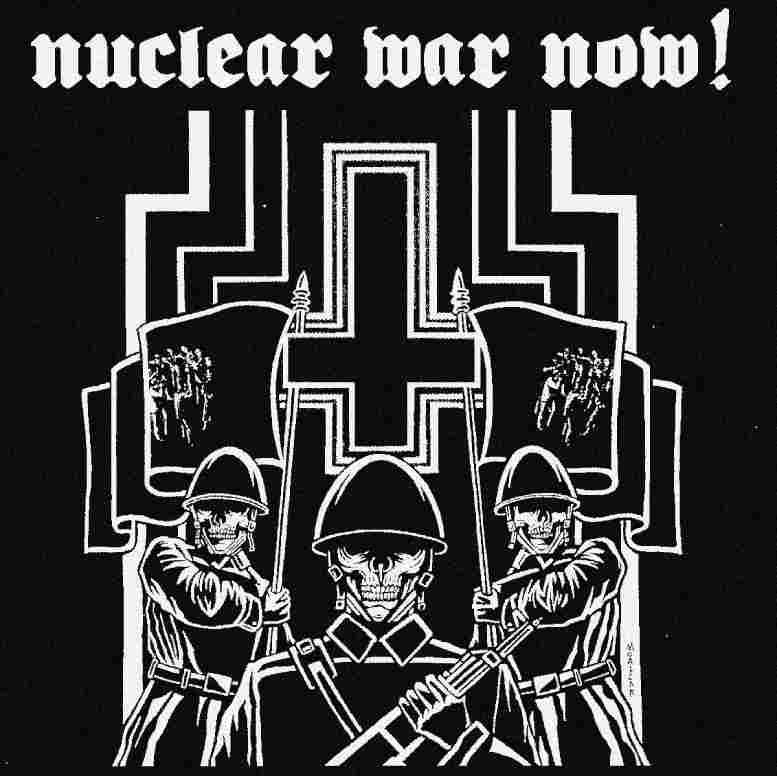

Despite being the only band without a full-length album – and leaning more toward sleaze-drenched, blackened speed metal than anything bestial – MIDNIGHT were given a prominent position on the bill.
YOSUKE: They were already very popular, and it was their first time playing abroad, so giving the band a higher slot made sense. Stefan from High Roller Records told me he came specifically to see them. Which is kind of unfortunate, because that show led to MIDNIGHT leaving N.W.N!.
Yosuke has described the first festival as a financial disaster but a creative triumph. One moment that seems to encapsulate both aspects involved MIDNIGHT’s stage theatrics.
YOSUKE: Jamie smashed his bass against the floor – damaging the stage at a cost of about €500. I deducted the money from their royalties for the ten-inch, and that really pissed him off. We got into a fight over it, which ultimately made them switch to Hells Headbangers.
The year prior, N.W.N! had released the “Farewell to Hell” mini-album on both CD and LP – a point Yosuke regarded as the moment MIDNIGHT formally entered the roster.
YOSUKE: We talked things through much later, and Jamie told me he thought my reaction was petty. Looking back, I might even agree – but this happened in the context of losing around $20,000. Every dime mattered; I simply couldn’t afford to spare five hundred euros.
That decision likely proved far more costly in the long run, given how MIDNIGHT’s 2011 debut, “Satanic Royalty”, became Hells Headbangers’ best-selling release to date.
YOSUKE: We’re on good terms now, but it’s unfortunate, because I genuinely wanted to continue working with MIDNIGHT. In hindsight, it may have been inevitable. The music was drifting toward something broader and more accessible, and they were clearly aiming for a larger audience.
In a 2024 Bardo Methodology feature, Chase Horval of Hells Headbangers said that when MIDNIGHT delivered “Satanic Royalty”, he was struck by how polished and digestible it sounded. While acknowledging its strength, he still prefers the rawer pre-album material – much of it originally released through N.W.N! and later reissued by H.H.B. on the 2012 collection “Complete and Total Hell”.
YOSUKE: Obviously, I should’ve handled it differently. Maybe I could have negotiated some kind of licensing arrangement for the older material I’d already released. Instead, I was too angry and just handed the rights back outright. From a business standpoint, it wasn’t a smart move.
This appears to have been a recurring scenario over the label’s first decade. Yosuke has often described contracts as necessary evils – something he prefers to avoid unless absolutely inescapable.
YOSUKE: That lack of clarity starts blurring the lines once a band gains popularity and wants to reissue earlier material. DEAD CONGREGATION is a good example. I financed the recording of “Graves of the Archangels”, but we never drew up a contract, so they eventually reclaimed ownership. There was nothing I could do about it.
In the fall of 2009, Nuclear War Now! reissued DEAD CONGREGATION’s 2005 “Purifying Consecrated Ground” mini-album, followed by CD and vinyl represses of “Graves of the Archangels” the next year. That became their final collaboration.
YOSUKE: I honestly don’t remember what kind of agreement we had regarding the rights. When everything begins as a handshake-type deal between a bunch of twenty-year-olds, it feels natural to just let things slide and move on. Decades later, however, those choices can come back to haunt you.
Has the situation been resolved since?
YOSUKE: No. Anastasis and I still aren’t really on good terms because of it. There were a few similar situations as well, but I don’t dwell on them anymore. At this point, it’s all water under the bridge. Everyone has moved on.
YOSUKE: Taking a hit of $20,000 is a serious setback. Technically, I shared the loss with Iron Bonehead, but even then, that’s a significant blow for a relatively small record label – it could have funded at least three or four LPs. Still, it was worth it; I got to meet Chris Volcano <laughs>.
Were the label’s finances able to absorb that loss, or did you have to inject personal funds to keep things afloat?
YOSUKE: There was never a separate bank account; whenever N.W.N! needed funding, I covered it with my personal money. Whether that’s the smartest approach is debatable, but the label is still operating today, so I must have done something right.
log in to keep reading
The second half of this article is reserved for subscribers of the Bardo Methodology online archive. To keep reading, sign up or log in below.
Related reading