Liber Ketola III
2026-03-10
by Niklas Göransson
In 1996, Timo Ketola launched Dauthus, establishing a printed platform entirely his own. Meanwhile, a collaboration with Funeral Mist was taking form – the beginning of an artistic partnership that would endure beyond the grave.
TIMO KETOLA: Around ULVER’s first album, I sent them an interview. Six months later, Garm got back to me and said he liked my questions but needed more time to respond. Then nothing for almost a year. After some detective work, I tracked Garm down through his parents and spoke to him on the phone; he blamed a hectic schedule.
KOSTA PAPAVASSILOU: Damn – stalking people’s mothers over missing interview answers <laughs>… classic Ketola. I actually remember this incident; Timo asked me something like, ‘Kosta, would you really stop writing letters just because you’re busy?’ He was bewildered. ‘How can you not make time for correspondence?’
TIMO: To be fair, Garm did apologise and promised to send me the upcoming ARCTURUS debut as compensation – that was decent of him. Sadly, it never arrived, which led to a slightly ironic review in Dauthus. As a fanzine editor, you always get the last word.
I’ll have to remember that line.
TIMO: It’s actually a quote from Rostén. When he began receiving FUNERAL MIST interviews, I couldn’t understand why he just let them pile up instead of insulting the editors – and that was his explanation.
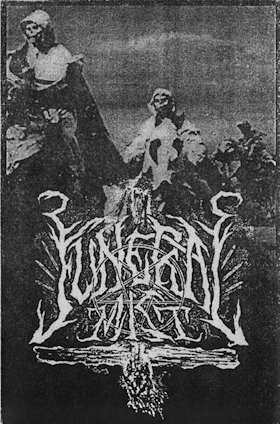
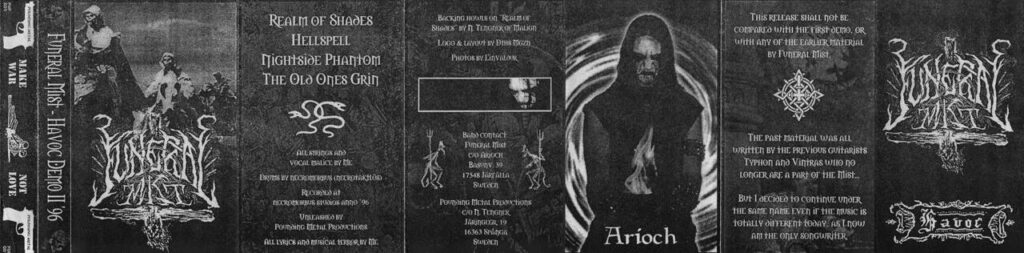
March 1996 saw the release of FUNERAL MIST’s second demo, “Havoc”. Once again, Timo handled the layout. The title is handwritten, just like on the previous year’s “Darkness” tape, but all remaining text is digital.
DANIEL ROSTÉN: I don’t really remember our reasoning now – but if I had to guess, it probably came down to the novelty of modern design tools: Photoshop, fonts, and so on.
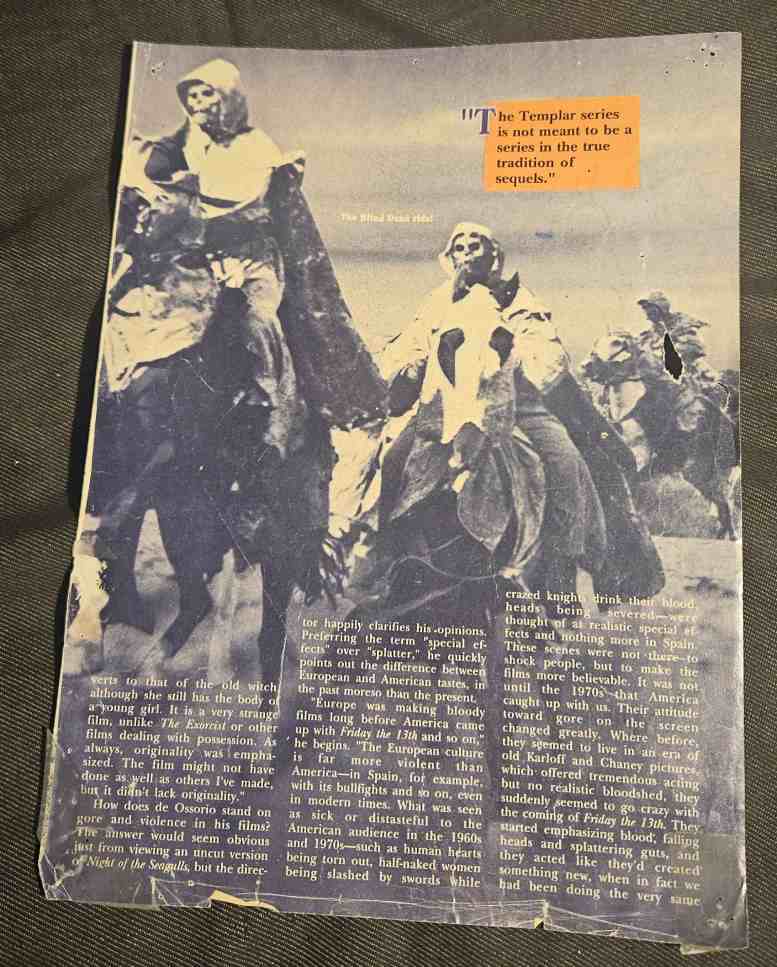
By then, Timo had become rather proficient in Photoshop, thanks to the tutelage of A MIND CONFUSED guitarist Richard Wyöni. The “Havoc” cover has the FUNERAL MIST logo superimposed over a scene from an old horror film called Tombs of the Blind Dead – an impressive technical feat back in early 1996.
ROSTÉN: I remember stumbling upon those horsemen in some kind of horror film magazine and being instantly mesmerised. Over the years, people have asked whether I’m particularly fond of the film – the truth is, I’ve deliberately avoided it. I’d rather not spoil the way that image exists in my mind.
By then, Rostén had gone all-in with black metal. Timo, meanwhile, took a keen interest in the developments – but, as he stated in Liber Ketola, it was never able to ‘dethrone death metal’.
ROSTÉN: All in, indeed. Not that I abandoned the domains of death metal; they remain with me to this day. As I recall, Timo sometimes found the black metal bands I introduced him to a bit over-the-top and image-conscious – theatrical, even childish – while at other times, he embraced them just as quickly as I did.
Do you have any thoughts on why you were drawn in different directions? Was it simply a matter of musical preference, or something else?
ROSTÉN: No, the choice between death and black metal is never a simple matter of musical preference. Why Timo didn’t feel the urge to join me wholeheartedly on that other path was probably due to several reasons; I can only speculate.
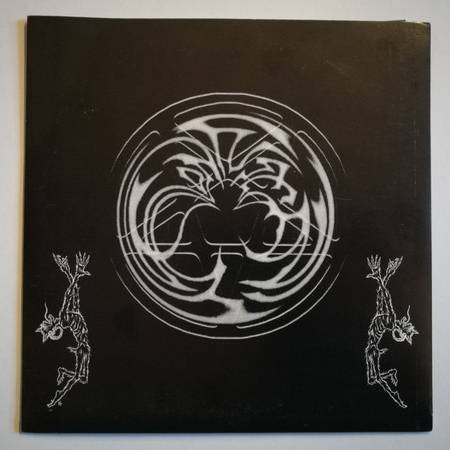
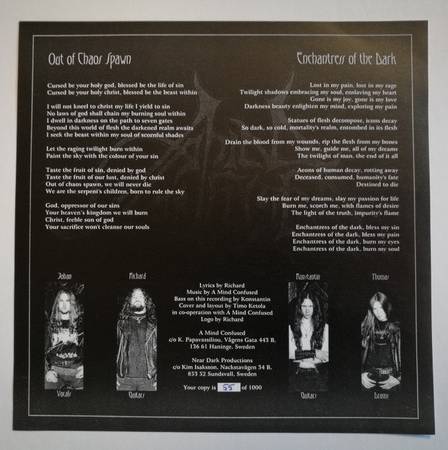
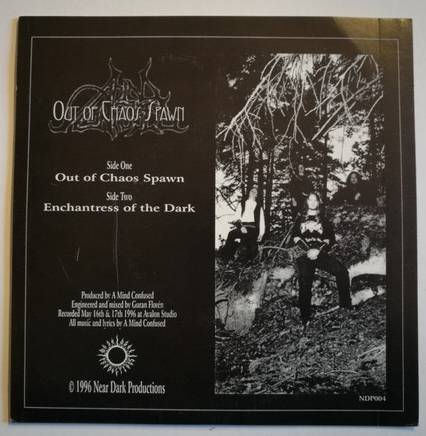
In May 1996, A MIND CONFUSED entered Avalon Studio to record “Out of Chaos Spawn”, an EP released by Near Dark Productions. Timo was in charge of the cover and layout.
KOSTA: Fanzines were still the main focus, but booklet design became Timo’s way of honing his craft. By then, he’d formulated a clear vision of what an underground ‘zine ought to be. Since Rostén was busy with FUNERAL MIST, Timo had started working on Dauthus.
Dauthus #1, the first issue of Timo’s own publication, is dated May 1896. This is the earliest example I’ve found of his peculiar habit of writing ‘18’ instead of ‘19’.
TYLER DAVIS: He dated his poetry book, The Chrestomath, the same way. I have no idea why; I guess it could’ve been Timo simply fucking with people? Or some romantic gesture, given that he was already writing articles about Friedrich Nietzsche and all these philosophers from centuries earlier.
KOSTA: Timo never felt like he belonged to the present; that’s the core of it. He saw the contemporary world as something utterly alien to him. Even as a teenager, Timo came across as an old soul.
The editorial column is somewhat less subtle: ‘He who calls Dauthus a black metal zine will be offered a free golden shower.’
KOSTA: Initially, the ‘90s black metal wave gave Timo a way back to the death metal darkness of the era before sweatpants and Bahamas shirts. But over time, he stopped drawing a line between the genres and realised that both currents sprang from the same source – they just crystallised in different directions.
TYLER: An amusing comment I noticed in the editorial column: ‘The official Dauthus soundtrack is hereby declared to be “Wings of Joy” by CRANES.’ That’s brilliant, as it completely shatters all the stereotypes one might expect from a fanzine like this.
KOSTA: CRANES was one of Timo’s early non-metal obsessions – it’s basically ambient dream pop. He talked about them a lot and played the album for me every now and then. I never quite understood the appeal, to be honest, but it’s not like I connected with everything he loved and vice versa. If it gave him something, that’s what mattered.
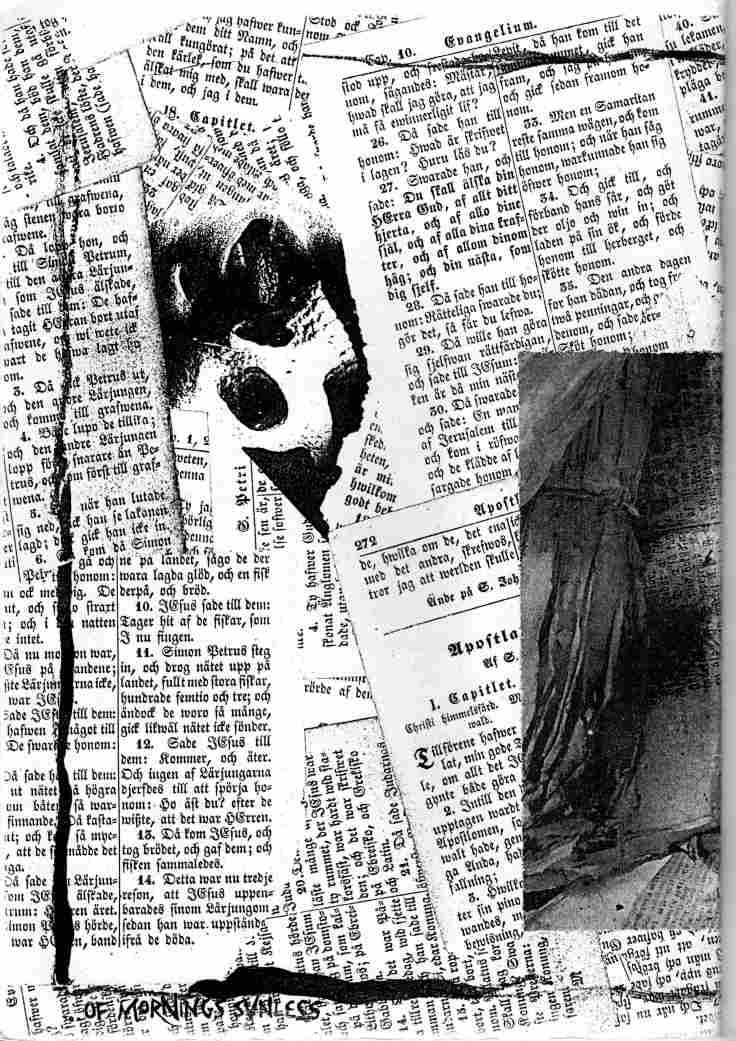
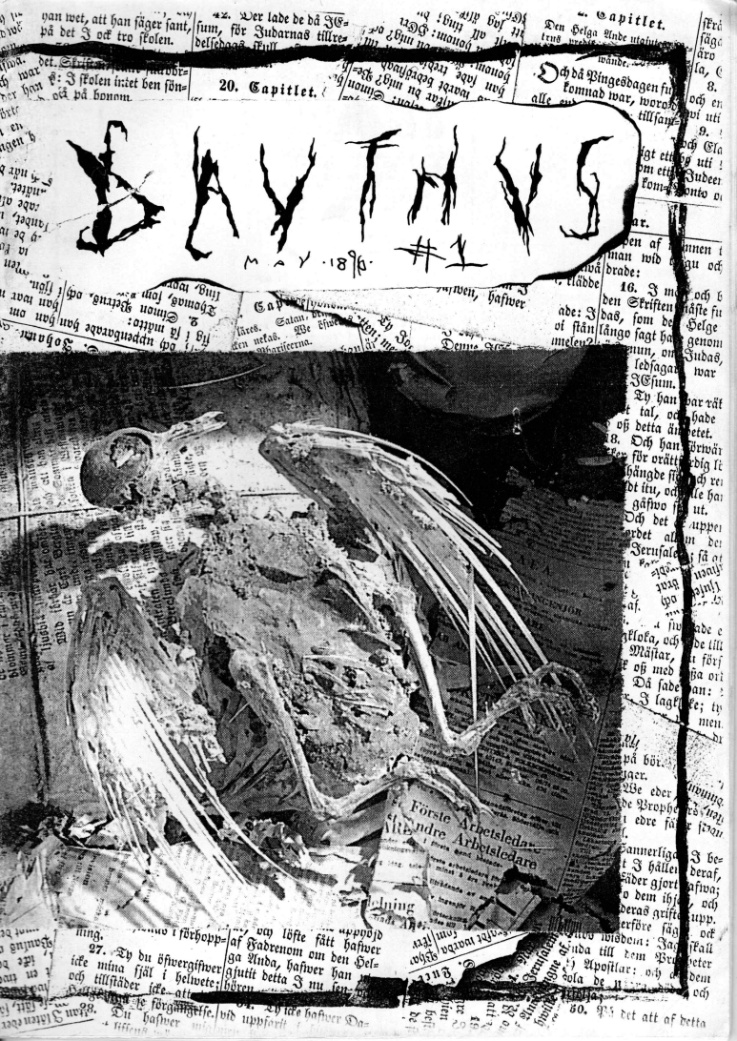
Unlike Script Infernal’s analogue cut-and-paste layout, Dauthus #1 was assembled in desktop publishing software. Supplementing the editorial page soundtrack disclosure are a number of public notices – early tell-tale signs of Timo’s budding preoccupation with the finer nuances of printed media.
TYLER: Even in the very first issue, Timo was already going on about fonts, graphics resolution, image reproduction, and so on. You can see the obsession taking shape – which is absolutely hilarious to me.
One such declaration addresses Timo’s decision to set large portions of the text in blackletter – an archaic, dense, Gothic typeface. He concedes it ‘might not be the most practical around’, adding that ‘I am assured to receive criticism on this’.
TIMO: It was actually Rostén who steered the typography of Dauthus #1. I’d printed a few test pages with Fraktur, and he asked if the whole ‘zine would use it. I answered, truthfully, that no, probably not.
From a conventional design perspective, Fraktur is an odd choice for body text. Belonging to the German blackletter tradition and historically associated with liturgical texts, it can be quite taxing on the eye.
TIMO: Rostén’s dubious ‘Why not?’ convinced me on the spot that I – and the rest of the design world – had been on the completely wrong track. Plainly, Fraktur was the only reasonable option.
ROSTÉN: This, I actually remember clearly for some reason. Those test pages were just something I happened to notice at his place.
Given that you bore the main responsibility, how do you view the typographic choice today?
ROSTÉN: It’s hard to recall my exact line of thought here. I can only assume I approached it the same way I do when composing: if the music feels right, it most likely is. Whether the listener finds it difficult to enjoy or digest must never be taken into consideration; the moment you start catering to a crowd instead of yourself, you will fail miserably.
You are officially credited with ‘back cover necropicture & bird feet’ – did these come from a burgeoning analogue art archive?
ROSTÈN: More like a biological archive; we used to collect a lot of strange things back in the day. As for the ‘necropicture’ – this was just me playing around with a skull and a photocopier in art class at school. Good times.
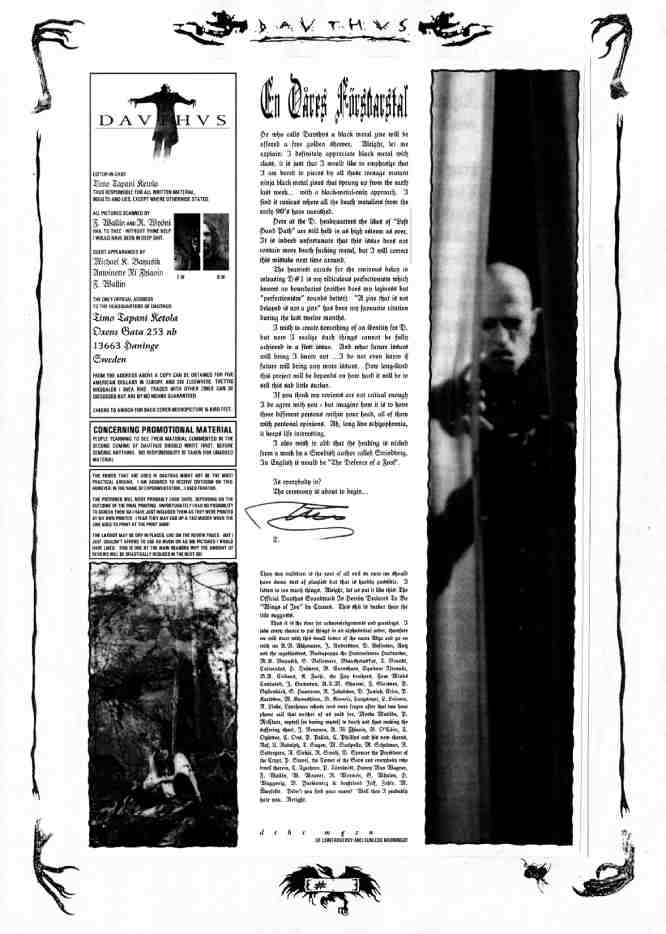

Another disclaimer warns that some images might reproduce poorly – or ‘look shite’, as Timo phrased it – since they hadn’t been professionally screened before printing.
TIMO: Once ‘zines started being designed on computers in the ‘90s, I couldn’t understand why band logos suddenly became blurry. It used to drive me insane; there was no reason to settle for some spotted mess when I could copy a logo at the library, paste it into the layout, and keep everything razor-sharp.
Laser printers convert tonal material – logos, artwork, photos – into dot-based halftone screens, as can be seen in the speckled texture of Dauthus #1. When Timo brought this up at the print shop, he learned that salvation lay in bitmap – a format which bypasses the screening process entirely, sending the image straight from pixels to paper.
TIMO: Thus, the logos come out as crisp as in an old-school photocopied ‘zine. And here’s the beauty of it: you can insert special characters as bitmap images inside the text, and they blend in seamlessly with the typeface. Perfect for Arabic words, alchemical symbols, and so on. It was Haninge Tryckeri that tipped me off about this.
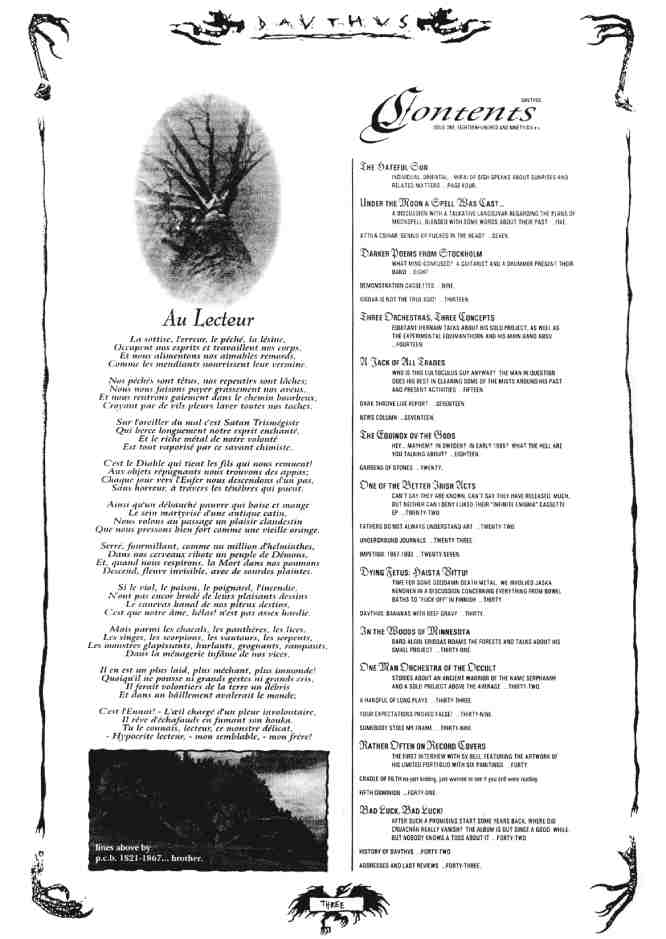
Haninge Tryckeri was a local print shop, next door to A MIND CONFUSED’s rehearsal room in Brandbergen.
KOSTA: I helped carry home the boxes of Dauthus #1 and got a free copy as thanks. Timo was ecstatic, being able to enter a print shop, touch the different paper stocks, discuss layout, and really dig into the technical aspects. But I remember his relationship with them as a bit strained.
Strained? In what way?
KOSTA: You know what Timo was like. Once he started obsessing over these things, he wanted to hang out there constantly – trying to learn everything about the trade and probably bombarding them with endless questions. And they went, ‘Who the hell are you? You can’t just skulk around our printing machines, interrogating us all day.’
One of the many qualities I came to appreciate in Timo while working on the printed editions of Bardo Methodology was his blunt honesty. If a layout idea, editorial, or article of mine felt weak to him, he never hesitated to say so in the most direct terms imaginable. Extremely helpful, though not necessarily pleasant in the heat of the moment.
Rostén encountered this trait early on. In Dauthus, Timo offered a few pointed observations about FUNERAL MIST’s “Darkness”: ‘another Swedish black metal band afraid of going against the stream’, ‘one DISSECTION is enough for me’, and ‘“In the Shadows I Wait” is a poor, very poor Mortiis rip off!!’
ROSTÉN: I’ve always preferred brutal honesty to courtesy — then as now. People who speak their mind without filters, even at the risk of serious friction, are rare and should be valued rather than dismissed. As for “In the Shadows I Wait” being a poor Mortiis rip-off… well, no lie detected.
In one of the excerpts featured in Liber Ketola, Timo recalls 1996 as the onset of a growing weariness towards the metal underground – something he largely attributed to running a fanzine, especially dealing with review submissions.
TIMO: In the early days of Script Infernal, I loved receiving review copies. I mean, the simple fact that someone out there gave a shit about your xeroxed ‘zine meant a lot, and I always did my best. But after a few years, it became overwhelming. I even asked certain labels to stop sending promos; a couple of them got offended.
Really?
TIMO: Yes, one wrote, ‘If you don’t review this or that, we’ll remove you from our mailing list.’ And I replied, ‘Splendid, please do!’ A certain English label once told me it was my duty as a ‘zine editor to cover submitted material – which I found amusing, since their releases were particularly awful.
Appropriately, the editorial page of Dauthus #1 makes it clear that any band or label wanting a review in #2 had to write first – zero responsibility taken for unsolicited material. While this conduct might not be unheard of in the world of fanzines, I’ve never seen it in someone’s debut issue before.
TYLER: I don’t have older issues of Wheresmyskin, although I could almost imagine an editor like Blaash taking such a stance. With Descent Magazine, Stephen and I never asked for promos – but didn’t refuse them either. It wasn’t until maybe the fourth or fifth issue that we started saying, ‘Stop sending stuff.’
Founded by editor and designer Stephen O’Malley, Descent Magazine was America’s leading black metal publication throughout much of the ‘90s. Tyler’s involvement began with the second issue, which Timo reviewed in Dauthus #1. He positioned it as a serious challenger to the ‘almighty Isten’ and ‘royal Slayer Mag’, praising its content and layout as some of the finest he’d seen.
CHRISTIAN BOUCHÉ: Slayer Mag was the most formative, and I do have fond memories of early Nordic Vision issues, but I really need to highlight Descent Magazine. The overall attitude spoke to me – a cultural layer, a discerning focus on the ‘best of breed’, and an aesthetic approach I found compelling.
Many years later, Christian entrusted Tyler with DEATHSPELL OMEGA’s first post-“Si Monvmentvm Reqvires, Circvmspice” interview, citing his Descent credentials as a key reason.
CHRISTIAN: Many ‘90s fanzines shaped my approach to black metal, yet most weren’t very good, objectively speaking. Some hold historic importance as part of the underground ecosystem, sure – but they aren’t necessarily worth mentioning now, thirty years later. Descent, on the other hand, has stood the test of time.
log in to keep reading
The second half of this article is reserved for subscribers of the Bardo Methodology online archive. To keep reading, sign up or log in below.
Related reading