Liber Ketola V
2026-03-18
by Niklas Göransson
By 1999, Timo Ketola’s interest in metaphysics had moved beyond theory into practice, and he abandoned digital art in favour of drawing – two threads that converged in the birth of Kaamos and the launch of Dauthus 1899.
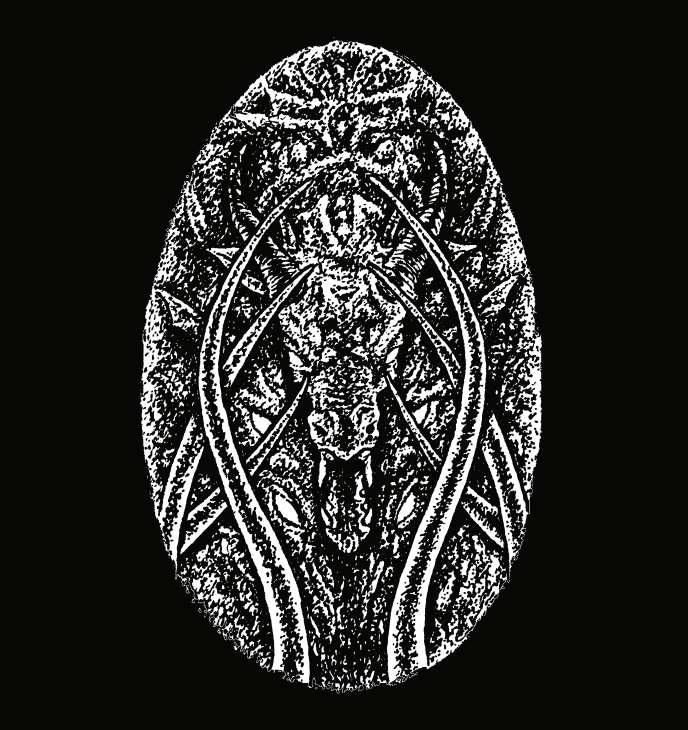
Kaamos - Shrines of Khem by Timo Ketola
KOSTA PAPAVASSILOU: I started experiencing otherworldly phenomena in my early teens – astral projection, succubus visitations, and so on. And I know this isn’t supposed to be about me, but whenever I tried discussing it with other metalheads, they’d go, ‘Eh, stop talking nonsense.’ So, I shelved that whole pursuit for a few years… until I met Timo.
Notably, it was their shared curiosity about metaphysics that first brought the two together, when Timo expressed interest in Kosta’s small collection of esoteric literature. By the fall of 1998, both had maintained – and in many ways intensified – this fascination.
KOSTA: We were walking from Timo’s apartment in Brandbergen to mine when I asked, ‘Have you ever considered practising magic instead of just reading about it?’ He stopped dead in his tracks, looking almost appalled. ‘Are you insane? We can’t discuss this while casually strolling down the street. These matters require a proper seated session – with tea. Strong tea.’
Timo was an absolute fiend for black tea and would, in his own words, drug himself with copious amounts of it before painting.
KOSTA: Once we got to my place, we sat down and talked it through. Where do you go if you actually want to learn and practise magic seriously? This was basically pre-internet, so the most visible options were groups like the Ordo Templi Orientis and the Hermetic Order of the Golden Dawn.
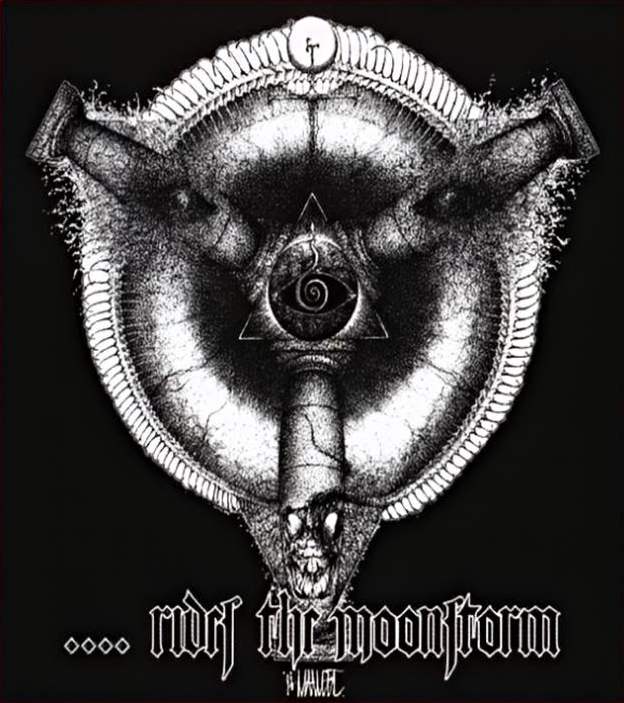
Around the same time, Dutch artist Manuel Tinnemans’ cover for PENTACLE’s “…Rides the Moonstorm” upended Timo’s entire artistic existence. In an interview with Necromaniac ‘Zine, he described the impact as immediate and irreversible: ‘I stopped creating digital art practically from one day to the other.’
KOSTA: I remember blasting “…Rides the Moonstorm” on repeat with Timo ranting and raving about that cover. ‘Look! Here’s something fully realised – the music, the lyrics, the visuals all belong together. Do you understand?’ I could see it pushing him back toward sketching and illustrations.
Although he finished a few lingering digital projects afterwards, Timo quickly realised he had to return to drawing – something he’d largely abandoned over the previous four years.
CHRISTIAN BOUCHÉ: Sometimes, it’s being exposed to something for the first time that makes the difference, rather than the objective qualities of the work itself. It alters your perception of what’s possible, of what exists. Tinnemans’ piece should probably be understood in this context – as a sort of window revealing new possibilities.
As per the Necromaniac interview, Timo’s realisation emerged amidst a broader dissatisfaction with the late ‘90s Photoshop plague – when much underground cover art relied heavily on what he saw as shallow digital processes.
CHRISTIAN: The structure is solid; there are several layers of symbolism, and the complexity must have been breathtaking to behold for someone still learning the craft. I’m not aware of anyone else in the metal underground who used that drawing technique with the same purpose.
TYLER DAVIS: Even without knowing Tinnemans’ exact intention… the three pillars, the focal point, the ring around it – I wonder if there was some esoteric element that resonated with Timo? But hey, whatever pulls someone away from digital layouts and back to pen and paper, I’m all for it.
To my understanding, the biggest impact lay in Tinnemans’ unapologetically analogue execution – ‘pure artisanship’, as Timo put it – and the discipline required for this dotting style.
TYLER: Okay, I can see that. The method is called stippling, and it’s a very hypnotic process. If you sit there doing it long enough, you slip into a meditative state. Maybe it aligned with some of Timo’s magical practices at the time – assuming he had any, I don’t know.
KOSTA: Around then, late ‘98 or early ‘99, I was in community college, catching up on a few core subjects. In my philosophy class, I ended up paired with a fellow metalhead: Saibot. He’s from Jordbro, of all places – probably the only Swede there.
Like Brandbergen, where Timo and Kosta lived, Jordbro is a multicultural suburb in the Haninge municipality.
KOSTA: We started talking and quickly realised we shared an interest in magic. Saibot had been a member of Dragon Rouge for about a year, attending weekly meetings. He said, ‘You should tag along sometime.’ I did – and it immediately felt like a homecoming. That was the door opening, a personal calling.
Founded in 1989 by seven Swedes, Dragon Rouge was conceived as a left-hand-path magical order. By the time Kosta joined a decade later, the organisation operated through local lodges across Sweden, meeting weekly for study circles, guided meditation, and ritual work informed by esoteric traditions such as Kabbalah, Hermeticism, Tantra, and the Qliphothic current.
KOSTA: About two months later, Timo was visiting as usual when the woman I lived with asked me, ‘Kosta, are you going to the Dragon Rouge meeting tomorrow?’ And I immediately thought, ‘Fuck… shouldn’t have said that.’ Timo didn’t know yet.
Why not?
KOSTA: Hard to explain. This was intensely personal – something I wanted to explore on my own before bringing anyone else into it. But I gave Timo the same invitation Saibot put to me: ‘It’s open for everyone; you can also join if you want. Come with us tomorrow.’ And he did.
By early 1999, both Kosta and Timo had joined Dragon Rouge’s Stockholm lodge.
KOSTA: That became the starting point for a total commitment to the practical side of Draconian magic. Timo and I didn’t just dip our toes in the Typhonian currents – we dove head-first straight into the Qliphoth, with everything that entails.
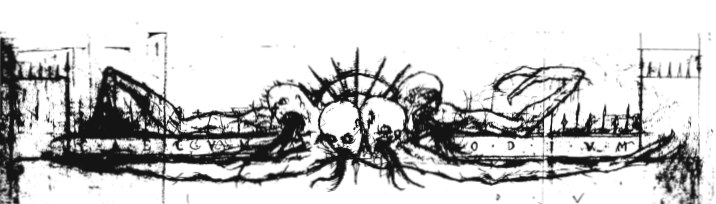
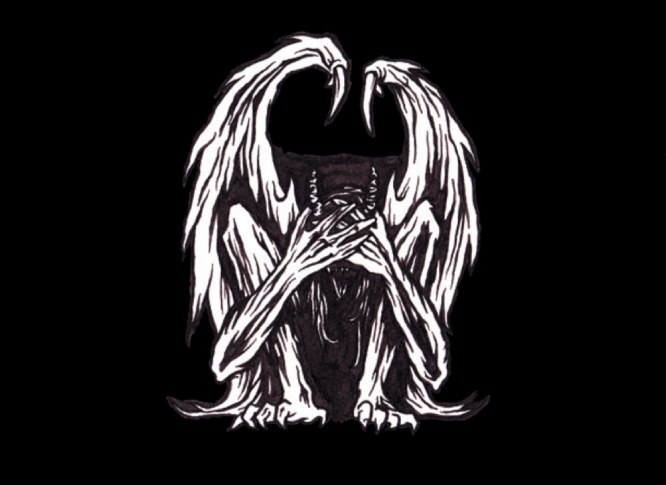
Artwork by Timo Ketola, 1998
TIMO KETOLA: Somewhere along the line, I realised that A MIND CONFUSED had always been a compromise between Richard – a massive VOIVOD fan – and Kosta, who’d worshipped MORBID ANGEL since forever but somehow ended up going down the DISSECTION path for a few years.
KOSTA: After “Anarchos”, tensions started building in A MIND CONFUSED. Musically, I’d begun drifting in a darker direction and wrote two songs in that style. Looking back, one of them was almost a blueprint for what came next – my way of saying, ‘This is where I want to go.’
Kosta brought the new material to the band’s founder, Richard Wyöni, who rejected it.
KOSTA: Richard can be a bit… not fickle, exactly, but he gets locked into ideas. First, only black metal mattered. Then suddenly it had to be ultra-weird technical death metal. He wanted to steer things toward bands like VOIVOD – skewed tones, more angular riffs. So I said, ‘Alright, I’m out.’
After two demos, one EP, and the debut album, A MIND CONFUSED dissolved in late 1998.
KOSTA: I kept developing the new material and ended up writing three songs – “Desecration”, “Blood of Chaos”, and “Cries of the Damned”. Then I asked the other members, everyone except Richard, ‘Do you want to join me? I can’t keep this bottled up any longer; it has to come out.’ That’s how KAAMOS formed.
When you recorded those first three KAAMOS songs in January 1999, had Timo already heard the material?
KOSTA: He used to hang around our rehearsal space – both during A MIND CONFUSED and later KAAMOS – but as a non-musician, he probably didn’t fully understand what the finished result would sound like. When I finally played him the recording, Timo just calmly said, ‘I’m releasing this as a seven-inch.’
That moment effectively marked the birth of Timo’s label, Dauthus 1899.
KOSTA: He’d never even hinted at releasing music before, so I was pleasantly surprised. Then we realised all three songs wouldn’t fit on a seven-inch, so one had to go – which is why I pushed for the cassette edition. I wanted the full material available.
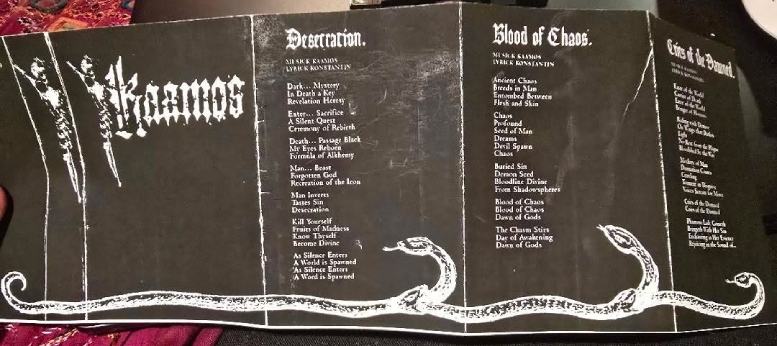
The first KAAMOS release appeared as a three-song cassette titled “Promo 1999”.
KOSTA: I didn’t want to diminish the EP by calling it a ‘vinyl version of the demo’, so we half-jokingly labelled the tape a promo. In reality, it did function that way – advance copies for ‘zines – because we couldn’t afford to send seven-inches all over the place.
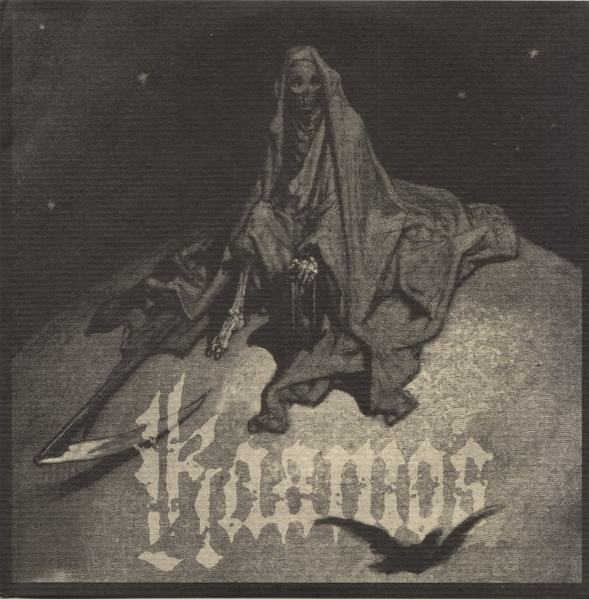
The following month, February 1999, two of the tracks surfaced on a self-titled KAAMOS seven-inch – catalogue number D/1, the inaugural Dauthus 1899 title.
TIMO: Literally the day after their studio visit, I sent the masters off to a vinyl plant in the Czech Republic. GZ Media were incredibly fast back then – the seven-inches arrived about two weeks later.
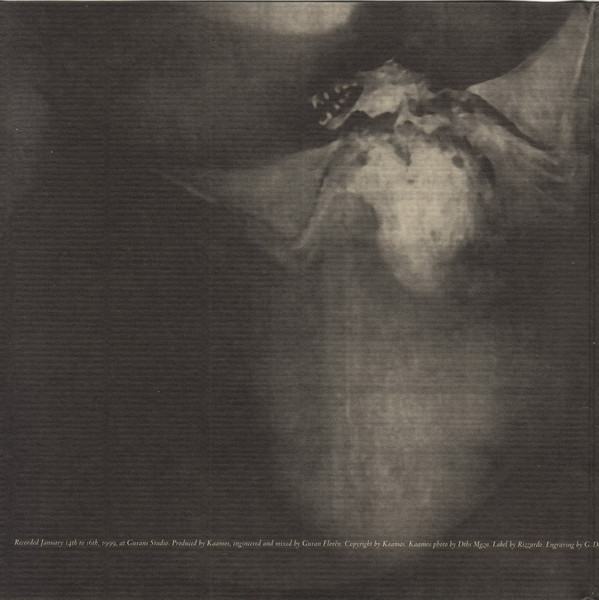
KOSTA: No idea where he had the vinyl pressed, but Haninge Tryckeri printed the sleeve. I don’t know if you’ve seen it – rather than a simple panel, it’s a full seven-inch fold-out. And, of course, Timo personally oversaw the entire printing process, choosing the paper stock and everything.
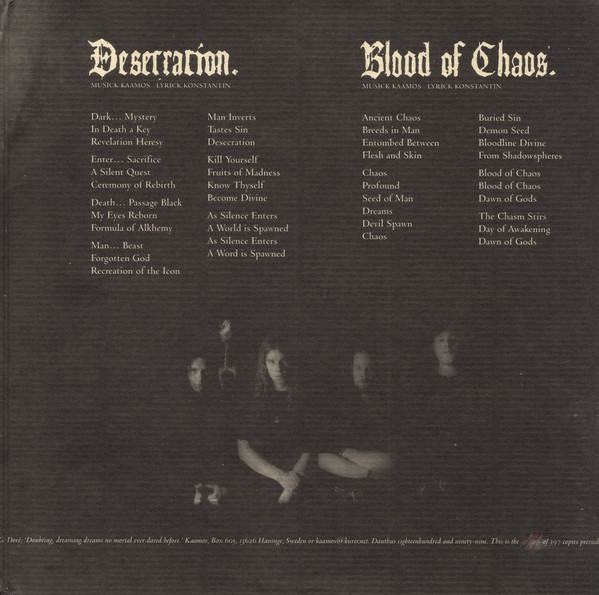
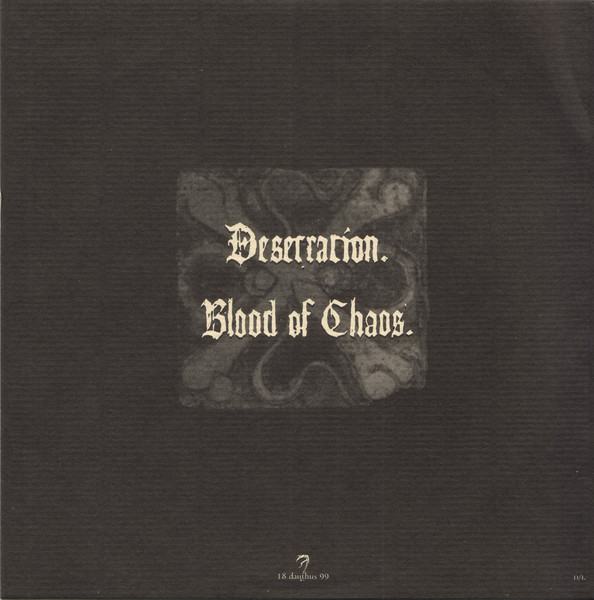
KOSTA: This was during MARDUK’s “Panzer Division…” era, and I remember Morgan Håkansson visiting Timo one evening to discuss the booklet layout. While they were working, Timo played him the KAAMOS seven-inch. Apparently, Mogge said, ‘Yeah, sounds good – but it’s ten years too late.’ Like, time had moved on.
TIMO: Although there had once been thousands of bands inspired by MORBID ANGEL, by 1999, you wouldn’t have found a single one in Sweden. We were only just beginning to recover from the terrible wave of melodic Gothenburg ‘death’ metal that swept across the country – right after the equally terrible mid ’90s wave of mediocre black metal.
By the turn of the millennium – after the rise of ‘death ‘n’ roll’, largely spearheaded by ENTOMBED, and the melodic Gothenburg wave popularised by bands like IN FLAMES – traditional death metal had become quite peripheral in Sweden’s underground scene.
Early on, the KAAMOS seven-inch drew far more attention abroad, partly thanks to Gregory Whalen’s review in Terrorizer Magazine.
KOSTA: That Terrorizer review brought in a bunch of orders – at least ten copies, which felt great. I’m not sure about Whalen, but a recurring description in the very early days was: ‘KAAMOS is death metal with a black metal attitude.’ Timo and I scoffed in disdain; ‘No! This is just real death metal.’
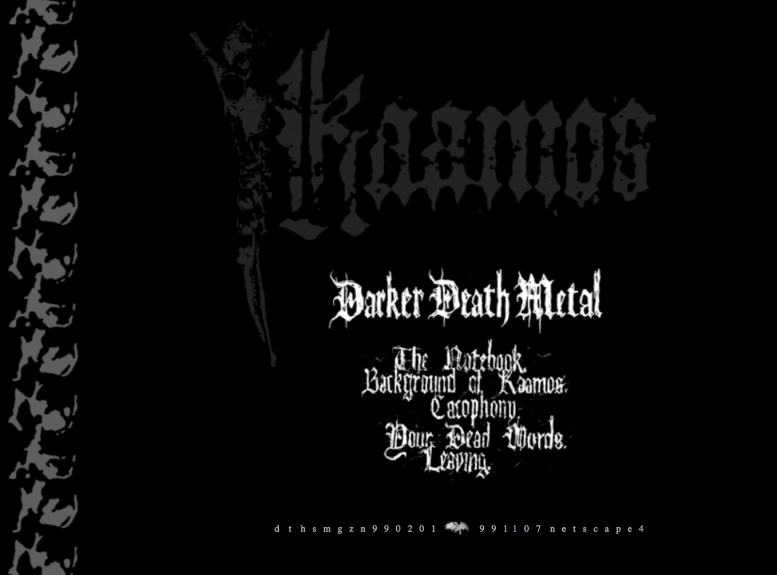
TIMO: On the first KAAMOS website, we actually wrote ‘Darker Death Metal’. Not long after, Kosta and I looked at each other and said, ‘What the fuck does that even mean? Darker than what, exactly?’ That’s when we realised extra adjectives weren’t the solution.
KOSTA: Timo and I shared an ambition to use KAAMOS as a way of showing the world what this music is really about. It almost felt like a clarion call – to reintroduce the darkness and Satanic elements to a genre that had been diluted with all sorts of silliness.
TIMO: It’s not just semantic nitpicking either. If you think about it, calling something ‘Darker Death Metal’ is paradoxical because it legitimises the existence of non-dark death metal. After that epiphany, we decided to reclaim the term by force and proudly wrote ‘DEATH METAL’.
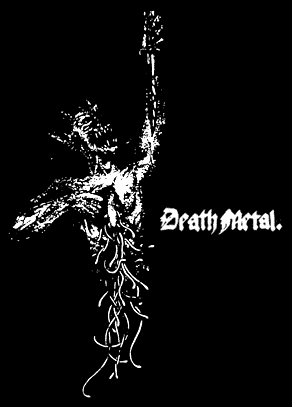
KOSTA: We had a hell of an attitude there for a while – like, ‘Step aside, we’ll show you how it’s done!’ – and probably rubbed some people the wrong way. Even in interviews, I’d say, ‘Stop calling us death metal; KAAMOS is DEATH METAL!’ We wanted to emphasise that this music is about Death, nothing else.
What is the definition of Death here?
KOSTA: Not in a literal, medieval sense – more as the catalyst that destroys in order to recreate. It’s not about bowing to Death as something to fear, but about glorifying a transformative force: regeneration, initiation, spiritual evolution. Death metal only works when both music and lyrics reflect those dimensions.
TIMO: Just like black metal, the term itself can’t be worn out. People who claim it’s been ‘overdone’ simply failed to grasp its essence. Think about all those ‘90s bands mixing this and that into their music – ‘sounds no one has heard before’. Well, I wonder why! They wanted to be original because death metal as a label felt too narrow – when in reality, they’d never truly touched it.
KOSTA: To us, that stance was simply the natural state of death metal – not something obsolete or overdone. In a way, it felt like a small revolt, born from equal parts frustration and dedication. And, to paraphrase one Caesar or another, ‘It’s only hubris if we fail.’
TIMO: Looking back now, I’d say we were on the right side of history. Things really improved after the ghastly late-’90s period. If someone had told me then that, fifteen years later, I’d be hearing something like TRIUMVIR FOUL, I would’ve choked on my budget noodles. The past is alive – death metal is as true today as it was for POSSESSED.

Surveying the timeline, I found it interesting that the birth of KAAMOS coincided with three other key developments: Timo returning to drawing, Kosta drifting towards darker music, and the two of them beginning an active magical practice through Dragon Rouge.
TYLER: I’m sure those things fed into each other, creating a kind of synergy – you know, the Lamp of the Invisible Light. It probably ignited everything Timo was looking forward to, pushing him down several different paths that eventually converged.
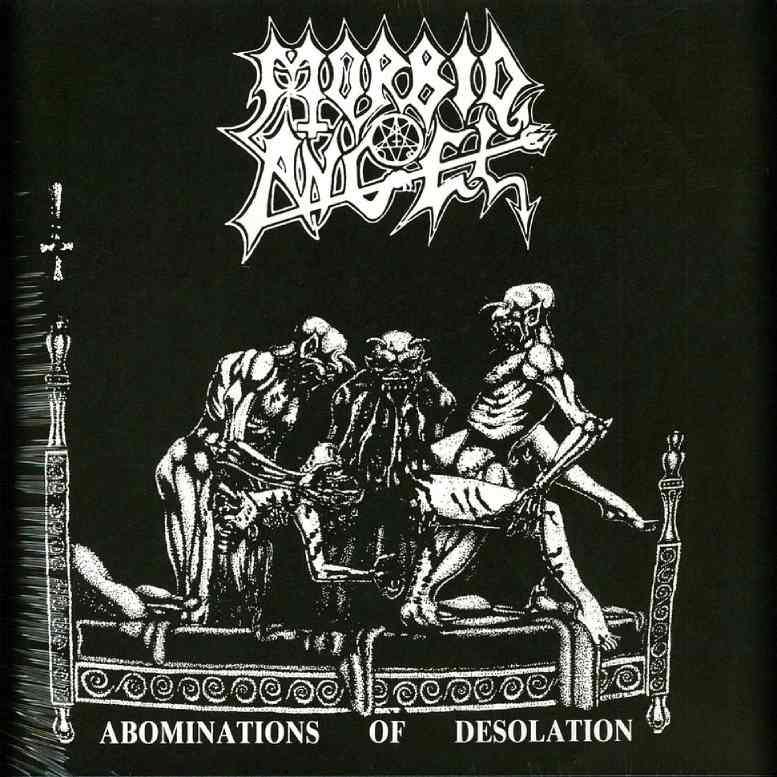
Chronologically, this also aligns with Timo’s complete reassessment of underground metal, after which he drastically reduced his music collection – selling, trading, and giving away roughly half of it. In Liber Ketola, he points to the discovery of Satanic Records’ 1991 bootleg of MORBID ANGEL’s “Abominations of Desolation” as the decisive catalyst.
KOSTA: We already had the official Earache edition of “Abominations…”, and if I remember correctly, whatever artwork Satanic Records used for their cover actually appeared somewhere inside the original release. They probably thought it would do the music better justice than just printing the logo.
log in to keep reading
The second half of this article is reserved for subscribers of the Bardo Methodology online archive. To keep reading, sign up or log in below.
Related reading