Liber Ketola VI
2026-03-24
by Niklas Göransson
At the turn of the millennium, Timo Ketola had become part of a small but increasingly influential circle centred around Shadow Records in Stockholm. Within this environment, new collaborations began to take shape – most notably with Watain.
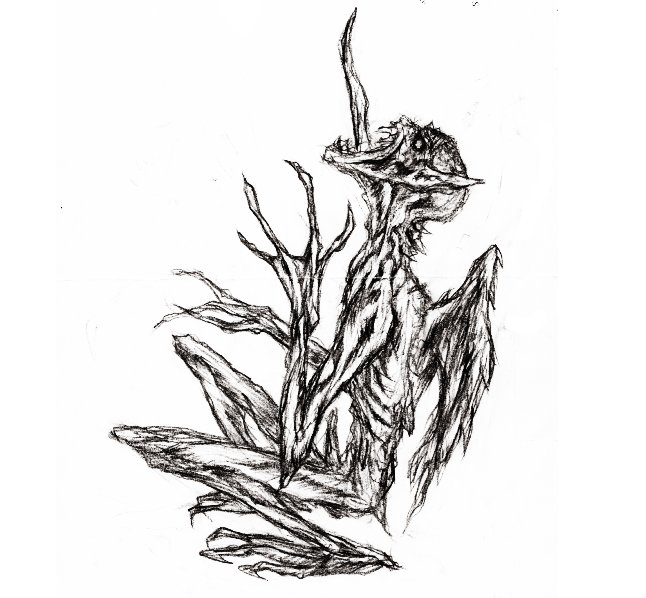
Watain - Mortem Sibi Consciscere - Artwork by Timo Ketola
TIMO KETOLA: The phrase ‘Kill your darlings’ must have crossed my mind once a month for nearly twenty years now. Good things are always worth discarding to make room for something greater. That may be the best – and almost only – lesson I took away from my unfinished studies in Tyresö.
In 2000, Timo left the media programme before graduating. Without the student grants that had sustained him, he needed a new source of income.
KOSTA PAPAVASSILOU: Do you remember his brief stint as a postman? Back then, it was all these energetic, sporty types delivering mail – and suddenly you’ve got Timo the goddamn tortoise taking sixteen hours to complete a route others covered in four or five <laughs>. Needless to say, it didn’t last long.
Timo had somewhat better luck working as a retail clerk at Shadow Records in Stockholm.
ERIK DANIELSSON: To a seventeen-year-old who’d grown up idolising the early Norwegian scene, Shadow Records felt like the closest thing you could get to Euronymous’ Helvete shop. The bands on that label – OFERMOD, FUNERAL MIST, and MALIGN – had pretty much become the centre of gravity for us at the time.
Shadow Records was founded in Linköping, Sweden, by Marcus Tena of TRIUMPHATOR. The label debuted with MARDUK’s “Here’s No Peace” EP in 1997, followed the next year by MALIGN’s “Fireborn” seven-inch and FUNERAL MIST’s “Devilry”.
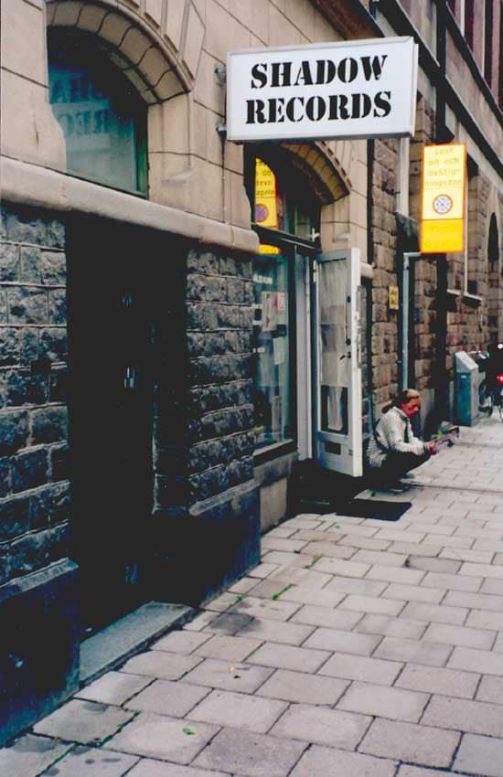
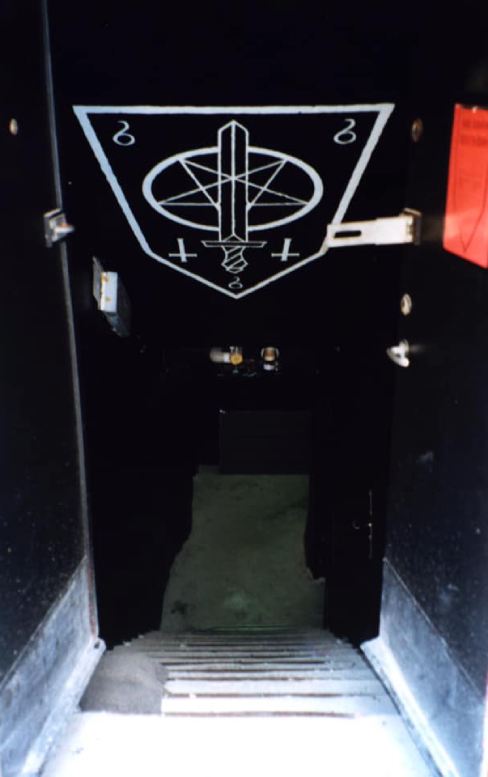
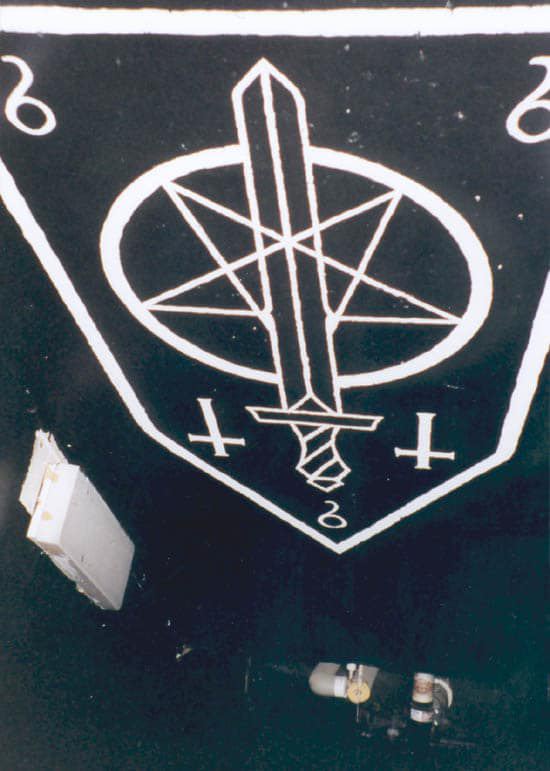
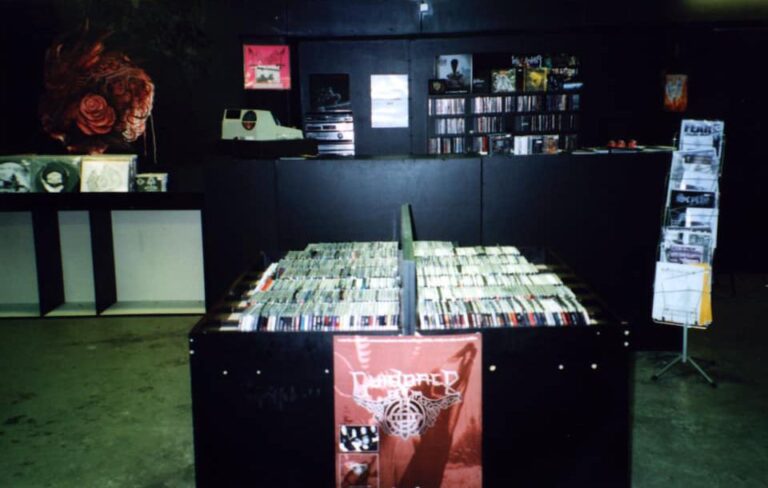
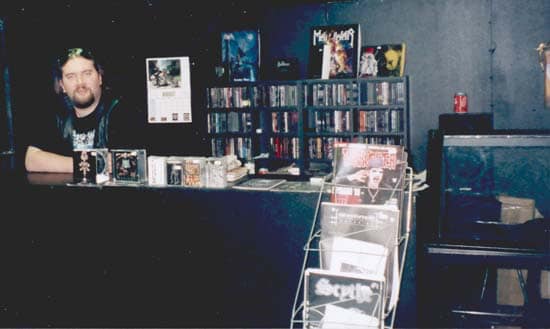
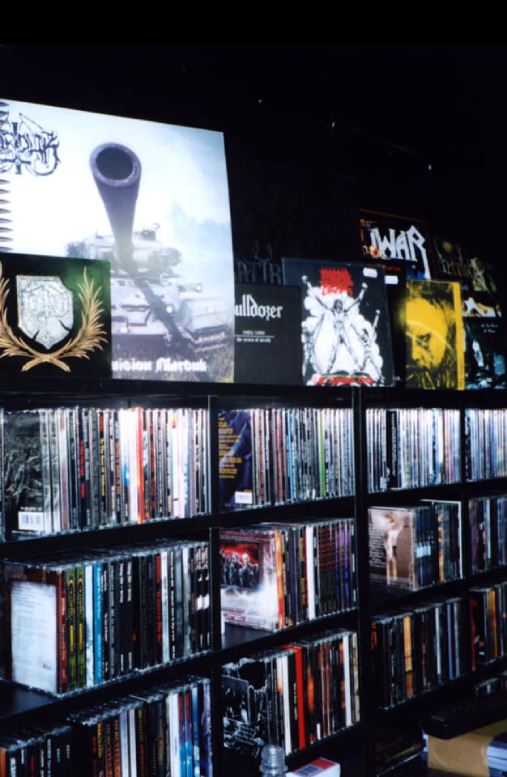
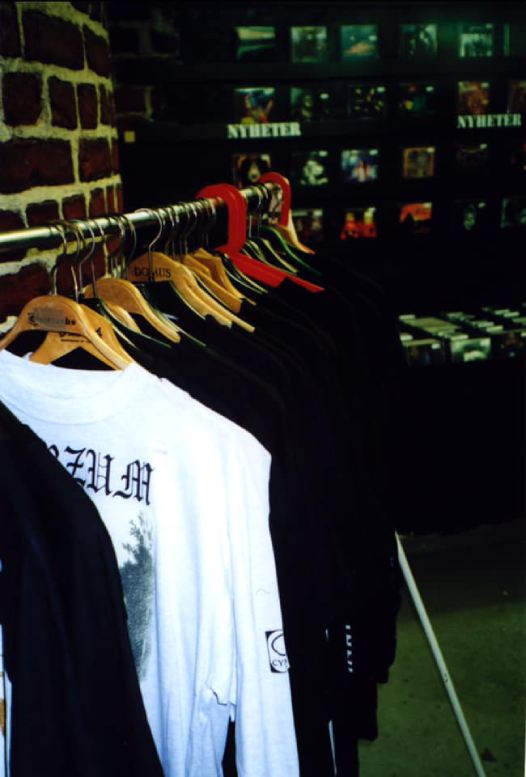
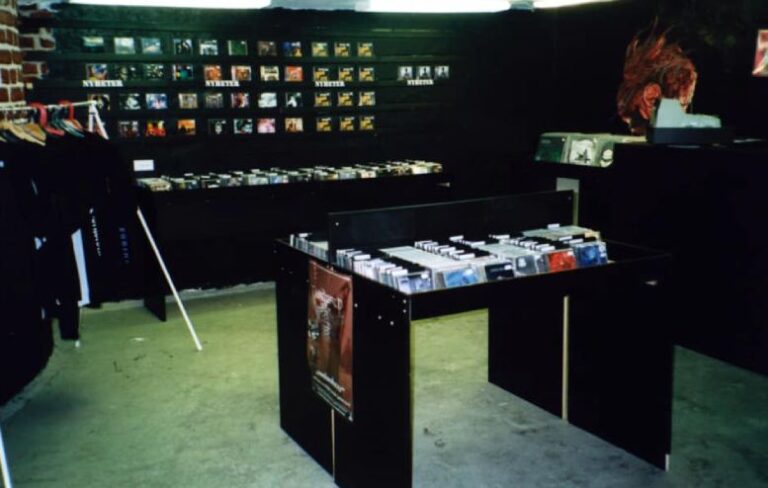
By 1999, Shadow Records had opened a Stockholm storefront and signed OFERMOD, who were preparing their debut album “Mystery of Iniquity (Luciferian Evangelium Cantata)”. Around that time, I worked nearby and would often drop in during lunch breaks to savour Tena’s famously blunt customer service – very much in line with the era’s confrontational black metal elitism.
ERIK: Oh yes, Tena really pushed it to extremes, I must say. He could be incredibly curt. You’d ask, ‘Is this record any good?’ – ‘No, it’s shit.’ ‘Right… what about that one?’ – ‘Also shit.’ ‘Okay, so what is good then?’ – ‘MARDUK. MYSTICUM.’
In the late spring of 2000, Erik Danielsson and Håkan Jonsson took the train from Uppsala to drop off copies of Hellish Massacre #2, the new issue of a fanzine they co-edited. The pair also brought an advance tape of “Rabid Death’s Curse”, the recently recorded debut album by their band, WATAIN.
After descending the stairs into the black basement that hosted Shadow Records, they found Timo behind the counter.
ERIK: I don’t recall whether I’d heard of Timo before. From memory, I was mostly just happy to meet someone approachable and… encouraging might not be the right word – but at the very least, he seemed far more communicative than Tena and showed genuine interest in what we were doing.
As it turned out, Timo had already read Hellish Massacre #1. He’d also heard WATAIN’s 1999 EP “The Essence of Black Purity” and found it impressive, which is notable in itself. Judging by Dauthus #2, Timo was growing increasingly intolerant towards black metal – especially the Swedish variety.
ERIK: I know Timo appreciated how the vocals weren’t just the traditional, slightly higher-pitched black metal style, but also had a deeper, almost grunt-like element. I clearly remember him mentioning that this added something to the music. And I think you’d agree – until the very end, Timo was always more of a death metal connoisseur.
Timo later wrote in Dauthus that Erik’s ‘dark howls’ potentiated the violent qualities of the material – particularly “On Horns Impaled” – noting it must be difficult for non-Swedes to grasp ‘how generic our black metal singers are, and how remarkable WATAIN appeared against this background’.
ERIK: He also liked the look of Hellish Massacre, which probably coloured his impression of the band. Like, ‘Alright, at least these kids have some clue.’ There weren’t many ‘zines left with that analogue feel; most had switched over to computers, whereas Håkan and I deliberately pushed the whole ‘88–‘91 fanzine aesthetic.
Referring again to Dauthus: before Erik and Håkan left Shadow Records, they mentioned that the forthcoming album differed somewhat from the seven-inch. Curiosity piqued, Timo confiscated the advance copy, which I presume was intended for Tena.
ERIK: Yes, that might actually have been the case. I can’t imagine either of us expected Shadow Records to sign WATAIN – but at the very least, I wanted Tena to know we’d recorded an album.
After that, things moved quickly. As Timo later put it in Dauthus: ‘Barely finished with the first two songs, I was already preparing an interview.’
ERIK: That felt like a big deal to us, because we hadn’t done many interviews yet. Dauthus must have been the second or third ‘zine to contact us. Seen in a wider WATAIN perspective, it was a highly eventful period, with a lot of things happening for the first time: playing live, taking proper band photos. We were starting to reach the outside world.
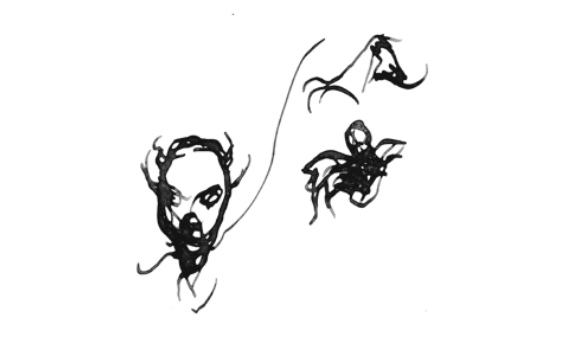
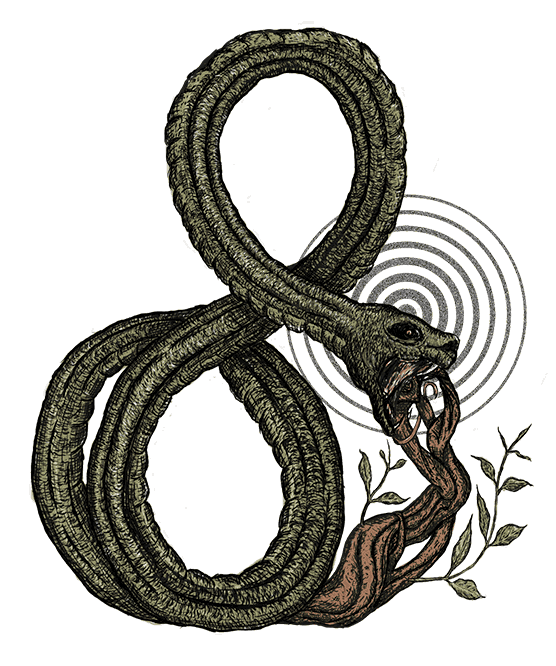
Artwork by Timo Ketola
KOSTA: Around then, Kola Krauze moved to Stockholm. Do you know who he is? Used to appear in Isten Magazine as a guest writer, I believe. If I remember correctly, Kola was living in London when he and Timo first started corresponding – and now they finally had the chance to spend time together.
Kola Krauze is a British-Polish actor with a background in death metal, having fronted DARK HERESY in the mid ‘90s. In 1997, after reading Dauthus #1, he wrote a rather combative letter to its editor, outlining in detail the many faults he’d detected. The very next day, Timo dispatched a highly sarcastic reply, addressing Krauze’s criticisms point by point. What began as a spirited debate soon developed into a friendship.
KOSTA: Kola got hired by some Swedish marketing company with big, prestigious clients. The problem was that, despite presenting himself as a design wizard, he didn’t know the first thing about Photoshop. Timo did – so he gave Kola a crash course, and eventually ended up working there, too.
I remember running into Timo on the way to work and almost fainting from shock when he mentioned employment as a web designer at an inner-city office. He’d been brought in on a project basis to design and develop a website for the Swedish department store chain Åhléns.
KOSTA: He worked there maybe half a year – performing quite well, from what I understand. Still, I think we can both agree that Timo wasn’t really cut out for the cubicle life. Not because he lacked professional skills, but the social side of an open office landscape was definitely outside his comfort zone.
TIMO: During my brief time there, working on the Åhléns website, a younger colleague hit the wall and burned out. I remember our boss basically shrugging and calling in someone else. That whole experience proved useful in one sense: it confirmed my instinct to keep a permanent distance from the world of office workers.
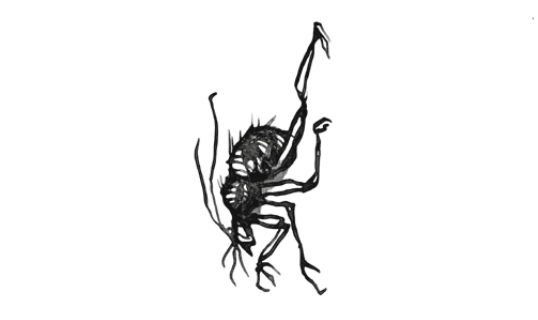
CHRISTIAN BOUCHÉ: Timo and I first started talking in connection with the vinyl edition of “Rabid Death’s Curse”, which I released through End All Life Productions. At the time, he was completely convinced of WATAIN’s merits and fully committed to turning the layout into something remarkable.
I’ll put the same question to you – given Timo’s general aversion to black metal, why do you think WATAIN caught his attention?
CHRISTIAN: I suppose you’d have to travel back to 1999 to fully grasp the incredible drive of that era – and the aura surrounding some of the newer Swedish black metal bands. Anyone with even a modicum of perception could sense the early stirrings of something different.
Today, it is difficult to convey the excitement surrounding the emerging Shadow Records bands – and the stark contrast they presented to the more prominent acts around the turn of the millennium, a period widely regarded as the weakest in black metal history. As one classic Norwegian band after another lost its way, this new generation restored the seriousness and gravity that had drawn many into the subculture in the first place.
CHRISTIAN: Timo certainly noticed. The situation was far from stale, and the traits he disliked about Swedish black metal were largely absent in these newer bands. WATAIN may have been influenced by MAYHEM and DISSECTION – but black magic cannot be faked, and they had plenty of it.
ERIK: The year before, in 1999, Håkan and I attended Wacken for the first time. It was completely overwhelming to suddenly be surrounded by so many metalheads at once – but we quickly realised most of them didn’t really have much in common with us. We weren’t interested in that whole denim-and-patches thing.
Those who’ve visited mainstream metal festivals like Wacken Open Air will have noticed the stark contrast – almost as if they were entirely different breeds of humans – between underground metalheads and the average attendee. Back then, the latter category was most often embodied by the archetypal ‘German thrash metal fan’. A decade later, at the height of the folk metal wave, the oversized denim vests covered in TANKARD patches had given way to kilts and drinking horns.
ERIK: I remember actively scanning the crowd for black metal people. At some point, we passed these two guys sitting along a walkway: one shirtless, with a huge scar across his chest, and the other wearing a big inverted cross necklace. So, I asked, ‘Hey, who are you?’ – ‘We’re from France.’
As it turned out, the scarred one was Sînn, with whom Christian shared guitar duties in HIRILORN.
CHRISTIAN: Sînn’s scar is the result of one of those classic alcohol-fuelled black metal nights. He asked Khaos – who later became our bassist – to cut him. Thing is, as opposed to other knives used that night, this one was very sharp. Unaware, Khaos went at it with excessive force, almost gutting Sînn in the process. A couple more millimetres and it’d have ruptured his abdominal wall.
ERIK: We started talking and got along really well straight away. Before parting ways, Sînn and I exchanged contact details; that spontaneous meeting basically became our gateway into the French black metal scene. They sent over some HIRILORN material, and I ended up interviewing Christian in Hellish Massacre #1.
CHRISTIAN: Erik and I shared a similar radical mindset – both in our view of the genre’s history and in what we believed should be done going forward. More specifically, we were aligned in terms of ambition rather than direction.
ERIK: After the interview, we stayed in sporadic touch. Christian told me about the new band he’d started and even sent some early recordings. If I remember correctly, that material was released as a demo called “Disciples of the Ultimate Void”.
The first DEATHSPELL OMEGA title, “Disciples of the Ultimate Void”, appeared on cassette via Drakkar Productions in July 1999. Three months later, Grim Rune released WATAIN’s “The Essence of Black Purity” EP.
CHRISTIAN: As soon as I heard the seven-inch, I got in touch with Erik and probably expressed enough enthusiasm about their work to convince him that a future collaboration between WATAIN and End All Life would make sense.
When WATAIN entered Necromorbus Studio in April 2000, were you financing the session?
CHRISTIAN: No. Given the economics of a vinyl pressing of 350 copies, you can imagine that once fifteen or twenty percent were allocated to the band, the label wasn’t making much profit. We may have covered some of the layout costs – that’s possible – but I can’t remember. It has been over a quarter of a century, after all.
At the time, End All Life operated as a vinyl-only passion project. Having already collaborated with Drakkar Productions on the 1999 WARLOGHE debut, Christian introduced Erik to the label head, Noktu.
CHRISTIAN: Noktu disliked chasing bands and preferred they come to him. I, on the other hand, was constantly keeping an eye on new acts I felt were relevant. Off the top of my head, Drakkar’s collaborations with GRAND BELIAL’S KEY and ATOMIZER came about that way. The same goes for UNPURE, I believe, although we ultimately never released anything by them on vinyl.
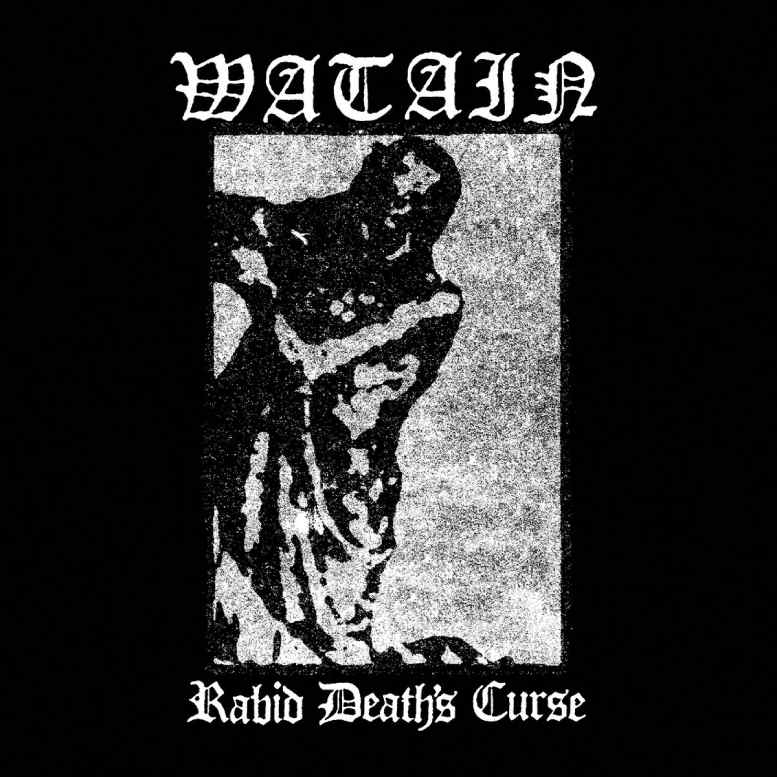

Erik was becoming increasingly interested in design, though his practical experience extended little beyond Hellish Massacre. Nevertheless, he decided to handle the CD booklet himself.
ERIK: I honestly don’t understand how the hell I pulled that off. I had no one to ask, and I’d never taken any kind of Photoshop course. Still, I wasn’t entirely satisfied and didn’t want to just reuse the CD layout for our first proper twelve-inch by simply stretching it into the LP format.
And that’s where Timo entered the picture. By the summer of 2000, after conducting an extensive WATAIN interview for the third issue of Dauthus, he’d agreed to design the vinyl edition of “Rabid Death’s Curse”.
CHRISTIAN: The email exchanges surrounding the LP layout were like discovering a new world; truly a life-changing experience. It was the first time a designer – Timo, in this case – engaged me in lengthy discussions about every tiny detail: paper stocks, typography, and so on.
ERIK: By then, after printing two issues of Hellish Massacre, Håkan and I had started paying attention to things like paper choice and how the outcome would change depending on different design approaches. But Timo definitely took everything to a whole new level, that’s for sure.
log in to keep reading
The second half of this article is reserved for subscribers of the Bardo Methodology online archive. To keep reading, sign up or log in below.
Related reading