Liber Ketola VIII
2026-04-01
by Niklas Göransson
By early 2002, Funeral Mist’s Salvation had taken shape through an extended process of refinement. Working from sketches, handwritten notes, and carefully sourced imagery, Timo Ketola gave visual form to a devotional framework.
DANIEL ROSTÉN: The real shift came somewhere between “Devilry” and “Salvation”, when I more or less stopped trying to create something and began summoning something instead. This is most apparent in the music and lyrics, of course, but since they all form part of the same whole, it carries over into the layout as well.
Following the 1998 EP “Devilry”, Daniel Rostén turned his focus to FUNERAL MIST’s debut full-length, “Salvation”. After two years of writing and rehearsing, it was recorded at Necromorbus Studio – owned and operated by the band’s drummer, Tore Stjerna – throughout 2001.
Meanwhile, an equally extensive layout process began at Timo’s apartment in Brandbergen. This was before Rostén had learned Photoshop himself, so he arrived with an assortment of analogue material to communicate his vision.
ROSTÉN: Templates, sketches, notes – you name it. I had a crystal-clear, almost autistic sense of how I wanted things; I just needed someone to help bring them to life. Only many years later did I fully realise how privileged I was that this someone happened to be Mr Ketola.
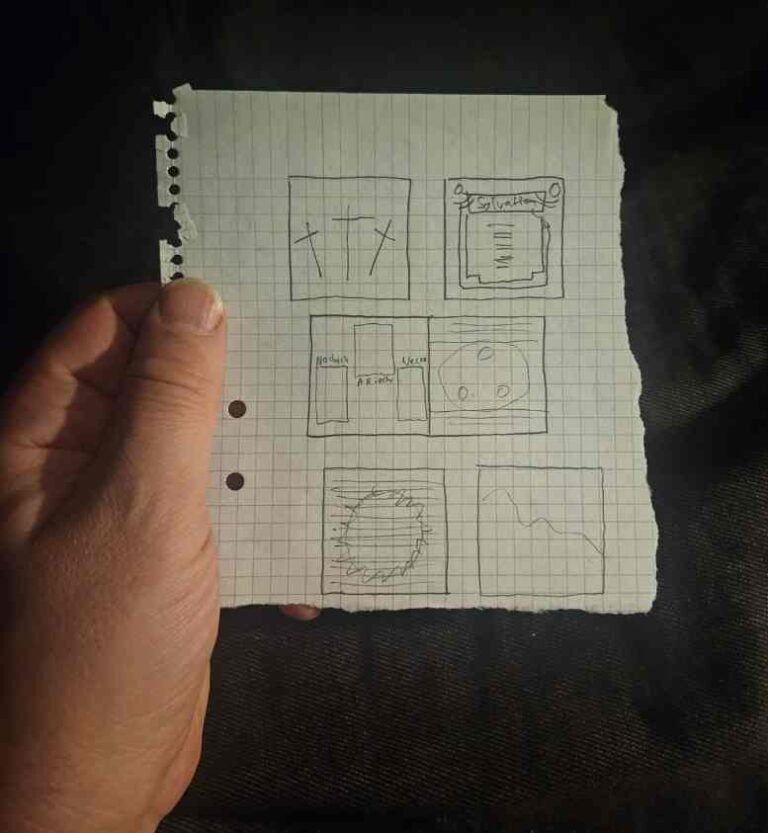
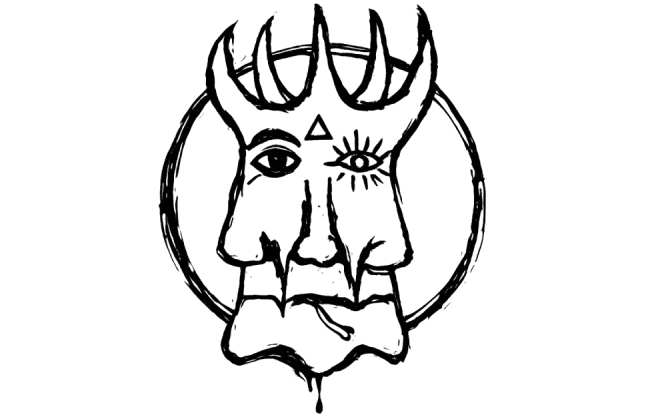
That rudimentary paper sketch you showed me – was this the actual origin of the “Salvation” layout?
ROSTÉN: Impossible to remember… it’s been tucked away for the past twenty-five years; I only found it just now. There’s no doubt what the sketch is for – but when it was made, or how it ended up being used, I couldn’t tell you.
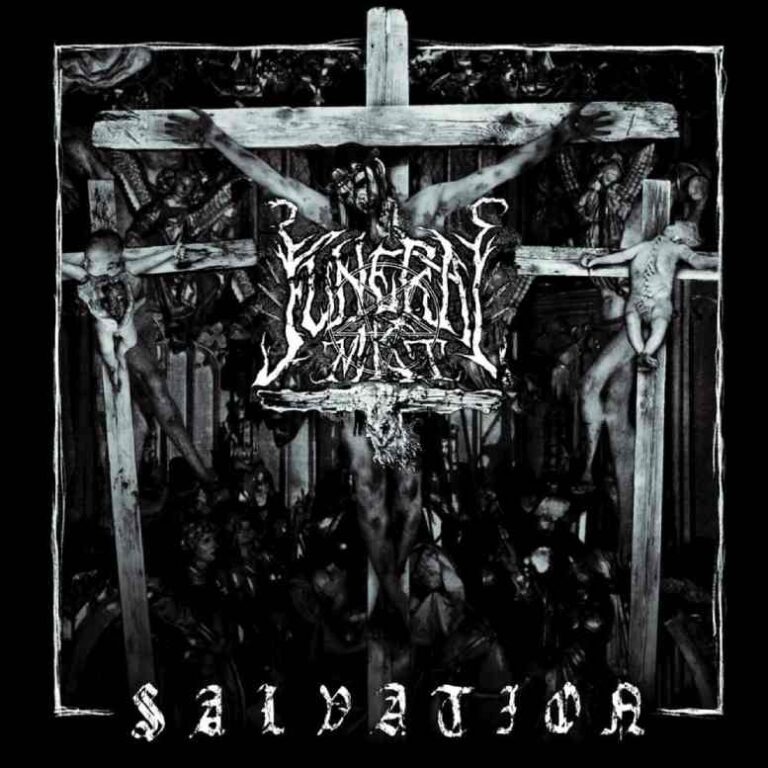
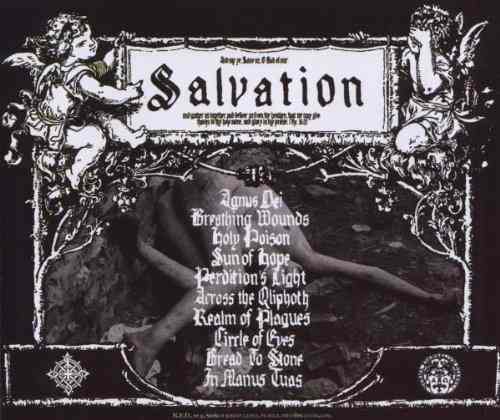
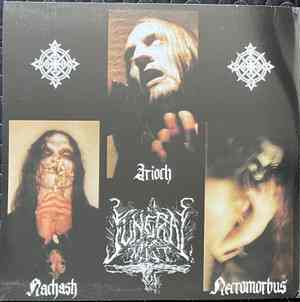
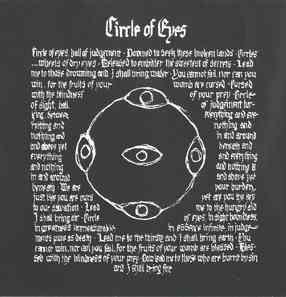
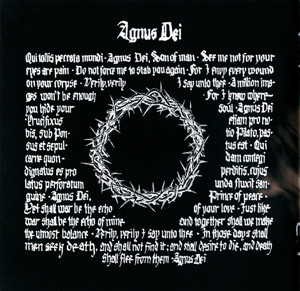
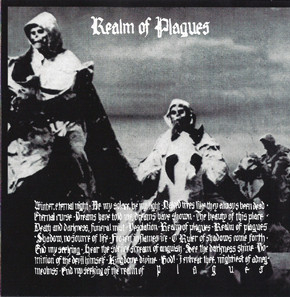
Like “Devilry”, the booklet’s front, back, and inner pages are arranged as compositions of different images – though this time with a stronger emphasis on photography. I’m assuming the pictures of deformed babies and aborted foetuses were sourced online; given Rostén’s extreme attention to detail, it seems unlikely he simply chose the first ones he came across.
ROSTÉN: It would be fair to say I spent quite a bit of time crawling the darker recesses of the internet in search of this kind of material. At least one of those foetuses, however, came from an article on Russian morgues in some adult magazine – most likely found in the woods, as one did back then.
The cartouche on the back and the crown of thorns both appear in the drawing – had you already come across these motifs, or did you seek them out with a specific idea in mind?
ROSTÉN: I’m always on the lookout for interesting paintings, drawings, woodcuts, and similar material to incorporate into my various crafts – then as now. I rarely discard anything, so my archives are… enormous. A system like that makes it difficult to say when, where, or even how a particular image was found.
The FUNERAL MIST demo J-cards had a classic underground fanzine-and-flyer aesthetic, which I assume came from Timo. But starting with “Devilry”, religious overtones and a clear memento mori sensibility begin to emerge – closer to a liturgical manuscript than a conventional album sleeve.
To reinforce this effect, Timo was tasked with writing all text by hand – titles, credits, and so on. In the FUNERAL MIST interview in Dauthus #3, he recalled how near-finished lyrics could remain on hold for months while Rostén sought the right word.
ROSTÉN: Even at a fairly early stage, the FUNERAL MIST lyrics had become a matter of supreme importance, and a great deal of time and effort went into refining them accordingly. Mainly because the very specific tone I was aiming for requires considerable amounts of patience.
By the time of “Salvation”, the lyrics had evolved – not only linguistically, but also towards a more crystallised ideological direction.
ROSTÉN: I found the lyrics of many contemporary bands to be little more than concoctions of random dramatic words, without any underlying thought or meaning. My ambition was, and still is, to rise above that. But in the end, it all comes down to two questions: what do I want to say? And how do I want to say it?
How much of what you do today with Holy Poison Design can be traced back to your Brandbergen sessions?
ROSTÉN: Besides the intellectual exchange and general inspiration, mostly the fundamentals of Photoshop and similar programs. Only a few specifics have stayed with me – mainly small tips and tricks on how to apply certain effects properly, or simple rules like never leaving half hands when cropping a picture. That’s something I still abide by.
Did you share his enthusiasm for printing techniques?
ROSTÉN: Heh, no. Every now and then, Timo tried to teach me about colour profiles, ink density, and things of that nature; naturally, bored to tears by the mere thought of it, I forgot everything instantly. Well, except one thing: the holy CMYK formula for the densest possible black in print – a creed I still bow before.
In December 2001, with most of the “Salvation” layout in place, Timo left Sweden for six months.
ERIK DANIELSSON: Timo had started collaborating with the Portuguese label and distro Hiberica. I think he’d done a few layouts, artworks, and similar things for them – then, all of a sudden, he was living down there.
KOSTA PAPAVASSILOU: Hiberica was run by a couple, Rita and Scott; Timo stayed with them so they could develop the label side together. I remember getting multiple requests to send down specific records he needed to hear – one of the first, and most important, being “Worship Him” (SAMAEL).
ERIK: Timo and I were in regular correspondence during this time. Judging by his emails, he seemed very taken with life in Portugal, writing about visits to ancient monasteries and old ruins. I imagine it did him good, because he came across as unusually elevated.
KOSTA: They didn’t quite know what to make of him at first – ‘Who is this strange creature?’ Rita told me a hilarious story about when Timo finally received the “Salvation” advance, and how ceremoniously he listened to it. Given the long delay between recording and the final mix, getting that tape was a big deal.
“Salvation” was mixed and mastered in late 2001, around the time Timo left Sweden. Upon its completion, Rostén sent a copy to Portugal.
KOSTA: If I remember her account correctly, Timo suddenly announced, ‘Attention, this is a hallowed moment. We shall now listen to “Salvation”.’ Then he started turning the living room into a sacred space… dimming the lights, lighting candles – as if he was in charge, in their home – making everyone sit down like they were about to attend a sermon.
ROSTÉN: Not exactly a side of Timo I recognise – but knowing him, I can’t say I’m surprised either. If only more people would take my work this seriously.
KOSTA: Once he pressed play, no one was allowed to utter a word. After the closing song, he ejected the tape, carefully put it away, and left the room in solemn silence; only then were they permitted to turn the lights back on. When Rita told me, I just thought: ‘Yep. That’s Timo for you.’

Three months into his Portuguese exile, in March 2002, Timo conducted a follow-up interview with Erik Danielsson for Dauthus #3 – this time to discuss WATAIN’s upcoming split release alongside MALIGN.
ERIK: MALIGN were supposed to contribute a live recording from ‘96 on their side, plus a new song, whereas WATAIN… well, we had a few different ideas floating around. Timo made an incredible cover for that split – one of his masterpieces. It really pushed us to finish everything on our end.
Not long after, a third interview addendum followed, announcing that the MALIGN split had been postponed.
ERIK: We met up with MALIGN in our rehearsal space. That same evening, we wrote two new songs and recorded them on a porta studio. As I recall, both turned out really good – lyrics and everything. But during the night, before Tengner (MALIGN) tracked his vocals, something happened and all the files disappeared.
The split remains unreleased – as does Timo’s cover artwork.
ERIK: After that debacle, the whole project more or less collapsed. We talked about using other material instead, and the idea has resurfaced many times over the years. We’ve tried to revive it repeatedly; maybe the split will finally happen someday.
The interview addition also mentions a new WATAIN track, “All That Is Holy, Holy Shall Be” – later retitled “Opus Dei (The Morbid Angel)”. The original title clearly struck a nerve with Timo, who thought he detected an OFERMOD influence.
Around this time, he had just torpedoed Belfagor with four full pages of critical questions about orthodox religious black metal – without receiving a reply – so some of that ire may have been redirected toward Erik. In his lengthy tirade, Timo references no fewer than thirty-six biblical quotations.
ERIK: I really appreciated Timo’s confrontational interview style and drew a lot of inspiration from it for Hellish Massacre #4 – with the added twist that I’d only feature bands I thought were shit. I wanted to underline how most of them don’t know what they’re talking about, have no real opinions, and barely even try.
How far did you get?
ERIK: I think there are maybe four or five interviews like that already finished. Håkan and I were well on our way to putting the issue together, but… I suppose WATAIN simply took over.
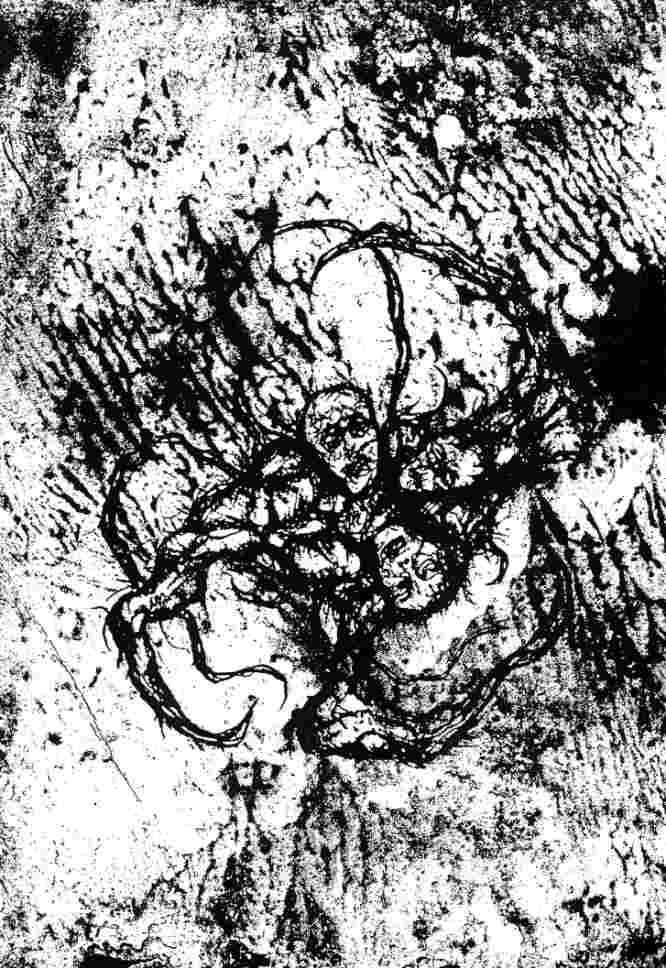
TIMO KETOLA: Two or three years after the second Dauthus came out, people started thinking I’d buried the ‘zine. I never bothered correcting them; it gave me some peace of mind as I finished up the inevitable third and duly final chapter.
CHRISTIAN BOUCHÉ: Although a highly impractical notion, I feel every extreme metal aficionado should encounter Dauthus #3 at some point, if only to gain a sense of what rabid possession can yield. There have been other very fine fanzines, of course, but Dauthus is simply so over the top.
Timo began work on his conclusion to the Dauthus trilogy in spring 1998. By the time he relocated to Portugal, four years of gruelling effort – the very epitome of obsession and perfectionism – were drawing to a close.
TIMO: My third issue was certainly the most obsessive – but perfectionistic? Maybe in its flawedness: article headings written in a drunken stupor, reviews published in draft form… it could even come across as kitsch, for all I know. Nevertheless, #3 feels less artificial and orderly than the first two – yet just as genuine as its teenage counterpart, Script Infernal.
CHRISTIAN: While expressing a certain distance from issues #1 and #2, Timo regarded #3 as an accomplishment – something he’d gotten right somehow. He would probably have disapproved of grandiose terms like ‘total art’, but that’s the closest I can come to the truth: the whole is simply breathtaking, realised in full accordance with his nature and vision.
TIMO: I’d only done the SKEPTICISM interview for #3 when something clicked. I picked up Script Infernal and saw bands like IMMOLATION, IMPALED NAZARENE, and MY DYING BRIDE. Then I compared it with Dauthus #1 and #2 – CERNUNNOS WOODS, CRUACHAN, NIGHT CONQUERS DAY, CENTINEX… most of them I don’t even remember anymore.
In retrospect, Timo acknowledged that most features in the first two Dauthus issues stemmed from existing pen-pal contacts, as opposed to any clear editorial direction. After #2, however, he undertook a fundamental re-evaluation of his relationship with underground metal. What began as a vague dissatisfaction crystallised into a personal axiom: ‘the only thing worse than bad music is mediocre music’.
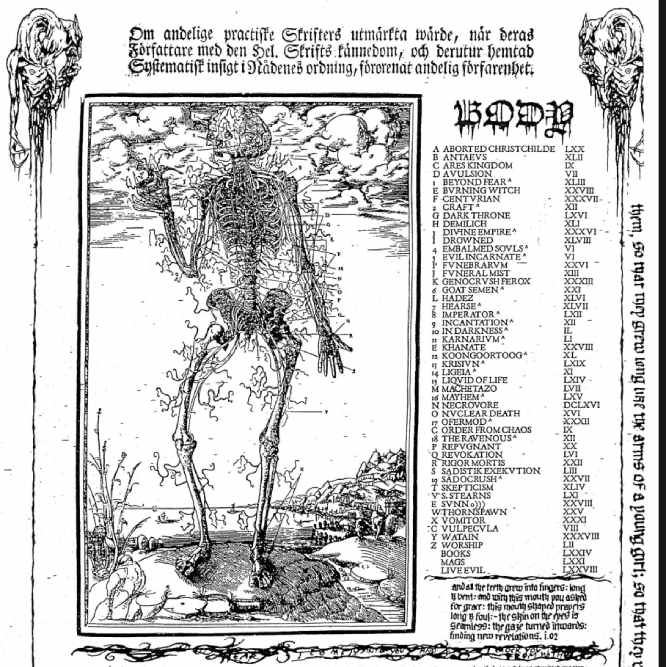
TIMO: From that point on, I went back to listening to black and death metal the way I did in the early ‘90s. Although I can’t say ABORTED CHRIST CHILDE gets many spins these days, I’ve probably listened to most of the bands featured in Dauthus #3 over the past few weeks. Not literally, of course – but looking at the line-up now, twenty years on, it still feels very solid.

Timo’s Scottish friend and collaborator Gregory Whalen contributed a DARKTHRONE interview. However, there is no trace of the ‘death metal dinosaur’ roundtable – featuring L-G Petrov of ENTOMBED and MORBID, Jörgen Sandström of GRAVE, and Peter Stjärnvind and Erik Wallin of MERCILESS – held during Whalen’s visit to Stockholm in ‘98.
TIMO: Sadly, I never managed to finish transcribing the recording. I made a valiant attempt but didn’t get very far; it simply became too overwhelming. With any luck, voice-recognition software will develop to the point where a single click is enough to tell who said what.
Today, automated tools can indeed manage this. Transcribing from a Dictaphone tape, on the other hand – where you have to stop and rewind every few seconds – is nightmarish, especially with several people talking over one another.
TIMO: I also interviewed Vince Cervera, then second guitarist of SADISTIC INTENT, but never had the stamina to hammer that one down either. However, what is probably the best feature in #3 came from a long phone call with Chuck Keller, which I somehow managed to slave my way through.
ERIK: Chuck Keller and Timo had a lot in common, I’d say. Chuck worships bands like SLAYER, POSSESSED, and BATHORY, but he’s also well-read and intellectual – very knowledgeable about history and astronomy. So, they shared that kind of foundation as well.
At the time of the interview, Chuck Keller was active with VULPECULA and ARES KINGDOM. However, he is primarily known for Kansas death metal power trio ORDER FROM CHAOS, one of Timo’s favourite bands.
KOSTA: You know how, while growing up, there’s often a band you’re completely enamoured with? In my case, this band was ORDER FROM CHAOS. Timo loved them as well – but maybe NUCLEAR DEATH filled that same role for him.
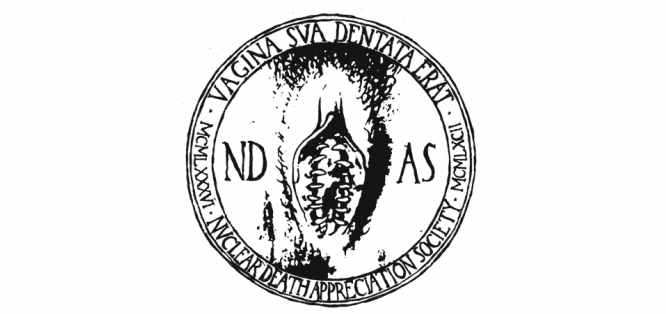
ERIK: I still have the tapes of the entire NUCLEAR DEATH discography Timo dubbed for me. Around that time, he was also in the process of starting a ‘Nuclear Death Appreciation Society’: Vagina Dentata. Whenever we spoke about the band, he kept returning to the lyrics – how they were on a completely different level within the genre.
The NUCLEAR DEATH lyrics were written by guitarist Phil Hampson, who also created the artwork.
KOSTA: NUCLEAR DEATH became a point of total fascination. Timo tried repeatedly to get me into them, constantly going on about how great they were. As for their appeal… I think it was the whole package: the aesthetics, the lyrics, the music – all of it quite lo-fi.
ERIK: This goes back to what we talked about earlier with my KAAMOS review – that somewhat unusual ability to form a complete whole where everything is driven to extremes. Not just the music, which is pretty over the top, but especially Lori Bravo’s vocals pushing the sound even further off balance.
KOSTA: I think he was as captivated by the musicians as by the music. After his Lori Bravo interview, I remember Timo talking a lot about her. And somewhere along the line, it clicked for him: ‘Shit – this demented music is simply an extension of their personalities, not a separate thing.’
ERIK: Fascinating band. The lyrics are ten out of ten, the artwork is perfect – yet there wasn’t a team behind them holding meetings about how to develop these ideas. It’s just a spontaneous outburst of underground creativity. Another good example of that, where everything reaches such an unexpectedly high level, is SADISTIK EXEKUTION.
CHRISTIAN: Timo spoke about NUCLEAR DEATH in almost mystical terms. For my part, I appreciate that sound far more today than I did in the 1990s. While this may not be an entirely accurate or particularly subtle categorisation, I tended to place them in the BEHERIT and BLASPHEMY lineage. I liked both bands – especially “Drawing Down the Moon” – but neither struck me as possessing the same evolutionary potential as other strains of black metal.
What made you change your mind?
CHRISTIAN: A few years later, a discussion with Nasko (TEITANBLOOD) about the future of black and death metal led me to reconsider and approach those bands from a different angle. At the time, I was mostly immersed in composers like Penderecki, but Nasko cut through what could be described as a certain indifference. As for NUCLEAR DEATH, I owned the early releases and found “Bride of Insect” fascinating. They were also held in high esteem within the ANTAEUS circle.
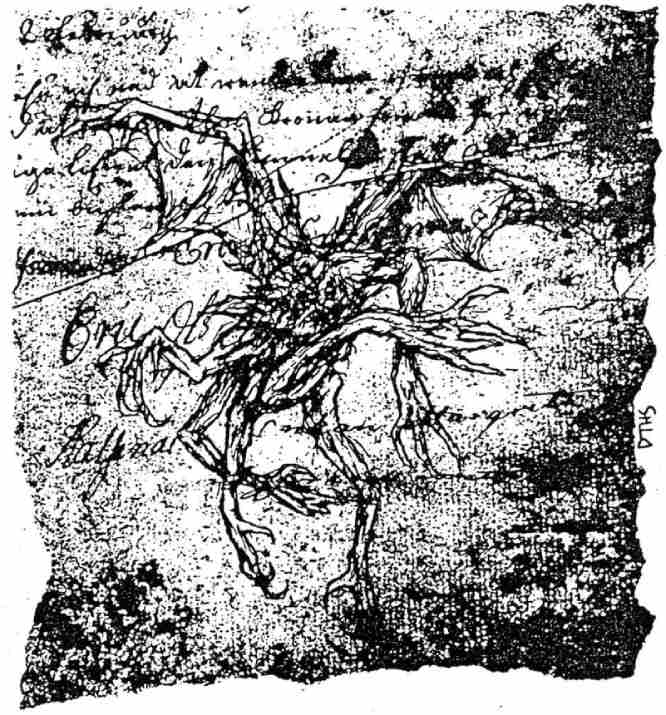
ANTAEUS, alongside FUNERAL MIST and WATAIN, are among the few contemporary black metal bands featured in Dauthus #3. They were also a rare exception to Timo’s general disinterest in the genre.
TYLER DAVIS: The one thing about ANTAEUS I can really pin down for Timo is the violence – the blood, the infernal insanity of it – tying directly into that grindcore-adjacent sound from my youth. I went through a punk and hardcore phase in the late ‘80s: bands like NAPALM DEATH, TERRORIZER, and EXTREME NOISE TERROR. By the time Timo’s generation rediscovered it, I basically had zero interest left.
log in to keep reading
The second half of this article is reserved for subscribers of the Bardo Methodology online archive. To keep reading, sign up or log in below.
Related reading