Necropolis Records VIII
2025-11-11
by Niklas Göransson
In 1998, Dawn’s Slaughtersun rose as Necropolis’ crown jewel – luminous, disciplined, and majestic. But for every blaze of brilliance came a shadow, as the label found itself caught between vision and decay.

PAUL TYPHON: I always had a clear aesthetic vision for Necropolis, but what frustrated me the most was the logo. Our first came from my old friend Denis Cullen at Atmosfear, then we used Stephen O’Malley’s design – the one with the explosion – until I settled on Jose’s logo.
1998 was a year of expansion for Necropolis, with more staff brought in to match the label’s growth. Still operating out of M.C. Hammer’s old rehearsal studio in Fremont, California, Paul hired a designer named Jose Montemayor.
PAUL: You’d look at him – Filipino, short hair, glasses, total ‘90s nerd vibe – and think, ‘What’s this guy doing working at a black metal label?’ But Jose loved it; he completely immersed himself and soon became essential to the operation.
Before recruiting an in-house designer, Paul would receive the bands’ artwork and photos by mail – then it was on him to figure out how to assemble everything.
PAUL: For the DAWN EP, I drove to San Francisco – about forty minutes – to meet a woman who could help piece together the layout from various images they sent me on floppy disks. Remember those things? The amount of time those processes took… unbelievable.
What would a typical day look like in 1998?
PAUL: For all of the late ‘90s, I was very hands-on with the label. I’d usually be up early, around seven, and head to the warehouse. My employees would show up, and we’d start our morning routine of filling orders and wholesale shipments. Then I had endless piles of faxes and mail to go through.
When I started my first corporate job, everything was already online and computer-based. Having never experienced office work before the era of email, it’s difficult to imagine.
PAUL: Yeah, most communication was by fax, letters, or phone. After checking the written correspondence, I’d start calling Sweden or Norway – whoever I needed to speak with – then move on to various legal or logistical matters requiring my attention. It just rolled from there until the evening.
For the label’s first five years, Paul was working on a marketing degree while running Necropolis by day.
PAUL: At night, I shifted gears into student mode. I’d be thinking about which classes I had, what my grades looked like, and whether I’d done the homework. If I fell behind, I’d end up dropping the course for that quarter – they ran on three-month cycles – and retake it later. I did that until I’d racked up enough points to graduate.

PAUL: The underground metal scene in Sweden really seemed to thrive at that point; suddenly, there were several solid studios to choose from. Andy LaRocque had Los Angered, and Studio Fredman was already well known. I think Dan Swanö still ran Unisound?
No, Unisound wound down the year before – mainly due to competition from the studios you mentioned.
PAUL: Oh, okay. Anyway, Peter Tägtgren’s approach stood out – he had the ear for it, and his Abyss productions didn’t carry that uniform ‘studio stamp’. What set him apart was how each band could record there and still retain its own identity.
In the early days, Abyss produced several great-sounding records – like ARCKANUM’s “Fran marder” and SORHIN’s “Apokalypsens ängel” – but I’d say that uniformity set in fairly soon.
PAUL: Perhaps. But since Peter was still establishing Abyss back then, he took his time and crafted things carefully. You’d hear stories of producers leaving bands alone in the studio – everything already patched through the same generic soundboard everybody else used. No wonder so many records ended up sounding identical.
Following the success of DAWN’s 1996 mini-CD, “Sorgh på svarte vingar fløgh”, recorded at Abyss, Paul had high hopes for what lay in store. Since both band and label were pleased with Tägtgren’s work on the EP, they decided to leave the second album in his hands.
PAUL: Peter said, ‘Trust me, I’m going to get everything they’re capable of out of them.’ He certainly had his work cut out for him, since DAWN ended up needing the studio longer than expected. I remember Andreas, the second guitarist, calling me, saying he was depressed and missed his family.
Once it was done, were you satisfied?
PAUL: Absolutely. The production had that beautiful, echoing quality you’d normally associate with Grieghallen. Peter was clearly coming into his own as a producer because the intensity on those drums is unbelievable; hence why I always say it sounds so much more epic.
Dan Swanö explained how Tägtgren’s ‘innovative way of triggering drums’ produced a consistently punchy, studio-grade sound even when the drummer lacked power or precision. By combining triggers with layered samples, selective replacement, and aggressive editing, he ensured the drums hit hard, cut through the mix, and maintained impact and clarity.
PAUL: The drum performance itself is staggering: Jocke just smashing the snare, filling every break with these massive rolls, eight minutes straight without a single punch-in. Once again, I went overboard on the packaging – especially the limited-edition black digipak.
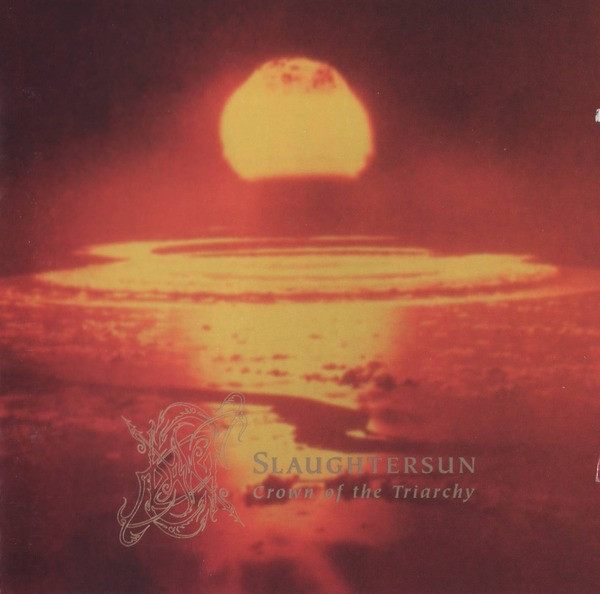
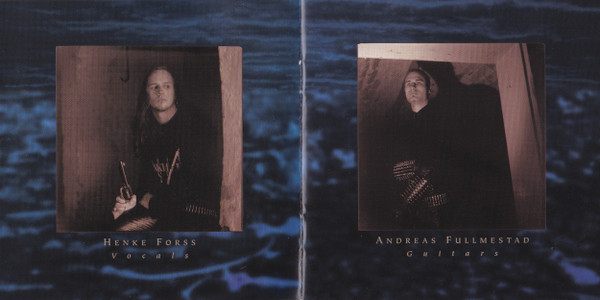


Necropolis Records released DAWN’s second full-length, “Slaughtersun (Crown of the Triarchy)”, in May 1998, one year after its recording.
PAUL: It sold reasonably well, partly because of how hard I’d pushed DAWN and built up their name. No one else would’ve paid for the gloss treatment on the mini-CD or invested in the kind of promotion we gave “Slaughtersun…” – but I genuinely believed in them.
So did the contemporary metal press. “Slaughtersun (Crown of the Triarchy)” landed on numerous year-end lists, and Terrorizer called it ‘one of the most important albums of the decade.’
PAUL: In my opinion, it’s one of the greatest records ever released. I saw “Slaughtersun…” as the label’s crown jewel – everything I wanted it to be, truly a defining moment. Then again, there was always the Necropolis curse: bands who didn’t tour.
It’s rather impressive how DAWN managed to gain such renown without touring or even performing live much. I only remember them playing Stockholm once, around ‘96. Besides the rarity of the occasion, it was equally memorable thanks to vocalist Henke Forss. Having found the crowd support lacking, he attempted to stage-dive.
I’m not sure about Linköping, but stage-diving at black metal gigs was never a thing in the capital – a fact made obvious to Henke mid-leap, as everyone stepped aside. Before hitting the floor, he instinctively grabbed someone’s T-shirt, tearing it in the process. Post-show, the owner of said garment complained and had to be compensated with DAWN merch.
PAUL: I mean, here’s a band where every member is a formidable musician, yet they barely played live. I was even talking to Metallysee, the Belgian booking agency, about setting up a tour with DAWN, NIFELHEIM, and a few others. I got everyone to agree – despite their reluctance to share bills – but it eventually fell apart.
Do you know why?
PAUL: No, I don’t recall. Henke and Fredrik Söderberg – the guitarist and main songwriter – were always keen to play, but getting the rest on board proved tough. Andreas, in particular… phenomenal musician, but never one for the spotlight.
To promote “Slaughtersun…”, DAWN were billed for the 1998 edition of Milwaukee Metalfest, which was meant to be followed by a US tour – neither of which happened.
Leading up to the cancellation, DAWN’s session drummer, Fredrik Helgesson – only seventeen at the time – had been bragging to his friends about the upcoming American tour. When it fell through, he couldn’t quite bring himself to tell anyone back home, opting instead to go into hiding for two weeks.
PAUL: All this made things incredibly difficult. Such a shame – Henke used to cover himself in blood and looked every bit the part, and his vocals alone were incredible. Fredrik’s guitar work was also striking. As a touring band, DAWN could’ve been ten times bigger; they had so many chances.
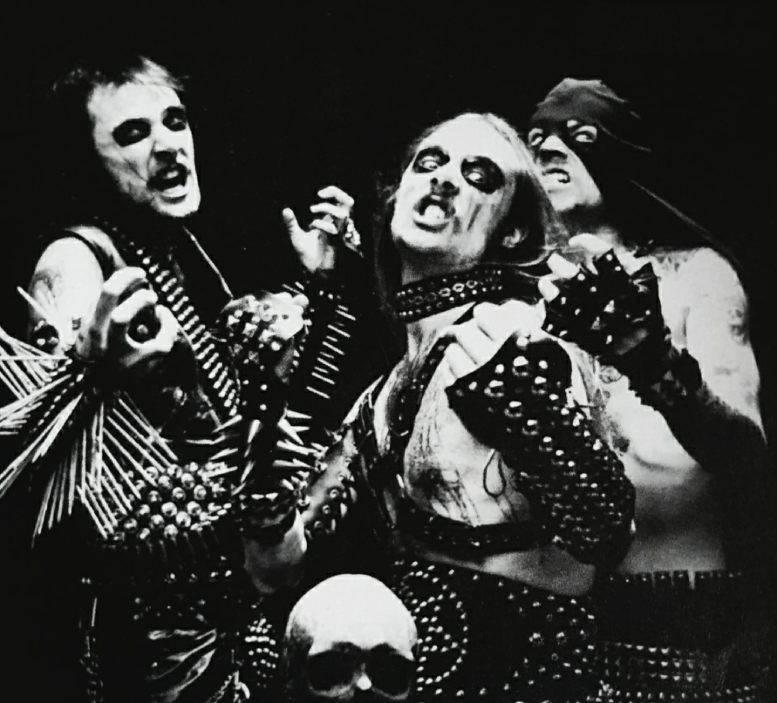
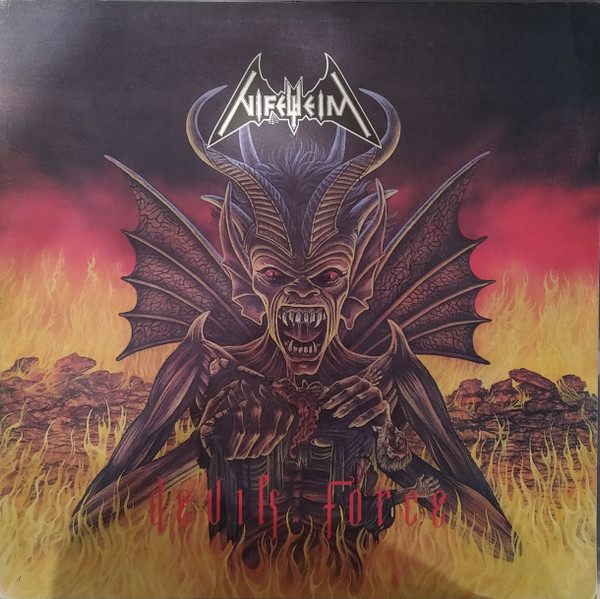
Three years after their self-titled debut, NIFELHEIM returned with “Devil’s Force”.
PAUL: By then, the Bröderna Hårdrock segment had aired on Swedish TV. Those two embodied everything people love about metal: standing under the blazing sun, decked out in spikes and leather. No one cared that they were bald. I mean, who doesn’t appreciate such passion?
The segment in question – broadcast on Swedish state television in 1998 – cemented the NIFELHEIM twins’ unlikely celebrity status. Framed around their obsessive devotion to IRON MAIDEN, the programme portrayed them as Bröderna Hårdrock, the ‘hard rock brothers’: living for metal in a way the general public found both amusing and oddly endearing.
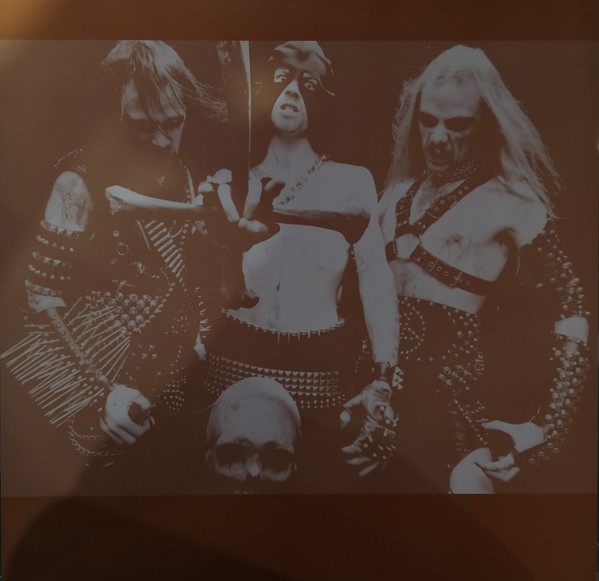
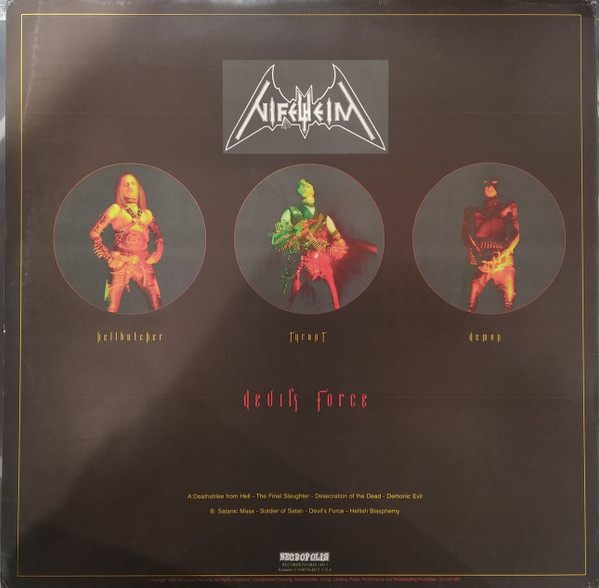
PAUL: Hellbutcher and Tyrant sent me these incredible promo photos, which convinced me the new NIFELHEIM album would be solid. I mean, the debut was flawless all the way through – inspired performances, outstanding solos. For me, that album is their “Kill ‘Em All”; they nailed everything.
Did you have any input on the choice of studio, like with DAWN?
PAUL: No. Fredman didn’t want them recording there again, so they opted for a smaller, local studio. And production-wise, it sounded fucking awful. I don’t know where the twins were mentally – I was honestly devastated. “Devil’s Force” just wasn’t executed properly.
NIFELHEIM’s second album was recorded at Maestro Musik in Gothenburg, with Onkel Andersson – better known as Bajsmannen, ‘The Shit Man’ – credited for production and mixing. The record also featured guitar appearances by Jon Nödtveidt and John Zwetsloot of DISSECTION.
PAUL: I think the band found their debut too polished – and in that sense, I could see where they were coming from. The real issue, though, was that I sent them the studio money; then I started hearing rumours about half the recording budget being blown on IRON MAIDEN rarities.
Once you released “Devil’s Force”, how was it received?
PAUL: Terribly, in terms of both sales and reviews. NIFELHEIM really shot themselves in the foot with the second record; nobody remembers that one. Plus, the guys lacked confidence in their abilities and refused to hit the road and promote it.
“Devil’s Force” spelt the end of Necropolis and NIFELHEIM’s collaboration – an unamiable split, marred by accusations of promotional neglect.
PAUL: We made tonnes of posters, pressed “Devil’s Force” on LP, and gave them the exact raw presentation they asked for. Nevertheless, once you cross me, it’s over. When I learn through the grapevine that my studio funds went into heavy metal collectables, and the record sounds like shit… ‘Come on – are you taking the piss?’
Over the years that followed, there were also complaints about alleged inconsistencies in royalty payouts and sales figures.
PAUL: A lot of this gets distorted in hindsight. Bands often remember things differently, but I stand by what we did, and I can prove it; I’ve kept every contract, every document, every sales report. Do you want to read them? I’ll even send you photos of the clauses and signatures.
No thanks – I doubt anyone besides those directly involved would find this especially compelling.
PAUL: As you’ve probably gathered, my mind is wired for details. Every deal was signed, each clause agreed to. I’m not even sure what they expected to make from a few thousand records sold. But that’s on me, right? I decided to work with these kinds of bands.
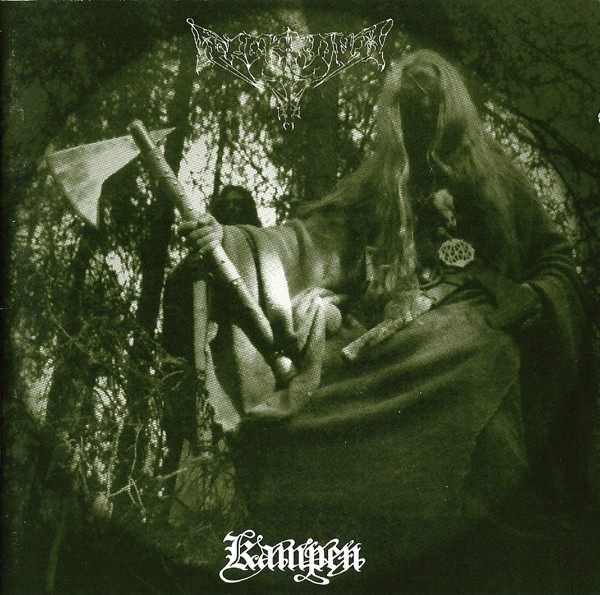

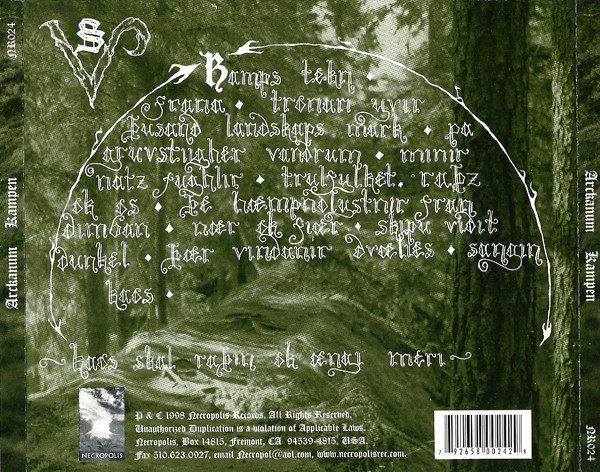

As in 1995, ARCKANUM followed close on NIFELHEIM’s heels. If memory serves, “Kampen” was received less enthusiastically than its two predecessors – largely due to the poor production, despite being recorded at the same studio as “Kostogher”.
PAUL: ARCKANUM has always mattered – to me personally and to the label – and I wanted Shamaatae to carve out his own path. “Kampen” is a great record, no question, but the whole necro production just wasn’t true to the audience. It felt like he took this killer material and degraded it on purpose. That one didn’t sell much either.
By this point, judging from contemporary ARCKANUM interviews, Paul’s relationship with Shamaatae had grown strained.
PAUL: Maybe I should have seen that coming, but I didn’t. Perhaps it could’ve been avoided with more communication. In the early days, I’d spend hours talking to our bands; my phone bills were like three grand a month. There was simply no time. Besides school and the label, I also helped my parents when their restaurants got busy.
log in to keep reading
The second half of this article is reserved for subscribers of the Bardo Methodology online archive. To keep reading, sign up or log in below.
Related reading