Necropolis Records XIV
2025-12-03
by Niklas Göransson
With Incantation joining the roster, Necropolis entered 2001 on a crest of momentum. But as Paul sought a rare moment of peace and clarity, the machinery he alone held together unravelled in his absence.
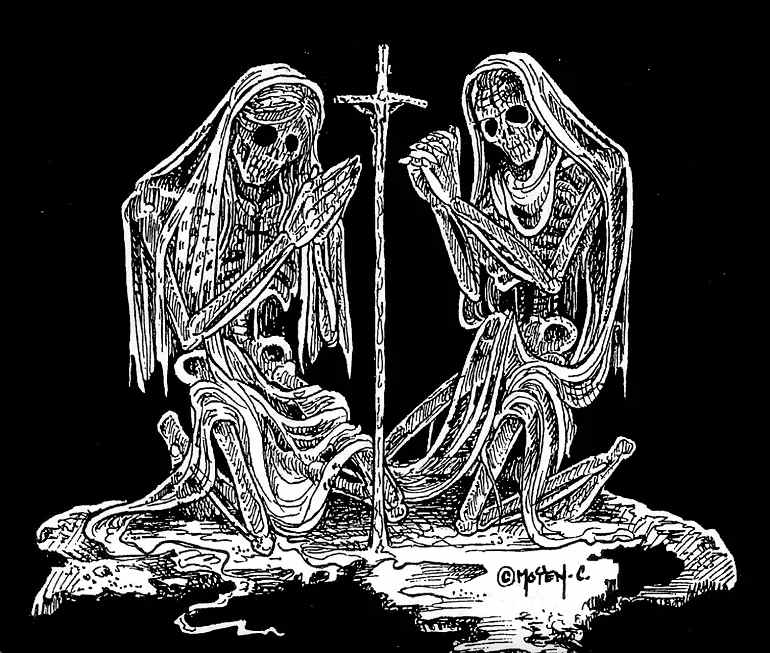
Artwork by Chris Moyen, taken from Incantation's Demo #1.
PAUL TYPHON: I still remember INCANTATION flyers landing in my mailbox during the ‘zine days, so having someone like John McEntee reach out… man, a real legend. Their demo and “Onward to Golgotha” are some of the greatest death metal ever committed to tape; signing an American band of that calibre was huge for me.
2001 opened with INCANTATION announcing their departure from Relapse Records, citing ‘minimum’ support and missed opportunities. Seeking a label that understood death metal and acknowledged their potential, they turned to Necropolis.
PAUL: Early ‘90s US death metal is visceral, guttural, and filled with anger, right? Look at the Satanic Panic, the way this country was gripped by Christianity back then, and then you had these badass dudes taking a stand against it. That’s the genius and beauty of the old American underground.
Were INCANTATION still under contract with Relapse?
PAUL: Yes, and the circumstances meant we had to… not exactly buy out the contract, but I agreed to cover the sizeable studio bill. McEntee seemed really upset with them, though I never learned the details. I also got the sense Matt Jacobson wanted to drop INCANTATION because Relapse was leaning more into deathgrind.
During this period, Necropolis had launched a similar venture in Deathvomit Records – a sub-label headed by Matt Harvey and Jason Balsells, both firmly rooted in the Bay Area’s grindcore resurgence.
After releasing the debut of Balsells’ band, DEADBODIESEVERYWHERE, the imprint soon expanded to include IMPALED, VULGAR PIGEONS, and other acts tied to the local grind and crust-punk circuit. With its growing roster of road-tested bands, Deathvomit started promoting shows at the Covered Wagon Saloon in San Francisco.
PAUL: For Christmas 2000, we put on a massive gig with IMPALED, DEADBODIESEVERYWHERE, VULGAR PIGEONS… and I think EXHUMED might’ve played as well. I met my ex-wife there; we started talking and soon became inseparable. Funnily enough, she used to date Bruce from PHOBIA, and they’d just joined the label.
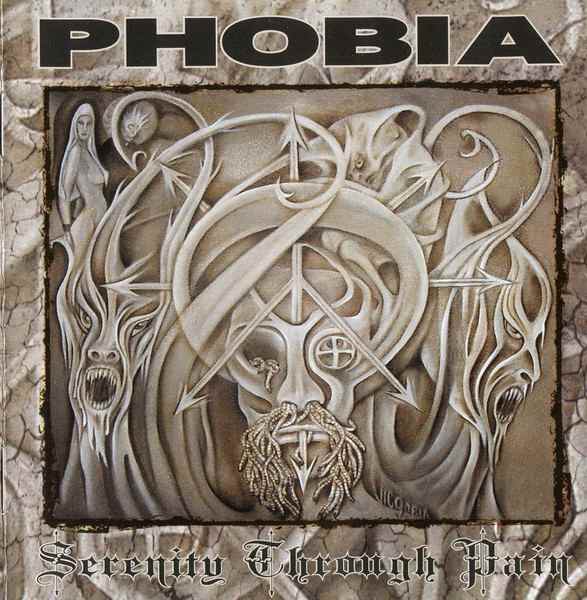
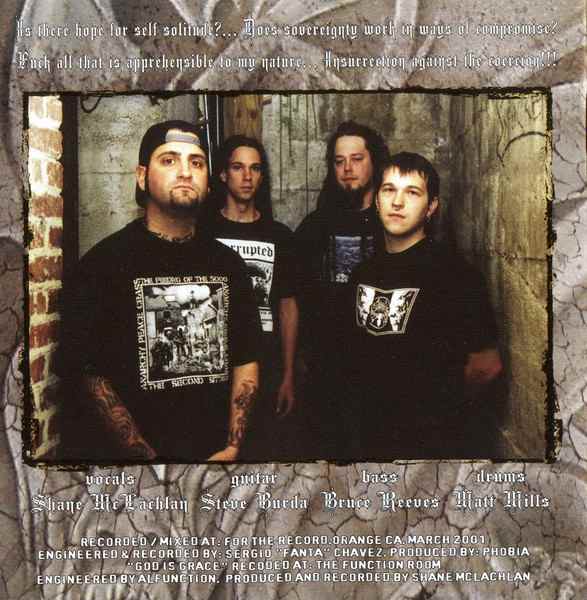
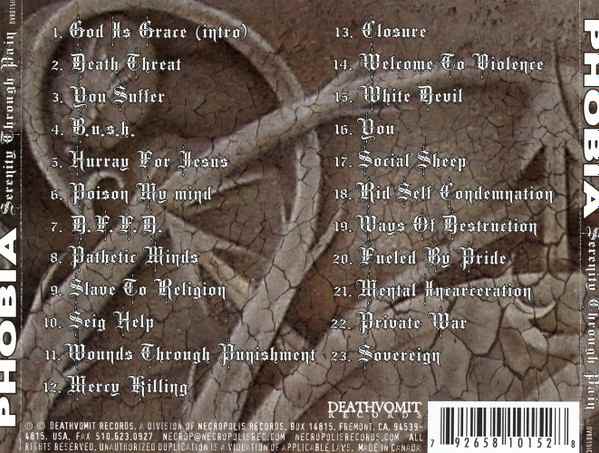
At the time, Orange County grindcore veterans PHOBIA were gearing up to record “Serenity Through Pain” – their second album and inaugural release on Deathvomit.
PAUL: That was an incredible feat in itself – such a well-regarded and widely influential band wouldn’t sign to just any label. I’d always admired PHOBIA; they had a strong ideological foundation and something to say. After interviewing Shane all those years earlier, we kept in touch.
PHOBIA frontman Shane McLachlan appeared in the first issue of Paul’s fanzine, Necropolis, published in the summer of 1991.
PAUL: The fact that my new fiancée used to go out with their bass player complicated matters <laughs>. They’d broken up a long time before, but you have to imagine the awkwardness – like, ‘Brilliant, I’ve just signed her ex.’ Still, she really did bring out something missing in my life; everything revolved around work, and I’d left no space for emotions.
PAUL: I read your Cold Meat interview and loved how Karmanik described that suffocating feeling of running a label – constant demands coming from every direction. Meanwhile, my fiancée was in college, bankrolled by her parents, and I’m sitting there thinking, ‘Wow, must be nice. Museums all day, zero stress.’
Instead of going straight to university, Paul spent his first six Necropolis years taking night classes until he’d scraped together enough credits for a marketing degree.
PAUL: I missed the American college experience. Honestly, my entire twenties passed me by; instead, I spent a decade stuck behind a desk dealing with guys killing themselves, calling in depressed, or begging me for money. You can imagine the headspace – having never known anything but grinding, I was completely worn down.
Didn’t you ever make time to unwind and relax?
PAUL: I don’t really do relaxation. I’ll watch a movie and immediately go, ‘Who made those costumes? I need to look it up.’ Then I start breaking everything down, figuring out what each part costs. That’s just how I’m wired – and trust me, it’s not always a blessing <laughs>, especially under constant financial pressure.
Wasn’t the label profitable by then?
PAUL: Sure, but the more Necropolis brought in, the more resources it needed. Running any business is tough, but a record label is outright madness because you have to keep accounts receivable and accounts payable perfectly balanced. If that slips, the whole thing falls apart.
Accounts receivable covered everything owed to Necropolis – distributor invoices, consignment statements, and return credits. Accounts payable refers to the costs incurred for manufacturing, artwork, shipping, ads, and other expenses.
PAUL: Say you’ve pressed CDs on credit – the plant will come calling for payment while you’re still waiting on distributors to settle their invoices, which is extremely stressful. You’re constantly juggling both ends: covering production so you actually have stock, then waiting forever for the cash to come back.
By then, Jon Korpse – Necropolis’ first full-time employee and co-founder of the Fueled Up sub-label – had moved on, so Paul hired an accounting firm.
PAUL: Today, I’d check Yelp; back then, I just asked around. ‘Who can I hire as a bookkeeper? Which accountant won’t screw me?’ You couldn’t verify anything. I never knew who’d rip me off or pretend they understood how to run a label <laughs>. You were basically at the mercy of random recommendations.
PAUL: Meeting someone felt like rebelling against my own rebellion. I thought, ‘I need to be with this woman, have some fun, actually enjoy life. I want to travel Europe.’ A few months after we got together, she enrolled at a university in Paris; I figured it was finally time to go over, meet everyone, and just… breathe.
It’s worth noting that while mobile phones existed in 2001, international calls were prohibitively expensive. Without smartphones or any of the instant communication we take for granted today, staying in regular contact with the Necropolis office was almost impossible.
PAUL: I’d never done it before, but I told myself, ‘Okay, I should be able to trust these guys. They’ve been with me long enough, and it’s only for three weeks.’ Twenty-one days is nothing, right? So, I left Necropolis in the hands of Dave and Jason.
In July 2001, Paul flew to Europe for his first real holiday since launching the label. He’d visited the continent several times after moving to the US, but always for frantic business trips.
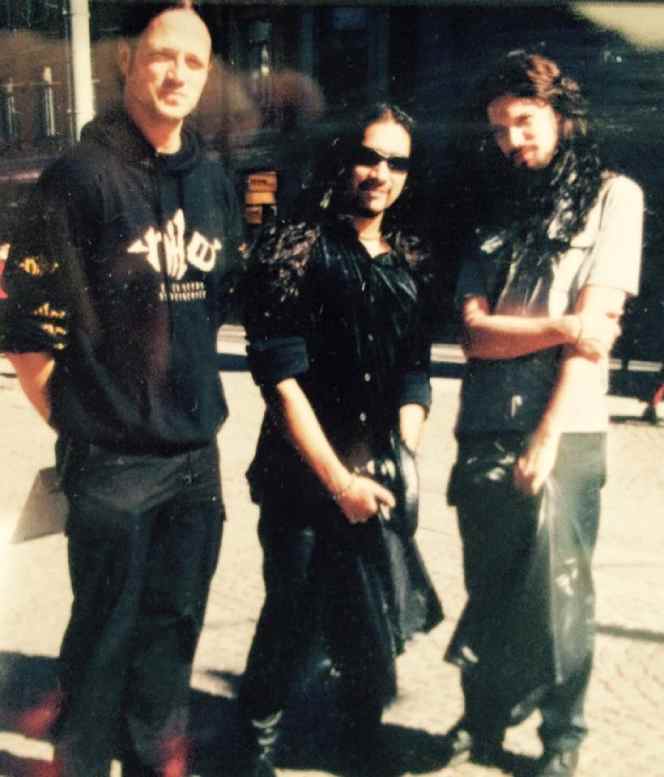
PAUL: We went to Sweden – hung out with Ahriman (DARK FUNERAL), Jensen (WITCHERY), Kristian Wåhlin (DIABOLIQUE), and a bunch of others – then headed over to Norway. For once, I was… not exactly free of the label, but close enough to think, ‘Wow, this is what life must feel like for normal people.’
Did this give any novel insights?
PAUL: I’d never had the time to look back and reflect on what I’d built over the past decade. With some breathing room, I asked myself, ‘Where does Necropolis go from here?’ I’d already begun shifting toward different music – signing DIABOLIQUE and BABYLON WHORES – and realised I wanted to keep exploring that direction.
This carefree, blissful peace of mind lasted about a week and a half. Everything ground to a halt when Paul received emails from both staffers he’d left in charge: they were resigning on the spot and walking out, leaving the Necropolis office with no one answering phones or keeping the operation alive.
PAUL: Jason couldn’t handle what I’d put on his plate, and Dave always had his own ambitions, right? He went on to found a new label. That guy stole CDs from me, literally walked out with them while I was overseas; basically, a slimy opportunist.
Were there no other employees around?
PAUL: Jose, our designer, wasn’t going to confront those guys, which meant they saw an opening. In the end, I trusted people way too much. Even Jose – one day I checked his backpack and found a stack of CDs from the warehouse. I’m thinking, ‘Wow, so this guy is stealing my shit while working on the new IN AETERNUM cover?’
Was that a common occurrence?
PAUL: When you’re getting rare imports from all these European labels, everyone wants a personal copy. Plenty of guys siphoned off records when I wasn’t looking. It felt like such a fucked-up backstab. Why not just say, ‘Hey Paul, I want these CDs’, and we’ll log it in the accounting system?
So they were allowed to take personal copies?
PAUL: Yes – I always told everyone, ‘If you want a CD, just tell me.’ But still they stole. When you build a company from nothing, it becomes part of who you are, so employee betrayals really twist you up inside. It hurt so much I swore I’d never put my own money into anything like this again.
By the time Paul got back to California, the Necropolis office was barely functioning. Shipments stalled, paperwork stacked up, and orders were in total disarray.
PAUL: I handed the reins to people I thought could handle it, but they just folded under pressure. And since then, have you heard anything about these guys – beyond one stupid bedroom label where he learned everything from me?
Did you draw any valuable lessons from this?
PAUL: I realised a business can’t depend on one person. Those three weeks made it painfully obvious that everything ran because of me. The nightmares, that whole ‘I’ve created a monster’ feeling – it all came from being completely intertwined with Necropolis. That’s the entire story of the label.
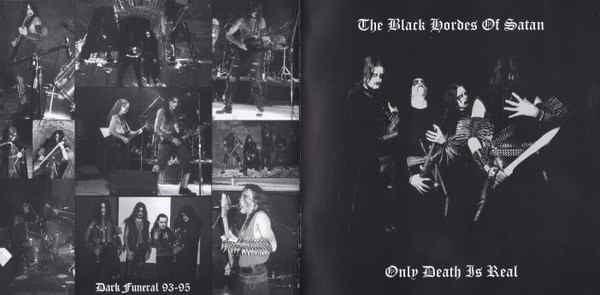
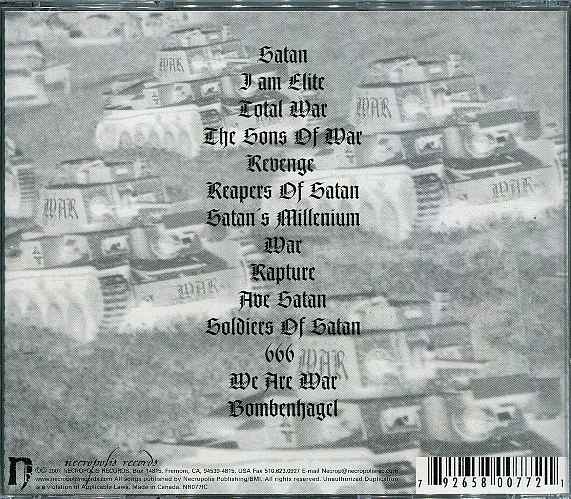
PAUL: Running a label throws all kinds of wild surprises at you. One of my funniest memories is getting a fax from the American WAR, demanding we stop using their name. They’d noticed both bands filed under ‘W’ in record shops and hired an attorney to send a cease-and-desist.
This legal notice came from the long-running American funk and R&B group WAR, responsible for major ‘70s hits like “Low Rider” and “Why Can’t We Be Friends?”.
PAUL: I thought, ‘Fuck these guys – they’re called WAR but sing about peace.’ <laughs> I was absurdly proud that a lawyer spent actual billable hours writing me a letter ordering us to pull our releases from Tower Records and Wherehouse. I told Blackmoon we’d have to switch the band name to TOTAL WAR in the US.
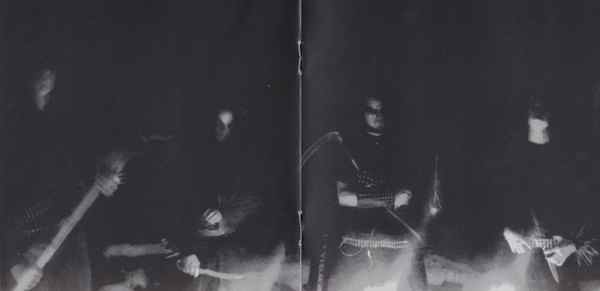
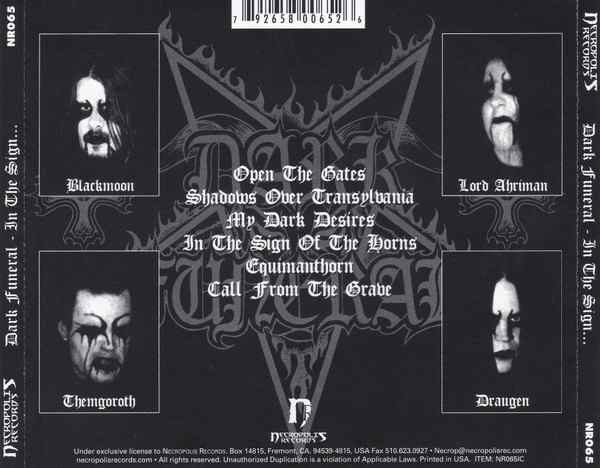
By then, Paul had patched things up with his longtime contact Blackmoon – head of Hellspawn Records and co-founder of DARK FUNERAL and NECROPHOBIC. They’d been pen pals since the early ‘90s, and their first proper collaboration was the vinyl edition of DARK FUNERAL’s “The Secrets of the Black Arts” in 1996.
After that album, Blackmoon left DARK FUNERAL and signed to Necropolis – first for his solo project, then for the Swedish black metal ‘supergroup’ WAR, whose ‘97 mini-CD caused quite a stir. But in 1999, leading up to WAR’s debut, the relationship fell apart. Wanting to issue it himself through Hellspawn, Blackmoon publicly condemned the release and cut ties with Necropolis.
PAUL: Blackmoon went, ‘I can do this better than you, asshole’, and took off with his projects. I said, ‘Sure, dickhead – good luck running a label.’ And not even a year later, he comes back like, ‘Man, how do you manage? This is the hardest thing I’ve ever done.’
That must have been an ‘I told you so’ for the ages.
PAUL: I didn’t feel smug about it; I’m not that petty. Blackmoon was a musician before anything else – full of ambition and ideas but without the support system or financing to pull them off. Very few people succeed at both roles; you rarely find someone like Euronymous who could handle the creative and business sides simultaneously.
In 1998, Hellspawn Records released the widely praised BATHORY tribute “In Conspiracy with Satan…”. Blackmoon then began working on a MORBID ANGEL homage, “Tyrants from the Abyss”, but struggled to finance it. Once he and Paul reconnected, Necropolis fronted the cost of a US licence and helped revive the project.
PAUL: Blackmoon learned how maddening it is when you’re relying on a fanbase to buy records so you can reinvest in new releases. So, we started talking again and kicked around ideas for further collaborations. DARK FUNERAL had blown up; he’d left the band but still owned the rights to their first mini-CD.
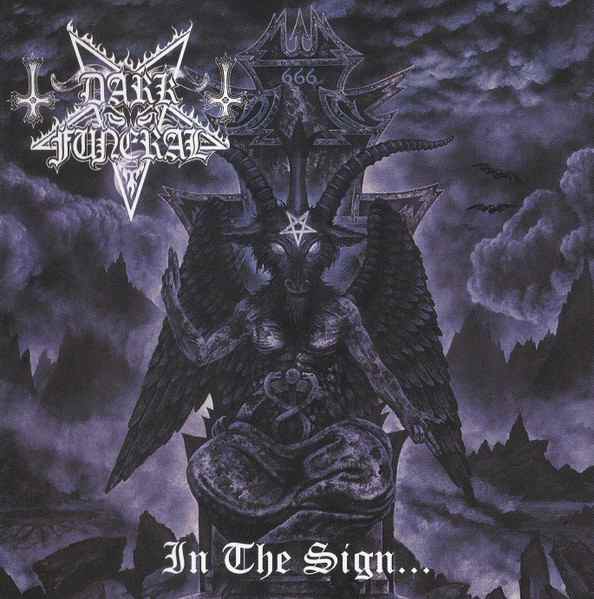
In 2000, Necropolis and Hellspawn co-released “In the Sign…” – a reissue of DARK FUNERAL’s 1994 self-titled EP paired with two BATHORY covers from “In Conspiracy with Satan…” as bonus tracks.
The following year, while in Sweden, Paul secured the US licence for DARK FUNERAL’s third full-length, “Diabolis Interium”.
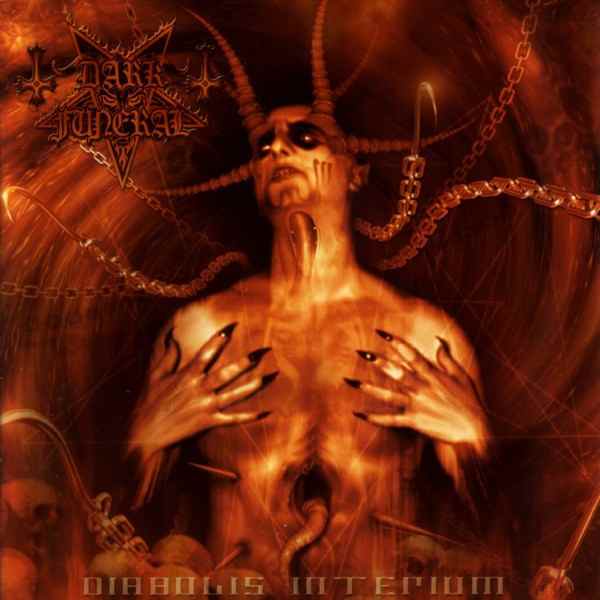
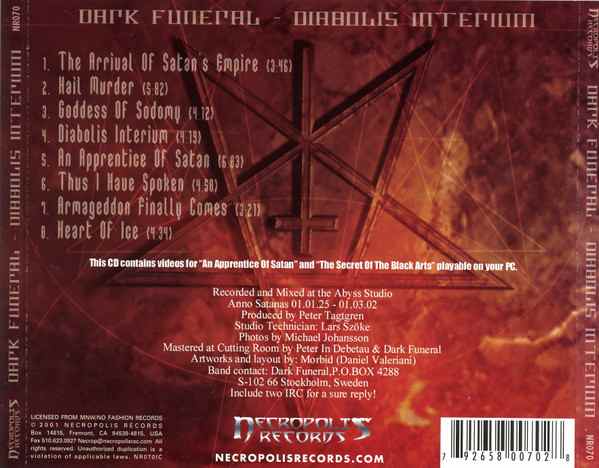
PAUL: As odd as it sounds, DARK FUNERAL meant a lot to me because Blackmoon founded the band. Missing out on their early releases when the No Fashion deal collapsed really annoyed me, so licensing “Diabolis Interium” felt like a bit of redemption. I met Ahriman in Stockholm, and we agreed, ‘Okay, let’s do this.’
In October 2001, three months after Paul’s disaster holiday, Necropolis issued its biggest releases since “Grand Declaration of War” – the US edition of “Diabolis Interium”.
Sentiment aside, the acquisition came in response to growing pressure from Paul’s US distributor, Big Daddy. After the success of MAYHEM, they kept pushing Necropolis to bring in more established, touring acts who could chart on college radio.
PAUL: Big Daddy didn’t think I’d given them another major record after “Grand Declaration of War” and started deprioritising Necropolis. Even worse, we were getting piles of returns on Baphomet titles that didn’t sell, despite advertising them properly and doing all the usual groundwork.
Throughout 2000, Baphomet Records operated as a Necropolis sub-label under a pressing-and-distribution deal: Killjoy delivered the masters, while Paul manufactured, promoted, and pushed the releases through his retail channels. Early on, it worked – Baphomet brought in strong underground acts like DEMONCY and ANTAEUS – but the momentum slipped as weaker signings and inconsistent sales followed.
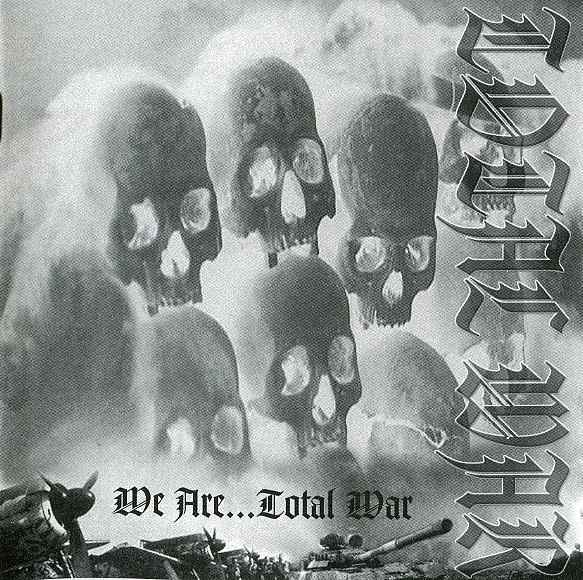
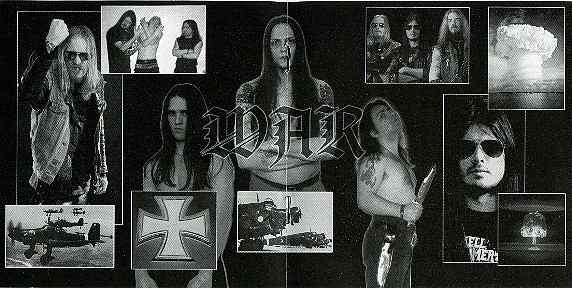
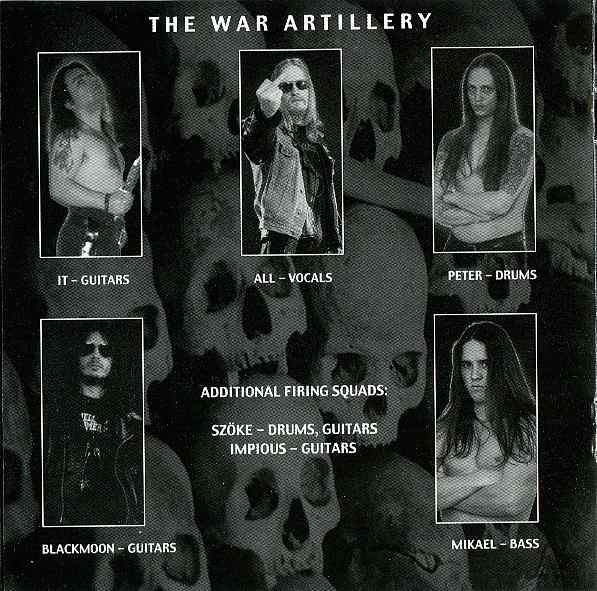
Parallel to “Diabolis Interium”, Necropolis and Hellspawn issued “We Are… Total War” – a compilation pairing WAR’s mini-CD with the full-length. In the liner notes, Blackmoon declared the feud ‘buried and forgotten’. Paul added a short clarification about including “I am Elite”, the track behind the 1997 controversy – noting that while he didn’t endorse every viewpoint reflected in WAR’s lyrics, the label stood firmly for artistic freedom.
PAUL: To be honest, I don’t know if I still agree with my statement – there’s freedom of expression, and there’s freedom in what you choose to put out. Either way, this was a reissue, and I’d already released it once. Altering an artist’s work always bothered me on a fundamental level.
I found the stance expressed in the booklet quite commendable. Would you handle it differently today?
PAUL: If we ever re-release it someday, I’d absolutely remove those lines. That shit pissed me off; it’s still a huge stain on the mini-CD and the whole WAR situation. At least this debacle taught me something important: if musicians don’t care about their own art, how do they expect me to?
I’m not sure I get your meaning.
PAUL: Look, when you sign a band whose members clearly don’t give a damn – let’s say, a drunken vocalist shouting out improvised lyrics in the studio, totally oblivious to what’s at stake – it tells you everything. No sane person should stick by people who treat their own music with that little respect.

In October 2001, the same month “Diabolis Interium” came out, THE HAUNTED kicked off a US headliner tour. After the 9/11 attacks, their scheduled openers pulled out, which opened the door for WITCHERY. Despite the summer staffing chaos, Necropolis backed the switch and covered all touring costs.
Earlier that year, WITCHERY had recorded their third album, “Symphony for the Devil”, at Berno Studio – where Jensen and Toxine tracked SEANCE’s “Fornever Laid to Rest” in 1992.
PAUL: So, what you must do to break a record like that… listening to Jensen’s haunting riffs, I could easily imagine “The Storm” or “Omens” turned into big, high-budget MTV videos. I told him, ‘WITCHERY has outgrown Necropolis – you need bigger resources behind the band.’
log in to keep reading
The second half of this article is reserved for subscribers of the Bardo Methodology online archive. To keep reading, sign up or log in below.
Related reading