Nuclear War Now! Productions II
2025-12-30
by Niklas Göransson
After displacement came fixation. University life required self-imposed austerity, as Yosuke’s attention narrowed and resolve sharpened. From that convergence, Nuclear War Now! formed as a conduit between discipline and extremity.
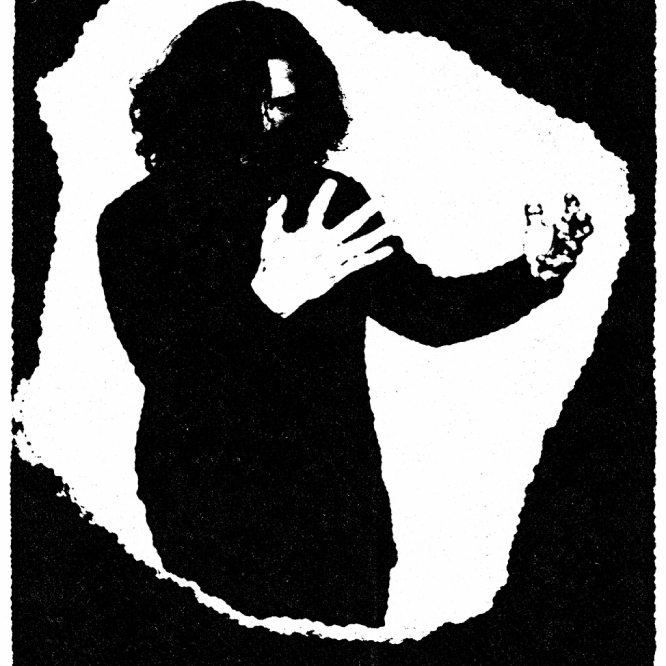
Yosuke
YOSUKE KONISHI: By ‘95, I was studying underground metal the same way I’d prepare for a physics exam – as scholastically as possible. I’d also started thinking seriously about academia, but fucking around in high school left me with terrible grades, so I had to enrol at a semi-shitty public university.
With elite colleges like Berkeley out of reach, Yosuke attended Virginia Commonwealth University – a Richmond school best known for its arts programmes but also offering a biology degree.
YOSUKE: As the former capital of the Confederacy, Richmond has a lot of history tied to the Civil War. It’s an interesting place where old Virginia culture collides with the leftist ideals of the present. The city itself is very multicultural, unlike its rural surroundings, and that tension creates fertile ground for creativity.
In the fall of 1995, Yosuke’s first taste of life away from home came in VCU’s on-campus dormitories, where students of vastly different backgrounds were housed together.
YOSUKE: When we first moved in there, the dorms were mixed – but over time, they kind of self-segregated, and I found myself in the black part. The noise never stopped… constant music, no way to study, no chance of sleep. It was an altogether miserable experience.
Did you share a room?
YOSUKE: Yeah, I was paired with an art student who listened to rap almost constantly. I basically lived in the school library; I’d avoid my dorm until three or four in the morning because they’d keep blasting music all night and wouldn’t crash until the early hours. Terrible place. I even got assaulted there.
What happened?
YOSUKE: Some guy thought it’d be funny to throw something at my head as I stepped out of an elevator – that’s American college culture for you. Eventually, I petitioned the school to move me into a non-black dorm. I ended up rooming with this nerdy, comic-book-artist type, and he was a complete nightmare in his own way <laughs>.
After two very different but equally unpleasant cohabitation attempts, Yosuke moved out of the dormitories and into a cheap off-campus rental near the university.
YOSUKE: The apartment leaked, so pools of water would form in my kitchen whenever it rained. Parts of the floor sagged and had to be avoided – unless you wanted to fall through the ceiling of the unit below. Cockroaches everywhere. Really shitty part of town, too; I even had a gun pulled on me.
Jason Campbell
What was the music retail situation like?
YOSUKE: I went to a record shop called Plan 9 almost every day, digging for stuff. I remember finding a CD by TYPHON from Colombia there. Soundhole, out in the Richmond suburbs, also carried a lot of good material; they focused on both underground metal and punk.
In autumn 1996, at the start of Yosuke’s second year, he formed what would become one of Nuclear War Now!’s most enduring connections.
Jason Campbell, a physics student who’d just transferred to VCU from community college, stood among unfamiliar faces – ‘a room full of nerds’, as he later put it. One of those nerds wore a CITIZENS ARREST shirt, which sparked a conversation that soon turned into friendship.
YOSUKE: At that point, Jason’s understanding of metal was pretty surface-level. He grew up further down in the South, where bands like DEATH were popular; I remember him mentioning having seen them live. By the time we met, though, he’d moved into industrial music, noise, and other electronic or experimental styles.
Had you made any friends who shared your taste in music during the first year at VCU?
YOSUKE: Not really. Most of them were just school nerds; my music interests stayed private until I met Jason. We also befriended a medical student who invited us into the cadaver room. I’d never seen a dead body before – and for some reason, that sudden awareness of mortality left a deep imprint.
And how did that manifest?
YOSUKE: Mostly in my commitment to learning; I treated it like a higher calling. Both of us were completely consumed by academia. Looking back, it feels ridiculous to obsess over grades and all this useless knowledge – but at the time, it drove everything. We’d be up studying at 3 am, blasting noise or black metal.
Before long, Jason and Yosuke’s shared fervour took on an almost monastic character. Long after classes ended, they’d stay on campus, studying deep into the night. In the otherwise empty, fluorescent-lit spaces of VCU’s medical school, their musical worlds began to merge.
YOSUKE: Those late-night sessions were highly formative for how we both approached music in general. Jason would play me industrial and noise artists he thought might resonate with a metalhead – DISSECTING TABLE, MERZBOW, THROBBING GRISTLE, WHITEHOUSE.
The artists Jason introduced all occupied the outer edges of music: DISSECTING TABLE’s surgical industrial noise, MERZBOW’s full-spectrum sonic overload, THROBBING GRISTLE’s confrontational minimalism, and WHITEHOUSE’s deliberately abrasive power electronics.
None of it resembled metal on the surface, yet the underlying logic – sound reduced to texture, repetition, and intensity – wasn’t far removed from the lo-fi, melody-averse black metal Yosuke already gravitated towards, with bands like BLASPHEMY, GOATPENIS, and BESTIAL SUMMONING.
YOSUKE: THROBBING GRISTLE has some sense of rhythm – but from a traditional musical perspective, it’s mostly chaos. You see the same thing in black metal; certain recordings are so harsh they border on abstraction, sounding more like machine noise than music.
Did you start collecting industrial albums as well?
YOSUKE: No, I stuck to black metal; my limited budget made it impossible for me to follow both worlds. Actually, one of Jason’s most lasting memories from our first meeting – besides the CITIZENS ARREST shirt – is how strange I looked carrying around a sack of boiled potatoes. I’d eat them during class because it was all I could afford.
Couldn’t your parents help, rather than let you starve?
YOSUKE: My mom gave me cash for utilities and food, but it usually ended up going toward music instead. The heating in my apartment barely worked – and since I needed to save money, I wouldn’t turn it on anyway. It’s not Sweden, but Virginia gets very cold in winter. I’d sleep under a pile of blankets and just try to survive.
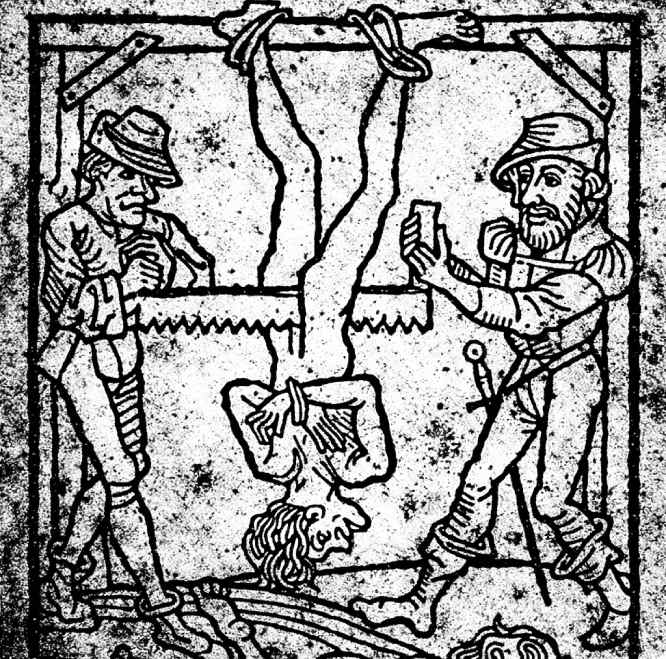
YOSUKE: After two years of undergrad at VCU, I left with a 4.0 GPA. I worked my ass off for that – probably put a lot of unnecessary strain on myself, staying up late all the time and eating like crap. But I treated it as a life-or-death mission, so getting into UC Berkeley made me really happy.
In a sharp reversal from his high school record, two disciplined years of consistently top-level marks at VCU qualified Yosuke for transfer into UC Berkeley’s biochemistry and molecular biology programme.
YOSUKE: At the time, everything seemed to be happening on the West Coast. The Bay Area felt like the centre of new technology – biotech in particular – with Genentech and all these companies popping up. That was exactly what I wanted to be part of, so heading there made sense.
At UC Berkeley, Yosuke shifted his focus to the chemical processes of life – from enzymes and proteins to DNA itself. Now placed in a far more competitive academic environment, the former VCU standout soon found himself recalibrated.
YOSUKE: It definitely reset my ego, being surrounded by people who were even more dedicated and a lot smarter than me. There’s a reason UC Berkeley has produced so many Nobel Prize winners – it’s academically brutal. I don’t know what the place is like now, but it was excellent for molecular biology back then.
Following his less-than-ideal housing experiences at VCU, Yosuke moved into the top level of an old house that had been converted into dorm-style rooms.
YOSUKE: That attic got pretty hot during summer, but Bay Area weather is mild enough for it to stay tolerable. Now, I don’t know how familiar you are with American college culture and the standard clichés about computer nerds – let’s just say my roommates reinforced every stereotype.
I have a fair idea – presumably related to personal hygiene.
YOSUKE: Yes, computer science students are notorious for being total slobs – they sit in front of a screen, coding for hours without giving a shit about showering or anything. These guys were awful to live with, but the place was super cheap and right down the street from Amoeba.
Amoeba Music is a California-based chain known for its underground selection. Yosuke had deliberately sought out accommodation near Channing Way, which slopes uphill from Shattuck Avenue toward the Berkeley campus – placing him within walking distance of both university grounds and a cluster of record stores.
YOSUKE: Channing Way basically formed the dividing line between Amoeba and Rasputin Music – another store I went to all the time. And when I say ‘all the time’, I mean multiple times per day between classes, checking for anything I could afford. In terms of discovering new music, those years were incredible.
UC Berkeley’s steep fees were covered by Yosuke’s parents and maternal uncle, a PhD scientist who hoped his nephew might follow a similar academic path. With tuition and basic living expenses taken care of, anything beyond that required improvisation.
YOSUKE: Do you remember B.M.G.? It was this corporate CD-subscription thing you could basically trick. You’d fill out a form, mail it in, and they’d just ship the discs along with an invoice. I’d order stacks of rap albums, then trade them in at Amoeba or Rasputin for store credit. That’s how I got a lot of my music at UC Berkeley.
How many times did you pull this off?
YOSUKE: I must have done it at least fifteen times. I just kept using different names – Pancho Moler being one of them… he’s a midget skateboarder <laughs>. They’d send hip-hop CDs addressed to him, and those would turn into black metal records. It was like alchemy or something.
YOSUKE: The Bay Area thrash scene was long dead by then, but we had a few good bands coming up – like WEAKLING. For some reason, they’ve since become the darlings of this crowd I really dislike; I guess you could call it ‘barista black metal’, if you know what I mean.
Hipsters?
YOSUKE: Yeah, this group of people who don’t actually care about black metal but latch onto very specific parts of it. WEAKLING’s fanbase might give them a bad rap these days – but at the time, I thought they were a serious band playing black metal the way it should be done.
Founded in 1997 after guitarist John Gossard left BLACK GOAT, WEAKLING was a short-lived San Francisco black metal project. They recorded their debut, “Dead as Dreams”, the following year but split up before its official release in 2000.
Issued through local indie label tUMULt, the album initially circulated within a small circle only. Over the years, however, “Dead as Dreams” came to be cited as an influence by bands associated with the so-called ‘post-black’ sound often linked to the likes of WOLVES IN THE THRONE ROOM and DEAFHEAVEN.
YOSUKE: John Gossard became one of my first contacts out there; I saw him at Rasputin and just struck up a conversation. I remember he recommended ILDJARN’s self-titled CD, which has something like twenty-seven tracks, so I assumed it was grindcore. John goes, ‘No, it’s actually black metal – very minimalistic and weird.’
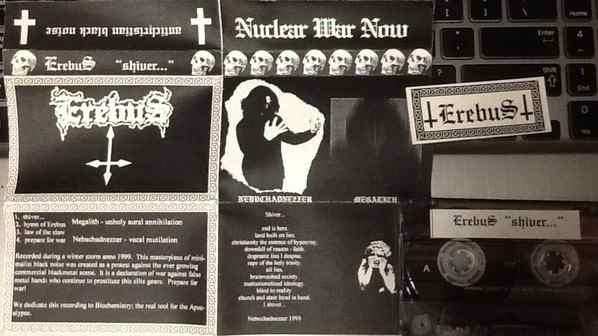

Meanwhile, as a long-distance continuation of his Richmond bond with Jason Campbell, Yosuke regularly sent dubbed tapes of recent discoveries back to Virginia. In 1999, after Jason relocated to Southern California, they shifted from shared listening to direct creation in the form of a ‘black noise’ project called EREBUS.
YOSUKE: Always an embarrassing part of our history <laughs>. I should preface this by saying it wasn’t especially serious. Neither of us had much musical talent, and I only contributed some vocals. The project ultimately failed, but it also launched N.W.N! in a way, because the first time I used that name was on the EREBUS demo.
The inaugural Nuclear War Now! release – ANTI-GOTH 001, EREBUS’ “Shiver…” – was modest in form yet monumental in implication. Limited to one hundred hand-numbered copies, the tape came with a fold-out booklet and sticker.
YOSUKE: My boombox only had a single deck, so I couldn’t dub cassettes. The solution? I bought a new dual-deck tape recorder at a store, went back to my apartment, and dubbed as many copies as I could over one weekend – then returned it with some bullshit excuse about not meeting my needs.
After the skateboard funding, your B.M.G. scams, and now this – I’m starting to wonder if you shouldn’t have gone into organised crime instead.
YOSUKE: Yeah, there’s plenty of theft in my background <laughs>. I sort of regret all this now, and I’m ashamed of my behaviour in hindsight, but it seemed like a good idea at the time. Many early developments around N.W.N! – and my record collection – came from stealing.
The EREBUS tape, promoted as a ‘masterpiece of minimalist black noise’, issued a call to arms against the ‘ever-growing commercial black metal scene’.
YOSUKE: I can definitely imagine myself being completely serious when writing that ‘declaration of war’. At the time – as an angry, hate-filled young man – it probably felt like the right thing to say. The ‘masterpiece’ part is definitely wrong, though; if anything, it’s a masterpiece of shit.
Had you already envisioned the label when you recorded the tape?
YOSUKE: No, I started N.W.N! as a vehicle to self-release “Shiver…”. The one genuinely good thing to come out of EREBUS was connecting with people in the underground – like Chad Davis, who played in DEMONCY and ran a small label called Hour Of 13 Productions. He put out a GOATWORSHIP demo, and I traded for that. I still have it in my collection.
log in to keep reading
The second half of this article is reserved for subscribers of the Bardo Methodology online archive. To keep reading, sign up or log in below.
Related reading