Nuclear War Now! Productions V
2026-01-14
by Niklas Göransson
The 2003 release of Von’s Satanic Blood Angel brought visibility, expectation, and consequence in equal measure. By unearthing recordings long thought lost, Nuclear War Now! began shaping the underground’s sense of its own past.
YOSUKE KONISHI: I often wonder how I would’ve turned out in the orderly, strict society of Japan. Who knows – maybe I’d be a salaryman with a regular haircut, wearing a suit every day? For all its shortcomings, American culture seems to spark these unpredictable, creative opportunities where people can actually build something interesting.
Yosuke’s entire family eventually moved back to Japan. His oldest sister left first; after finishing graduate school, she returned home and pursued a career as an oil painter.
YOSUKE: We had a house in Tokyo that I could’ve moved into, but I chose to stay here. I fully assimilated, whereas both of my sisters were always more Japanese than American. They never clicked with the chaos of this country the way I did. I mean, it basically shaped who I am.
Jason Campbell told me you took an early interest in Japanese black metal bands – was that nostalgia, national pride, or something more specific in their music?
YOSUKE: At first, it was probably just the novelty of hearing black metal from my own country. Beyond that, the musical style of those bands – like SIGH, SABBAT, and ABIGAIL – leaned towards heavy metal and old thrash, which really resonated with me at the time.
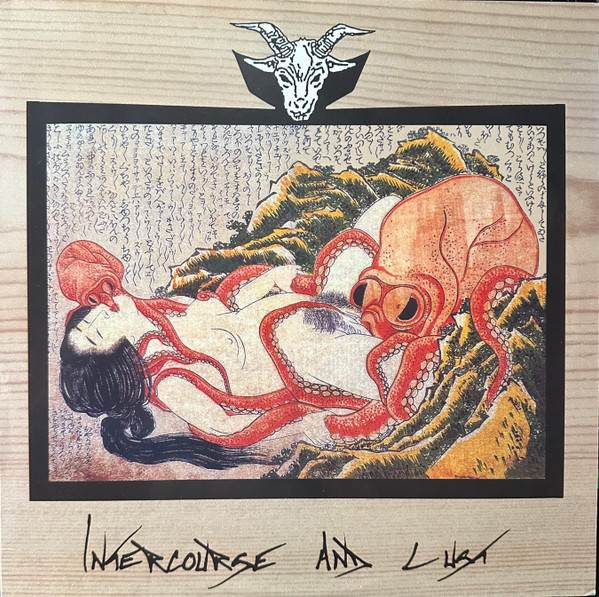
In 2002, as the label’s first foray into Japanese metal, Nuclear War Now! issued an ambitious LP edition of ABIGAIL’s debut full-length. Formed in ‘92, the Tokyo-based purveyors of ‘street metal’ released a string of demos and EPs that eventually caught the attention of Australia’s Modern Invasion Music, who issued the band’s 1996 album, “Intercourse and Lust”, on CD.
YOSUKE: The members seemed genuinely surprised when I approached them. Very few labels focused on vinyl, and the band wasn’t especially well known yet – certainly nowhere near the level they’d reach later. Around that time, ABIGAIL were already in talks with Drakkar about their second album.
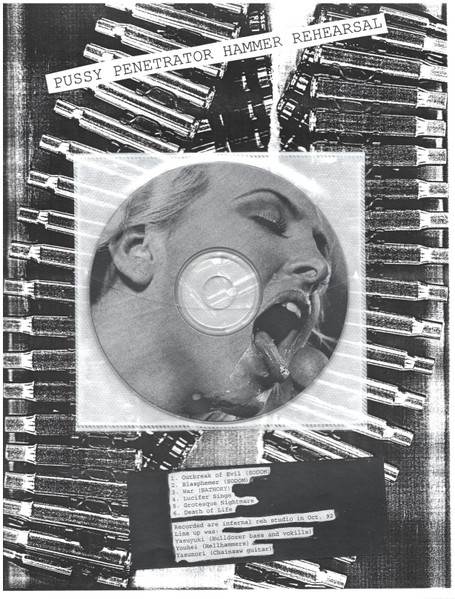
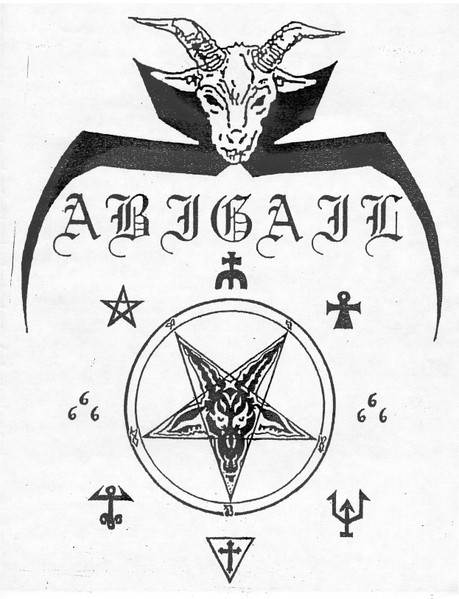
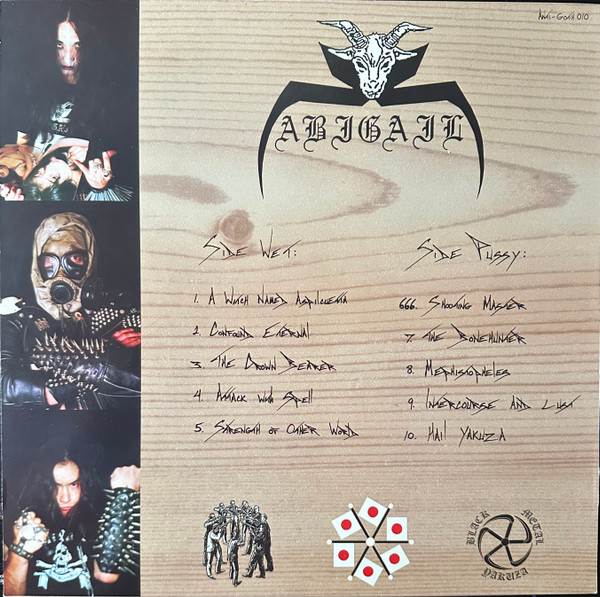
The Die Hard edition of “Intercourse and Lust” pushed the concept even further: white vinyl accompanied by a patch, stickers, posters, the bonus “Pussy Penetrator: Hammer Rehearsal” CD-R, and an erotic fanzine that Yosuke photocopied during dawn raids at the Silicon Genetics office.
YOSUKE: I used and abused those copy machines as much as possible – flyers, booklets, and inserts for N.W.N! releases. My tech support shift started at 7 am, so I’d get there around six, before anyone else showed up. But every once in a blue moon, someone would suddenly appear while I was mid-xerox, giving me a suspicious look.
While the explicit ‘zine inserts featured standard adult entertainment, the vinyl reissue cover took a more adventurous turn with a pornographic image involving an octopus.
YOSUKE: The original Modern Invasion cover used a more restrained image from the same art period. That octopus illustration – lifted from an ukiyo-e print – appeared inside the CD booklet in really shitty resolution, paired with some truly terrible graphic design choices.
Ukiyo-e refers to a centuries-old tradition of Japanese woodblock prints that depict scenes ranging from mundane life to folklore, theatre, and erotica.
YOSUKE: We added a woodgrain texture to the image background, which is what gives it this sushi-restaurant kind of vibe. I remember going to a hardware store and buying some sort of plastic laminate wallpaper with that pattern, which I then scanned and used as the base.
The motif itself reminded me of my friend’s anecdote of wandering into a random video shop in Tokyo that just happened to be screening ‘tentacle porn’ – which is apparently an established subgenre over there.
Mikko Aspa of CLANDESTINE BLAZE – whose work includes both productions of and writings on pornography – has performed in Japan with two of his noise projects, GRUNT and NICOLE 12. He observed that the country stands out not simply for the prevalence of unusual fetishes, but for how entire commercial ecosystems form around them: shops, clubs, events, magazines, and dedicated industries which normalise what might elsewhere remain marginal.
Mikko suggested that these ‘dark undercurrents’ aren’t aberrations in opposition to an orderly surface culture like Japan’s, but rather the mechanisms quietly sustaining it – perversion acting as a release-valve beneath an immaculate façade.
YOSUKE: My sense is that these kinds of deviancies are rooted in a mix of Shinto and Buddhist repression of sexual desire, which then manifests in these strange forms. For instance, you could famously buy used panties from vending machines in Japan – something many Westerners now associate with the country.
Both the regular vinyl and Die Hard versions of “Intercourse and Lust” include a ‘Black Metal Yakuza’ poster, and the album itself has a song titled “Hail Yakuza”, which is a reference to Japan’s organised crime syndicates.
YOSUKE: As far as I know, ABIGAIL leaned more into playing the role – basically cosplaying an image. Most of the real Yakuza involvement in subcultures was tied to punk and hardcore, going back to the early ‘80s. I don’t know that scene particularly well, but G.I.S.M. definitely had those kinds of connections.
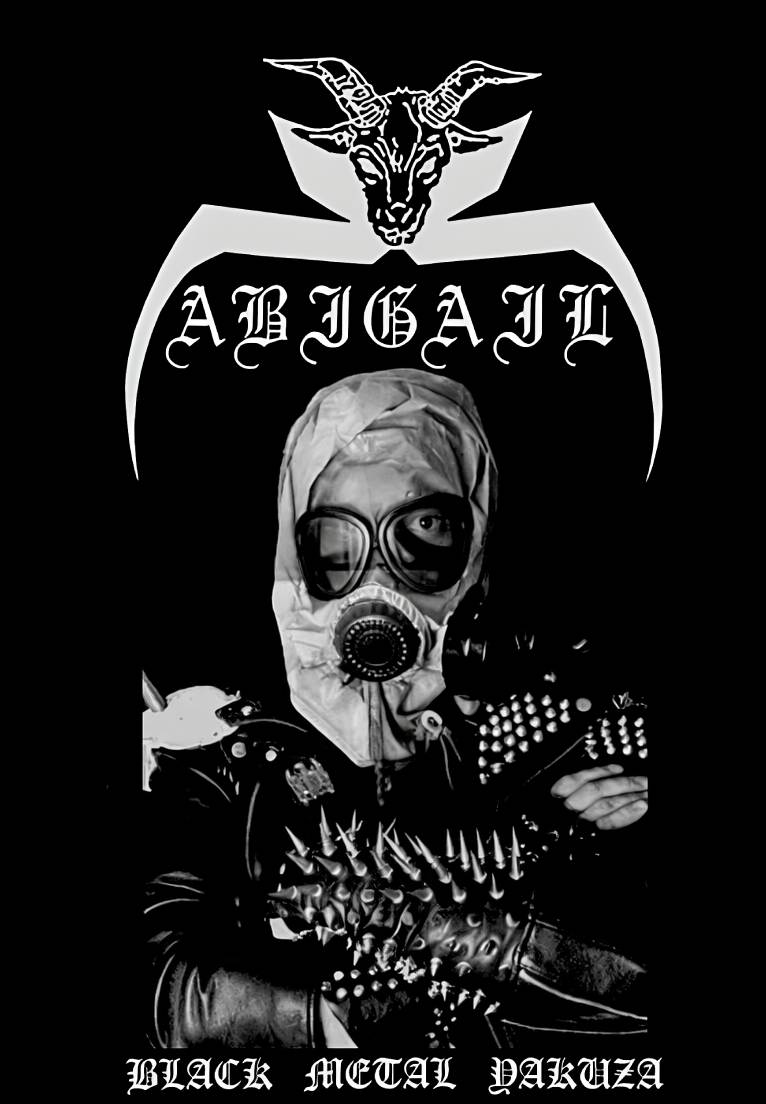
November 2002 marked N.W.N!’s first step into live promotion: a chaotic, self-funded West Coast run with ABIGAIL and MORBOSIDAD.
YOSUKE: The logistics were completely DIY, and a lot of the planning happened in real time <laughs>. Nothing about that tour felt especially organised, and attendance wasn’t great either. The first show was either in Oakland or Berkeley – at the famous Gilman Street venue, where BLASPHEMY once played after illegally crossing the border.
Back in 1989, BLASPHEMY snuck into the US for two shows, loosely arranged through a network of punk-scene connections. After a Seattle date – secured with help from THE ACCÜSED guitarist Tom Niemeyer – the band travelled south along the West Coast towards California.
The Berkeley gig, hosted by contacts of BLASPHEMY’s friend and later bassist, Bestial Savior, proved memorable less for the set itself than for the cultural dissonance: the bill consisted entirely of straight-edge hardcore acts. From there, the Canadians continued on to Los Angeles, where they met Wild Rags head Richard C. and worked out the deal that would eventually lead to “Fallen Angel of Doom….”.
YOSUKE: ABIGAIL’s Berkeley show was with a local, not-so-great Relapse grind band called BENÜMB. After that came two San Francisco shows: first at an art venue on Mission Street, where hardly anyone turned up, and then at some bar alongside a semi-known emo/hardcore band.
ABIGAIL’s second San Francisco date took place at the Covered Wagon Saloon, together with New Jersey post-hardcore act RYE COALITION.
YOSUKE: Next came a tiny venue in Los Angeles; that’s where I met Dan from ASHDAUTAS for the first time. The final show was in San Diego. We drove all the way down – a high-school friend of mine who’d moved there helped set up the gig and let us crash at his apartment.
Did you feel any kind of unique affinity with the ABIGAIL guys that could be traced back to your shared cultural background?
YOSUKE: I suppose so, yeah. Especially in their mannerisms – easy-going, quiet, reserved. Being Japanese, all three were incredibly polite and considerate. Well, except for the degenerate sexual tendencies; they’d sit at my computer and just look at porn non-stop.
Was that about accessing material unavailable in Japan?
YOSUKE: I think they were just degenerates <laughs>. Though maybe some of that stuff wasn’t accessible in Japan; a lot of it gets censored there, and VPNs weren’t easily available back then. Anyway, my girlfriend at the time eventually got completely fed up – so when we returned from San Diego, she was gone.
She broke up with you because of ABIGAIL’s porn surfing?
YOSUKE: The overall testosterone and all the dirty men sleeping on the floor probably didn’t help either; I’d invited a lot of my scene contacts to crash at our place. That tour was the second time I met Ryan Förster. I also remember hosting Chris Reifert (AUTOPSY), Jimmy (CULT OF DAATH), Luis from Vinyl Command, and Joe from VON.
YOSUKE: In the early 2000s, VON held an almost mythical status. People actively hunted for their recordings – even that Hellspawn bootleg had become hard to find. Since most of it circulated only through tape trading, the material simply wasn’t anywhere near as accessible as today.
Back in 1994, when BURZUM’s Varg Vikernes appeared in court wearing a VON shirt, very few underground devotees even knew who they were. Most didn’t hear the music until two years later, when DARK FUNERAL guitarist Blackmoon bootlegged VON’s 1992 “Satanic Blood” demo – their only known recording – through his label, Hellspawn Records.
Aside from the lyrics and line-up – Goat on guitars and vocals, Kill on bass, and Snake on drums – the booklet contained virtually no information about the band.
YOSUKE: I bought that bootleg assuming they came from Sweden. Once I started digging into who the members might’ve been, I realised VON was a semi-local band. According to rumours floating around the Bay Area, these guys were Asian and somehow connected to AUTOPSY.
Yosuke wrote a letter to AUTOPSY’s Chris Reifert, asking for information about VON. To his surprise, he learned that Reifert’s death-grind project ABSCESS featured Kill – real name Joe Trevisano – on bass.
YOSUKE: Chris gave me Joe’s contact details and suggested I get in touch, so we ended up talking on the phone. As it turned out, he lived in Livermore, California – only about twenty minutes away. I drove over there and met with him at some random steakhouse to talk things through.
You’ve described your interactions with BLASPHEMY frontman Black Winds as a bit awkward – were you more composed when meeting Kill?
YOSUKE: Probably not, but Joe wasn’t nearly as intimidating as Black Winds <laughs>. He’s more of a normal, working-class metalhead than some hardened streetfighter. Joe was still in great shape, though – if you look at old VON photos, they were clearly lifting weights back in the day.
When Yosuke left the restaurant, he’d secured permission to reissue not only “Satanic Blood”, but also six unreleased songs from the same 1991 studio session – later referred to as the “Blood Angel” demo.
YOSUKE: We struck a deal that, in hindsight, turned out to be a bit faulty. As I would later discover, Joe wasn’t a founding member of VON. I didn’t realise this at the time – with his credits on the demo and appearances in plenty of live photos, I naturally assumed he’d been there from the start.
In reality, when VON formed on the island of O’ahu, Hawaii, in 1987, the founding members were Shawn ‘Goat’ Calizo and Jason Venien. Trevisano replaced Venien on bass in 1990, after Calizo relocated to California.
YOSUKE: Snake, the drummer, apparently didn’t want anything to do with black metal anymore, and Joe might have mentioned another bass player in passing. I don’t blame him, but I do wish he’d been more forthcoming about this before I moved forward – it ended up creating a lot of tension between the other members and me.
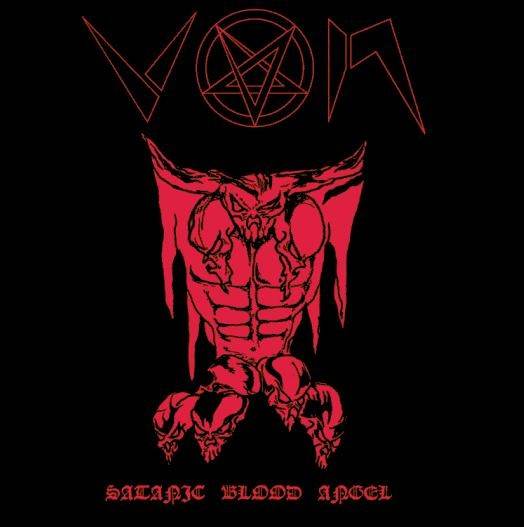
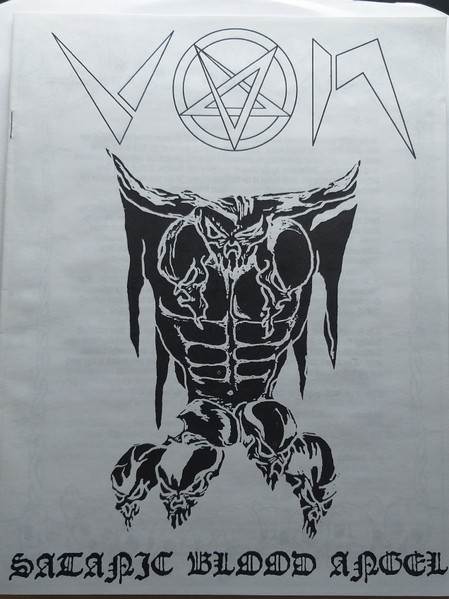
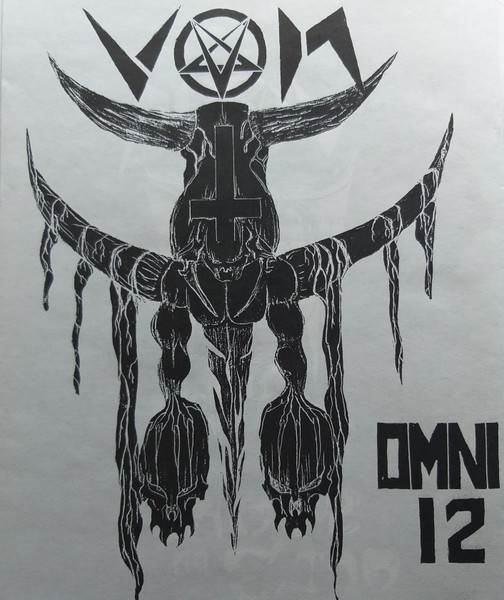
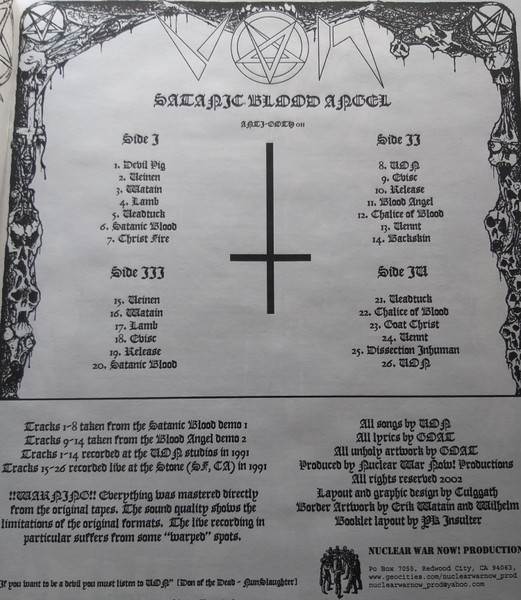
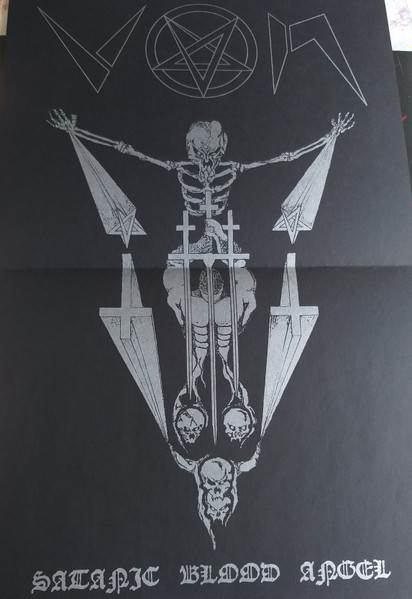
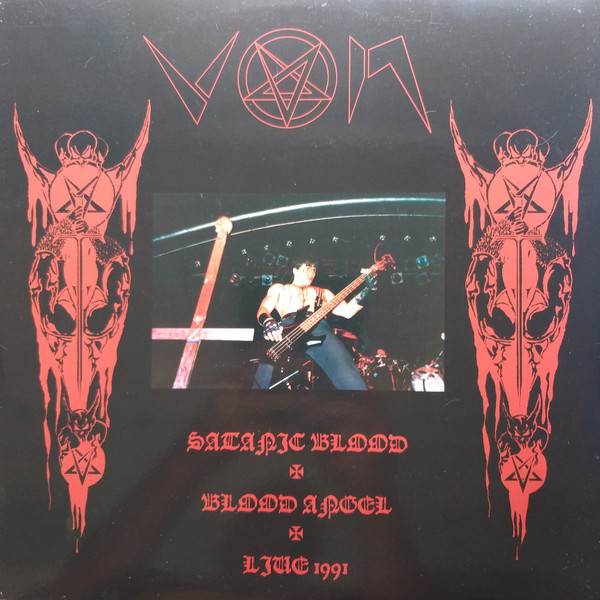
Upon its early 2003 release, “Satanic Blood Angel” stood as N.W.N!’s first major archival undertaking – not just reissuing hard-to-find material but also including previously unknown studio recordings as well as old photos and flyers.
YOSUKE: It was received very well. Expectations started forming; people clearly wanted more unearthed demos and rediscovered bands, which gave me a renewed sense of energy to keep digging in that direction. “Satanic Blood Angel” really elevated N.W.N!’s standing in the scene – just like “Live Ritual…” had.
Nuclear War Now! released “Satanic Blood Angel” on both vinyl and CD – but according to its booklet, the latter edition existed solely as a deterrent for bootleggers. BLASPHEMY’’s “Live Ritual – Friday the 13th”, on the other hand, was issued on CD by Dutch label From Beyond Productions.
YOSUKE: At the time, I had a rigid anti-CD stance – for what was honestly a pretty retarded reason – and wanted N.W.N! to focus exclusively on vinyl, similar to Sombre Records. The difference is that Sombre never wavered from this rule; Marcel stuck with it right up until he died.
From Beyond Productions – a sub-label of Displeased Records run by Roman Buschmann – would go on to collaborate regularly with N.W.N!.
YOSUKE: I first became aware of Roman through his PENTAGRAM CHILE reissue. I picked up some copies, and we started talking and eventually got to know each other quite well. He asked if I’d be interested in working together on a few CD releases, starting with “Live Ritual…”.
In 2003, From Beyond licensed a European edition of EAT MY FUK’s debut album, “Wet Slit & A Bottle of Whiskey”, from Nuclear War Now!.
Promoted as something of an underground supergroup, EAT MY FUK featured members of AUTOPSY, ABSCESS, and VON. After the initial correspondence that led to “Satanic Blood Angel”, Yosuke stayed in touch with Chris Reifert – in fact, both he and Trevisano came out for ABIGAIL’s San Francisco show.
YOSUKE: By then, I’d spent a lot of time at AUTOPSY’s rehearsal space, and we’d become good friends. They asked if I could help out with the EAT MY FUK album, so I ended up covering the studio costs – around a thousand dollars – and then licensed the recording to From Beyond.
What’s slightly confusing is that the US edition came out through Bestial Onslaught Productions rather than Nuclear War Now!.
YOSUKE: EAT MY FUK leaned more toward GG Allin–style punk, which didn’t really fit N.W.N!. I technically owned the rights, but I handed it to Alex Spina from Bestial Onslaught instead, since it matched his roster much better. He was one of the people who crashed at my apartment during the ABIGAIL tour.
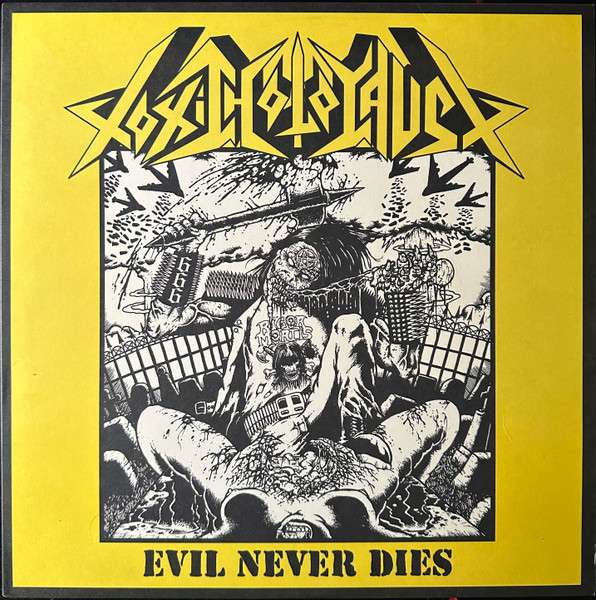
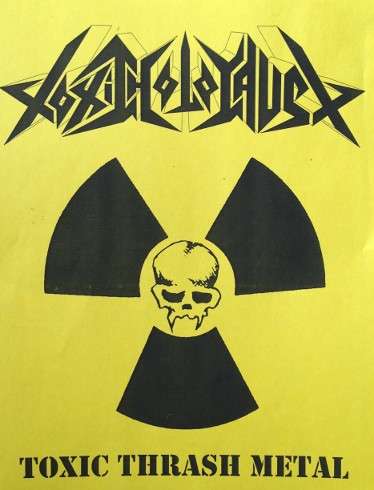
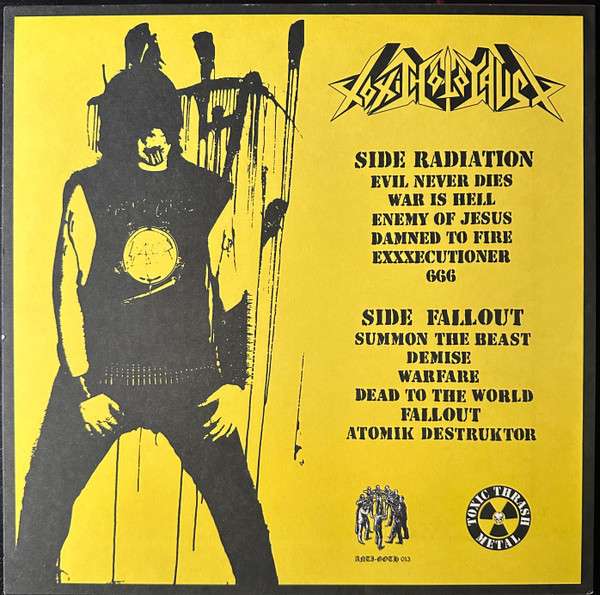

YOSUKE: When Joel Grind sent me a TOXIC HOLOCAUST demo, I think we’d already been in touch through his bootleg operation <laughs>. Joel was a massive MISFITS fan and had put out a few unofficial reissues. I’m not entirely sure, but that might’ve been how we first connected.
Before forming TOXIC HOLOCAUST as a one-man project, American multi-instrumentalist Joel Grind played in hardcore and punk bands like GRAVE MISTAKE and THE RAPISTS.
YOSUKE: At the time, I didn’t even know Joel had been involved in other genres. Musically, TOXIC HOLOCAUST sat somewhere in the German thrash or speed metal zone – whatever you want to call it. I obviously liked his demo enough to decide that we should work together.
In late 2003, the US vinyl edition of “Evil Never Dies” – TOXIC HOLOCAUST’s debut album, released on CD by German label Witches Brew – became the first N.W.N! full-length of original material, and an early best-seller.
YOSUKE: I never expected that band to blow up. Looking back, I don’t think “Evil Never Dies” has aged particularly well; it’s very mediocre thrash. Don’t get mad at me, Joel! <laughs> In the broader history of underground metal, it’s just not something I’d personally reach for.
log in to keep reading
The second half of this article is reserved for subscribers of the Bardo Methodology online archive. To keep reading, sign up or log in below.
Related reading