Nuclear War Now! Productions XIII
2026-02-12
by Niklas Göransson
Few underground entities embodied the internal discipline of Order from Chaos. In 2007, Nuclear War Now! restored a catalogue shaped by intent rather than evolution – a philosophical arc completed precisely as conceived.
YOSUKE KONISHI: ORDER FROM CHAOS truly were ahead of their time. That emphasis on personal growth simply didn’t exist in metal back then – especially not in the underground, where everything leaned toward self-destruction. Within this context, it was a pretty wild concept.
Founded in 1987, Kansas City death metal band ORDER FROM CHAOS incarnated the philosophical collaboration between Chuck Keller and Pete Helmkamp. Centred around the ‘Conqueror of Fear’ theme, their lyrics explored self-overcoming, discipline, and existential willpower.
From the outset, ORDER FROM CHAOS was framed as a finite project. Before even recording a demo, Chuck and Pete vowed to cap the band’s output at three albums. After watching metal giants of the era stumble on their third records, the two young men decided they’d rather leave a small, uncompromised catalogue – and, if a following ever emerged, avoid saddling it with the inevitable disappointment of a weak continuation.
Aside from the music, the band also produced their own fanzine – which became Yosuke’s introduction to ORDER FROM CHAOS, as he was handed a copy at an early ‘90s CARCASS show in Virginia.
YOSUKE: I doubt any band members were present – more likely someone from their circle handing out propaganda. Either way, I got the O.F.C. ‘zine without having heard the music. I didn’t come across “Stillbirth Machine” until several years later; Wild Rags just weren’t distributed very well in Virginia.
In 1990, after noticing strong mail-order sales of ORDER FROM CHAOS’ early tapes and the “Will to Power” seven-inch, Wild Rags head Richard C. approached the band. He offered to reissue their 1989 “Crushed Infamy” demo and put out a cassette edition of the EP, ostensibly to help finance O.F.C.’s debut album, “Stillbirth Machine”.
YOSUKE: If you’re looking at things objectively, you could probably argue that the later ORDER FROM CHAOS material has stronger songwriting and cleaner production. But to me, on a personal level, “Stillbirth Machine” carries a level of iconography unmatched by anything else.
In May 1991, ORDER FROM CHAOS entered The Sound Factory in Kansas City and recorded “Stillbirth Machine” under the guidance of Ron West, a ‘70s rocker with little connection to extreme metal but a genuine affection for the band’s defiant spirit.
The studio was antiquated, plagued by failing gear, overheating machines, and monitors on their last legs; moreover, the engineer seldom had more than a few functional hours before drink overtook him. Once tracking was finished, Keller and West met weekly over the following months to wrestle the mix into shape.
YOSUKE: I’ll put on “Stillbirth Machine” when I’m lifting weights or need to psych myself up. That first song, “The Edge of Forever”, is completely iconic – I even skip the intro sometimes because the opening riff immediately gets your blood moving. It’s almost hard-wired into my brain at this point.
Did you appreciate the philosophical aspects at the time, too?
YOSUKE: Back then, my life wasn’t exactly nihilistic, but it was far less thoughtful and driven more by anger. I don’t think I fully understood or valued their philosophy until much later – probably when I read Chuck’s liner notes for my ORDER FROM CHAOS reissues.
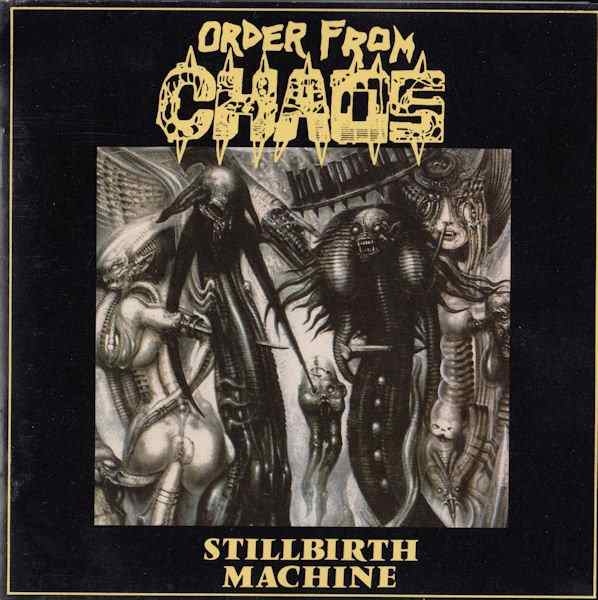
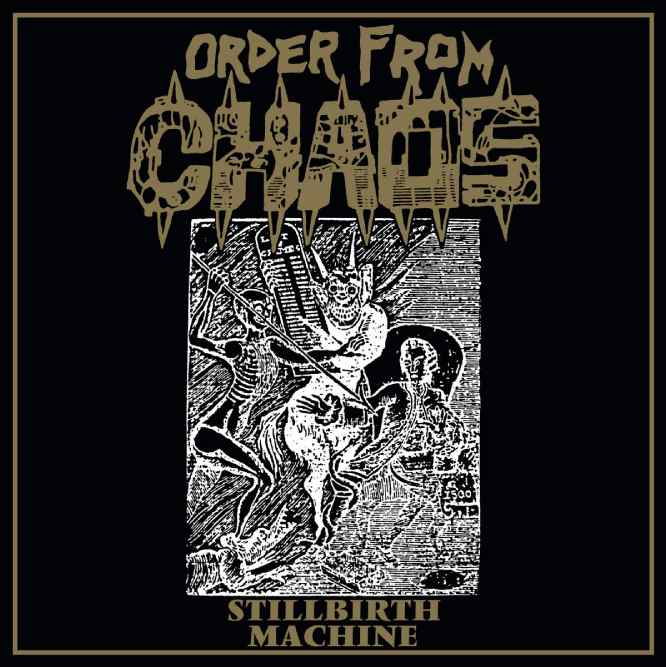
Originally released on CD in 1993, “Stillbirth Machine” didn’t receive an official US vinyl edition until fifteen years later, courtesy of Nuclear War Now!.
YOSUKE: It also became the first official pressing with the intended artwork. The woodcut I used was always meant to be the front cover of “Stillbirth Machine” – a choice Chuck made years earlier. For whatever reason, though, the Wild Rags edition had a Giger painting instead.
After “Stillbirth Machine” was finished, Wild Rags sat on it for more than a year, offering a rotating list of excuses – production costs, pressing backlogs, and so on. The band had covered the studio themselves but were yet to be reimbursed. In November 1992, they asked to be released from the label; Richard C. agreed, promising to return the DAT and original layout materials, neither of which happened.
A few months later, after spotting advertisements for their upcoming debut, ORDER FROM CHAOS realised Richard had gone ahead without telling them. To complicate matters further, there was a second label in the mix by then. After leaving Wild Rags – but before “Stillbirth Machine” finally appeared – Pete Helmkamp negotiated a separate deal with Greece’s Decapitated Records.
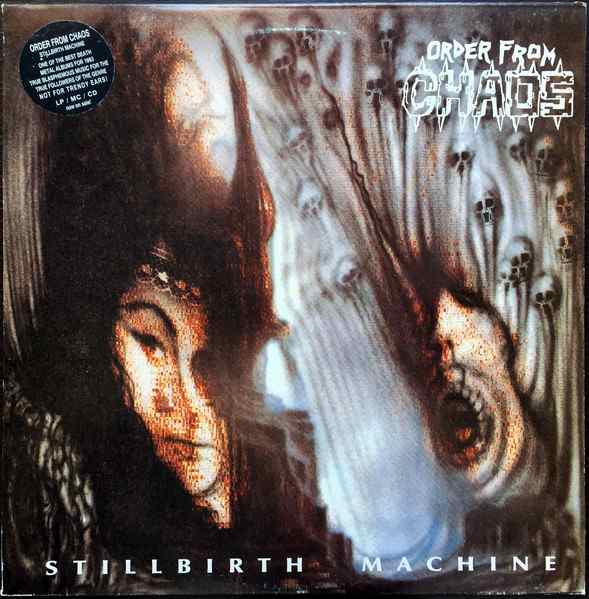
YOSUKE: I honestly don’t know where that strange Decapitated artwork came from. It looks like a zoomed-in fragment of a painting – as if someone took a newspaper clipping and blew up one small section. But that may have come down to miscommunication. Back then, everything was handled through letters, and communicating with Europe took forever.
Issued on LP, CD, and cassette, the Decapitated edition blindsided ORDER FROM CHAOS even more than Wild Rags. The layout completely derailed their instructions: the booklet swapped Chuck and drummer Mike Miller’s photos, botched the thanks list, truncated song titles, and replaced the intended cover altogether.
In May 2008, Nuclear War Now! released “Stillbirth Machine” on vinyl, true to the original vision and supplemented with vintage material. Compared to ORDER FROM CHAOS’ contemporaries, accessing the band archives proved far easier.
YOSUKE: Chuck is incredibly organised. I mean, archiving is literally part of his professional work; because of that, everything related to their musical history was flawlessly documented. He had each item arranged chronologically – every original image used in the layouts, all of it accounted for.
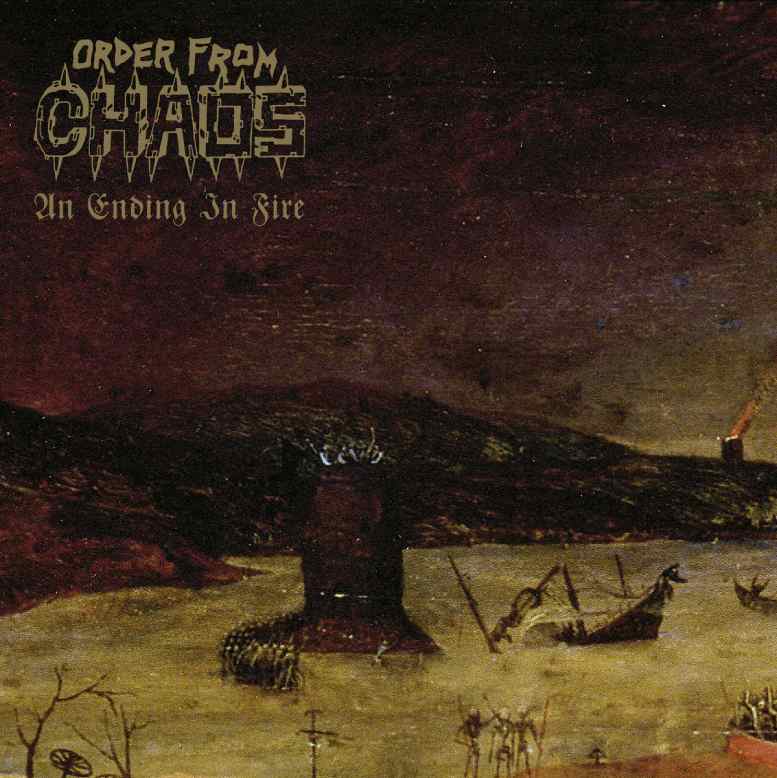
Alongside the debut LP edition came a reissue of ORDER FROM CHAOS’ third and final full-length, “An Ending in Fire”.
Recorded in 1995, it is structured as three larger pieces rather than nine individual songs. The “Conqueror of Fear” cycle unfolds as a four-part sequence – “Dawn Bringer Invictus”, “Tenebrae”, “The Sign Draconis”, and “Plateau of Invincibility” – followed by the instrumental bridge “The Angry Red Planet”. From there, the album pivots on the epic standalone “There Lies Your Lord! Father of Victories!”, before closing with the three-movement suite “Somnium Helios”.
YOSUKE: “Somnium Helios” definitely resonated with me because it represents a fully realised thought-process, sealed at birth and carried until the end. I love the idea of envisioning an entire trajectory all the way to death. That’s really the core message I took from it.
“Somnium Helios” – the dream of Helios, the Hellenic sun god whose chariot was said to drag daylight across the sky – served as a metaphor for the completion of ORDER FROM CHAOS’ premeditated three-album arc.
YOSUKE: Studying the “Somnium Helios” piece made me want to live more deliberately – to approach existence with intention, and to seriously consider what I need to accomplish on Earth before I die. I can’t speak to their exact intent, but that’s the meaning it holds to me.
When O.F.C. finished the recording and split up in the summer of ‘95, they had no label deal in place. “An Ending in Fire” remained unreleased for three years – until Osmose Productions, home to Helmkamp’s new project ANGELCORPSE, stepped in. Although highly anticipated by long-time supporters, it was received with limited fanfare from the wider metal scene.
YOSUKE: This is yet another project that falls into the category of musicians’ bands – groups that many underground artists cite as key influences. You’d see Europeans like EMPEROR wearing ORDER FROM CHAOS shirts, yet they were never discussed on the same level as many of their contemporaries.

YOSUKE: ORDER FROM CHAOS’ vision sat years beyond where the underground initially stood. It wasn’t until J. Read (REVENGE/CONQUEROR) took their philosophy further and became more widely recognised that things really shifted for them. So, who knows? Maybe ARES KINGDOM will also find broader appreciation after they break up.
Arriving barely a week after the “An Ending in Fire” reissue, “Firestorms and Chaos” – a compilation documenting ARES KINGDOM’s first decade – reads almost like an epilogue. At the time, Chuck Keller and Mike Miller were working on the follow-up to their 2006 debut, “Return to Dust”.
Earlier in the conversation, Yosuke expressed frustration that ARES KINGDOM – like ORDER FROM CHAOS – have been consistently overlooked.
YOSUKE: There are some genuinely diehard ARES KINGDOM fans. Whenever we put on shows for them, they tend to win people over, and their records do sell. But in my opinion, that still isn’t enough. Maybe the band is simply too advanced for most metalheads of this day and age.
Part of it might be that they don’t fit cleanly into any established category.
YOSUKE: Yeah, I suppose that makes them difficult to pigeonhole. Is it death metal? Thrash metal? Black metal? ARES KINGDOM aren’t Satanic or occult, nor are they really focused on specific historical events. The subject matter does revolve around war, but is approached from a more philosophical angle.
What can an underground label do in situations like this?
YOSUKE: I honestly don’t know how to help ARES KINGDOM reach a wider audience. I feel a bit guilty, because I want them to be more acknowledged, but popularity can’t really be imposed – not at my level. When you try, it turns cheesy and starts resembling something the major labels do, you know?
In what way?
YOSUKE: This might be a bit tangential, but I still don’t understand how a label like Metal Blade manages to make shitty BATUSHKA popular. Do they just pay a bunch of writers to cover them? It doesn’t feel organic. That whole process has always baffled me. How do you manufacture popularity? Where does it actually come from?
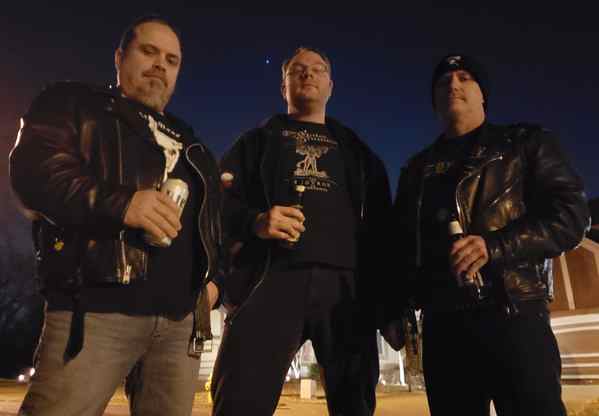
YOSUKE: There was a period in the early 2000s when I spent a lot of time at the Necropolis warehouse. Since I worked in Silicon Valley, their location in Fremont wasn’t far. It also happened to be an area where many Indians lived, which probably explains why Paul’s family settled there.
Paul Thind – a UK native of Punjabi Sikh origin – moved with his family to the United States in 1988, at age fourteen. Five years later, he founded Necropolis Records and went on to release ‘90s classics by the likes of ARCHGOAT, THE BLACK, NIFELHEIM, DAWN, and ARCKANUM, as well as the iconic “Nordic Metal: A Tribute to Euronymous” compilation.
YOSUKE: I used to drop by Necropolis mainly to talk to Matt from EXHUMED, who worked at the warehouse. I remember trading copies of VON’s “Satanic Blood Angel” for NIFELHEIM records. Back then, they were among the few bands that genuinely tried to emulate the Cogumelo sound while blending in European influences.
Necropolis released NIFELHEIM’s debut album in 1995 and then “Devil’s Force” three years later, before the band and label went their separate ways.
YOSUKE: In 2004, I spoke with one of the NIFELHEIM brothers – probably on Yahoo Chat or something – who agreed to a reissue of their first two albums. He said the rights still belonged to Necropolis, and that any licensing would have to go through Paul. The label was already in the process of folding, so I asked him whether he’d consider selling them.
By then, Necropolis was already in its death throes. A brief European lifeline through Century Media couldn’t offset the wider retail collapse and the implosion of Big Daddy Distribution, whose unpaid balances and massive returns strangled cashflow. In late 2004, Necropolis went dormant – assets transferred to a holding company as Paul stepped away under heavy personal debt and burnout.
YOSUKE: We agreed on a price. It wasn’t even especially high – around $9,000, if I remember correctly – but I didn’t have that kind of money sitting around, so I took out a bank loan. I ended up paying Paul and finalising the contract, which seemed to settle the matter.
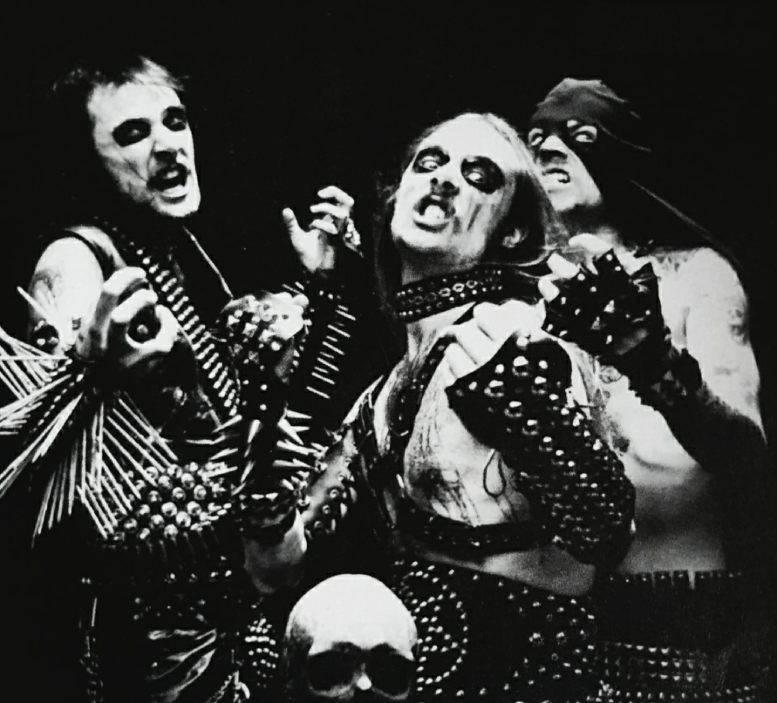

YOSUKE: My first real mistake was that I didn’t clarify things with everyone involved. I assumed the twins were communicating internally, but it turned out they weren’t, so I’d suddenly landed myself in a total minefield. I said, ‘Anyway, I’ve bought the rights, so let’s move forward.’ Eventually, both of them agreed.
log in to keep reading
The second half of this article is reserved for subscribers of the Bardo Methodology online archive. To keep reading, sign up or log in below.
Related reading