Nuclear War Now! Productions XIV
2026-02-17
by Niklas Göransson
By 2008, Nuclear War Now! was expanding even as Yosuke’s personal life tightened around him. Parenthood, relocation, and a seven-day grind coincided with a roster coalescing into a darker strain of death metal.
YOSUKE KONISHI: The mail-order gradually took over the garage of our Pacifica duplex. Another couple occupied the unit upstairs, which was completely separate from the lower one, where my wife and I lived. They eventually moved on, which allowed me to seize the entire upper level.
The year 2008 brought a major shift for Yosuke, as parenthood, relocation, and an intensifying workload all converged at once. After his daughter was born, the newly expanded family moved from Pacifica, California, to nearby Oakland.
YOSUKE: A lot of musicians lived there – John Gossard, the MORBOSIDAD guys, and others. Gigs started moving across the bay; that San Francisco venue where SABBAT played eventually relocated to Oakland, and metal shows were following the same pattern.
A big part of this development came down to the tech boom driving up costs in San Francisco – particularly around Silicon Valley, where Yosuke worked. The move introduced a punishing daily commute: he’d rise before dawn, spend hours in traffic back and forth to the office, and then work another full shift with the label at night.
By this point, Nuclear War Now! was still a solo operation: Yosuke handled packing, correspondence, ordering, and finances himself.
YOSUKE: It was a seven-day grind until my daughter got a little older and we were finally able to spend Sundays together. But early on, I basically went at it nonstop – twenty-four seven.
We’ve now discussed several aspects of Yosuke’s childhood that resurfaced later in life. This reminds me of how he described his stepfather – a workaholic who was rarely present at home.
YOSUKE: I think the mindset that workaholism equates to self-worth is ingrained in almost every Japanese man. Work becomes a way to define yourself. I’m struggling to find the exact word, but I’m sure there’s a specific term in the Japanese language for this connection between labour and personal value.
How long did it take before you turned the new house into an N.W.N! warehouse?
YOSUKE: <laughs> The Oakland storage expansion was gradual. At first, I only took over the garage and one section of the house; the living room hadn’t been claimed yet. Early on, I’d load packed orders into my car and leave it outside overnight – until someone decided to break in.
Was Oakland as bad back then as now?
YOSUKE: Well, we were up in the Oakland Hills, in an area where more affluent people tended to settle, so it felt relatively safe and was very close to nature. Living there wasn’t too bad at first, but conditions definitely deteriorated as the crime rates skyrocketed.
Were you personally affected, besides the car break-ins?
YOSUKE: We had a home invasion – the door to my record room, which sat at the back of our house, was kicked down. In the end, they walked off with an old iPhone and some jewellery, apparently unaware of the several thousands of dollars’ worth of vinyl lying around. Still, those scumbags stepped on a few LPs, and that annoyed the fuck out of me.
YOSUKE: It was becoming ever more obvious that death and black metal were converging. Bands like KAAMOS – dark death metal in the vein of INCANTATION and IMMOLATION – had started gaining traction, and I could see the genre boundaries beginning to blur. Not just musically, but also aesthetically.
What do you think caused this development?
YOSUKE: By then, black metal had been around long enough – at least within the more visible corners of the scene – for its influence to have become foundational to the underground. It makes sense that younger musicians would start approaching death metal with the same seriousness and occult focus.
Back in the mid-2000s, during a discussion with Jason Campbell, Yosuke predicted the rise of a darker, black metal-inflected strain of death metal.
YOSUKE: Even before that, you could already trace a pattern, as many prominent Norwegian bands were drifting into death metal. Some of them arguably went too far and ended up making themselves irrelevant – EMPEROR, for example, became ridiculously technical.
By the late ‘90s, EMPEROR had begun shedding the mystical grandeur of their earlier period in favour of the heavier, more death metal-adjacent riffing on “IX Equilibrium” – a shift they themselves linked to touring and writing material built to hit harder live. The 2001 “Prometheus – The Discipline of Fire and Demise” carried this evolution to its logical extreme: a far more progressive, intricately structured record composed entirely by Ihsahn.
YOSUKE: GEHENNA made a similar attempt; maybe some of those bands were simply running out of ideas. Still, a distinct strain of dark death metal was definitely emerging. Off the top of my head, the main examples would be DEAD CONGREGATION, NECROS CHRISTOS, and GRAVE MIASMA. TEITANBLOOD, possibly – though they leaned more towards bestial black metal.
The 2006 split EP between two then-relatively obscure acts – NECROS CHRISTOS and TEITANBLOOD – feels almost prophetic now. The latter would go on to push the bestial sound forward by drawing equally from low-end malice à la AUTOPSY and the plodding, atmospheric lo-fi black metal of DEMONCY and BEHERIT.
NECROS CHRISTOS, meanwhile, developed a distinctly occult form of death metal, refined on “Trivne Impvrity Rites”, their 2007 debut released by Sepulchral Voice Records.
YOSUKE: I was especially drawn to the early NECROS CHRISTOS material, mainly because it didn’t sound particularly European to me. Instead, it reminded me more of certain American bands. What they were doing felt closer to something like GOATLORD mixed with EVER DARK – essentially just very dark death metal.
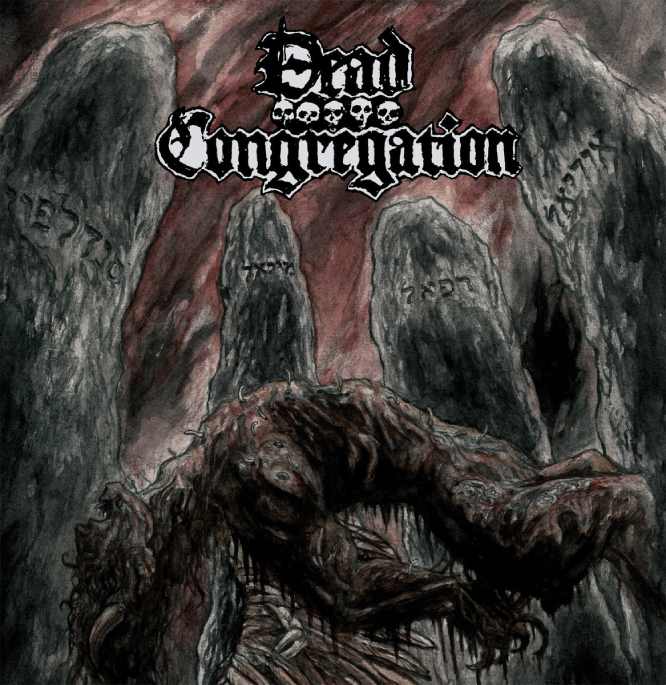
YOSUKE: I became aware of DEAD CONGREGATION through the ten-inch (“Purifying Consecrated Ground”) Necrocosm released in 2005. The CD version came from another label – I think it might’ve been Konqueror. I carried both through my distro, and what immediately stood out to me was how much they sounded like dark American death metal.
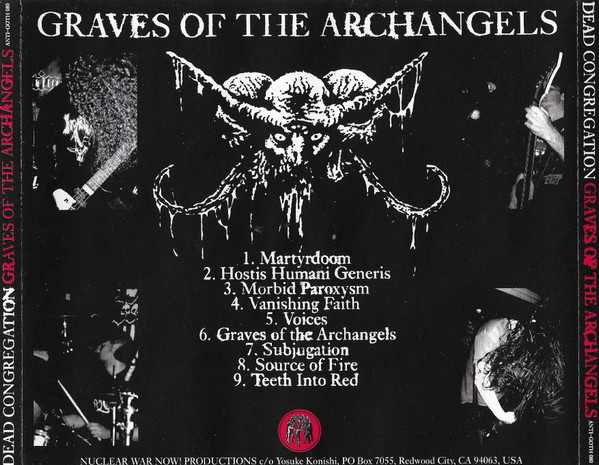
The 2005 EP was strong, but not especially original – more INCANTATION worship than fully formed identity. The debut album, “Graves of the Archangels”, is where DEAD CONGREGATION truly came into its own.
YOSUKE: INCANTATION are in my top ten of death metal. To me, “Mortal Throne of Nazarene” sometimes sounds like incredibly dark, dense black metal. I always liked the doomy elements as well, which DEAD CONGREGATION clearly tapped into. So, when Anastasis reached out about us working together, it felt like a natural fit.
Aside from a reissue of IGNIVOMOUS’ demo, the vinyl and CD editions of DEAD CONGREGATION’s “Graves of the Archangels” in January 2008 marked Nuclear War Now!’s first real involvement with this death metal resurgence.
YOSUKE: I thought DEAD CONGREGATION’s debut was among the strongest records in that vein, but I had no idea how popular it would become. The last track always struck me as the highlight – to my ears, it sounded like Swedish black metal filtered through INCANTATION, yet genuinely original.
Most of “Graves of the Archangels” is built around suffocating, doom-drenched death metal – but the final track, “Teeth into Red”, with its long, cyclical tremolo motif, is where the black metal influence surfaces most clearly, merging both atmospheres into a single riff.
YOSUKE: “Teeth into Red” made perfect sense as a closer, especially with that long, expansive part. I also appreciated how carefully the whole album was arranged; the songs felt deliberately positioned, placed exactly where they needed to be. Honestly, I liked everything about it.
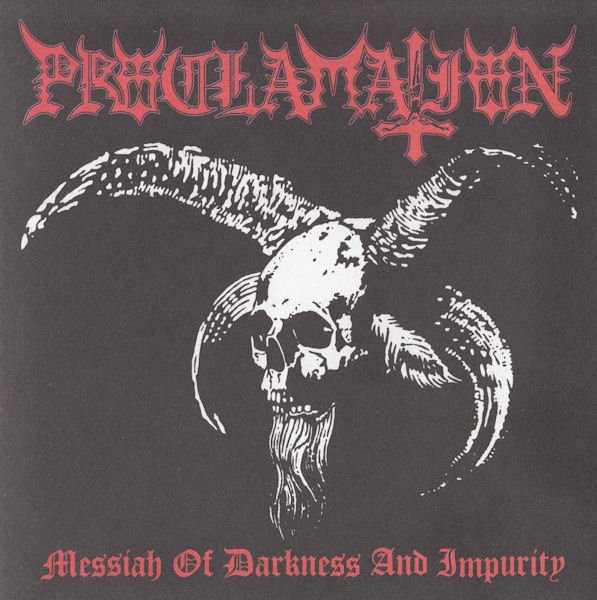
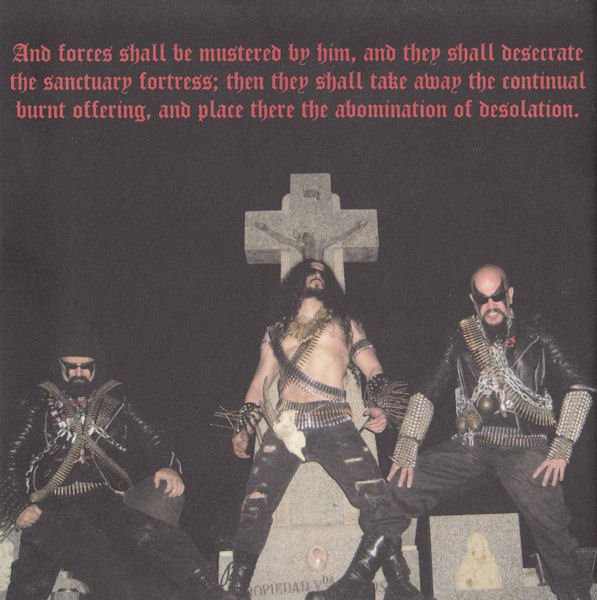
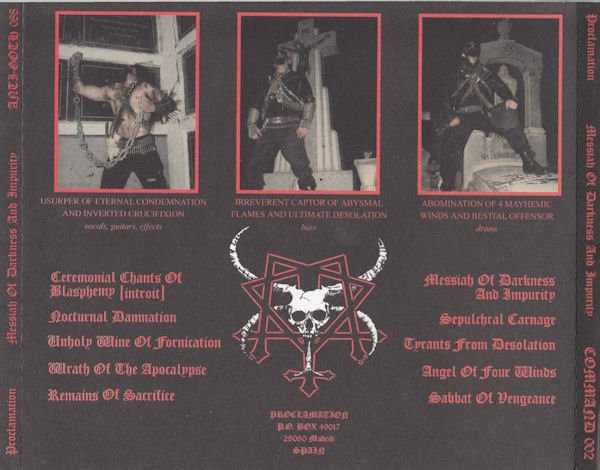
In early 2008, two years after “Advent of the Black Omen”, Nuclear War Now! and Ross Bay Cult released PROCLAMATION’s second album, “Messiah of Darkness and Impurity”. Tracked entirely with analogue equipment, the record paid clear homage to the original architects of the bestial sound.
By then, their approach was no longer especially novel, but it’s worth noting that PROCLAMATION had been operating in this space long before the style gained prominence.
YOSUKE: Despite being younger than me, they were veterans of that sound. Even before PROCLAMATION released their first demos, the main guy, Usurper, was already active with his ‘zine (Panoptikon) and a band in a similar vein called GORATH.
How was the band received back then?
YOSUKE: They weren’t obscure – but nothing more than that. At the time, I expected their debut to be a blockbuster, mainly because there was already a lot of buzz around PROCLAMATION. The TEITANBLOOD split had come out by then, and plenty of tapes were circulating.
In 2005, Kiss of Shame Records – a Greek underground label run by the vocalist of GOATVOMIT – issued a split seven-inch with PROCLAMATION and TEITANBLOOD.
YOSUKE: The strange thing is that PROCLAMATION actually became far more popular after the band dissolved. Both albums did fairly well, but the second pressings moved far quicker than the first – in fact, they sold out immediately.
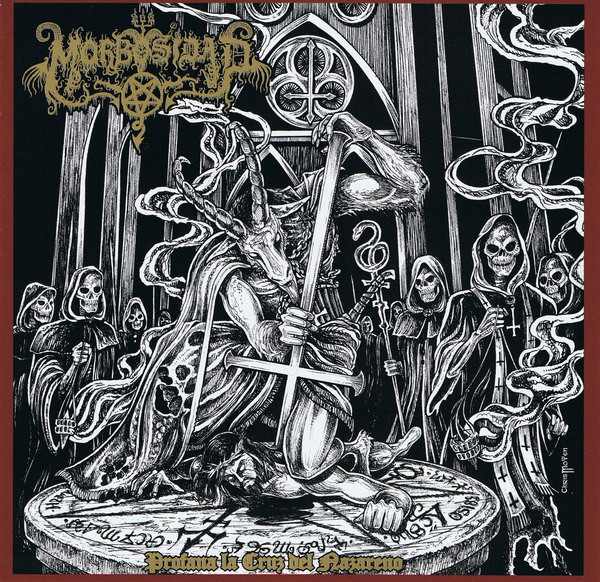
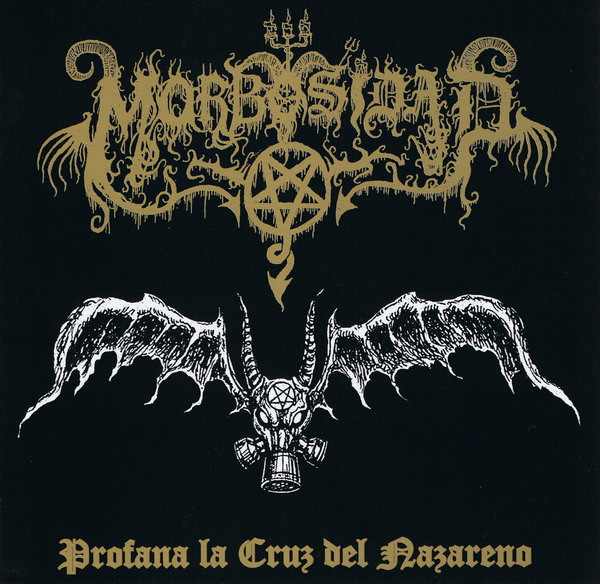
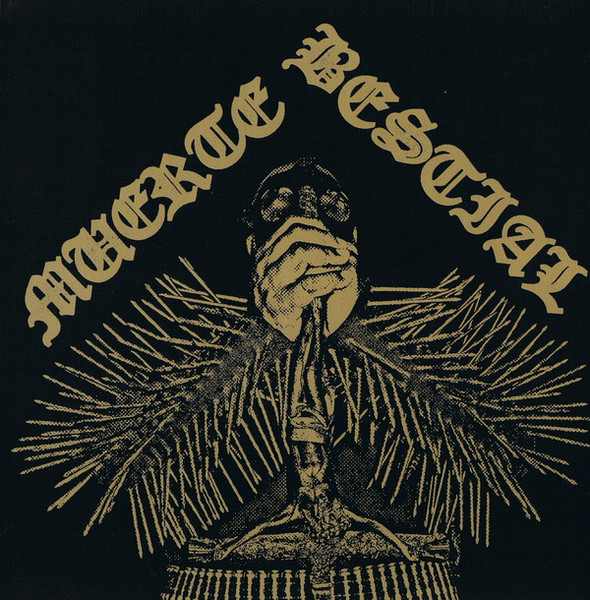
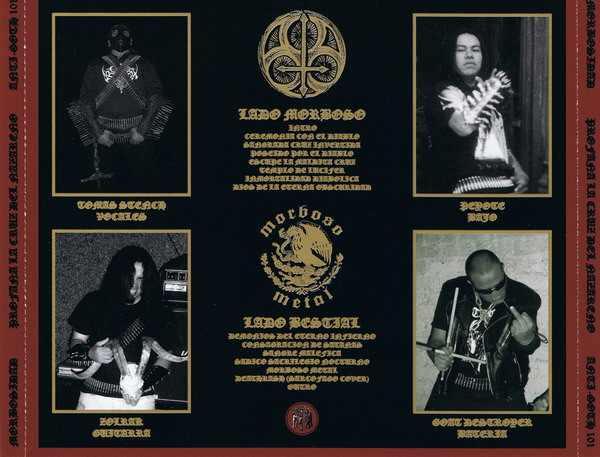
When Nuclear War Now! finally issued a MORBOSIDAD full-length, “Profana la Cruz del Nazareno” in March 2008, the band was no longer a local entity. Tomás Stench had moved to Texas and recruited guitarist Zolrak – a long-time scene veteran and the organiser of Destroying Texas Metal Fest.
YOSUKE: My relationship with Tomás had improved – we were actually talking again by that point. Maybe the distance helped. The whole “Profana la Cruz…” release was a bit strange, though, because I’m pretty sure the version we released wasn’t the one they originally intended to put out <laughs>.
What? How?
YOSUKE: I’m not sure; I should probably ask Tomás about this and see if he remembers. My vague recollection is that the recording wasn’t even fully completed when the album came out. Nonetheless, it was the master tape they gave me, so that’s what got released.
Had the band kept growing since the “Legiones bestiales” EP?
YOSUKE: Yes, MORBOSIDAD were relatively popular. Once Tomás got a green card – because for a while he didn’t have legal status, his visa had expired or something – the band started touring everywhere. I remember them going to Russia to play with PSEUDOGOD, and they also did a lot of shows in South America and Europe.

YOSUKE: Whenever REVENGE take the stage, it’s like a precise, deliberate attack. If I remember correctly, I first saw them on that 2003 tour with DEICIDE and BEHEMOTH; they were so brutally harsh it made the other bands sound like pop music.
Back in March 2003, REVENGE embarked on an extensive US tour alongside DEICIDE, AMON AMARTH, BEHEMOTH, and VEHEMENCE. Three years later, they joined DESTRÖYER 666 for a run through Europe.
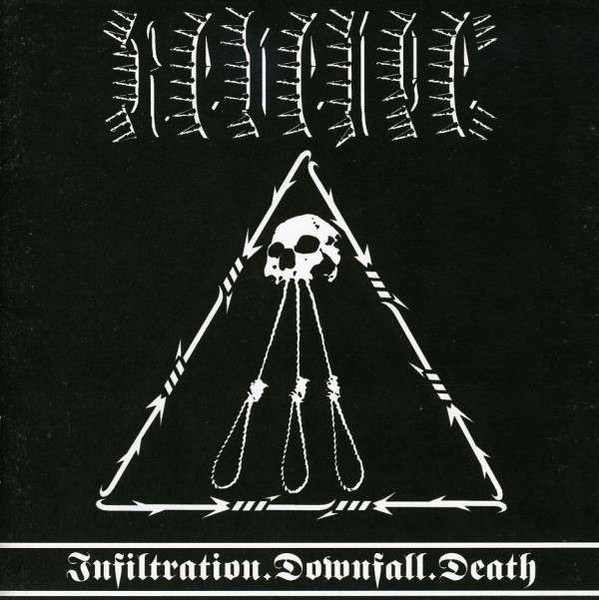
By July 2008, when N.W.N! issued their third full-length, “Infiltration.Downfall.Death”, on vinyl, REVENGE had just returned from a two-and-a-half-week European tour with ANGELCORPSE and ARKHON INFAUSTUS.
YOSUKE: REVENGE on stage is a different animal – far more vicious than on record. Capturing that level of violence in a studio environment is almost impossible, even though they’ve managed it a few times, some attempts more successfully than others.
One recurring weakness I’ve noticed among bestial bands is an inability to translate studio intensity into the live setting. REVENGE, however, operate on another plane entirely – an almost otherworldly ferocity.
YOSUKE: A lot of it comes down to J. Read’s militant work ethic and his uncompromising rehearsal standards. He once told me that if a member misses even a single practice, they’re out of the band <laughs>. I don’t know how literal he was being, but you need extreme discipline to keep the knives sharp, so to speak.
In your experience, how important is touring for building momentum and supporting releases?
YOSUKE: Live shows are essential to a band’s survival – especially now, when there are so few ways for musicians to sustain themselves beyond door splits, shirts, and merch sales on the road. Performing on stage is also one of the most powerful promotional tools available.
log in to keep reading
The second half of this article is reserved for subscribers of the Bardo Methodology online archive. To keep reading, sign up or log in below.
Related reading