


The Ajna Offensive: Liber Ketola
2026-02-25
by Niklas Göransson
Issued by The Ajna Offensive and NoEvDia, Liber Ketola is a monograph dedicated to the late Finnish artist whose vision shaped the aesthetics of black and death metal. To grasp how that legacy manifested, we return to its earliest stirrings.
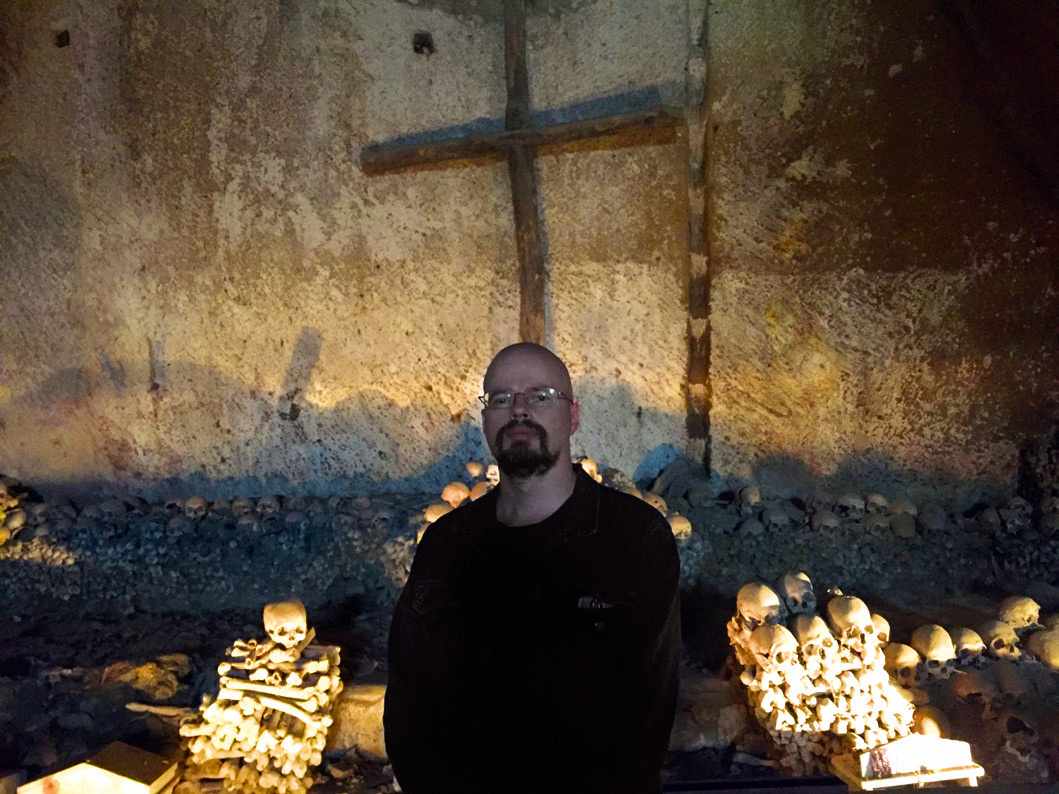
TYLER DAVIS: Liber Ketola is an attempt to safeguard Timo’s legacy – a collective effort by a circle of people who knew him. All of us shared the same conviction: his body of work needs to be preserved in a way that goes above and beyond random album covers scattered across the last three decades.
CHRISTIAN BOUCHÉ: Timo was a rare human being, the kind this world witnesses only once in a generation – and I mean that sincerely. He lived and incarnated his own radical nature without pretence. Regrettably, as Liber Ketola testifies, Timo’s constant artistic ascent ended prematurely.
If asked about Timo Ketola by someone entirely uninitiated, how would you describe him?
CHRISTIAN: Timo was someone who could learn Italian in a few months, eventually moving there to live a life free from the constraints of modernity. While largely introverted, he maintained a candid dialogue with the world. Timo also had an insatiable curiosity for literature, art, spirituality, music, craft, and ideas in general. The breadth of his interests showed itself in the striking differences among the people he called friends and occasionally brought together.
TYLER: When my brother, an artist of thirty years, asked about the book, I emphasised that Timo didn’t operate within the same boundaries as his contemporaries – always one step ahead. However, it can be challenging to explain the imagery to people who lack a frame of reference for death and black metal.
CHRISTIAN: I’m certain that, given another decade, Timo would’ve entered the broader history of art, far beyond our specific niche. His impact on the world of black and death metal cannot be overstated, and those fortunate enough to have crossed paths with him will remember someone truly unique and irreplaceable.
TYLER: My brother could certainly find value in many of Timo’s pieces – the complexity, the technique, how things were applied and rendered. Still, the material comes across as very dark and extreme. I only register that contrast when I’m in the presence of someone outside our subculture, because for me it’s just another day.
Tyler Davis owns and operates The Ajna Offensive, an American music imprint founded in 1995. Fourteen years later, the release of Qabalah, Qliphoth and Goetic Magic by Swedish author Thomas Karlsson prompted an expansion into publishing through Ajna Bound.
In the wake of Timo Ketola’s passing on October 12, 2020, Tyler set out to assemble a comprehensive monograph dedicated to Timo’s art. Early in the planning process, he invited Christian Bouché of French label Norma Evangelium Diaboli (NoEvDia) to collaborate.
TYLER: I’ve worked closely with NoEvDia since 2003, and Timo’s body of work for DEATHSPELL OMEGA and several other bands tied to that label gave the partnership a natural foundation. It also made sense logistically – the book is, what, over six pounds? Getting copies into Europe would’ve been a massive undertaking on my own.
CHRISTIAN: One pivotal moment was when I met Tyler and Nasko (TEITANBLOOD) in Madrid. Tyler still seemed a little hesitant about how to approach the book, but after a few hours of conversation, I believe the idea behind Liber Ketola became clear enough for him to push it into reality.

CHRISTIAN: We made preservation our most immediate priority. Several individuals stepped in to make sure Timo’s originals weren’t thrown out when his apartment in Italy was emptied. Further uncertainty arose about the many pieces he’d left behind in Sweden – once again, friends of Timo intervened.
In January 2022, The Ajna Offensive and NoEvDia issued an open call for archival material, asking friends, collaborators, and former clients of Timo to dig up anything that could help build a comprehensive picture of his life’s work.
TYLER: What struck me as a little ironic was how people who embrace all the chaos and nihilism that once came with death and black metal reacted so sentimentally to Timo’s passing. I don’t mean this as a disparaging remark upon them, but it took some individuals much longer than I had expected to process the grief.
The request was intentionally broad: finished artwork, raw files, sketches, logos, sculptures, calligraphy, unpublished pieces, photographs, tattoos, correspondence – even fragments of process notes or just offhand comments Timo had written in emails.
TYLER: Admittedly, it was audacious to expect people to scour hundreds of emails for snippets worthy of including in the book. Most needed well over a year to come to terms with Timo’s death before they could think about going through their archives. Even then, several contributors I deemed essential remained hesitant, so I had to go to them.
During the research and material-gathering phase, Tyler travelled from the Ajna Offensive compound in rural Oregon to Europe three times, visiting various people who’d been close to Timo.
TYLER: Many of them didn’t want to go through their emails, artwork, or letters from Timo until I was there in person. I don’t know if my presence softened the impact or simply made the emotional weight easier to manage, but a lot of people were deeply affected by his passing.
Two years later, Tyler had either received or personally scanned close to 20,000 images. After a gruelling selection process, the material was sent to Tilmann Benninghaus, guitarist of DROWNED and Timo’s mentor in book design, who handled the layout based on a demo sketch provided by Tyler.
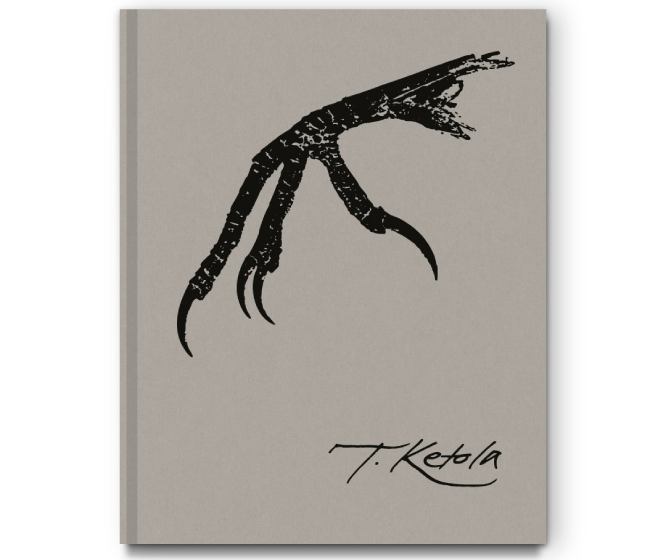
When Liber Ketola finally arrived from the printer in October 2025, its release was commemorated through a series of exhibitions across Europe – Sweden, Germany, Italy, and France – giving many key contributors their first glimpse of the finished work.
TYLER: Meeting so many people who worked with Timo from the very beginning, right up to the end, in such a personal and intimate setting was amazing. Every one of them has been incredibly enthusiastic about the book. I’m grateful for that, because you don’t often see this kind of communal appreciation.
CHRISTIAN: I have rarely, if ever, heard so many supportive comments about a project. Another surprise was all the thoughtful questions I received at the exhibitions: several attendees had an intimate knowledge of Timo’s work and a remarkably acute understanding of it.
TYLER: We’d timed the official release of Liber Ketola to coincide with my return to the US. By then – between sales at the events, plus pre-orders through the Ajna webshop, NoEvDia’s site, and their wholesale partners throughout Europe – it was basically gone.
The second edition is due shortly – in fact, both the North American and European presales just went live. Meanwhile, I assume there’s been plenty of feedback from the general public by now.
TYLER: It’s extraordinary how little criticism there’s been – especially considering that these days, everyone with a keyboard feels compelled to sling slander left and right. Thus far, I’ve only seen two negative comments: one person mentioned a faulty binding on their copy, and the other complained the book didn’t have enough quotes from Timo.
Except for Tyler’s foreword, the monograph relies exclusively on the artist’s own voice. Email and letter excerpts augment a visual presentation spanning Timo Ketola’s entire career – everything from iconic album covers to the fanzines he edited.
TYLER: Without naming anyone in particular, I saw a compilation release where the band gathered commentary from partners, fans, and so on. Reading it felt very awkward to me – and that reaction became the main impetus for making sure only Timo commented on Timo in Liber Ketola.
The backstory portion of this feature takes a similar approach. When Timo died, he and I were working on a Bardo Methodology interview – and rather than let the exchange go to waste, I decided to use much of it here. However, since the material is woefully incomplete, outside perspectives will fill the narrative gaps.

TIMO KETOLA: I am most certainly no ‘Swedish-Finnish artist’. I’m a Finn who moved to Sweden as a child, and I’ve neither regarded nor called myself anything else. It’s not all that important – but consistency is key.
Timo Ketola was born in Helsinki, Finland, on February 25, 1975. Three years later, his family moved to Sweden and settled in Brandbergen, a suburb in the Haninge municipality just south of Stockholm.
TIMO: The main advantage of growing up in a religious household was the great bedtime stories. I’d leaf through our big family bible with colour illustrations – the same ones GRAND BELIAL’S KEY use – and see the rivers of blood, Moses locked in magical battle against Egyptian priests, and so on. I’d just point and say, ‘That one!’ and have it read to me.
Rather than moral instruction, Timo recalled the Bible as more of a formative storytelling experience. Illustrated literature was also where his first creative impulses took shape – an obsession that stayed with him for as long as he drew breath.
CHRISTIAN: Timo’s passion for the most obscure death metal demos was matched only by his fascination with the Hypnerotomachia Poliphili. Published in 1499, it’s an incunable whose intricate layout approach became an early precursor to the graphic-novel form.
TIMO: Besides studying it many times, I’ve read at least five books about the Hypnerotomachia Poliphili. In 2014, I had the pleasure of giving a lecture on it at the Esoteric Crossroads III: Art, Eros, and Esotericism conference. The enduring impact of such an ancient work – something considered arcane when it first appeared – is just remarkable.
Long before discovering the Hypnerotomachia Poliphili, Timo was absorbed in comic books and graphic novels – modern heirs to the centuries-old interplay between prose and visual art.
In one of the quotes featured in Liber Ketola, Timo recalls early attempts to become a comic book artist – drafting full-page layouts, sketching panel grids in different shapes and sizes, only to abandon the project a few frames in because he hated drawing the same image twice. Anyone who’s worked with Timo will immediately recognise that trait: an incessant refusal to repeat himself.
TYLER: Absolutely. Which is funny, because that’s one of the reasons I always hated comic books. Timo also pointed out how the cover art often looked compelling – but once you flipped through the pages, it wasn’t the same artist inside. Just repetition, repetition, repetition.
CHRISTIAN: Well, there was always that drive to progress, learn, and evolve – but repetition is, to some degree, part of every artist’s trajectory. Sometimes, a theme needs to be revisited; alternatives must be manifested until everything feels resolved. Other times, replicating a certain visual gesture or identity becomes meaningful in its own right.
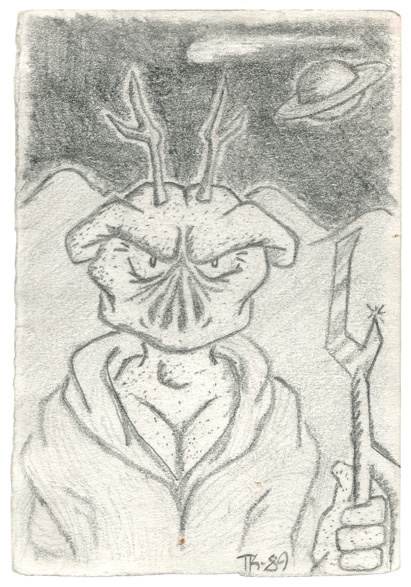
Instead, Timo’s early artistic ambitions were channelled into his growing passion for music.
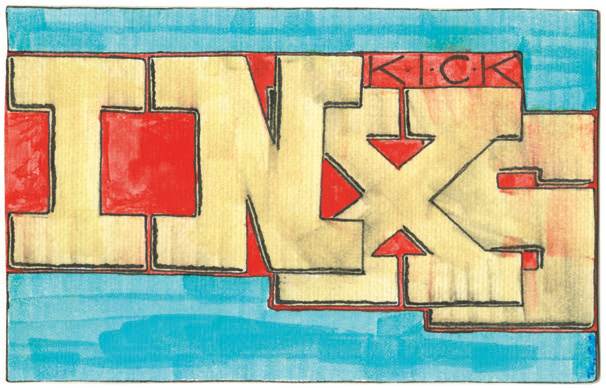
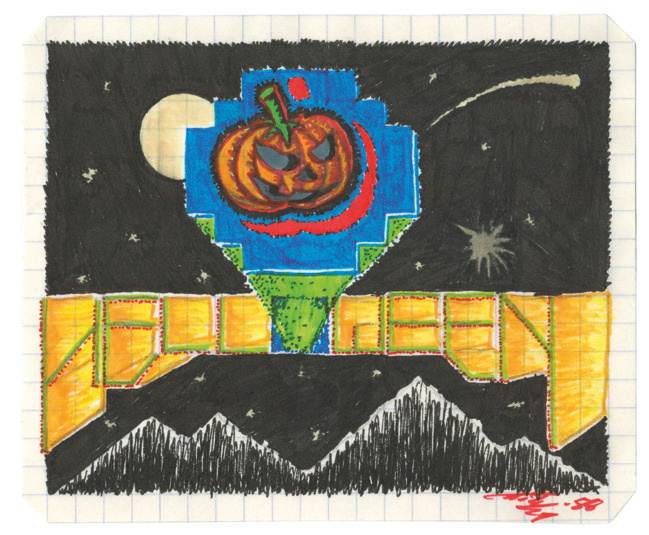
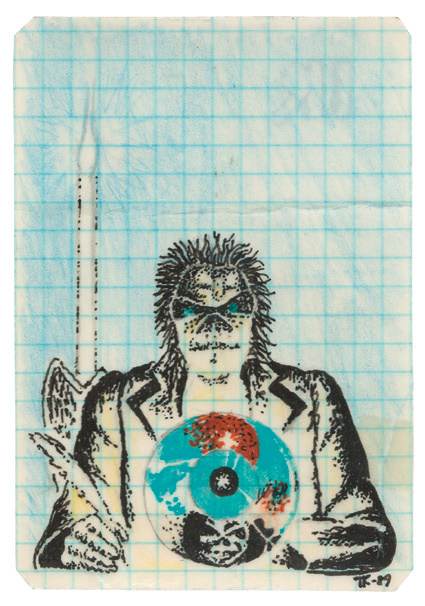
Timo first encountered heavy metal around the age of ten. Coming from a Christian household, he initially felt uneasy about the ‘Satanic imagery’ of some bands, but soon came to terms with it. Liber Ketola features late-’80s designs inspired by IRON MAIDEN and HELLOWEEN – material unearthed during Tyler’s trips through Europe.
TYLER: We found a little folder of drawings that looked like they were from grade school. Even though Timo’s style was much harder for me to recognise in those HELLOWEEN and IRON MAIDEN pieces – and don’t forget INXS <laughs> – you could still distinguish them as his works.
In 1989, after discovering METALLICA, Timo’s musical interests shifted towards the speed and aggression of thrash metal. Around the same time, he began reevaluating religion.
TIMO: At fifteen, I concluded that Christianity wasn’t for me. Nevertheless, I’ve always found it useful to have studied Western religion – not least to distance myself from it. The myths themselves are still fascinating, especially once you supplement the canonical gospels with texts like the Dead Sea Scrolls.
TYLER: The more esoteric strands tied to the Bible – Gnostic writings such as the Dead Sea Scrolls… I think that influence reached far beyond artwork and shaped Timo’s spiritual outlook. He and I had many conversations about religion and how it intersected with his occult beliefs and magical practices.
CHRISTIAN: Timo and I did talk about Biblical apocrypha, although I probably approached it with a bit of amusement. In the last years of his life, we debated what he called ‘my Satan’ and how it had evolved for him. What was once pitch black now showed broader nuances incorporating paganism – and yes, even Jesus, understood symbolically, of course.
This dual stance – rejecting the faith while maintaining a lasting interest in its lore and symbols – became a persistent thread running through Timo’s artistic worldview.
CHRISTIAN: Timo was extremely fond of figures like William Blake and Austin Osman Spare; unless I’m mistaken, those were the two artists whose books he collected the most. Especially with Spare, myth and symbolism became a way to uncover hidden atavisms buried deep in the human psyche.
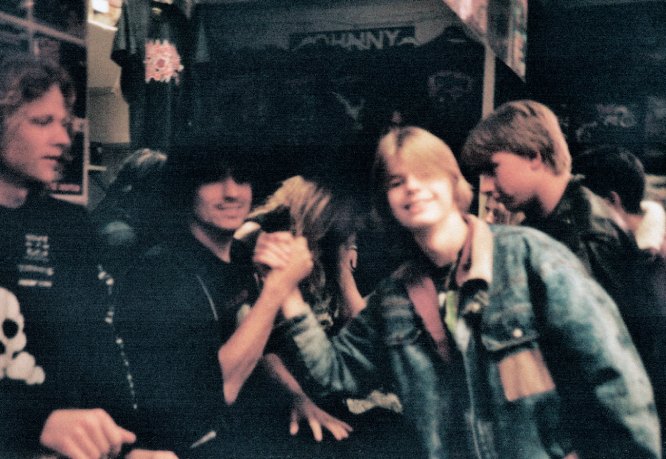

In the spring of 1991, Timo heard ENTOMBED on Swedish national radio. Despite some initial confusion, given how abrasive it sounded compared to mainstream thrash, he soon became immersed in death metal with an intensity that eclipsed his earlier musical interests.
Timo’s gateway into the metal underground appeared at House of Kicks, a record shop in Stockholm city, during the spring of 1992: Thanatography #4, only the third fanzine he’d ever encountered.
TIMO: Thanatography cost twice as much as regular ‘zines, but it was an investment. Absolutely mental issue – to this day, I’ve rarely seen such a stacked line-up. I don’t even remember how many interviews it had; every Nordic band that later became relevant showed up in those pages, alongside articles and reviews covering the rest of the world.
Edited by MONUMENTUM mastermind Roberto Mammarella and Stefano Longhi – later of Scarlet Records – Thanatography #4 spanned eighty-eight pages and featured interviews with DISMEMBER, SAMAEL, SADIST, ROTTING CHRIST, DESULTORY, DISSECTION, PAN–THY–MONIUM, SENTENCED, AMORPHIS, EDGE OF SANITY, DARK TRANQUILLITY, ABRUPTUM, and many more.
TIMO: With its semi-glossy cover, Thanatography looked nothing like an underground fanzine – yet was so hellishly obscure it made my head spin. VARATHRON? ROTTING CHRIST? Never heard of them. That same issue even included an old photo of Ultrahuset, less than two kilometres from Brandbergen.
Opened in 1980, Ultrahuset was an autonomous venue and social centre. For nearly a decade, it hosted hundreds of concerts, primarily by Swedish punk and hardcore bands, while occasionally welcoming international groups like BLACK FLAG. A few early underground metal acts, such as MORBID, also performed there.
Ongoing clashes with the municipality eventually escalated into occupation, eviction, and finally the building’s destruction by fire in 1988.
TIMO: The encyclopaedic scope and uncompromising execution of Thanatography left a lasting impression; no band was too obscure as long as the music delivered. For instance, that’s where I first discovered SHUB NIGGURATH. Fanzine reviews were the only thing missing – I always devoured those sections.
As Timo once pointed out to me, fanzine reviews were far more common in underground publications from Scandinavia.
TIMO: Thanatography went deep without becoming as dry as Mortician Magazine. It had the occasional football question, but they never elevated silliness into an art form the way Putrefaction did. For more esoteric material, though, I turned to ‘zines like Hammer of Damnation.
log in to keep reading
The second half of this article is reserved for subscribers of the Bardo Methodology online archive. To keep reading, sign up or log in below.
Related reading

