Liber Ketola II
2026-03-04
by Niklas Göransson
By the early 1990s, Timo Ketola was firmly embedded in the international metal underground yet remained largely isolated within his local scene. This changed when a chance encounter with Daniel Rostén paved the way for Script Infernal.
TIMO KETOLA: In ‘93, I contributed a handful of interviews, live reports, and reviews to the first issue of a British ‘zine called Final Obituary. One of the two editors was Andrew McIvor (CODE), whom I’m still in occasional touch with.
Timo Ketola first encountered death metal in 1991. What began as curiosity quickly escalated into full immersion once he discovered the underground network beneath the music – fanzines, tape trading, and a postal culture linking devotees across the world. Early contacts included Will, the other Final Obituary editor, who invited Timo to contribute.
TIMO: By then, I’d started attending the many shows scattered across Stockholm’s suburbs. It was a great time for live death metal, with bands like OPETH, AT THE GATES, ENTOMBED, DESULTORY, UNANIMATED, ETERNAL OATH, and HYPOCRISY. I met Rostén on the way to one of those gigs.
In Liber Ketola, Timo describes the strange paradox of having an extensive international network of death metal fanatics while lacking any like-minded contacts at home. Daniel Rostén – later of FUNERAL MIST and MARDUK – became one of Timo’s very first local connections.
What I find curious here is how two introverts, neither of whom would normally be inclined to seek out contact, end up striking up a spontaneous conversation.
DANIEL ROSTÉN: Luckily, there are certain brews and potions that can turn an introvert into an extrovert in a matter of minutes. My memory from this period is rather hazy, to put it mildly, but yes – around ‘93 sounds right. On the subway or maybe the commuter train, heading out to some suburb.
Do you remember if Timo was alone?
ROSTÉN: I’m fairly sure he was accompanied by two individuals from his local circle. I could be wrong, but I got the impression he’d teamed up with them for lack of better options. They didn’t seem to share Timo’s interests, mindset, or musical devotion at all.
Your younger self wasn’t usually drawn to timid, bespectacled, nerdy types – why do you think you clicked with Timo?
ROSTÉN: Well, as the observant will know, there’s good nerd and then there’s bad nerd; Timo was definitely the former. Though really, it had less to do with ‘nerdiness’ and more with him being completely unbothered by the opinions or expectations of his surroundings – or people in general.
Timo was mainly into death metal at that point, but you’d already begun gravitating toward black metal, right?
ROSTÉN: Yes. I think it had taken hold a year or two prior, depending on what one considers black metal. Earlier still if you count BATHORY, though I couldn’t pinpoint exactly when.
Did you and Timo start hanging out in person after that?
ROSTÉN: At first, we just exchanged home addresses to trade some tapes. I was constantly hunting after new, interesting acts – the more obscure, the better – and I suppose I saw Timo as a dependable source for that.
Were you active in the tape-trading scene?
ROSTÉN: Very little. I tried for a while, but it just wasn’t my cup of tea. Sure, there were real treasures out there, some of which I still value and cherish today – however, I always found writing letters exhausting.
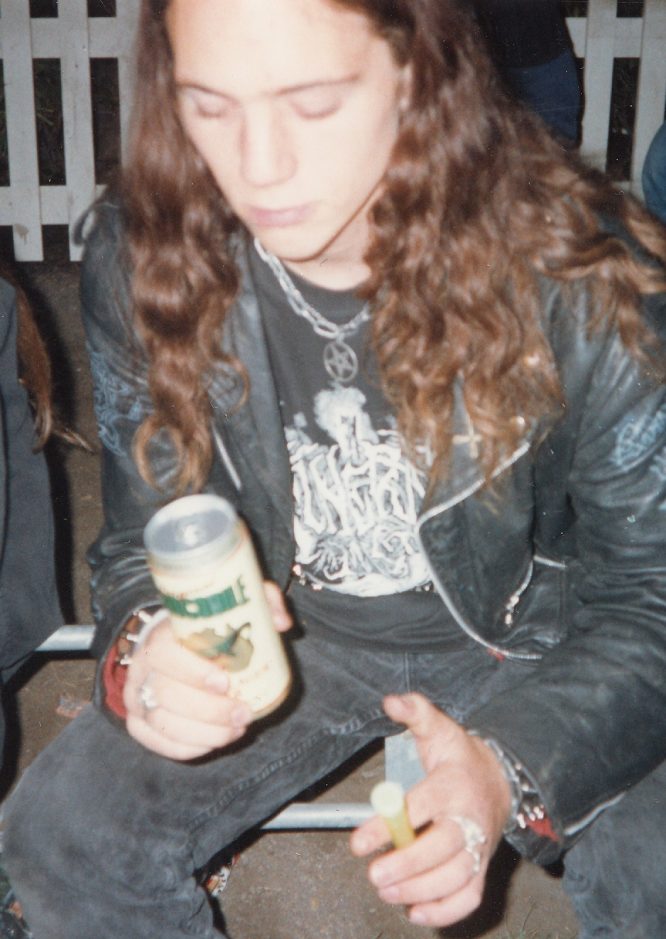
TIMO: I believe it was my work with Final Obituary that inspired Rostén to start what became Script Infernal. Initially, I’d agreed to contribute a few reviews and interviews, but when his two friends jumped ship, it ended up being just him and me doing everything.
ROSTÉN: If I’m not mistaken, the whole thing might even have been the two other guys’ idea in the first place. But that was pretty much the entirety of their contributions; they didn’t take it seriously. And to be honest, neither did I, so Timo handled almost everything himself. I only helped out with a few random things here and there.
Were you already interested in graphic design?
ROSTÉN: Not graphic design per se – more the art, imagery, and illustration behind it. The actual layout part came much later.
Among Rostén’s more memorable contributions is a review of DEMOLITION HAMMER’s 1992 album “Epidemic of Violence”, which I’ll quote in full:
Gym shoe metal? No thanks!!! This release is a little bit old but it’s so extremely worthless that I just had to review it anyway. This is shit, stay away from it.
ROSTÉN: Oh, wow – I have absolutely no memory of that. Surprising, even a bit shocking, since I actually like DEMOLITION HAMMER. Their “Skull Fracturing Nightmare” demo is still remarkably strong, and the first album holds up too. I suppose I was under the totalitarian spell of black metal at the time.
TIMO: I think the MISCREANT debut received one of my first hesitant attempts at a proper trashing; I got better at it later. I also remember Jonas Renkse (KATATONIA) taking offence at the “Dance of December Souls” review – or rather, my comment about the crooked pentagram in their logo.
For a Swedish teenage fanzine made in 1994, the range is surprisingly broad – everything from established bands like MY DYING BRIDE and MARDUK to obscure acts such as Belarusian GODS TOWER and Malta’s BEHEADED.
BEHEADED vocalist Marcel Scalpello is credited with ‘inverting and pinching’ the Script Infernal logo. This was a common mid-’90s fanzine trick: photocopy a hand-drawn logo into a negative, then stretch it on the copier’s platen to create a warped variant.
Scalpello – who’d recently launched Moonflame Rag – also became the first to commission Timo for a formal art assignment. Ketola was asked to create a cover depicting Christ crucified upside down, a goat perched on the cross, giving birth. Ultimately, Moonflame never materialised, and the plan shifted to using the artwork for BEHEADED’s debut album. But Malta’s strict censorship laws made that impossible, and the piece remains unused.
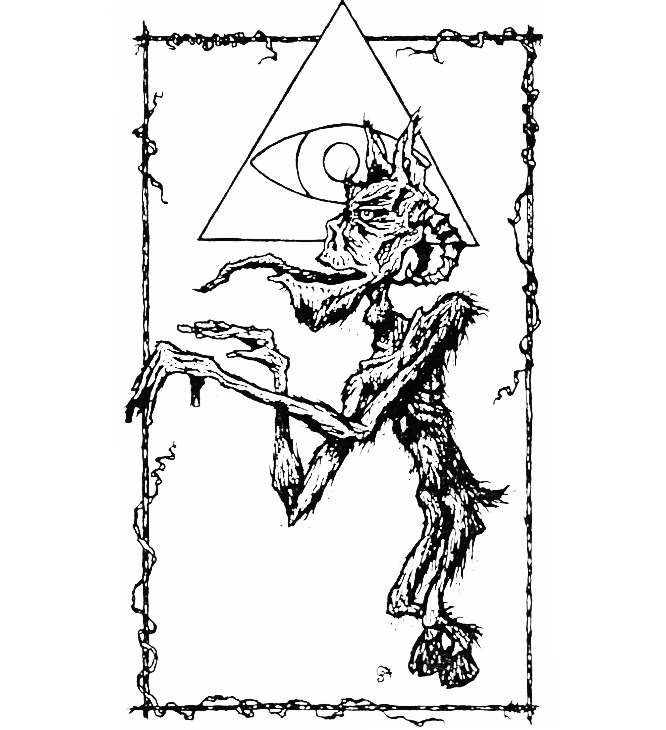
KOSTA PAPAVASSILOU: The first time Timo and I met was at Tre Backar in Stockholm, around ‘94. I must’ve been, what, eighteen? As you might recall, the basement bar there had become a regular haunt for metalheads. We started talking, and I remember my surprise when he claimed to be from Brandbergen.
Constructed during Sweden’s post-war suburban expansion, Brandbergen is a housing district on Stockholm’s southern edge, dominated by looming concrete apartment blocks clustered around a shopping centre.
KOSTA: I said, ‘Nah, that’s impossible. Everyone in the area who’s into metal already belongs to the little clique I’m part of. I’ve never seen you before; never even heard your name.’ Turns out, he had indeed grown up there. Born in Finland, sure – but raised in Brandbergen.
By the late ‘70s, when Timo’s family relocated to Sweden, Brandbergen had become a densely populated, ethnically mixed suburb.
KOSTA: We kept talking and soon identified plenty of common interests. Timo’s eyes lit up when I mentioned my small collection of occult books. Besides a genuine curiosity in the subject matter, he needed artwork for his fanzine, Script Infernal.
From Timo’s earliest fanzine days to his last, he firmly believed in filling the pages with older, non-metal artwork – far more than using the bands’ own covers or merch designs.
TIMO: When you focus on contemporary imagery, it feels far less… timeless. I mean, Metalion and his ‘Slayer Mag is not a newspaper’ stance influenced me enormously. This kind of publication carries more weight than Metal Hammer and their ilk because it sits outside the frantic rush and superficiality of regular music media. We’re dealing with eternities; people will still be reading these interviews ten years from now.
KOSTA: About a week later, Timo came over. I was living with my mother back then, so we went into my room and just sat around talking, getting to know each other. He borrowed… hang on, I still have it. This one: Häxkonst och trolldom.
First published under its English title in 1987, Francis X. King’s Witchcraft and Demonology offers an illustrated overview of Western esoteric traditions, tracing different forms of magical belief in Europe and the movements that kept them alive.
KOSTA: After he left, my mother asked, ‘Kosta, who was that boy? Is his last name Ketola?’ Oddly enough, she’d known Timo’s parents. Stranger still: we apparently used to play together in the courtyard as kids. Which makes sense – in a multicultural environment, you gravitate toward others from the same diaspora.
Like the Ketolas, Kosta’s mother was a Finn living abroad. His father is of Greek descent.
KOSTA: Then we moved to another part of Brandbergen, and our parents lost touch. I told Timo about it – he was sceptical at first but consulted his mother, who confirmed that we had indeed played together as young children. So, both of us were like, ‘Shit. That’s pretty wild.’
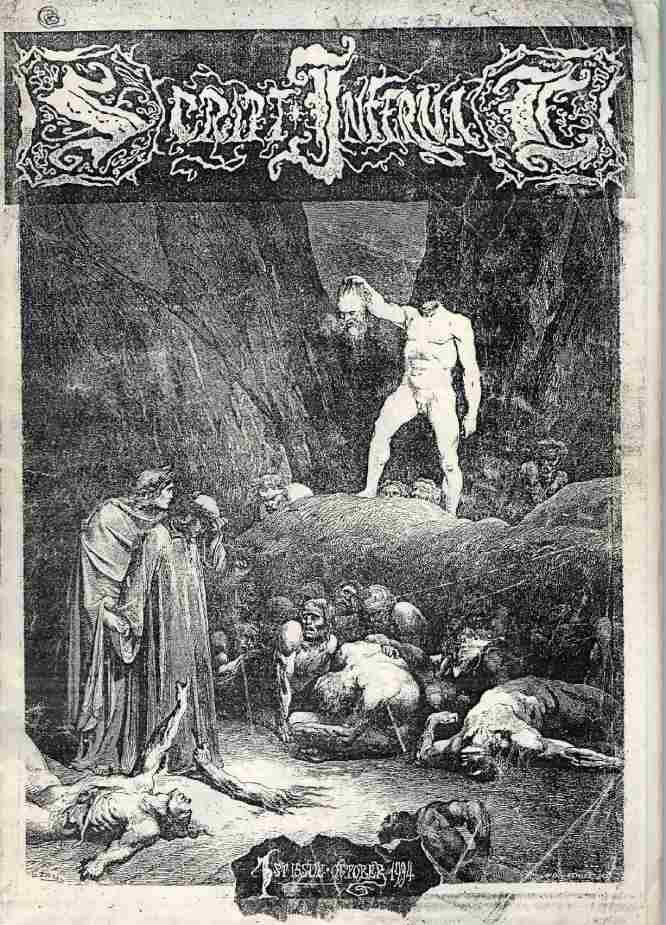
In August 1994, Timo learned of Final Obituary’s demise. Rather than discarding his twelve interviews for #2, he decided to include them in the nearly finished Script Infernal. The editorial column notes that this meant ‘lots of typing and work’ performed ‘in great haste and stress’.
TIMO: Growing up, we had an old electric typewriter my father brought home. Knowing proper finger placement proved practical when hammering out Script Infernal. Rostén, meanwhile, struggled with the keyboard – ‘This is impossible! The E was on the far right last time, and now it’s over there instead!’
For the bulk of the work, Timo travelled from Brandbergen to his co-editor in Viksjö – a suburban area to the north-west of Stockholm – where they wrote up the content on Rostén’s mother’s desktop. However, referring again to the editorial, the final pieces had to be typed on Timo’s old machine ‘due to unexpected problems and reduced access to the computer.’
ROSTÉN: I don’t really remember… probably some technical issue with the computer. What I do recall is us printing the entire edition on a massive Xerox machine at my father’s workplace. That thing was pretty advanced for its time – even Timo seemed impressed.
While most of the text was in digital form, Timo and Rostén assembled the layout entirely by hand. Artwork and printed interviews were cut, arranged, and pasted into collages that they then reproduced on the photocopier.
Script Infernal #1 was completed in October 1994. Like Final Obituary, it would become the publication’s first and last issue.
ROSTÉN: I’d started playing in bands by then, and not once have I considered doing anything like Script Infernal again. The ‘zine thing simply wasn’t for me. I’m no writer – music, lyrics, and layouts, that’s where I should be.
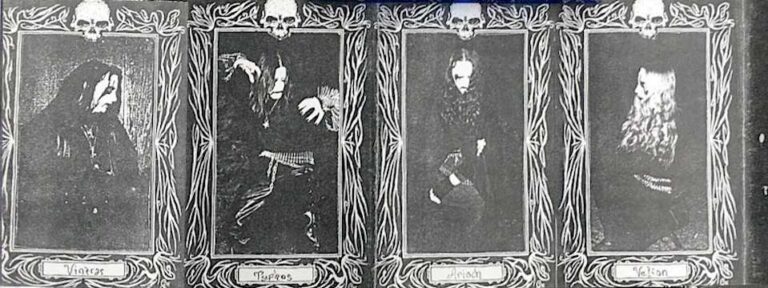
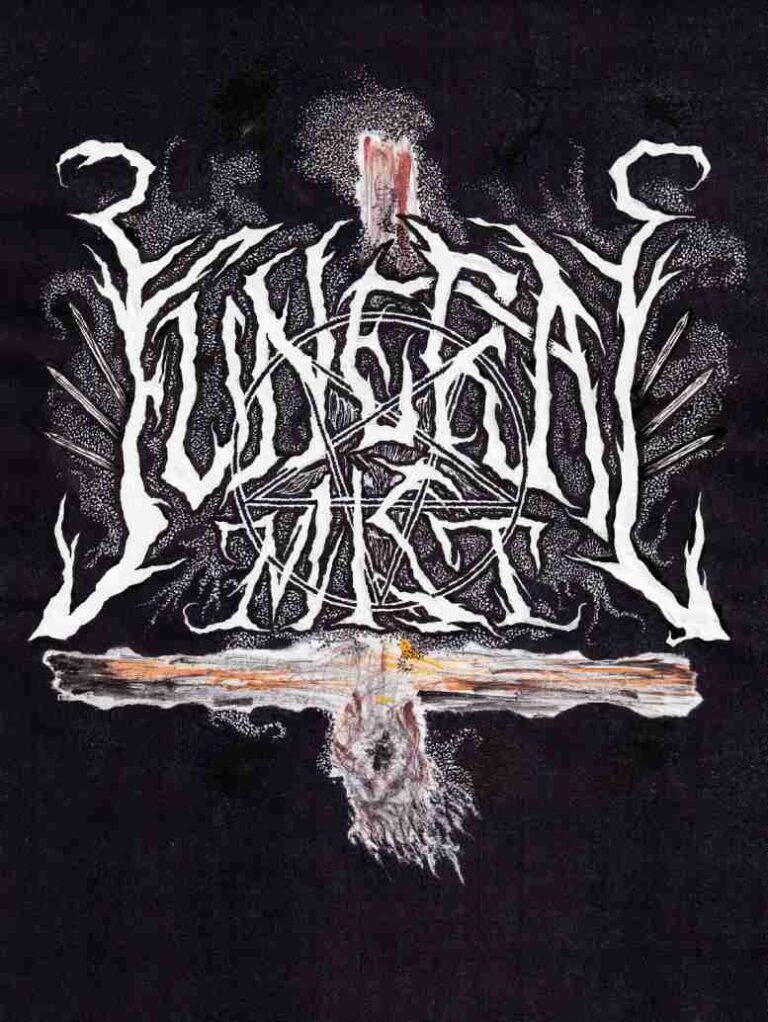
In 1994, Rostén joined FUNERAL MIST, a black metal band in Tyresö – a municipality south of Stockholm, not far from Brandbergen. Timo was put in charge of the band’s visual presentation early on.
ROSTÉN: There were times when Timo offered his services – whether this was one of those, I honestly couldn’t say. It probably came down to me asking him, not the other way around. That’s just more guesswork, of course, as it’s simply the natural order of things.
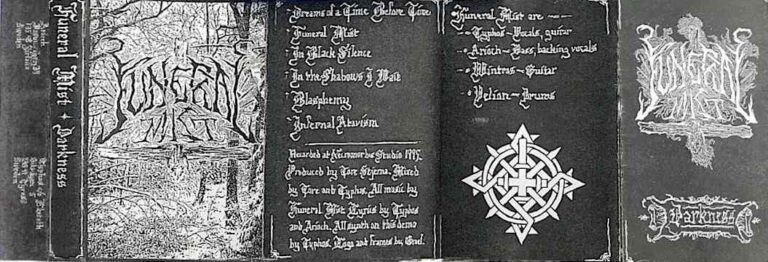
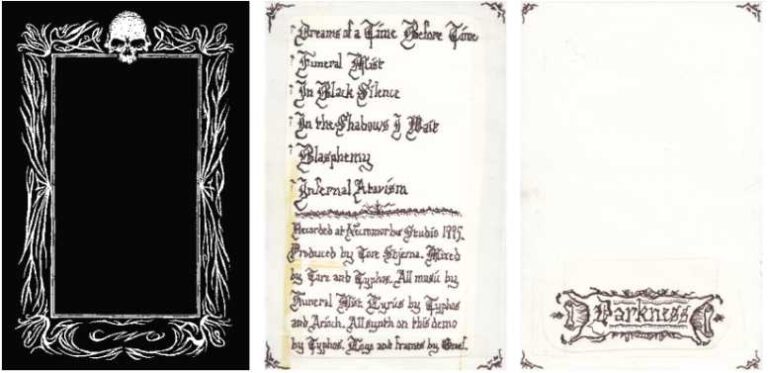
The J-card for FUNERAL MIST’s 1995 tape “Darkness” has an entirely analogue feel. At a time when almost every Swedish demo featured digital text, this one was completely handwritten.
ROSTÉN: I think the handwriting was my idea – but Timo did the actual lettering. I could never write like that.
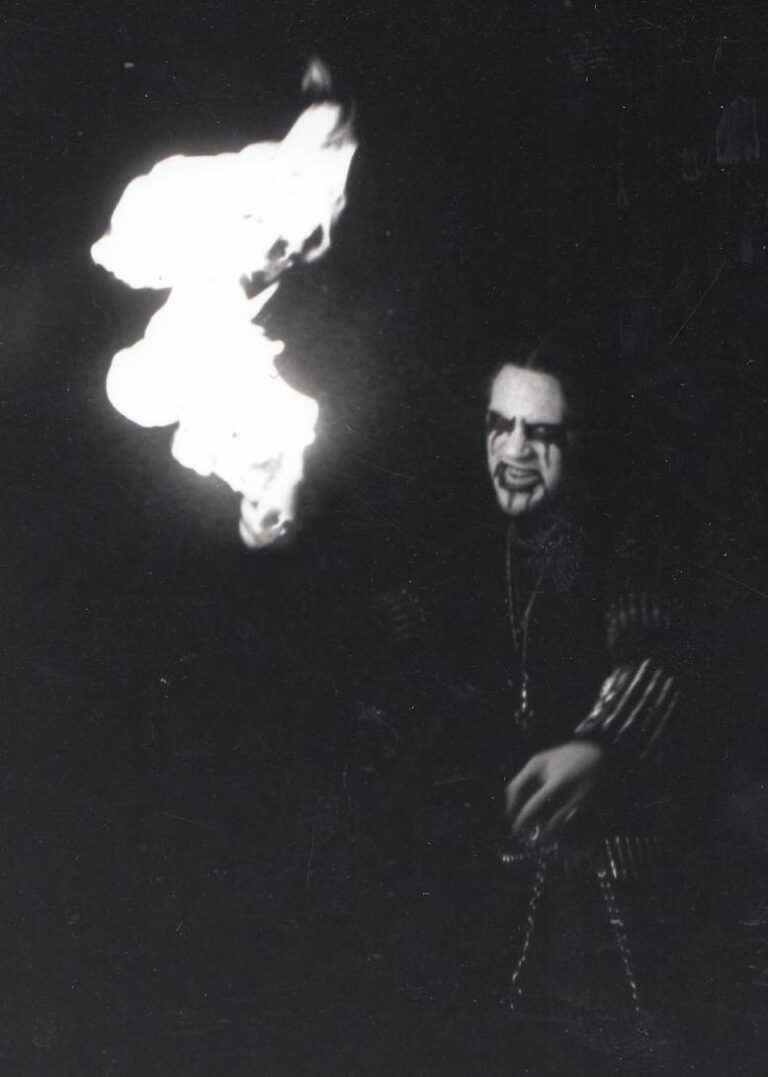

KOSTA: Quite a few illustrations from my book ended up in Script Infernal; I remember receiving a free copy as thanks. Our friendship developed quickly – before long, Timo and I were basically inseparable. We kept discovering shared interests. I had a stack of Lovecraft books, and he was like, ‘Wow, someone else who reads Lovecraft!’
TIMO: I dare say most of what I do today connects to H.P. Lovecraft one way or another. I’ve always been fascinated by the sea, and being born under Pisces on top of that almost feels predictable.
KOSTA: I’m a Pisces too – the star sign tied to water, depths, and all that. In many ways, Timo and I were very similar, especially in how we expressed ourselves artistically; we used different brushes to channel the same forces. Mine was a guitar; his was a literal brush.
Besides Rostén, Timo doesn’t seem to have had many friends in the Stockholm area when you met.
KOSTA: True – while incredibly diligent with tape-trading and international correspondence, he was quite reserved in person. As far as I recall, Timo had two or three friends from school he’d see occasionally, but none of them were close. They listened to some metal, but weren’t metalheads, if that makes sense.
That’s presumably who Rostén mentioned from their first meeting.
ROSTÉN: I think I met them once or twice after that first encounter, but it’s safe to say they faded out of the picture quite early. Then again, Timo wasn’t always the most open or informative person, so I could be wrong.
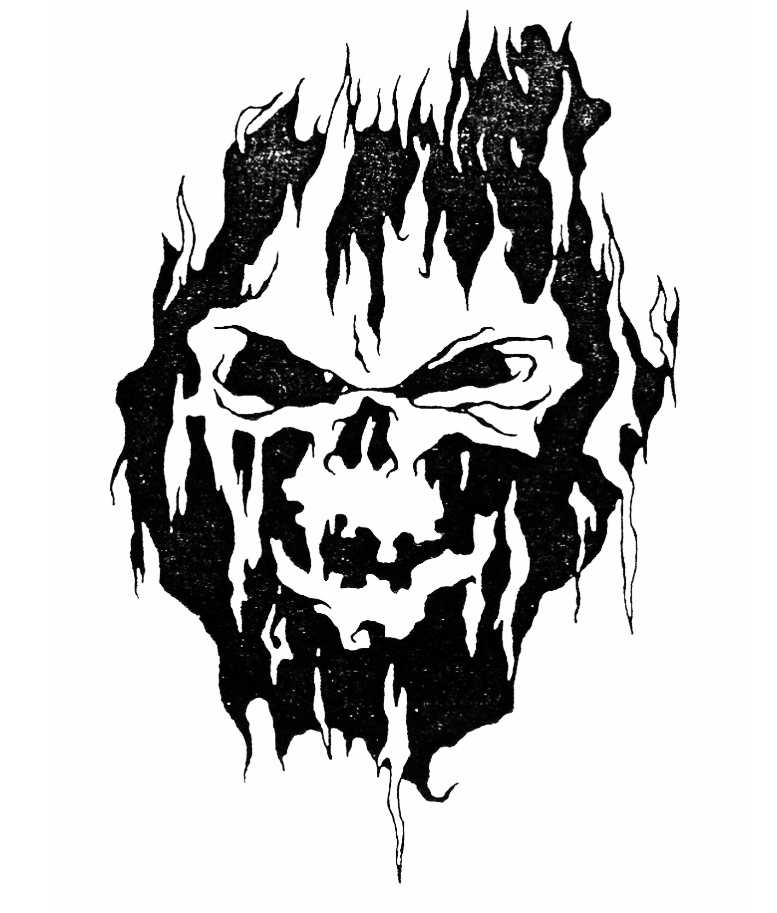
KOSTA: Soon after we met, Timo made a mixtape that blew my mind. If you look at Script Infernal, a lot of the releases reviewed there are the same albums he dubbed for me. That’s how I first heard MASTER’S HAMMER, one of his absolute favourite bands.
You were mostly into traditional death metal at the time, right?
KOSTA: Yes, but not the brutality-driven stuff like MALEVOLENT CREATION or SUFFOCATION. I was always searching for that darker, more explicitly Satanic atmosphere – DEICIDE, ACHERON, MORBID ANGEL. I’d already found SAMAEL through “Worship Him”. I liked DARKTHRONE too.
log in to keep reading
The second half of this article is reserved for subscribers of the Bardo Methodology online archive. To keep reading, sign up or log in below.
Related reading