Liber Ketola IV
2026-03-12
by Niklas Göransson
When Timo Ketola published the second Dauthus in 1998, a bleaker philosophical outlook had begun shaping its pages. At the same time, his collaboration with Funeral Mist yielded Devilry, marking a new chapter in the band’s emerging liturgy.
TIMO KETOLA: Having no formal education in graphic design, I figured out fanzine and album layouts on my own, with plenty of help from the local print shop. I started a media programme around ‘97, but the institution wasn’t great, and I was an even worse student.
KOSTA PAPAVASSILOU: That must’ve been when Timo enrolled in an art school, or whatever it’s called, in Tyresö. Funnily enough, it was mostly because he needed some kind of educational activity to qualify for student grants. He’d also gotten really into photography by then, experimenting with exposure times and so on.
TIMO: In hindsight, my studies in Tyresö mostly contributed to a temporary livelihood – and later hundreds of thousands of kronor in student debt. The only experience of real value I remember from that place was the chance to develop film rolls in a darkroom, which is great.
KOSTA: By that point, I’d moved in with my girlfriend. Besides our cat, we had a pug – a very unusual breed at the time. Timo would call and ask, ‘Can I come by and photograph the animals?’ Then he’d take the negatives to the darkroom, develop them, experiment, and I’d get the results.
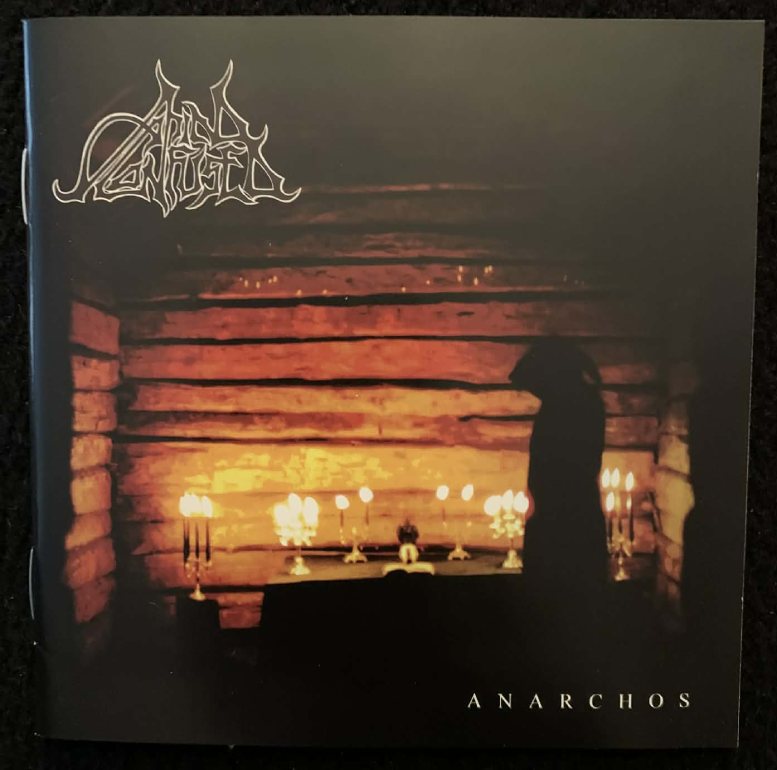
A MIND CONFUSED’s debut album, “Anarchos”, came out in 1997. Beyond the layout, Timo handled all photos – including the cover shot.
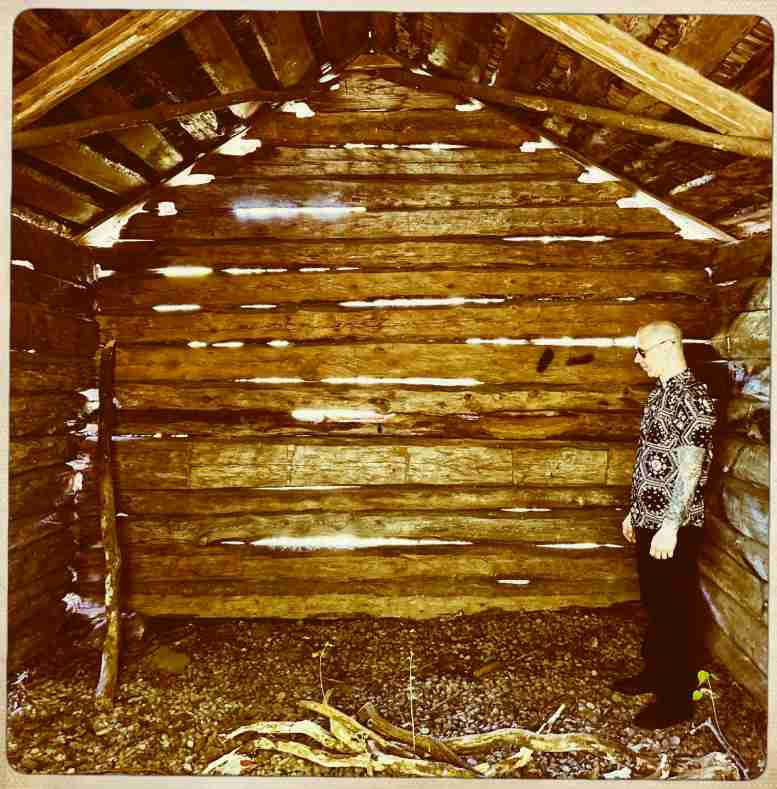
KOSTA: It’s only natural that friends make use of each other’s strengths, and he had a great eye for the moment, so to speak. Timo also started combining his photography with travelling. He’d always been fascinated by graveyards, especially Highgate Cemetery in London.
That interest was already obvious in Dauthus #1, which included two full pages of graveyard reviews – burial grounds in Sweden, Italy, the US, and England – written by four different contributors.
In the summer of 1997, Timo set off alone across the United Kingdom. I’m not sure about the full itinerary, but I know he visited the cemetery at Ely Cathedral, Cambridgeshire, in the east of England, then continued south-west toward St. Thomas Becket Churchyard in Wiltshire. From there, he went to Cornwall’s Penzance Cemetery before eventually making his way north to Scotland.
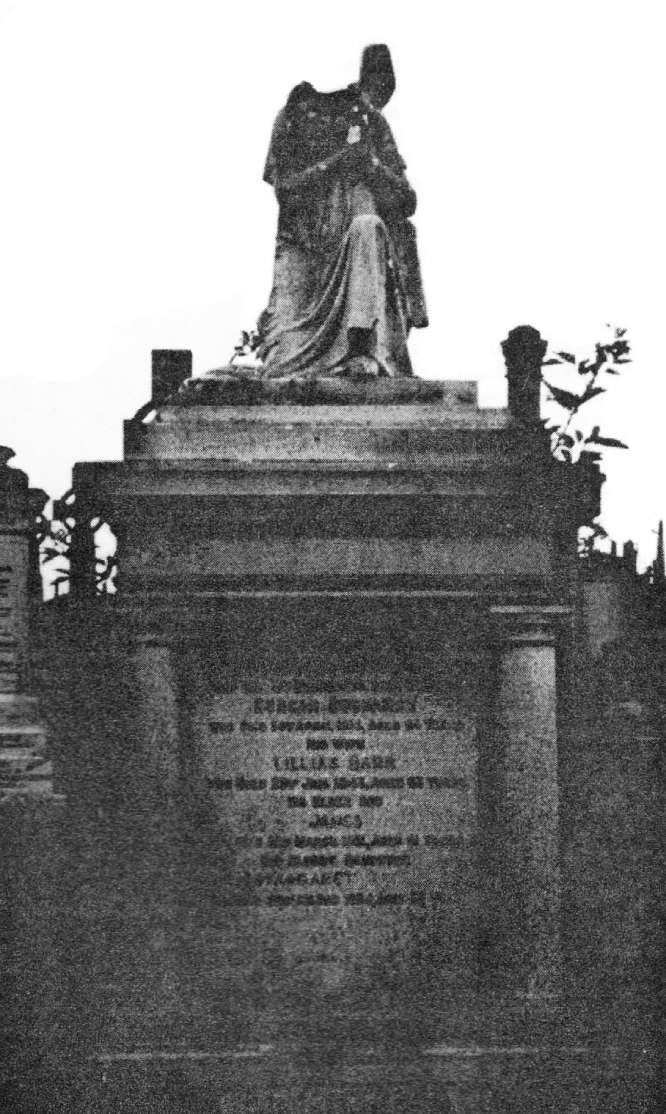
TIMO: My friend Gregory Whalen, who lived in nearby Ayr, took me to the Glasgow Necropolis. The place was heavily vandalised – statues with missing limbs, broken sarcophagi, mausoleums in ruin. Tragic, but also surreal. Gregory rummaged around in the bushes behind a decapitated marble angel, then suddenly yelled, ‘Found it!’ and came out holding its head, which he stuffed into his backpack.
KOSTA: I remember Gregory Whalen – two metres tall, looked like a Scottish Highland warrior, and often referred to himself as a ‘walking shithouse’. He probably taught Timo a lot about music journalism and writing; Gregory worked for Terrorizer Magazine but used to run his own ‘zine.
TIMO: Before he became a regular contributor to the far less interesting Terrorizer, Gregory ran a stellar fanzine called The Crypt. I actually met another influential editor on that same trip: Stephen O’Malley, who’d recently moved to the UK. I’d been an avid Descent reader since issue #2.
Stephen O’Malley’s move from North Seattle to rural England was prompted by his graphic work. In 1997, impressed by Descent #3, EMPEROR commissioned cover artwork for a forthcoming EP. Upon seeing an early draft, the Norwegians were so taken they ended up using it on their “Anthems to the Welkin at Dusk” album instead.
That same year, O’Malley was offered a full-time design position at Misanthropy Records – an underground label based in the small Suffolk town of Hadleigh.
TIMO: I’d been corresponding with Antoinette Flynn over several years, so I decided to surprise her by dropping in unannounced at the Misanthropy office. Except she had to work late that day, so Stephen took me to the pub for a few beers.
Hang on – what do you mean, ‘dropping in unannounced’?
TIMO: In a manner of speaking. The label had recently moved a few blocks away, so I called ahead for directions. Still, Antoinette’s incredulous, ‘What? You’re in Hadleigh?!’ is forever burned into my memory. It’s not the kind of place you just end up in… probably an hour’s bus ride from Ipswich on winding country roads.
The label’s office overlooked Hadleigh Cemetery, which Antoinette Flynn reviewed in Dauthus #1. Until 1995 – before being hired by Misanthropy and moving to the UK – Flynn co-edited Deprived Zine out of County Wicklow, Ireland, with Brian ‘Scobes’ Taube, who later founded Sentinel Records.
KOSTA: Unless I’m mistaken, she was dating the guitarist from CRADLE OF FILTH. Despite Timo and Antoinette being strictly friends, I remember him mentioning that her boyfriend kept monitoring the situation, like some kind of jealousy thing.
To be fair, he was probably wondering what sort of lunatic she’d brought into their home – because who does that?
TYLER DAVIS: That’s not the only story I’ve heard about Timo suddenly showing up somewhere. I think he arrived in Portugal more or less the same way – just appearing on Hiberica’s doorstep. There had been some correspondence, but it was basically, ‘Oh, you’re here? Okay.’
KOSTA: One day, Timo stopped by while my girlfriend’s parents were visiting. Afterwards, her mother – a lifelong healthcare professional – asked me, ‘Are you aware that your friend is clinically depressed?’ I thought it was a hell of a thing to say. But looking back, she might’ve been right.
TIMO: I’ve never had addiction problems or been in therapy, but the late ‘90s marked the start of what I call my nihilistic period. I dug myself as deep into nihilism as I possibly could; in fact, that term was literally the first thing I searched for with Altavista.com in the computer lab at Tyresö.
KOSTA: He called it nihilism, which I interpreted as a kind of philosophical approach to this gnawing sense of meaninglessness. But yes – that’s when his depression really took hold. Back then, Timo was extremely melancholic, a completely different person from the one most people know today.
I’d almost forgotten about this until reminded – but yes, Timo used to be rather gloomy.
KOSTA: Sometimes Timo’s anxiety grew so thick you could practically cut it with a knife. I really worried for him – but at the same time, being in a relationship, I couldn’t be at his side constantly. There were a couple of occasions where he made me genuinely uncomfortable.
Like what?
KOSTA: He’d push needles under his nails. Torture himself. Just to feel something. Self-harm is a common psychological mechanism – the depressive emotions dominating you are so unbearable that any kind of distraction, even pain, becomes a relief. I didn’t understand this at the time, so I’d plead with him: ‘Seriously, cut that shit out. It makes me sick.’
How did he react?
KOSTA: He heard what I said but didn’t care in any meaningful way. When it was at its worst, he ran on pure adrenaline and loathing and self-contempt. You can see it plainly in Dauthus #2 – the issue with razor blades, the one that glorifies suicide and so on. I found all this deeply unsettling.
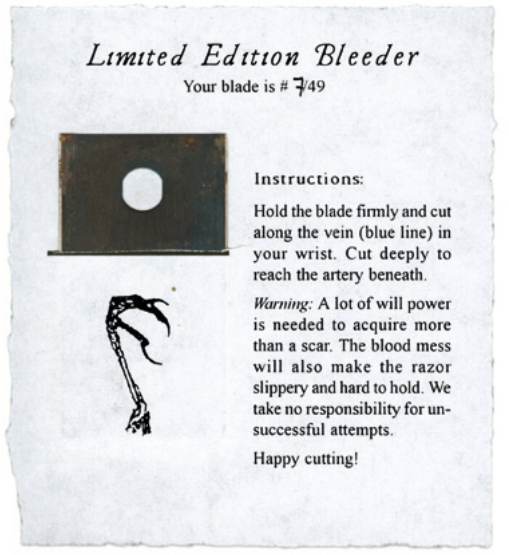
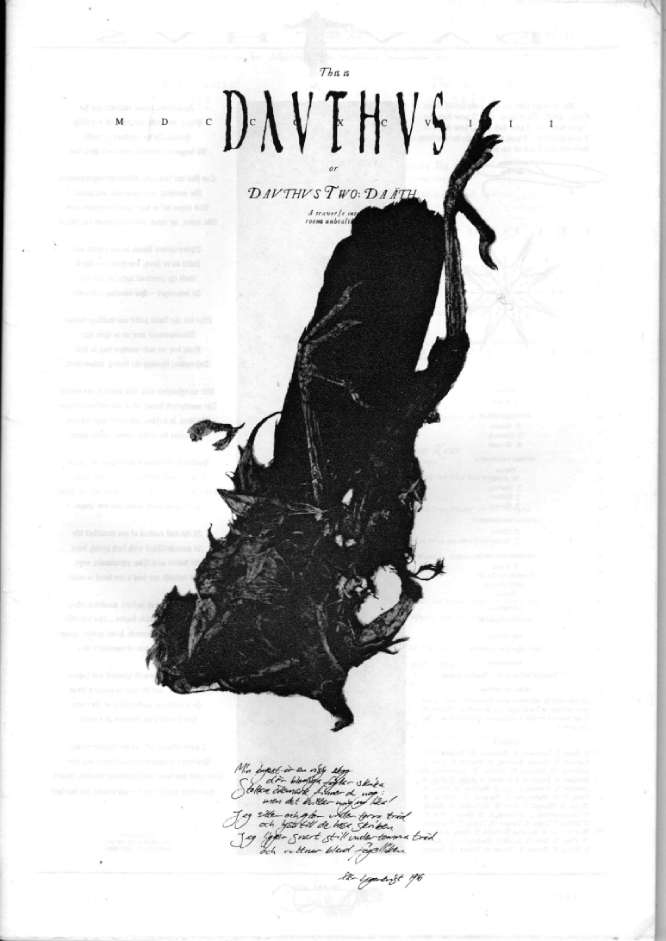
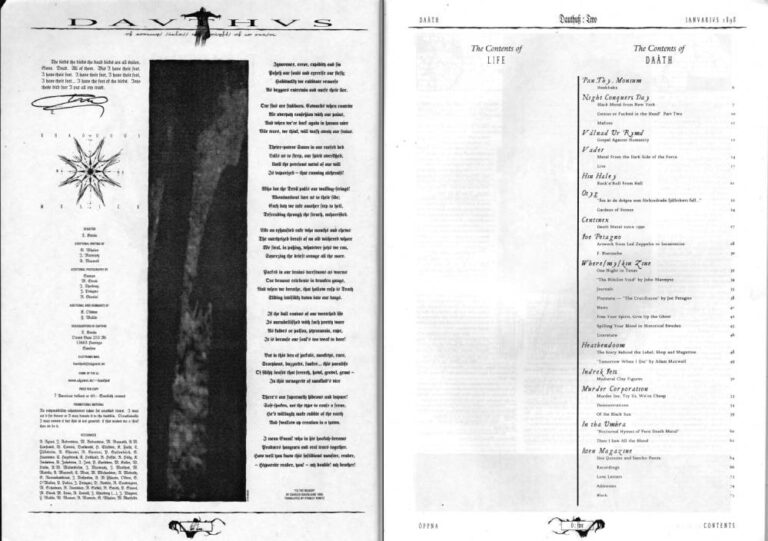
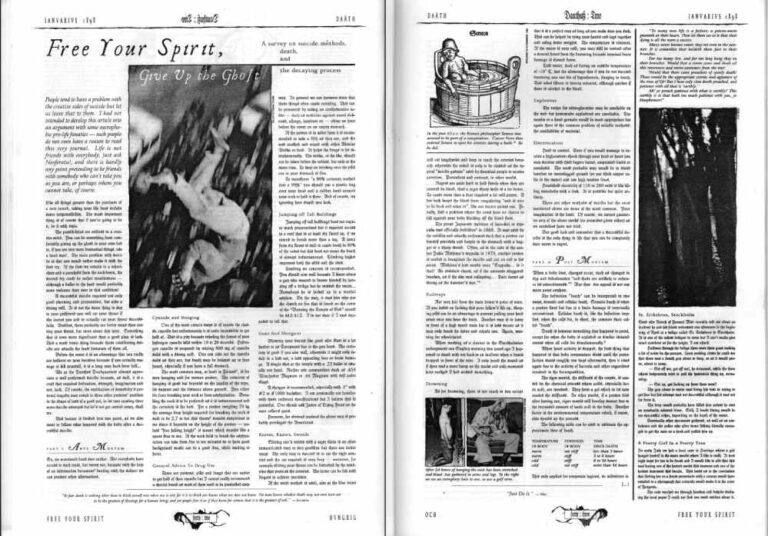
Dauthus #2 appeared in January 1998. The first forty-nine copies included a razor blade, complete with instructions on how to use it – noting that ‘a lot of willpower is needed to acquire more than a scar’. Further guidance followed in Timo’s three-page illustrated article Free Your Spirit: A Survey on Suicide Methods, Death, and the Decaying Process.
TYLER: With the second Dauthus, things changed drastically. The presentation feels austere and contained – more focused in certain respects, but also overtly computer-based, almost sterile. The first issue still had bird claws in the corners, hand-drawn borders, those small touches. Honestly, I think #2 was a step back in some ways.
Timo himself viewed Dauthus #2 as more formally developed yet ultimately hollow – what he called ‘a neat package of generic contents.’ Most interviewees appeared simply because they were reachable through existing pen-pal networks rather than out of any cohesive editorial vision.
TYLER: On the upside, #2 has much more of Timo’s writing, and it carries that witty little charm of his. You can see early versions of ideas he’d refine later, but plenty of it doesn’t stand out from what other magazines were doing at the time.
The issue includes bands like CENTINEX, IN THA UMBRA, MEFISTO, NIGHT CONQUERS DAY, OTYG, PAN–THY–MONIUM, and VADER alongside Heathendoom – a label and physical record store in Stockholm – and American artist Joe Petagno, known for having created the MOTÖRHEAD mascot, Snaggletooth.
If one feature captures something quintessentially Timo Ketola, it’s his interview with the obscure Estonian artist Indrek Jets. After seeing Jets’ work at a library exhibition, Timo dug around to find out who he was and eventually tracked him down at an art school.
TYLER: Another observation: Timo gave the issue a subtitle, ‘Dauthus #2: Da’ath’. I found this really curious and, quite frankly, ahead of the curve for a fanzine written in ‘97. It suggests he was already studying the esoteric, left-hand-path aspects of the Kabbalah.
KOSTA: Well, Da’ath is a sephirah on the Tree of Life – but I think Timo’s angle then was that the word can be translated as ‘death’. Just like ‘dauthus’, which has the same meaning in Old English.
TYLER: I also noticed that on the old Dauthus webpage where Timo discusses #2, he refers to the fanzine as ‘her’ – feminine – which struck me as interesting as well. Giving the publication a gendered identity is an unusual touch.
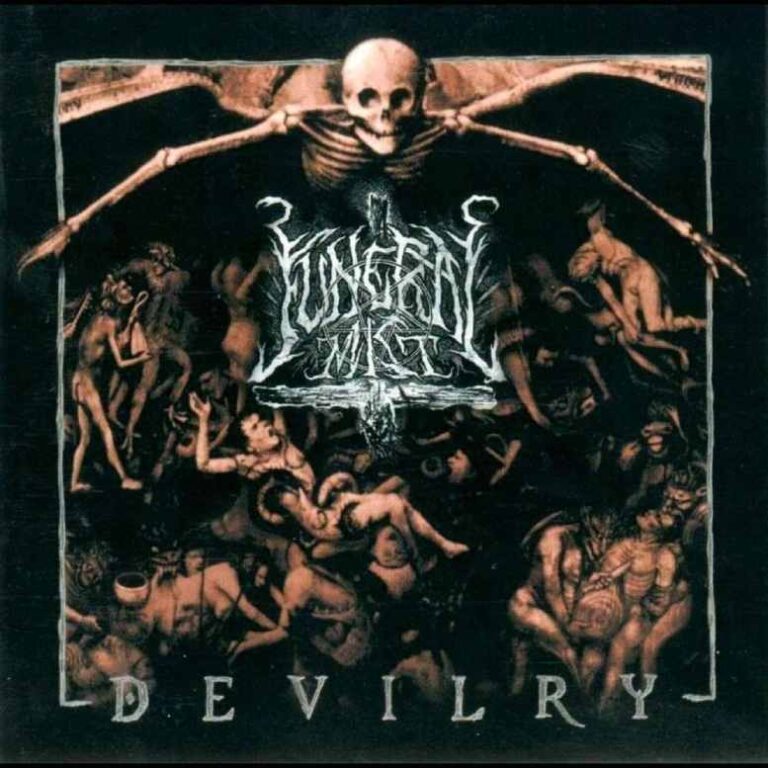
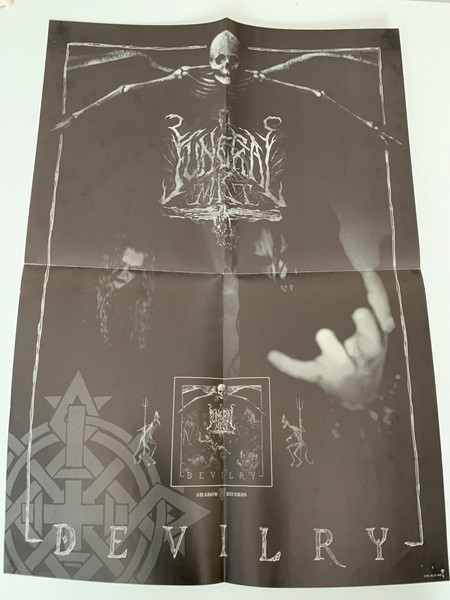
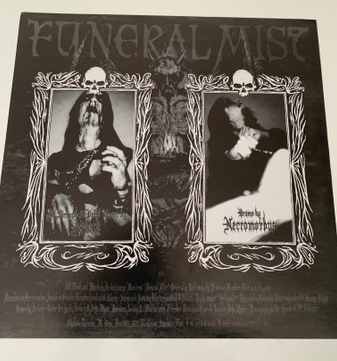
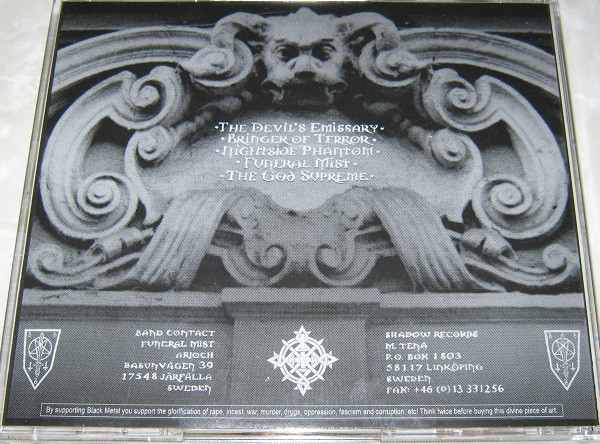

In January 1998, the same month Dauthus #2 arrived, Daniel Rostén and drummer Tore ‘Necromorbus’ Stjerna finished the recording and mixing of FUNERAL MIST’s mini-album “Devilry”. The layout process began soon thereafter.
TIMO: Like “Havoc”, Rostén made sure not to miss a single minute of the layout work for “Devilry”. He travelled all the way to Brandbergen and sat next to me throughout the entire process. With few exceptions, that’s something I’d usually never, ever, tolerate from a client.
ROSTÉN: I’m sure it must’ve been annoying – me constantly hovering around him, interfering, redirecting, and dictating this, that, and the other. Still, Timo probably picked up a thing or two along the way; even if not from me directly, then simply by being dragged out of his comfort zone by my often strange and unusual requests… win-win!
Was that driven by some deep-seated need for control, or your growing interest in design?
ROSTÉN: As a lifelong control freak, handing over important tasks like album art has always been difficult for me. I think many musicians would agree – even if the result ends up surpassing the initial idea, it can still be hard to accept something that doesn’t align closely enough with your original vision. Some people manage, most probably do; I usually can’t.
As with “Havoc”, the cover was constructed from scans of various existing images that were then assembled on a computer. However, “Devilry” is significantly more intricate – a testament to Timo’s rapidly improving skills.
ROSTÉN: I gathered the source material, and Timo compiled everything into a collage using Photoshop. I’d bring him the different images, explain roughly what I had in mind, and then we’d piece it together through experimentation.
Where did you find the images?
ROSTÉN: The central motif, the skeleton with its arms outstretched, came from a painting (The Crucifixion; The Last Judgment, Jan van Eyck, 1440) that I must have come across in some art book. Then, we added more material in a similar vein – most of it church ceiling paintings reproduced on postcards. Where I actually found them, though, I don’t remember.
TIMO: Somewhere in the archives, I probably still have all twenty-five versions of that cover. The graphics card in my computer was on its last legs when we worked on “Devilry” – every time I saved the file, a tiny, pixelated line would appear at random places in the image.
Big enough to show up in print?
TIMO: No idea, but something clearly visible on the computer might very well have appeared on an LP cover. The paranoia got so overbearing that all I could do was laugh. I kept a book nearby and would leaf through it to soothe my frail nerves while the file saved – which took several minutes every single time.
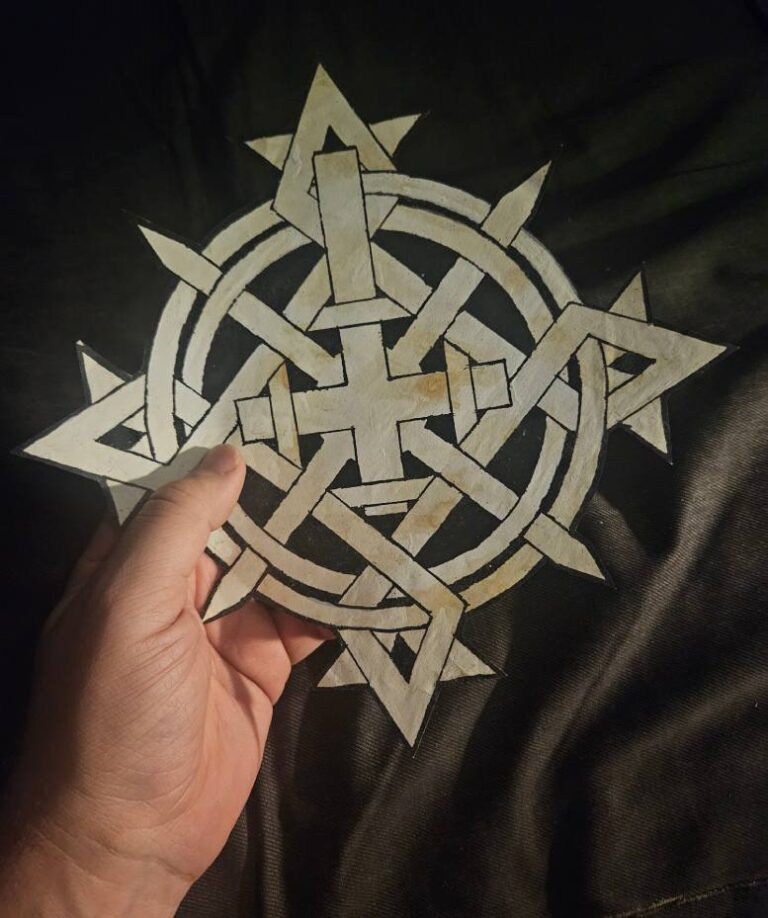
This was during a period when Timo had completely stopped drawing by hand, caught up in the novelty of digital art. “Devilry” reused the “Darkness” portrait frames, as well as Rostén’s inverted-cross knotwork on “Havoc”, but most of the remaining booklet imagery came from assorted scans.
ROSTÉN: Aside from the frames and typography, I think there was only one additional custom drawing – which I made myself. With the benefit of hindsight, I probably should’ve let Timo handle it as well.
What drawing are you referring to now?
ROSTÉN: Heh, do you remember my only tattoo? Yes, that one. It appears in the background of the “Devilry” inlay – behind the credits, if I recall correctly.
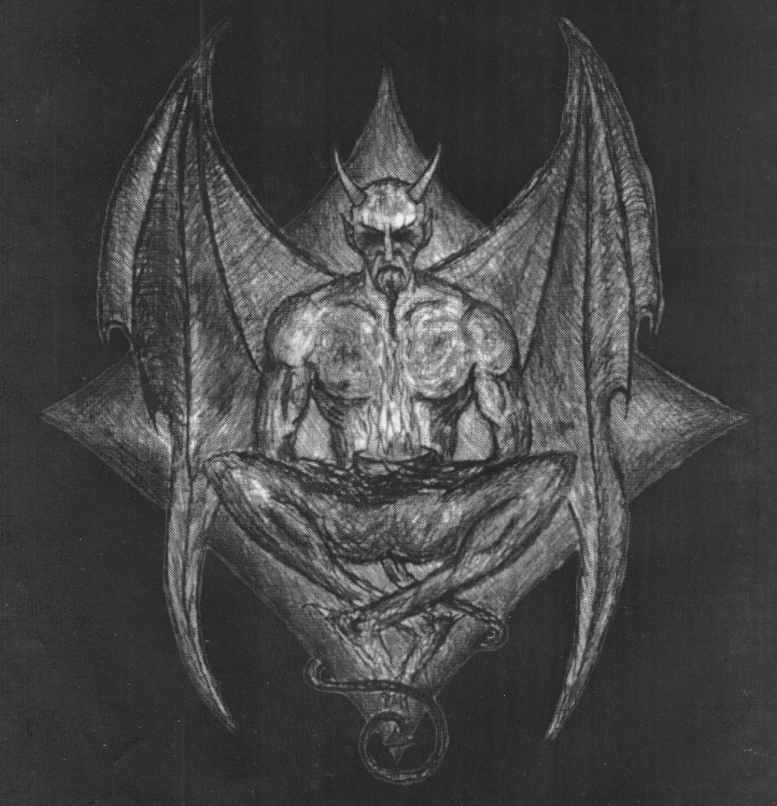
Artwork by Daniel Rostén
What are your strongest memories from the Brandbergen sessions?
ROSTÉN: The painfully tedious hour-and-a-half train rides from one side of town to the other come to mind, unfortunately, as do the ensuing hours of mostly staring at a screen. There probably wasn’t much else going on, except the usual distractions such as listening to music, flipping through old books, and solving the mysteries of the universe over long philosophical ramblings of varying depth and seriousness.
At the time, Timo had a somewhat unusual workflow. His layout sessions were frequently interrupted by impromptu meals, spontaneous naps, or even breaks for baking traditional Finnish rye bread.
ROSTÉN: I never witnessed any actual baking, but Timo was unmistakably Finnish – and it showed in his culinary habits, which often felt quite alien to me. Finnish sausage, stringy fermented milk, and bone-dry bark bread were regular menu staples. Whether sipping black whiskey while eating raisins with a tiny fork is an established custom in Finland or simply a Timo-ism, I’ll leave for others to speculate about.
But surely, you must have experienced the naps?
ROSTÉN: Mm. Every now and then, I’d finally reach Brandbergen after ninety minutes of battling Stockholm’s public transport system, only to be told Timo needed a two-hour nap. Frustrating, sure – but one thing I’ve learned over the years is that when the artist tells you he needs to sleep, you let him sleep… especially if he’s helping you for free.
Did Timo ever charge you for any of this?
ROSTÉN: Money wasn’t even part of the conversation back then. We simply followed our respective callings without contemplating too much about how or why… liberating.
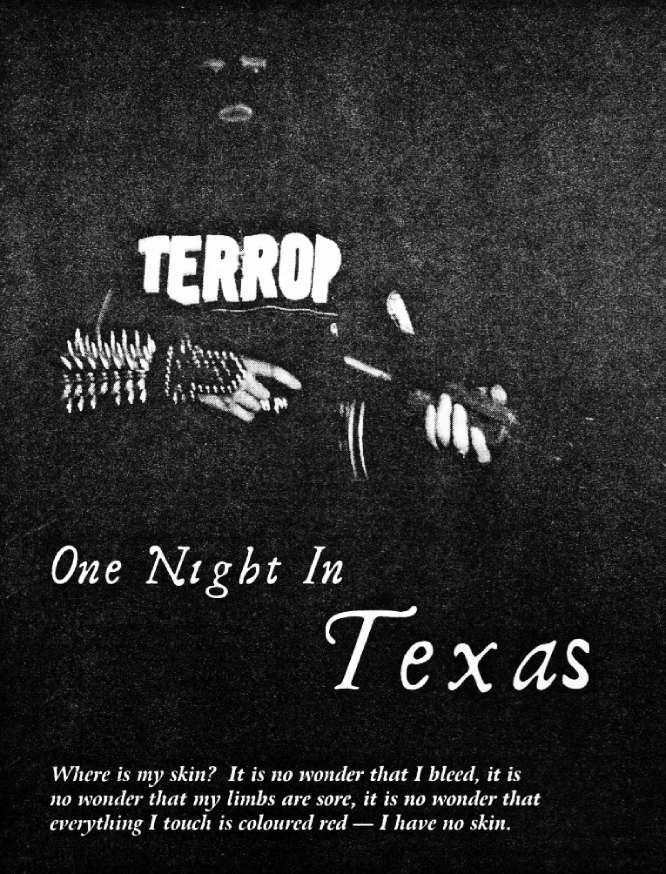
TIMO: Wheresmyskin was unquestionably one of Dauthus’ biggest influences. Blaash, the editor, taught me that ‘zines don’t have to be ingratiating, meek reading – how you shouldn’t shy away from uncomfortable questions, even with good friends. The music and the art demand a straight spine, not back-patting.
In addition to an extensive fanzine-review section, Dauthus #2 includes interviews with both the long-running Finnish publication Isten and the Texas-based Wheresmyskin ‘Zine.
KOSTA: Timo saw in Wheresmyskin the kind of fanzine sphere he felt Dauthus belonged to. He and Blaash shared that same nihilistic mindset – drinking whisky, blasting BESTIAL WARLUST, hating the world, pondering the meaninglessness of existence. Those two built a solid connection.
Gregory Whalen, the Scottish editor of The Crypt, contributed a VADER interview to Dauthus #2.
TIMO: Later that summer, Gregory visited me in Brandbergen. Partly to discuss our planned split issue – both The Crypt and Dauthus were gearing up for a #3. We came up with the idea of inviting a few old Stockholm death metal dinosaurs to a roundtable discussion.
KOSTA: If memory serves, Gregory was here to interview OPETH and some other Stockholm bands for Terrorizer. So, he took the opportunity to… I can’t remember if he stayed with Timo the whole time or just came by. But yeah, we hung out while he visited.
TIMO: Gregory and I ended up sitting down with L-G (ENTOMBED), GRAVE–Jörgen, and Flinta and Erik from MERCILESS, talking about the early days. It’s dizzying to consider how back then – twenty years ago at this point – we were discussing events barely a decade old, and even that already felt like a lifetime.
log in to keep reading
The second half of this article is reserved for subscribers of the Bardo Methodology online archive. To keep reading, sign up or log in below.
Related reading