Liber Ketola XII
2026-04-29
by Niklas Göransson
During the Rebirth of Dissection Tour in late 2004, Timo Ketola and Jon Nödtveidt began discussing artwork for what would become Reinkaos. In its shadow, he continued his work with Swedish black metal band Malign.
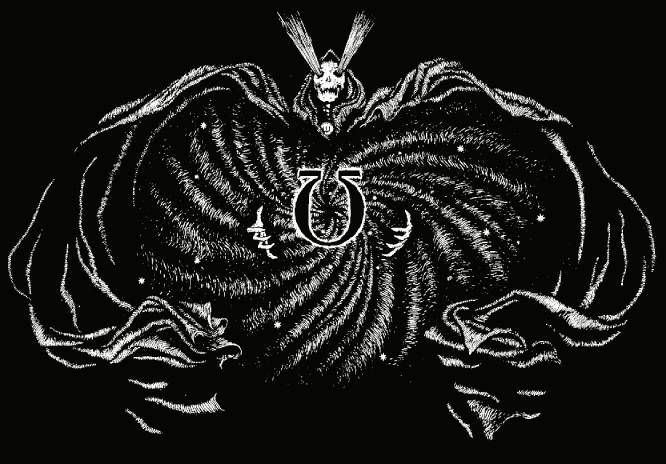
Dissection artwork by Timo Ketola
NASKO: After discovering Dauthus #3, I wrote a letter – ‘Hey, how can I get this?’ I also included the third issue of Final Solution, in case he wanted to trade. Timo replied by sending my ‘zine back, saying he didn’t have any copies left and wasn’t interested in other publications. I think that was our first interaction.
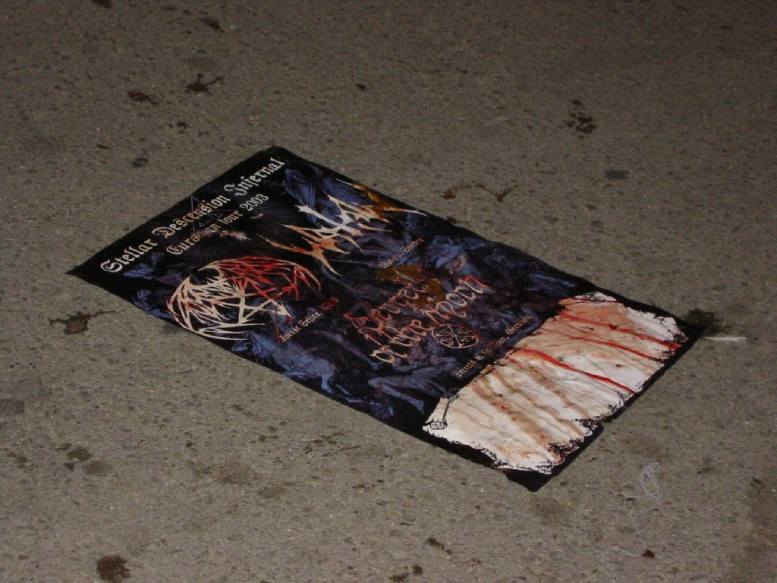
During a late 2002 visit to Barcelona, Erik Danielsson introduced Nasko to Dauthus #3. The two met again in October the following year, when WATAIN played their first Spanish dates as part of the Stellar Descension Infernal Tour with AVERSE SEFIRA and SECRETS OF THE MOON.
NASKO: That’s when I first met Ynas (Mörk) from MALIGN, who was playing bass with WATAIN at the time. After the show, we were hanging out in Plaça de Catalunya. I remember Håkan (WATAIN) biting the heads off pigeons and throwing them away – I have all of this on video.
YNAS: The pigeons in the square were so used to humans that they’d practically climb into your hand. Someone handed one to Håkan, who might’ve had a glass or two too many, and he promptly bit its head off in some kind of caveman reflex. By the end of the night, we’d collected plenty of new stage décor. All of us stayed at Nasko’s place – about twelve people in a small one-room flat.
NASKO: Yes, my twenty square-metre studio in Barcelona. Everyone slept all over the floor, and the supermarket bags full of beheaded pigeons were in the restroom.
YNAS: We stored those plastic bags with the stage equipment in our van. The stench was far worse than other animal carcasses, because pigeons really do eat garbage; the whole thing must’ve been a serious hygiene hazard. After the tour, Nasko and I kept in touch by email and the occasional phone call, then met again in Milan.
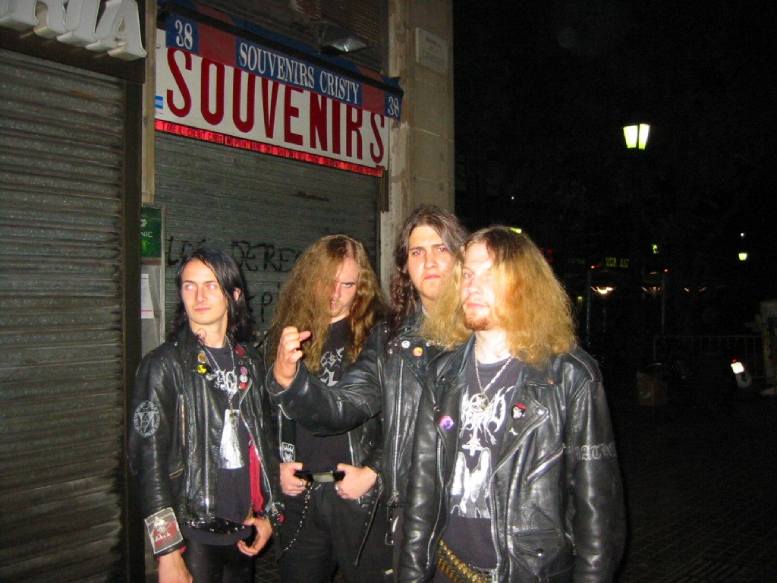
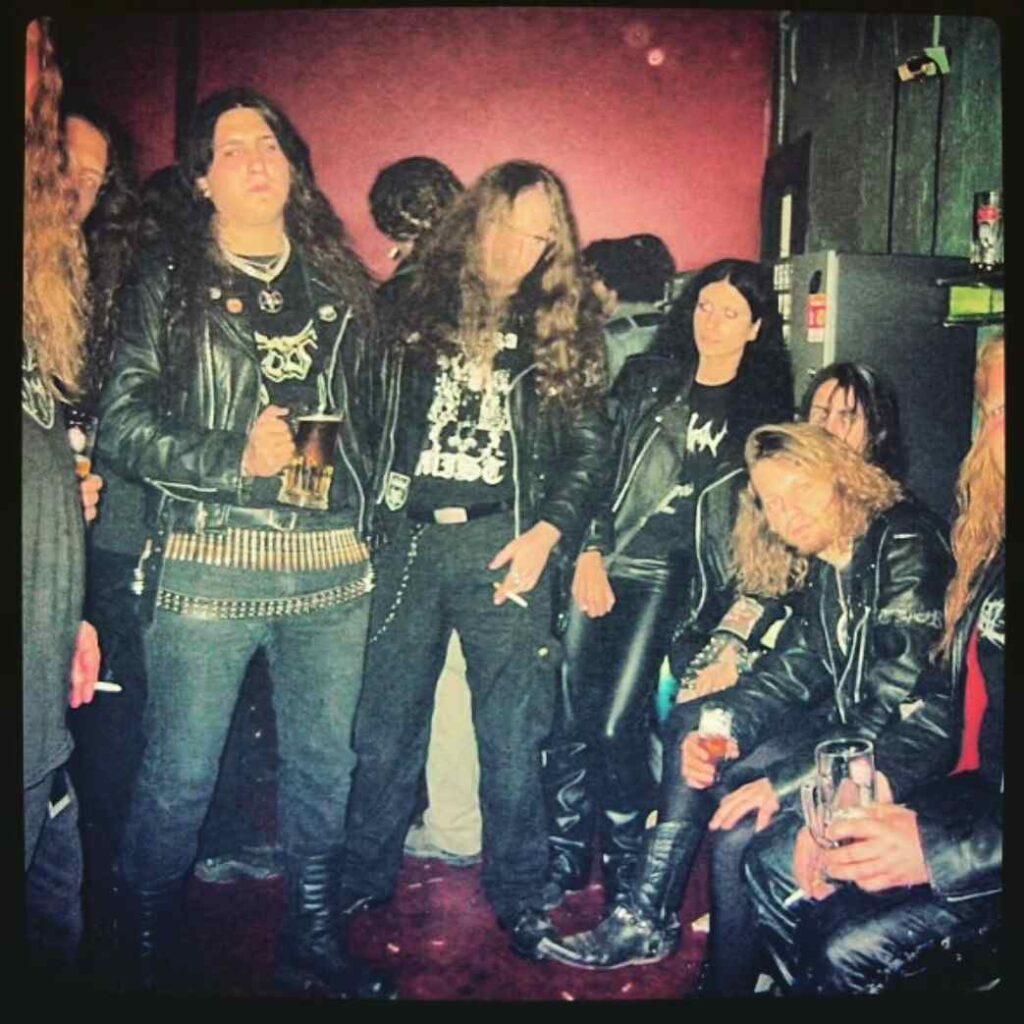
In February 2004, Timo and Nasko travelled to Milan independently to see MORTUARY DRAPE and WATAIN.
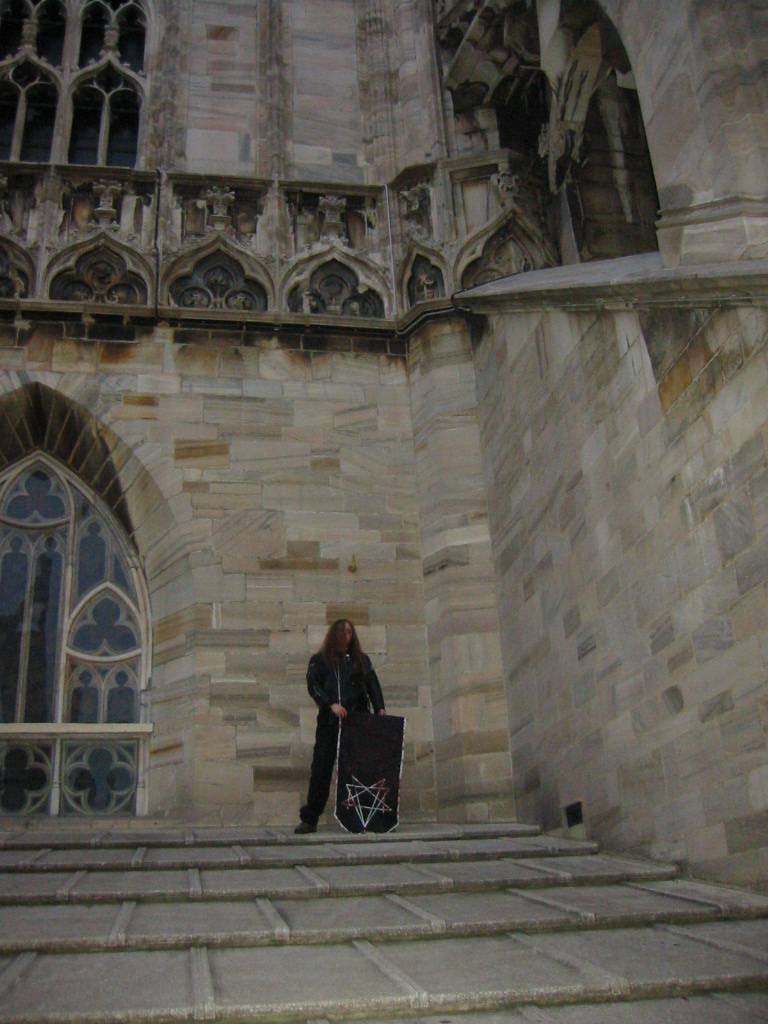
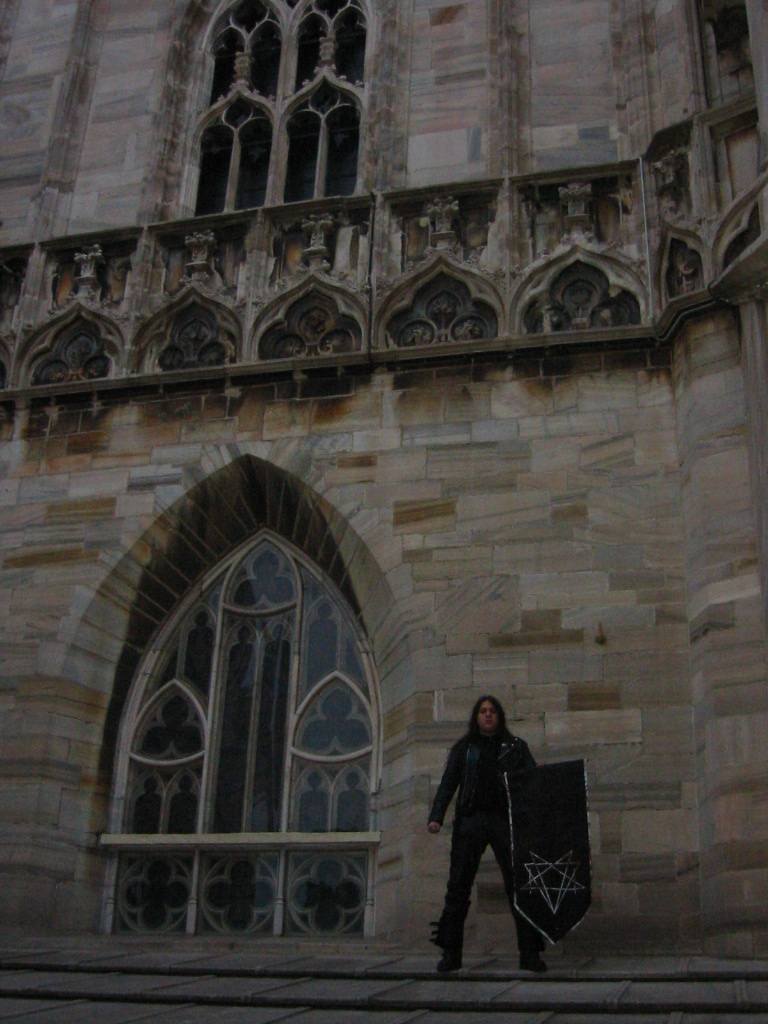
YNAS: While visiting the roof of Milan Cathedral to look at the gargoyles, Nasko and I had the brilliant idea of taking some blasphemous photos, unfurling banners with pentagrams and shit. That bravado faded quickly when the Carabinieri showed up brandishing automatic weapons – very Catholic and very angry.
This weekend also marked the first time both Timo and WATAIN met Set Teitan, then guitarist of ABORYM.
NASKO: A very memorable trip – not only the show, but those three days of hanging out. I remember bringing the TEITANBLOOD demo with me… did you get it there? I know Timo did, because he’s holding his copy in one of the photos.
The year prior, TEITANBLOOD had taken shape through online correspondence – with no clear intention beyond jamming when Nasko next visited Madrid, where the guitarist and drummer lived. Drawing on bands like BEHERIT, BLASPHEMY, and DEMONCY, that first session yielded the 2003 “Genocide Chants to Apolokian Dawn” demo.
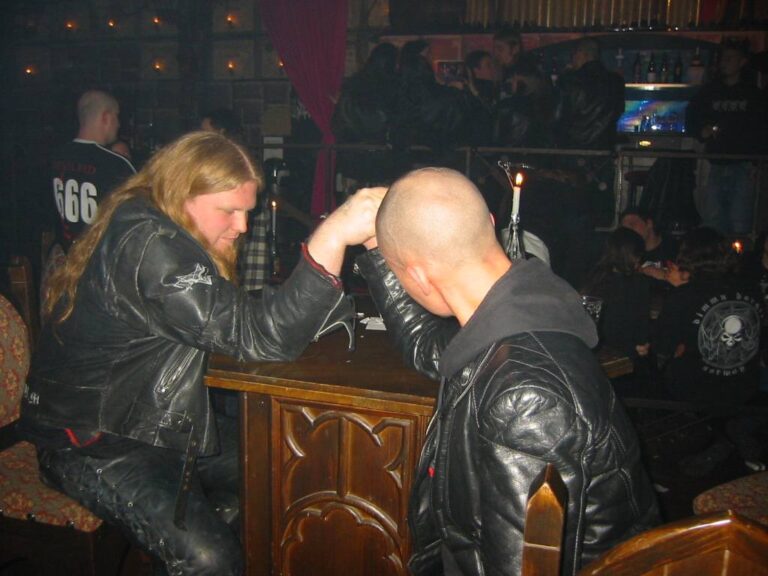
NASKO: The night before the show, everyone was at this Transylvania Live pub getting very, very drunk – there are some memories of arm wrestling. Timo and I sat at a table discussing music. Of course, he went into that fanatic mode, speaking about ORDER FROM CHAOS, NUCLEAR DEATH… the filthy, chaotic sound, their lyrics, and how powerful it all felt.
In a later TEITANBLOOD review for the Dauthus Appendix, Timo included Nasko’s contact details along with an added note: ‘He will also be able to tell you exactly how drunk I was at the Transylvania Live pub.’
NASKO: As the whiskey kept flowing, the moment Timo and I really connected was when we started talking about “Salvation” – going into very specific, obsessive details: this part, that lyric, certain artworks, and so on. I clearly remember us almost sounding angry, but we were just being violently enthusiastic, completely possessed.
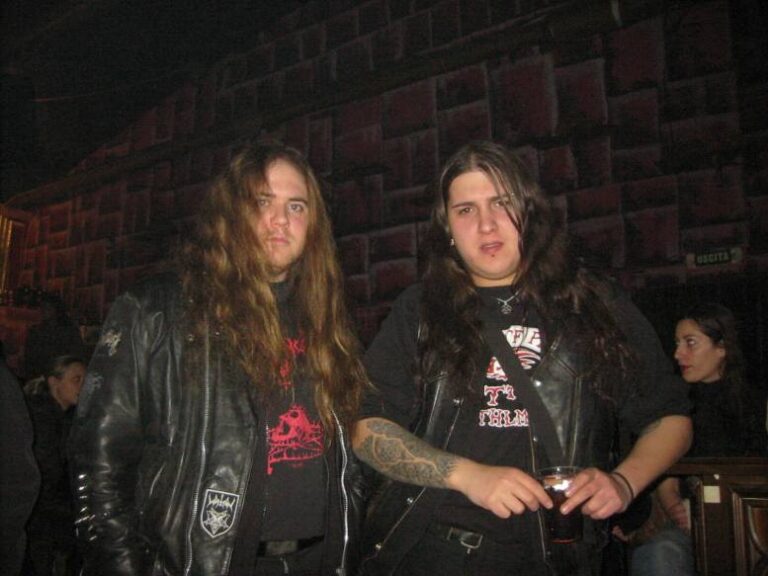
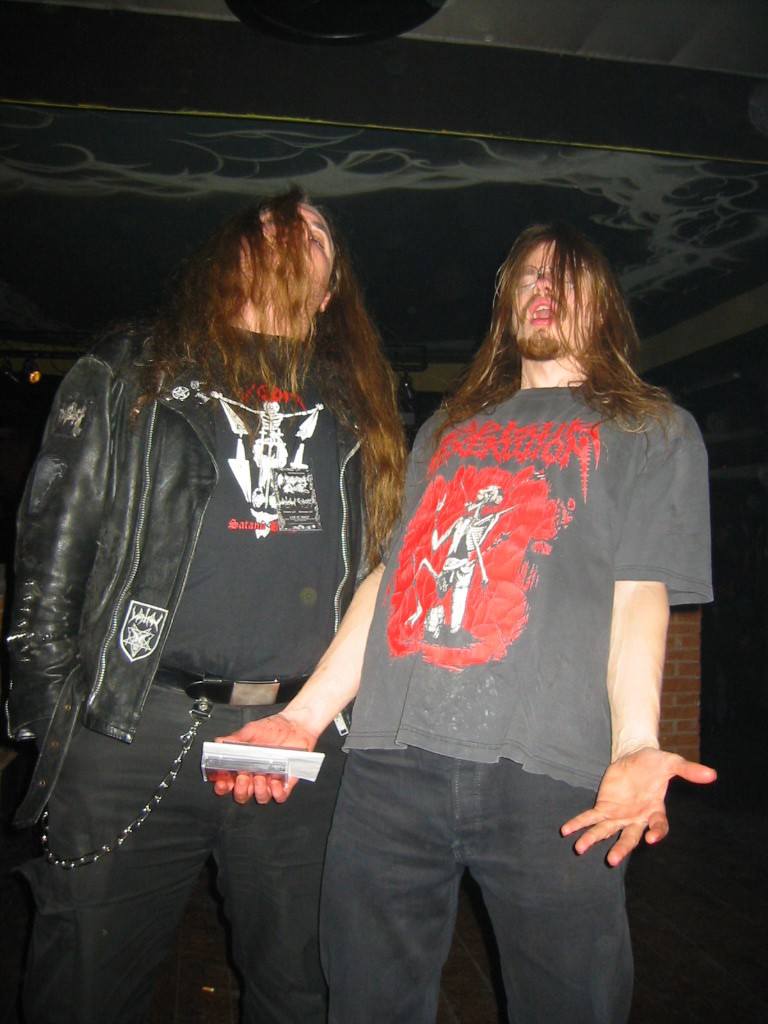
With DISSECTION founder and frontman Jon Nödtveidt nearing the end of his prison sentence for a 1997 murder conviction, he began assembling a new line-up. In the summer of 2004, Set Teitan travelled to Stockholm to try out.
He arrived a week in advance, staying with Erik Danielsson, who stepped in on drums for pre-audition rehearsals. A few months later, both of them embarked on the Rebirth of Dissection Tour – Set as the band’s new guitarist and WATAIN as openers.
ERIK DANIELSSON: WATAIN produced all the merchandise for DISSECTION – we did everything ourselves at the printing house where Håkan worked. That was basically how we paid our way onto the tour. We also printed the posters in Uppsala and sent them out to venues across Europe.
The tour ran from late October to December 2004, amounting to just over seven weeks on the road – taking the bands through thirty-five shows across sixteen countries, spanning Scandinavia, the Baltics, Central, Southern, and Western Europe, as well as the British Isles.
ERIK: Jon, who’d just been released from prison, brought along people he’d gotten to know on the inside as crew: a guitar technician, Lech, and Jugge, who acted as security. SUFFER-Perra joined as tour manager – and at some point, someone was needed to handle the merch stand.
I recall a fair degree of surprise upon learning that the merchandising role had fallen to Timo.
ERIK: Now… how the hell did that even happen? I mean, Timo wasn’t the obvious first choice for something involving a lot of customer interaction, keeping track of fifty different merch items, and handling wads of cash. This was also before he and Jon had started collaborating.
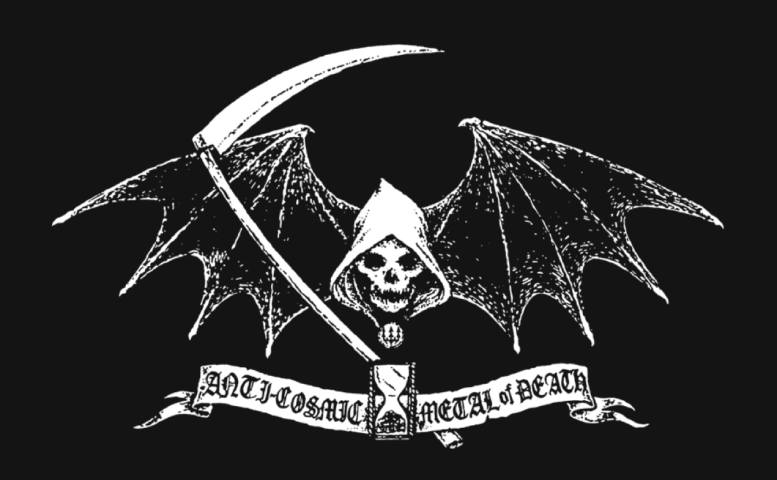
I think Timo had made DISSECTION’s Metal of Death reaper by then.
ERIK: Oh, that’s right – he also made our tour shirt. Anyway, we said, ‘Okay, who can sell merch?’ Initially, there was talk of Tobias Forge (REPUGNANT) doing it. Timo might’ve been unemployed at the time; I honestly don’t remember. But it worked. He approached it with the same manic dedication as everything else.
YNAS: I remember one night in some poorer country where the pricing apparently didn’t sit well with the locals – they stole half the merch on display the moment Timo turned around. His solution was to duct-tape everything to the table so no one could lift anything.
I must say, it’s difficult for me to imagine Timo on a nightliner tour – especially with the 2004 incarnation of WATAIN.
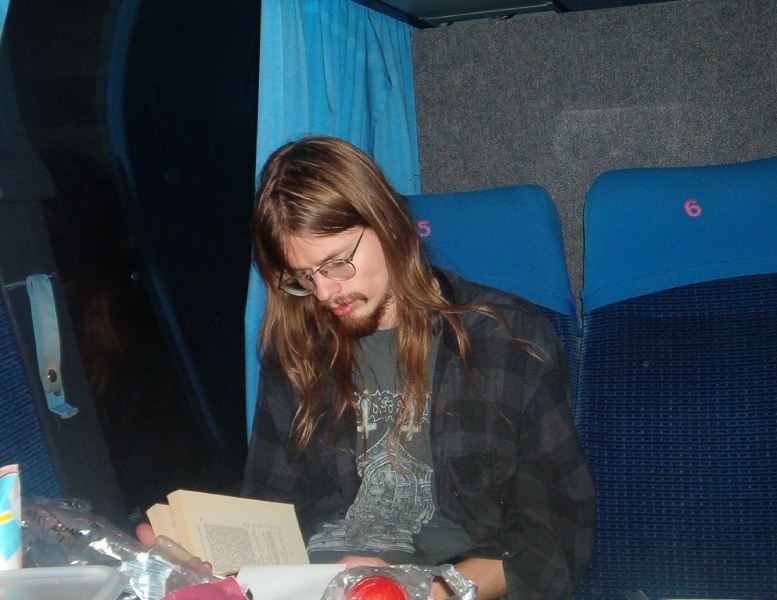
ERIK: Timo found his place in that environment quite naturally. He brought along Eliphas Lévi’s… what’s the book called again? The Doctrine of Transcendental Magic. He’d often sit in a corner, reading in the dim light. Jon sat in the opposite corner, meditating in front of a Kali statue. A few seats away, the rest of us were raising a fair bit of hell.
YNAS: Yeah, I’d say we were the ones doing the MÖTLEY CRÜE routine. Timo mostly sat reading quietly, drinking tea. Every now and then, he’d look up and offer one of his sardonic remarks before returning to the page.
ERIK: It was also fascinating to watch Timo and Jon interact; both had a certain presence. Neither struck you as someone to casually brush off or laugh away. But instead of clashing – as two individuals with that kind of aura often do – they found a genuine way of communicating.
Timo told Necromaniac ‘Zine it was after the show at Havana Club in Naples that he and Jon first started talking about artwork for “Reinkaos”. Do you remember what else happened that evening?
ERIK: Let’s see now. Where exactly was this again? In Napoli? I remember the venue quite clearly, but nothing else from that date.
YNAS: Wasn’t there an earthquake that night?
ERIK: Yes! Exactly, that’s right. And what a collaboration it turned out to be.
NASKO: I’ve always had huge praise for DISSECTION; “Storm of the Light’s Bane” is an absolute masterpiece. Everything surrounding their return felt like a major highlight, especially since WATAIN were involved. Seeing my friends touring with DISSECTION – and Set joining them as well – was just incredible.
In fact, so incredible that you attended all the Spanish dates.
NASKO: I hadn’t planned to. After the Barcelona show, we were all hanging out. Pelle (WATAIN) told me, ‘We’re going to Madrid tomorrow – join us on the bus.’ I thought it was a bit crazy at first, then figured, ‘Okay, I know some people there I can stay with. I’ll take a train back home the next day.’
YNAS: All I remember is that Nasko turned up at one of the shows; I think he was supposed to go to work the next day, but we forced him onto the bus.
NASKO: After the Madrid show, we went out for drinks, hitting the metal bars. I clearly remember all the Swedish black metal die-hards going crazy to EUROPE – which… you know, was a bit unexpected.
No true-blooded Swedish metalhead who lived through the late ‘80s would deny the sinister grandeur of “The Final Countdown”.
YNAS: Yeah, I’ve got no shame when it comes to EUROPE. It was a rowdy evening, and Nasko brought along the PROCLAMATION guys. Neither spoke a word of English, but we still became best mates; hard, staunch fellows.
NASKO: Then Pelle came to me, ‘So Nasko, you’re not joining us in Bilbao tomorrow? Are you some kind of chicken?’ <laughs> I was like, ‘You motherfucker…’. I remember waking up the next day thinking, ‘What the fuck am I doing here?’
Did you have any local friends?
NASKO: No, I’d never even been to Bilbao. I was really broke, too, and had no idea where to sleep or how to get home. This happened over twenty years ago – you didn’t have a smartphone and couldn’t just buy tickets online or call an Uber. There were no easy options.
What about the next tour date?
NASKO: The next stop was Paris, and I thought, ‘No, I can’t keep going.’ After the others left, I spent the night walking around the central station before catching a bus back to Barcelona in the morning. It wasn’t planned at all – nothing like how I’d approach it now.
YNAS: Things weren’t quite as organised back then. We dropped him off in Bilbao, and no one really knows how he got home from there. I don’t remember what Timo was up to during all this – he probably stayed on the bus drinking tea. Honestly, the right call.
According to Timo, this tour was when discussions about a potential collaboration between him and TEITANBLOOD first took place.
NASKO: I’m not sure – I really don’t have clear memories from those days. Let’s see… we’re talking about November 2004, right? Which means the Madrid guys and I had met up again; our second session was to record new material for the PROCLAMATION split.
During the summer of 2004, the TEITANBLOOD trio recorded two songs for an upcoming split seven-inch with guitarist Juan Carlos Deus’ main band, PROCLAMATION.
NASKO: I honestly don’t know what those conversations could’ve been about; by then, I had nothing close to a clear vision for a TEITANBLOOD album. Most likely, it was just a general exchange of ideas, concepts, and inspirations – an ongoing process that later became the foundation of everything.
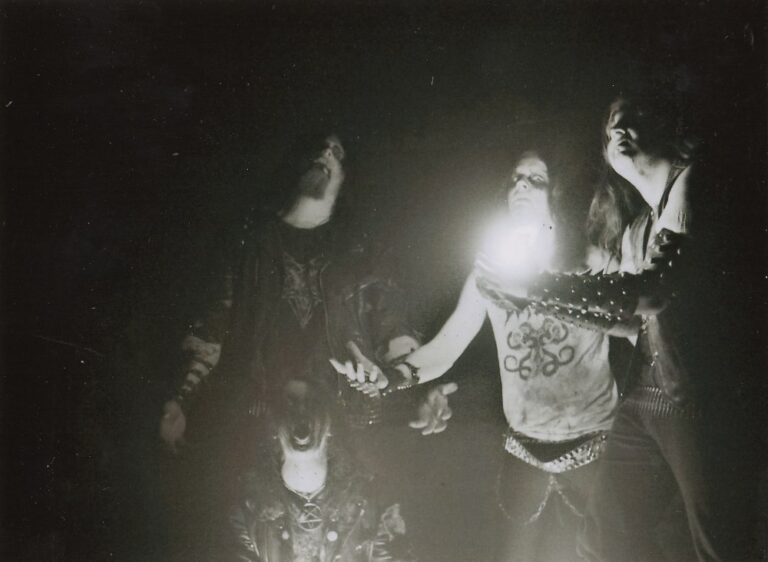
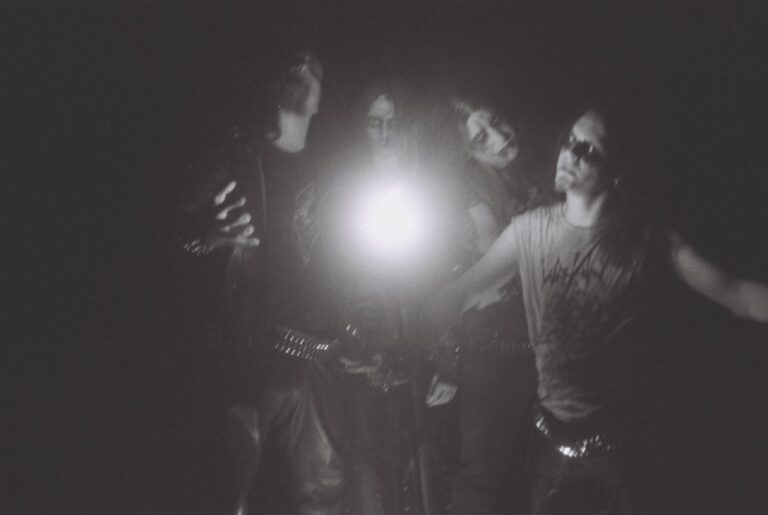
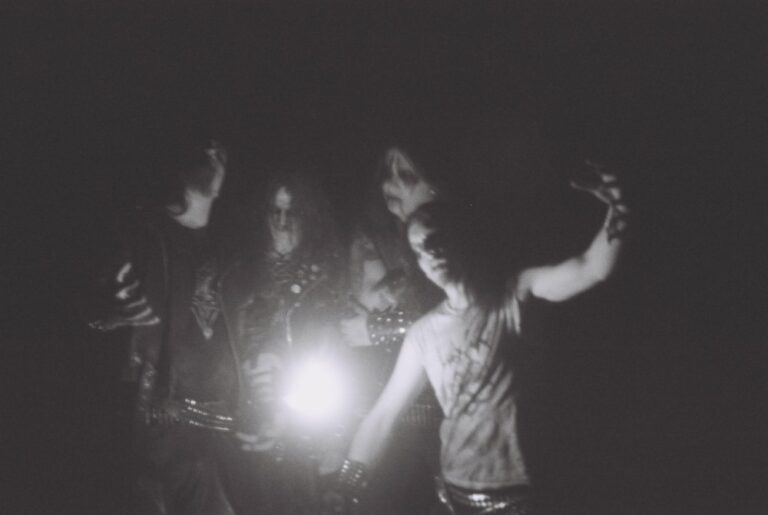
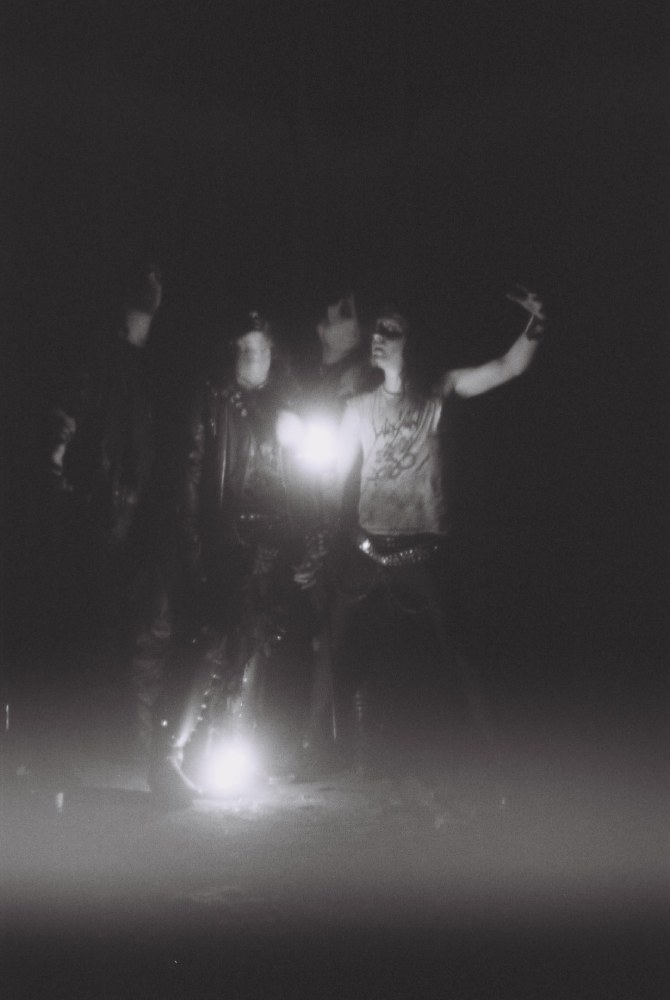
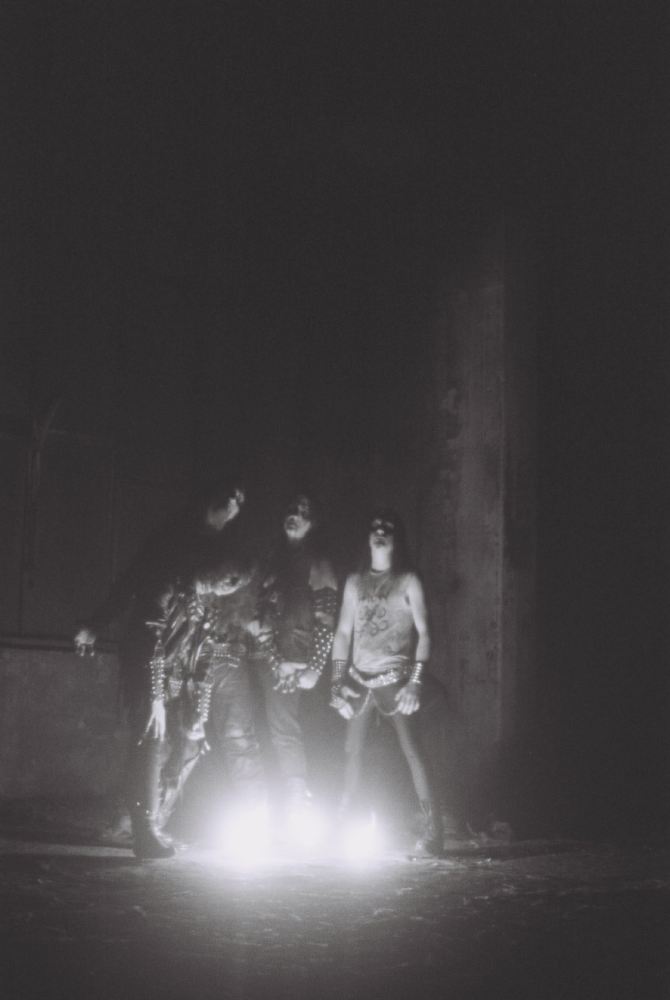
In early December, the Rebirth of Dissection Tour reached Leipzig, Germany. There, in what Timo described as an ‘abandoned factory’, a photoshoot took place – one he would speak fondly of for decades afterwards.
YNAS: I mean, really – back in the 2000s, how do you not end up in an abandoned factory in Leipzig? The whole city was basically nothing but abandoned factories. The venue itself was an abandoned factory. So yes, even though I don’t recall the specifics, that part is unquestionably true.
ERIK: Right, we played at Hellraiser-Leipzig – the venue has an adjacent building where, as far as I can tell, they used to repair and maintain trains before it was abandoned. Absolutely incredible place.
The building was most likely part of Leipzig’s extensive railway infrastructure – a locomotive depot or service complex, fallen into disuse in the years following German reunification.
ERIK: It has underground tunnels running beneath; they aren’t sealed off, so you can keep exploring for hours. We happened to have some time to spare before going on stage, so Timo brought us down there to take those photos.
Timo’s commitment to analogue extended beyond the camera itself. Shooting exclusively on film, he also developed and printed the negatives in a darkroom.
ERIK: Since he shot on film, we couldn’t just fire off a hundred photos without thinking and pick the best one afterwards. Instead, it became more like, ‘Where exactly should the picture be taken? Wait, let’s move that torch a bit’, and so on.
YNAS: He wasn’t running around with studio lights or anything. The lighting really was torches, genuinely. Timo didn’t speak much either – from what I remember, there weren’t many instructions, just a sense of the scene he wanted to create.
ERIK: A photo session usually involves an uncomfortable friction. You want to be in a certain headspace – one that should come through in the images – while simultaneously maintaining a dialogue with a photographer who, at best, knows how to take a good-looking picture, yet rarely understands what state of mind you’re in. Working alongside Timo, the situation couldn’t have been more different.
YNAS: Timo was very particular about setting an atmosphere, and then the rest sort of fell into place. It’s hard to explain. I suspect this stemmed from something ritualistic as well. Some might think that sounds silly, but it really is part of manifestation – making sure the circumstances are optimal.
ERIK: This is something I remember very clearly about Timo; his goal was for everyone involved to enter a trance state. He told us to wander out into the space and communicate with whatever energies resided there, while he tried to document it. A dream setup.
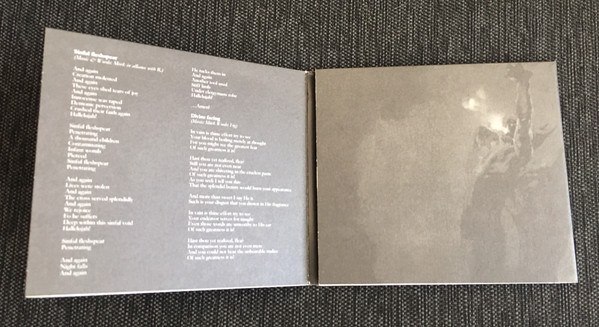

Back then, WATAIN’s setlist often included a cover of “Fireborn” – a song by Ynas’ main band, MALIGN.
YNAS: That certainly wasn’t my decision; if anything, I probably found it somewhat awkward. We played “Fireborn” mainly for its rowdy, energising nature – a bit of D-beat mayhem thrown in among the “Casus Luciferi” material, which could grow repetitive in a live setting.
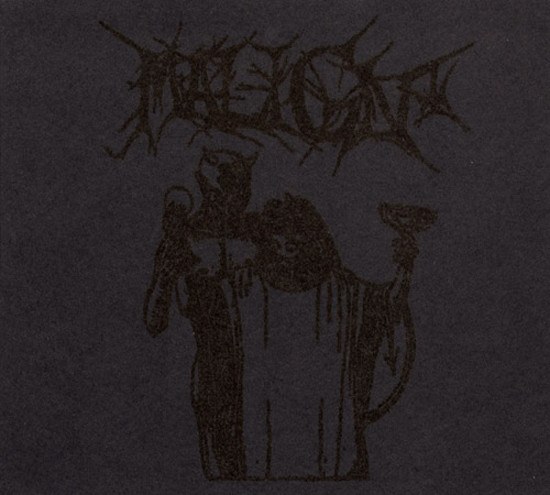
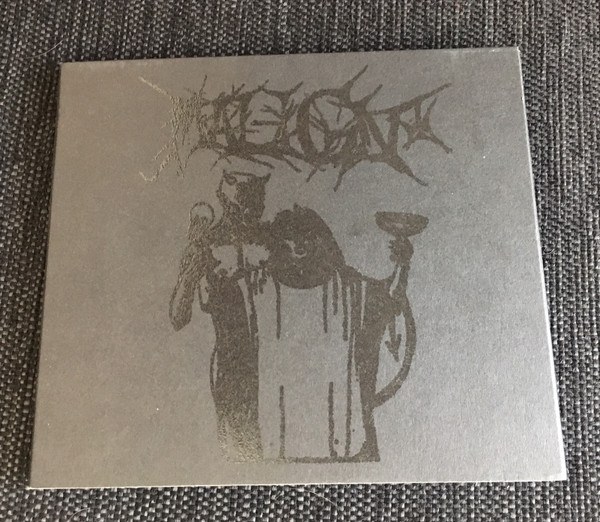
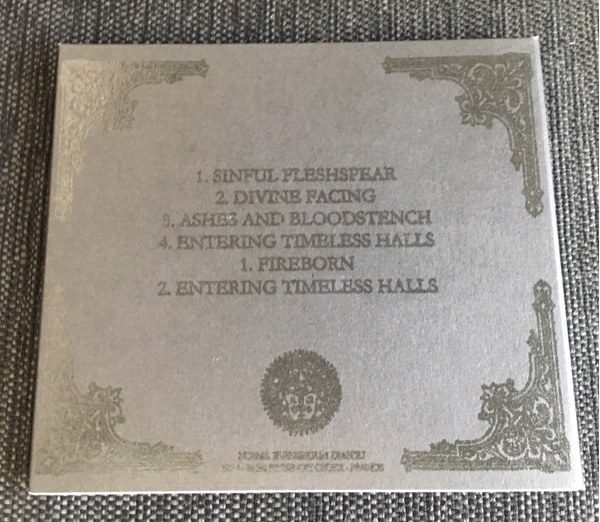
In February 2005, shortly after the tour, Norma Evangelium Diaboli released “Divine Facing / Fireborn” – a digipak CD compilation of two long-since sold-out MALIGN EPs.
TIMO KETOLA: One of the darkest days in my long career as a designer was the miserably failed digipak of MALIGN’s “Divine Facing”. Black-on-black print on the reverse side of the cardboard… mmm, you can already imagine things getting sketchy.
CHRISTIAN BOUCHÉ: The packaging was not a success, no; everything came out blurry. Honestly, with a few additional steps, a more specialised printer could’ve pulled it off – I’ve since seen books that achieved something very close to what we had in mind. The subsequent reprint on coated card looked great, though.
YNAS: Timo’s layout preview looked fantastic, but the printed version turned out bloody awful. The cardboard didn’t take the ink properly, and the whole booklet ended up a smeared mess. I don’t know who chose the paper stock or why no one ran test prints. Oh well – at least it isn’t pink. That’s something.
Did it ever occur to you that this might have been Timo’s form of belated revenge for your old fanzine feud?
YNAS: <laughs> No, because first of all, we were long past that by then. Secondly, I can’t imagine Timo would ever have compromised his own artistry just to mess with me.
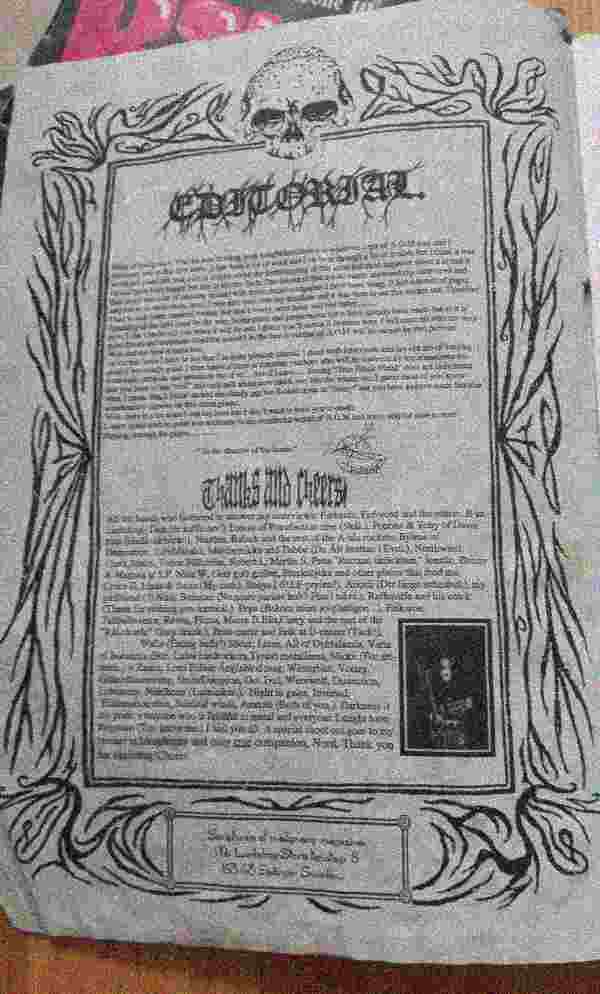
Like most other participants in this feature, Ynas is a former editor. Back in 1995, he and MALIGN vocalist Jonas Tengner published the first issue of their fanzine, Scriptures of Malignancy.
YNAS: I was leafing through #1 earlier, and it’s fucking atrocious. Ghastly layout, everything in poor resolution, different fonts and frames all over the place. Photoshop and Publisher had just come out, but we hadn’t quite grasped the concept of image rendering. Not to mention the written content, courtesy of seventeen-year-old me – embarrassing beyond belief.
As they were finishing the layout, the frame originally intended for the editorial page ‘got lost in the computer somewhere’. Luckily, Ynas had a flyer advertising FUNERAL MIST’s “Darkness” demo at hand.
YNAS: I scanned the flyer, blew up Timo’s frame, and inverted it. We didn’t know each other, but I assumed it would be fine. Then I heard second-hand – maybe through Rostén – that Timo was absolutely furious. Not only had we used it without permission, we’d also gone against his vision of how things were supposed to look.
The grievance was addressed head-on in Dauthus #1, published in May 1996. A piece titled Childlike Manners laments how ‘some kid’ stole FUNERAL MIST artwork ‘after first having changed it to his liking.’ Despite admitting to feeling ‘a tad irritated’, Timo takes solace in the notion that ‘this little schoolboy (who by the way plays in some band called MALIGN) will grow up one day and learn to behave himself’.
YNAS: Timo was right, of course – but as a borderline retarded adolescent, I lashed out and threatened violence. I called him up and asked if he wanted to meet for a duel; he didn’t. We went back and forth, trading insults, and then I wrote some idiotic article full of spelling errors.
log in to keep reading
The second half of this article is reserved for subscribers of the Bardo Methodology online archive. To keep reading, sign up or log in below.
Related reading