Liber Ketola XVI
2026-05-21
by Niklas Göransson
Timo Ketola’s faith in Pentagrammaton never wavered. The innate calamity that nearly devoured Ofermod’s debut album was, to his mind, exactly what permitted such an otherworldly abomination to take form.
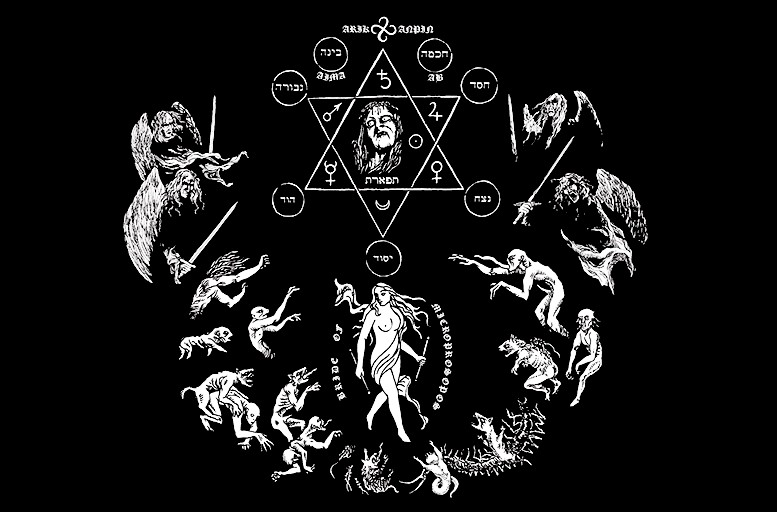
TIMO KETOLA: “Pentagrammaton” is a phenomenal listening experience – it takes my breath away. Given all the insane stories surrounding this recording, I’m genuinely impressed. The music is majestic and powerful, the arrangements outstanding, and the playing great.
I believe the main complaints concern the production.
TIMO: I know Mika called the guitar sound unlistenable or something along those lines, but I personally wouldn’t change a thing. To my ears, the original mix is perfect. Sadly, it was mere human opinion that prevented this otherworldly channelling from reaching vinyl form.
As far as human opinions go, those of the artist, producer, and label seem relevant – neither of which leaned in favour of releasing it.
TIMO: While the outcome largely comes down to Mika’s volatility as a person, we should remember one thing: it was the same unstable mind that allowed those gates to open, however briefly – long enough for this abominable art to slip through into our reality and remain suspended at the threshold, unreleased.
This conversation predated the remixed version of “Pentagrammaton” issued by Shadow Records in 2020, the same year Timo passed away. The album had originally been slated for release through Norma Evangelium Diaboli in 2006.
TIMO: Mika and I had gathered more than enough layout material from books, and I’d prepared a fairly complete sketch. If “Pentagrammaton” ever does come out, I want to paint a cover based on those old notes: a temple in Golden Dawn style, lion-faced spirits floating around, and so on.
In early 2005, OFERMOD founder Mika ‘Belfagor’ Hakola spent several days at Timo’s apartment working on the “Mystérion Tés Anomias” reissue, “Pentagrammaton” and various related artwork concepts.
Despite having savaged “Genocide Chants to Apolokian Dawn” in the Dauthus Appendix, Timo gave Mika the TEITANBLOOD demo while enthusiastically praising the man behind it. Mika reached out to Nasko by letter, and what began as discussions about black metal, occultism, and devotion gradually evolved into an invitation to join OFERMOD’s new line-up as vocalist.
NASKO: Leading up to “Pentagrammaton”, there was a sense of anticipation – but also some personal pressure on my part. Every recording I’d participated in had taken place in a rehearsal room, so I wasn’t at all familiar with studio dynamics, logistics, or anything like that.
Were you in regular contact with any of the other members?
NASKO: Yes, after we’d met and rehearsed together in the summer of 2005, I kept in touch with both Emil and Johannes – mostly by email, exchanging ideas and sharing a passion for music. We discussed our own projects too, and I got really into DÖDFÖDD and MORTUUS. All of us were incredibly excited and couldn’t wait to start recording.
In December 2005, OFERMOD entered Necromorbus Studio to record their long-awaited debut album, “Pentagrammaton”. Despite the lack of rehearsals, expectations were considerable. For the younger members, especially, the sessions carried a sense of historical weight; Johannes described it almost as stepping into the making of a modern-day “De Mysteriis Dom Sathanas”.
NASKO: Let’s not forget, Mika was a multi-instrumentalist – like Varg Vikernes on the early BURZUM albums, highly unusual back then. I thought, ‘This guy is clearly a musical genius.’ His mindset and instinct for black metal felt incredible, playing everything on “Mystérion…” himself and still making it sound so powerful.
CHRISTIAN BOUCHÉ: I trusted that the man behind “Mystérion Tés Anomias” would live up to his promises. After all, a great deal was at stake for him.
When NoEvDia agreed to finance the recording, I’m guessing you weren’t informed that Mika was effectively incarcerated?
CHRISTIAN: No, I wasn’t.
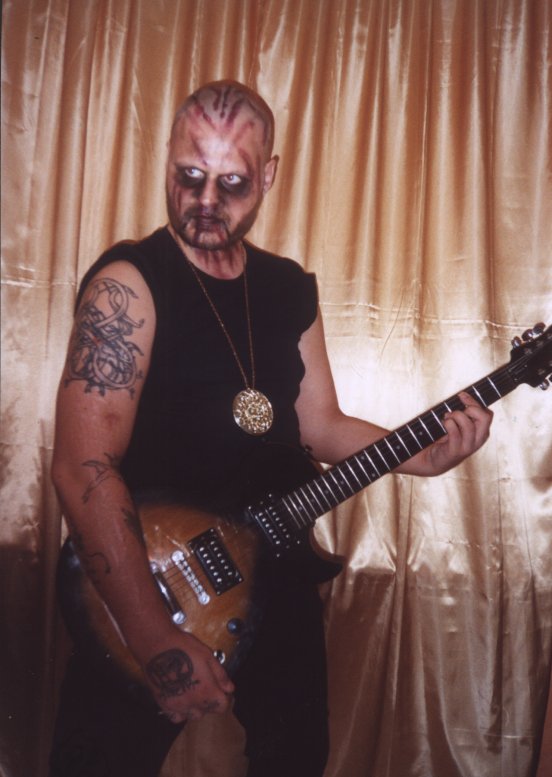
Going into the recording sessions, Mika had three months remaining on a prison sentence – commuted to treatment at Narva behandlingscenter, a closed rehabilitation facility in the Stockholm archipelago.
TORE STJERNA: The day we were supposed to get started, Mika asked me to drive out to… where the hell was it? Yeah, Vaxholm. Which is bloody far to begin with. Like, ‘Can you pick me up here at the treatment centre?’ According to him, he could come and go more or less as he pleased.
MIKA HAKOLA: To leave the place, you needed to ask permission every time, specify exactly how many hours you’d be gone, and so on. They wouldn’t allow me to be away for a full week, and Tore refused to drive me back and forth daily. I thought he understood that left me with no other option if we were going to record anything at all.
TORE: I’m no idiot; I obviously know you can’t just do whatever the hell you want in a treatment facility. But I figured maybe he’d spoken to the staff and reached some kind of arrangement; if they could meet me and see I was a normal person, perhaps he might be granted leave. Of course, that’s not what happened.
So, you didn’t realise you were essentially helping him escape?
TORE: No, but I figured it out soon enough – once I arrived at the address Mika gave me, and he came sprinting from the forest.
MIKA: That decision wasn’t taken lightly and came at great personal cost, because I ended up serving those final three months in prison instead. But first, it caused an enormous amount of suffering in the studio, which in turn required an enormous amount of drug-taking to get through.
By absconding from Narva to record, Mika forfeited access to his methadone – the opioid replacement therapy that kept heroin withdrawal at bay.
MIKA: The first day went okay, but then the withdrawal started creeping in. Foolishly, I took Subutex too soon – while I still had methadone in my system – which sent me into projectile vomiting on the sofa where I lay shaking from the collision between buprenorphine and whatever substance methadone contains.
NASKO: I clearly remember Tore writing to me, ‘I just got to the studio and found it completely trashed, with Mika lying on the floor.’ He was explaining the situation, like, ‘I don’t know what to do. I’m getting really pissed off about this.’
TORE: I think he’s mixing up two different occasions. Towards the end of one workday, Mika couldn’t find his pills and turned just about everything in the studio lounge upside down; the place looked like it had been raided. I was there with him trying to help, and eventually he found them, took off, and left me to tidy up.
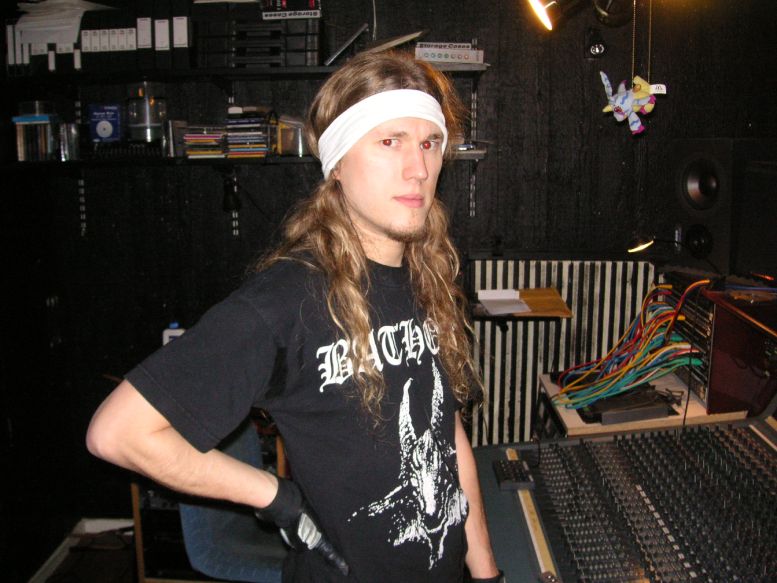
TORE: On the third day – and we still hadn’t recorded anything – Mika called me before I arrived at the studio. ‘Listen, since I discharged myself, I lost access to my medication. I’m just gonna pop by Plattan and buy some heroin.’
Anyone from Tore’s and my generation who grew up in Stockholm will likely associate Plattan – the colloquial name for Sergels torg, the sunken plaza just outside Central Station – with a very particular clientele: derelict prostitutes, heroin dealers, and the customers of both.
MIKA: I knew many of the girls working there, and their often-tragic life stories. Still, they had bigger balls than most of us men who fancy ourselves warriors. Imagine being a whore, knowing you’re about to get slapped around by some dirty old pervert in a cramped car somewhere – just so you can score a bag of heroin to share with your boyfriend.
TORE: Mika arrived at the studio in his usual cheerful mood, which isn’t unpleasant in any way. He presented it as a kind of microdosing approach – ‘just a tiny little mouse hit’, I believe the terminology was. ‘Sure, whatever.’ Then he started fiddling around with a lighter, bending some fucking spoon, doing that whole routine.
Like you see in films.
TORE: Yeah, exactly. He produced a syringe, injected the heroin – and completely passed out. So there I am, alone, thinking, ‘Eh, okay. Mika just overdosed in my studio… what the hell am I supposed to do now?’ It was a real dilemma.
Maybe call an ambulance?
TORE: Then I’d be causing serious trouble for him; I didn’t want to do that either. I had no idea what was happening. ‘Is he going to stop breathing?’ I mean, seriously – do you think I know anything about heroin? In the end… I couldn’t handle it, so I just went home.
MIKA: After several days of brutal withdrawal, I must have been so utterly exhausted that once I finally got some relief, I simply dozed off for a bit. I probably slept very well.
TORE: When I came back, twelve or so hours later, Mika was sitting in the exact same position – with the syringe still lying in front of him. After a while, he woke up and gradually started coming around, but I don’t think we got anything done.
Later that day, the younger Swedish members arrived at Necromorbus, only to find their modern-day “De Mysteriis…” off to a rather shaky start. Emil recalled, ‘A week went by where we essentially just waited for Mika to sober up. I think Tore managed to record a few drum tracks on his own.’
TORE: Exactly, I just tracked the drums without guitars since I already had the songs in my head. I could also refer back to our rehearsal recordings to check the arrangements.
Extending the studio session wasn’t an option as Tore had a flight booked to Portugal, where he lived part-time. Eventually, Mika managed to track some scratch guitars. Then, in a moment that could almost stand as the defining image of the entire project, he drank a few ciders, disrobed, and – flailing on the ground – recorded guide vocals for Nasko.
MIKA: It felt like the most natural choice – to lay down my vocals sitting naked on the concrete floor. Tore, of course, was less than pleased. Then again, he’s always in a bad mood. That man is incapable of having fun.
NASKO: I could tell the first studio session hadn’t gone well. I’m thinking, ‘What do you mean a full week went by and all you have is drums, one scratch guitar, and some reference vocals?’ I was honestly speechless. Again, every recording I’d previously taken part in had been finished in a single evening.
CHRISTIAN: I heard a primitive recording presented as working material. As a musician myself, I’m fully aware that there is usually a vast gulf between an unmixed rough take and the final result. It merely indicates the direction things are heading in.
Given that all of this transpired on NoEvDia’s dime, how much insight did you actually have into the situation?
CHRISTIAN: Very little. In retrospect, I’ve come to the conclusion that the more functional people around Mika – Tore in particular – may have shielded me from most of the chaos. I can’t say for certain whether this is accurate, but I certainly wasn’t receiving any real-time updates on how the disaster unfolded.
NASKO: I’d expected everything to be finished by the second session, with me simply coming in to track vocals before they started mixing. So clearly, things were not going according to plan.
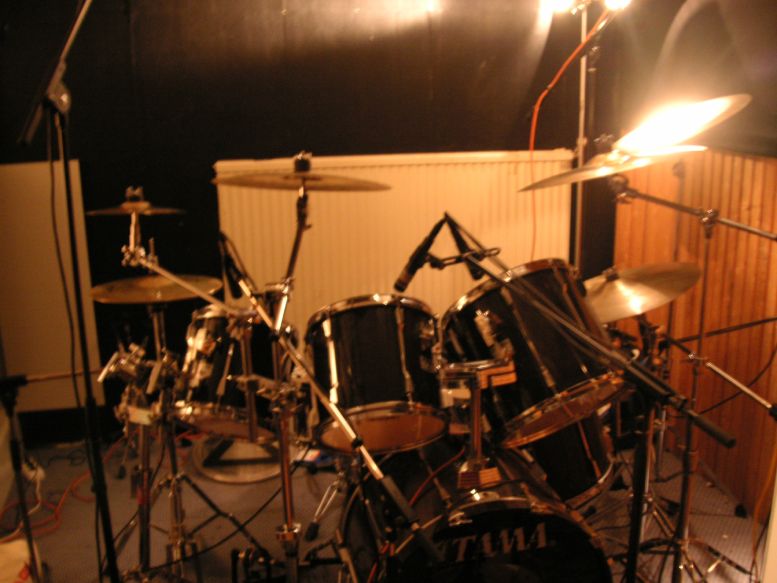
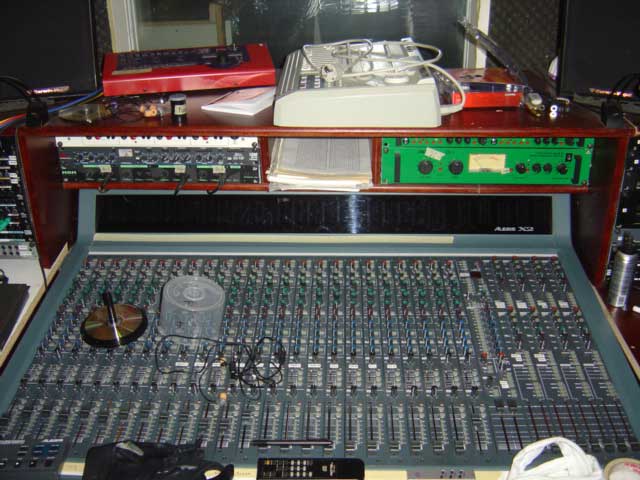
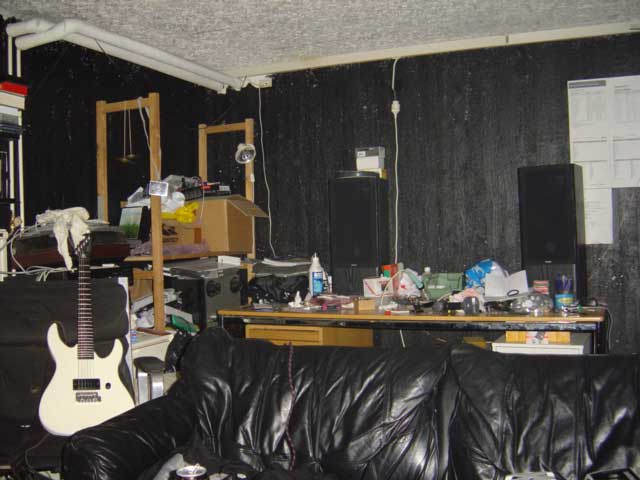
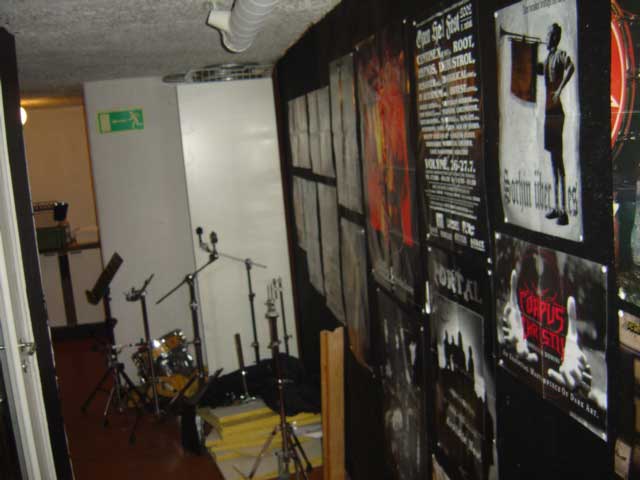
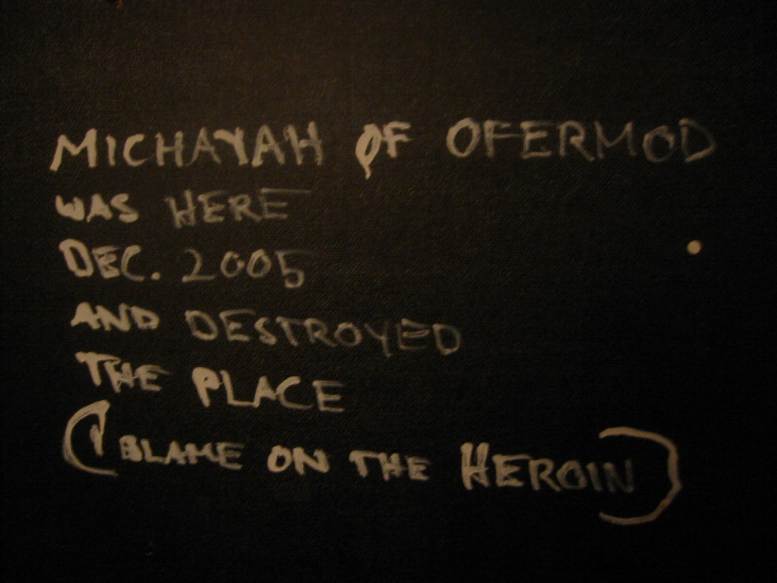
TORE: Before session two of “Pentagrammaton” in February 2006, I’d had an idea. I mean, you can build speaker cabinets into boxes, and that works fine – but I didn’t want a completely dampened construction. I was thinking more along the lines of a Helmholtz resonator.
Helmholtz resonators are commonly used in studios, concert halls, and architectural acoustics. Rather than deadening a space completely with insulation, they work more selectively by absorbing specific problem frequencies while leaving the rest of the sound relatively intact.
TORE: It works like this – you have a gap behind the panel, a bunch of insulation, and then these openings. Same principle as blowing across a bottle, which produces a specific tone. That tone gets drawn in and dies out, so you can cancel certain frequencies.
At the time, Necromorbus Studio operated beneath an active business, which imposed strict daytime noise limitations. Tore therefore needed an isolation cabinet – a partially enclosed speaker construction designed to contain volume while still allowing amplified guitars to be recorded at usable levels. His resonator-based design was intended to control sound leakage without completely choking the tone.
TORE: My dad finished building the box while I was in Portugal and brought it down to the studio before day one of the second session. My flight back to Sweden wasn’t until the afternoon, so I asked a guy I’d been working with to head over in the morning and help Mika get started.
MIKA: Were the recordings divided into two sessions? Okay, now that you mention it, my memories are starting to come back a little. I remember the young, ambitious studio engineer with curly hair. A pleasant fellow in every respect.
TORE: So I arrive in the afternoon – nobody there. What the hell? Once again, zero control over the situation. I checked with the stand-in engineer; apparently, they’d started tracking guitars, but Mika got a blister on his finger, had to stop, and then went into town.
NASKO: I remember speaking with Tore just before I left Barcelona. ‘What do you mean he got a blister on his finger? I’m completely broke, and having to cover these flights myself isn’t helping.’ Sweden was super expensive at the time – not like Germany, which felt more affordable.
MIKA: No, it wasn’t a blister – I tore the skin on every finger of my left hand except the thumb. Four fingertips bleeding profusely; they had to be wrapped in duct tape because there weren’t any plasters in the studio. I needed a break.
TORE: I listened to their guitar takes and could tell straight away – ‘Okay, the sound is fucked.’ Turns out my idea didn’t work in such a small box; you get all these phase issues. I was pretty annoyed at the other guy who just hit record without noticing it sounded like crap.
MIKA: Tore called me: ‘Right, so I’ve been using an untested isolation box, and it turns out the sound is so worthless you have to re-record your guitars.’ And because of his return trip to Portugal, we couldn’t wait for my fingers to heal. I said, ‘Fuck this – I’m going home to my mother.’
TORE: After that, Mika disappeared. Nobody could get hold of him. I took a quick look inside the box and removed all the boards, turning it into a regular isolation cabinet instead. The others arrived, including Nasko – Emil tracked guitars for his song, and I did mine.
NASKO: It was February, absolutely freezing. I’m thinking, ‘What do you mean I’m spending all this money flying over to Sweden and the guy isn’t even here, and the lyrics aren’t finished?’ I remember sitting around for two or three days doing nothing, just waiting to hear from Mika.
Couldn’t you at least track vocals for the songs with finished lyrics?
NASKO: Actually, I kept asking Tore, ‘Do you know what kind of vocals Mika wants? Maybe I can record without the guitars. This is our only chance – I won’t afford to come back later.’ But he insisted we wait.
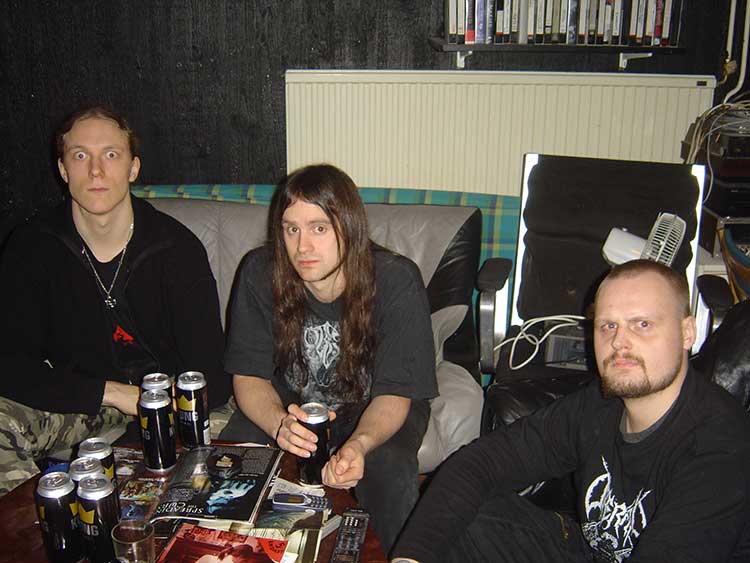
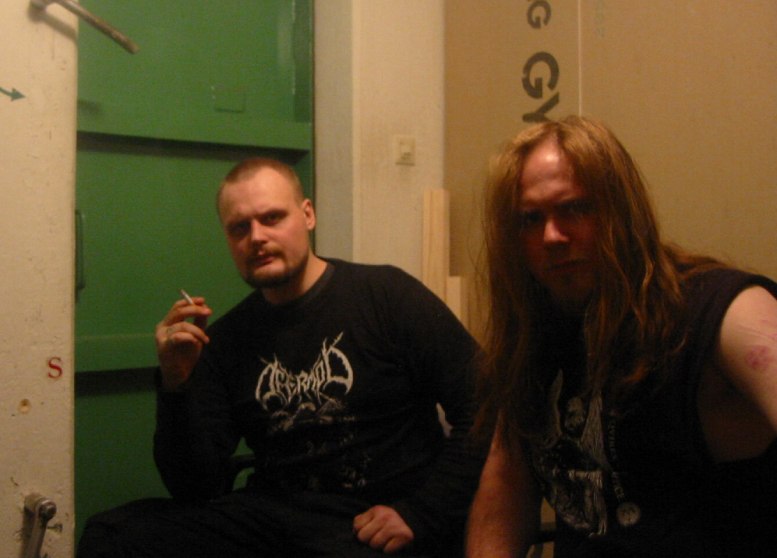
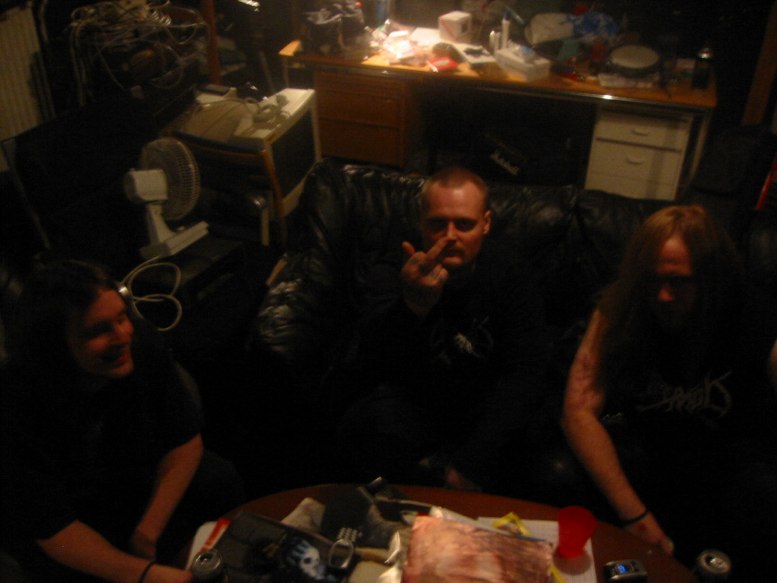

NASKO: Finally, a sign of life came from Mika. When we picked him up by car, he looked almost suffocated. Tore and I had this iron determination: ‘Let’s go straight to the studio, track his guitars, and send him back.’ If I’m not mistaken, there was only a day and a half left by then.
MIKA: My fingertips were still taped up, far from healed, so playing guitar was difficult.
NASKO: At first, I thought, ‘Okay, in a professional studio, the guitarist sits down, plays the song, and starts over if he makes a mistake.’ Right? Not quite – almost every riff had to be tracked separately. A couple of songs flowed a bit more naturally, maybe, but others were like, ‘This riff? I don’t remember it.’ Mika was relearning parts on the spot.
MIKA: I wasn’t a particularly well-rehearsed guitarist back then – I was very lazy when it came to practising. I composed music during short bursts of inspiration but otherwise avoided playing. Which meant my fingertips weren’t prepared for the kind of intensive recording schedule we ended up with.
NASKO: There were sections – say, four repetitions – where he had to record them one by one. Especially “The Birth of a Man-God”; I don’t know how many hours that took. Each riff tracked separately, over and over again. And every fifteen minutes, Mika would be exhausted: ‘I need to go for a smoke.’
MIKA: It’s not exactly easy to play this advanced stuff – picking riffs, for example – with taped fingertips, where you can’t even feel the string against your skin. You have to go by ear to hit the right note, instead of simply playing by touch.
NASKO: At some point, Tore was even showing Mika where to place his fingers… and I’m thinking, ‘Is this what recording an album looks like? You play one riff, track it, then play it again?’ My first time in a studio – very strange, very frustrating. But eventually everything got done.
log in to keep reading
The second half of this article is reserved for subscribers of the Bardo Methodology online archive. To keep reading, sign up or log in below.
Related reading