Liber Ketola XV
2026-05-19
by Niklas Göransson
In early 2005, Timo Ketola welcomed Mika ‘Belfagor’ Hakola to his home. Surrounded by bone artefacts and antiquarian volumes, the pair shaped the visual presentation of Ofermod’s reissued Mystérion Tés Anomias.
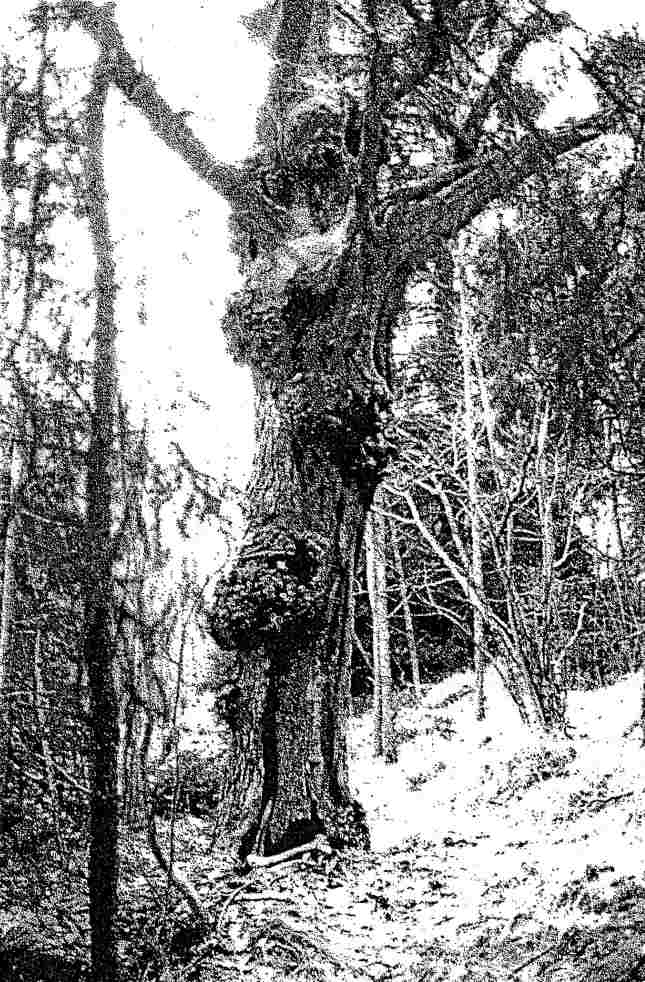
The Corpse Tree
KOSTA PAPAVASSILOU: One day, while wandering in the woods, Timo came across an elk carcass. He managed to drag it onto an anthill, I think, so they could handle the cleaning job. Then he selected the skeletal parts that interested him and stored the rest inside a hollow, dead tree.
The decayed oak, which became known as the Corpse Tree, is depicted in Dauthus #3.
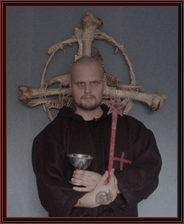
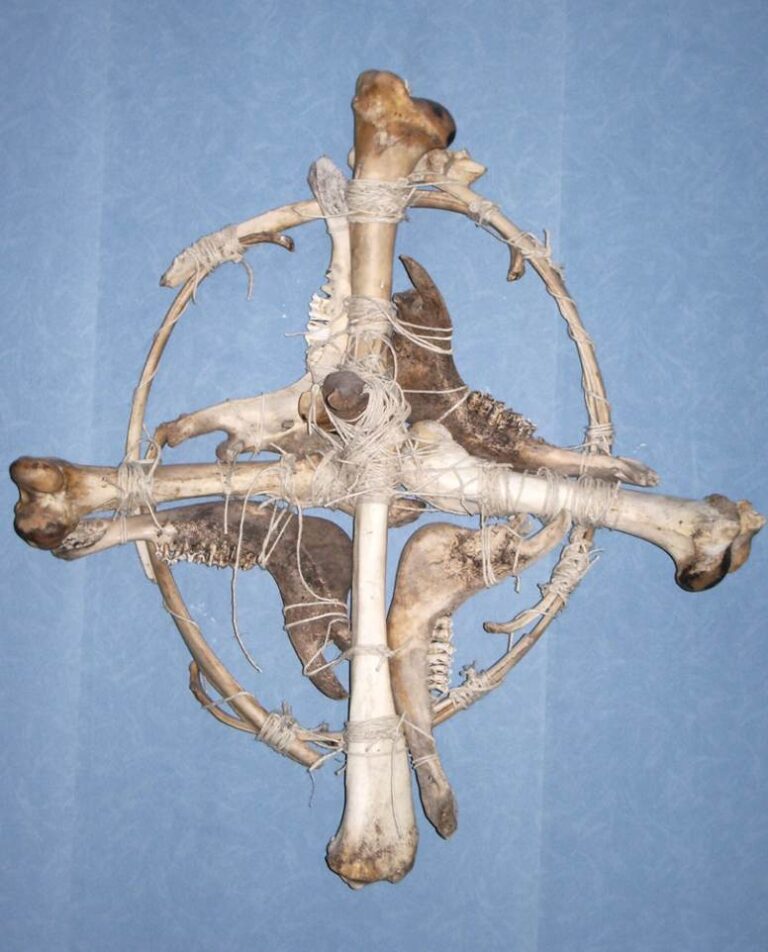
KOSTA: Do you remember the massive pot Timo kept his bone collection in? It stood in the living room, in case that jolts your memory. Over time, it filled to the brim with all kinds of animal remains – until he was struck by inspiration and assembled the wall decoration Mika is standing in front of.
In December 2004, OFERMOD recorded two bonus tracks for NoEvDia’s upcoming “Mystérion Tés Anomias” reissue: “Khabs Am Pekht” and “Rape the World”. The following month, Mika travelled to Brandbergen, where he and Timo – fresh off the Rebirth of Dissection Tour – spent several days working together on the visual presentation.
MIKA HAKOLA: On my way there, I bought some speed from a woman I’d come to know at a drug rehabilitation centre. Timo abstained but didn’t mind my indulging, as it made me industrious and creatively charged. The whole process was collaborative, with both of us contributing good ideas while the bad ones were quickly discarded.
TIMO KETOLA: Mika can be a very messy person, but in my opinion also has his sincere sides. Before we got started with the layout, he’d gathered a wealth of image material from books.
MIKA: I had a list of fifteen or so authors who’d made a lasting impression on me as an occultist, marked only by their initials. Without missing a single name, Timo identified every one of them.
Besides the CD and vinyl layouts, the pair designed the Lord Chaos shirt motif – which also became an EP poster – and developed ideas for OFERMOD’s upcoming debut album, “Pentagrammaton”. Moreover, they took several sets of promotional photographs.
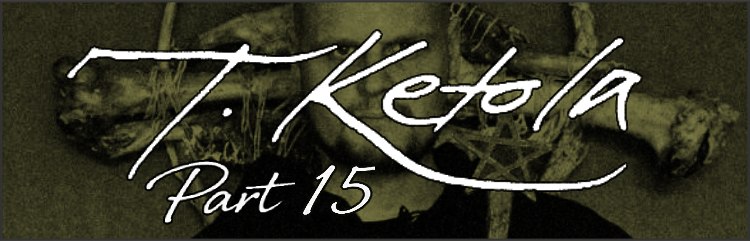
MIKA: The only one I remember is the photo where I’m holding a magical staff with an upright pentagram at the top – have you seen it? Behind me, there’s this incredible skeletal arrangement on the wall.
Did you and Timo speak Swedish or Finnish?
MIKA: Swedish in person for the most part, but Timo insisted our written correspondence be in Finnish. He taught me to appreciate my mother tongue again and to express myself more elegantly in the language I’d grown up with before starting school.
Mika was born in Sweden to Finnish parents in 1978, the same year a three-year-old Timo moved from Helsinki to Stockholm. The Ketolas settled in Brandbergen – a largely immigrant suburb not unlike Navestad, where Mika grew up.
MIKA: He was a rewarding companion to wander central Stockholm with – visiting antiquarian bookshops, talking about everything under the sun. Timo and I shared a passion for occult literature; we had extensive discussions, and I learned a great deal from him.
Can you think of an example?
MIKA: Timo explained the Qliphoth to me – how they are actually functional to work with, unlike what I’d been taught through my studies: that the shells were worthless slag products, leftover energy from the Creator to be liberated at some distant point in the future.
The Qliphoth, Hebrew for ‘shells’ or ‘husks’, are the shadow side of the Kabbalistic Tree of Life – the counterpart to its holy emanations, the Sephiroth. Mika’s views at the time were rooted in the Christianised Western Kabbalah tradition associated with Éliphas Lévi and the Hermetic Order of the Golden Dawn.
MIKA: Chaos was the ultimate object of my worship, my devotion, but I found no paths in occult literature other than the Sephirothic. I had no one to guide me toward Kenneth Grant and authors like him – pioneers of the Qliphothic tradition, who wrote openly about these forces not as something to fear but as something that could benefit the Great Work.
Timo’s interpretation, as presented to Mika, was likely informed by his longstanding association with Dragon Rouge and its founder, Thomas Karlsson. One year earlier, in 2004, Karlsson had published Kabbala, kliffot och den goetiska magin – later translated into English by Ajna Bound as Qabalah, Qliphoth and Goetic Magic.
MIKA: Timo convinced me to at least give the Qliphothic method a chance – to let it reveal itself to me and see whether I could envision myself pursuing it as a path. Bear in mind, this was several years before I read Thomas Karlsson’s book.
Did you know at the time that Timo was a member of Dragon Rouge?
MIKA: No, I found that out many years later, after I’d been accepted as a prospective member myself. I was extremely pleasantly surprised – though it also made me wonder, ‘Why haven’t you said anything before?’
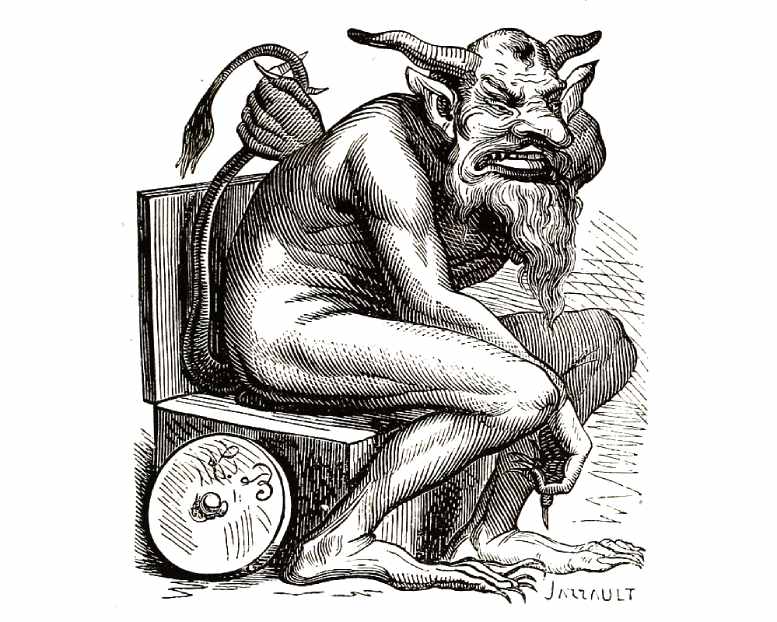
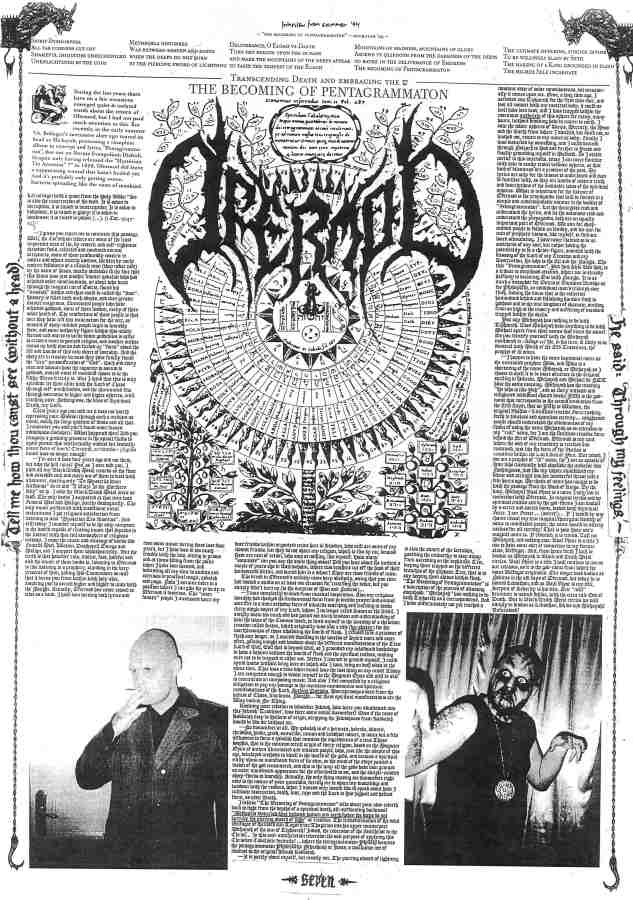
The previous summer, Timo had conducted an extensive OFERMOD interview for the Dauthus Appendix– which gave him the opportunity to use an illustration he’d long admired.
TIMO: Belphegor, from Dictionnaire Infernal by Jacques Collin de Plancy, illustrated by Louis le Breton for the 1863 edition. Those drawings are what made the book timeless. The image has turned up elsewhere too, like in certain versions of the Goetia – the classic grimoire cataloguing the seventy-two demons of King Solomon.
In February 2005, Timo added some further reflections to the article. Having properly listened to “Khabs Am Pekht” by then, he conceded his initial scepticism had been misplaced: ‘I’ve cast my doubts aside. This song has the same lofty, majestic darkness as the seven-inch.’ “Rape the World” fared less well, though Timo did remark how fitting it was to have recorded a tribute to Leviathan in December 2004: ‘300,000 lives for OFERMOD. Death Metal.’
MIKA: Ah, indeed – the Thailand Christmas tsunami struck just after we finished recording the bonus songs for “Mystérion…”. It almost felt like, ‘What the fuck, is this our fault?’ <laughs> Timo was right about that goddamn PANTERA song, though – “Rape the World” is OFERMOD’s stain of shame in hell.
The interview addendum also announces a new shirt released by The Ajna Offensive, NoEvDia’s US partner. The label was home to DÖDFÖDD and MORTUUS, from which OFERMOD recruited guitarist Emil Lundin and bass player J.K.
MIKA: I don’t think either of them made the introduction to Ajna – I’m fairly sure Timo put me in contact with Tyler. I found Johannes (J.K.) and Emil through Acerbus of ONDSKAPT and, rudely enough, proceeded to steal his members <laughs>. He was bitter about that for a long time.
Who else did Timo connect you with?
MIKA: Quite a few people – Timo introduced me to the new generation of elite black and death metal. I’d completely lost track of the underground scene over the previous four or five years and had no clue who was hot and who wasn’t, so to speak.
It wasn’t exactly as though Timo had his finger on the pulse either.
MIKA: No, but he’d identified a handful of musicians who were genuine both in their convictions and in how they expressed them through art – younger bands like WATAIN, TEITANBLOOD, KATHARSIS, and NECROS CHRISTOS. He actually played me “Casus Luciferi” – I was quite surprised to hear an OFERMOD riff on the sixth track, whatever it’s called.
“The Golden Horns of Darash”?
MIKA: Yes, the main theme comes from an old cassette tape – one that somehow ended up in their hands – where I’d recorded OFERMOD song ideas. Later, Erik Danielsson sent me a handwritten letter apologising and thanking me for the chance to use my riff.
How did the tape find its way to him?
MIKA: Can’t say for sure; I have my suspicions, though. Giving away OFERMOD material to a band I didn’t know personally is unacceptable, of course – but I’m even more disappointed about losing the cassette in the first place. That riff is so fucking good. What else was on there? Oh, to be able to listen to it again.
The NECROS CHRISTOS recommendation makes sense, given how much Timo loved their 2004 “Black Mass Desecration” demo. However, considering his savaging of TEITANBLOOD’s “Genocide Chants to Apolokian Dawn” in the Dauthus Appendix, I’m not entirely sure why he was recommending them to anyone.
NASKO: Exactly – I have the same question. I still can’t figure out why Timo, after writing that merciless Dauthus review, would go to Mika and say, ‘You’ve been locked up for a few years, so now you must listen to this – the new “Abominations of Desolation”!’ <laughs>
MIKA: Personally, I loved TEITANBLOOD’s demo – Timo gave me the tape. But I imagine his enthusiasm had more to do with personality than the music itself, because he praised Nasko to the skies.
In Bardo Methodology #8, J.K. – who idolised OFERMOD – recalled the shock of receiving a phone call out of the blue from the infamous Belfagor himself. Likewise, eyebrows must have been raised in the TEITANBLOOD camp when Mika sent a letter praising the demo recorded during their very first rehearsal.
NASKO: Well, it wasn’t exactly heart attack-inducing, but it felt very, very strange. We began corresponding regularly – discussing music, the occult, and black metal. Mika talked about being back, wanting to make an album, having all these plans. He’d also started a ‘zine.
MIKA: I was working on a black metal bible, basically – in the spirit of Slayer Mag #X, featuring the most important acts of that generation. I wanted to use everything I’d learned through my esoteric studies to ignite another wave of fanaticism in the scene. But those plans died fairly quickly, as it proved nigh-on fucking impossible to find worthy bands.
Before abandoning the project, Mika managed to conduct a TEITANBLOOD interview.
MIKA: I remember asking Nasko about black metal concerts. I had the same attitude as Euronymous: zero tolerance for mosh pits full of drunken buffoons cavorting around. It’s supposed to be a solemn occasion and an act of devotion. So I explained, in no uncertain terms, my view on headbanging and such – that I found it undignified.
It’s worth noting that their exchange took place five years after Mika’s then-only experience as a live performer. Stepping in as session drummer for MALIGN, he played two songs before losing his temper and booting an audience member in the face.
MIKA: Nasko expressed the exact opposite of my opinion. He said, ‘No, a motionless crowd is like playing to a bunch of corpses – you want an audience that actively engages in the violent ritual.’ This earned him plus points in my book; he was one of the few scene contacts willing to contradict me outright, without hesitation.
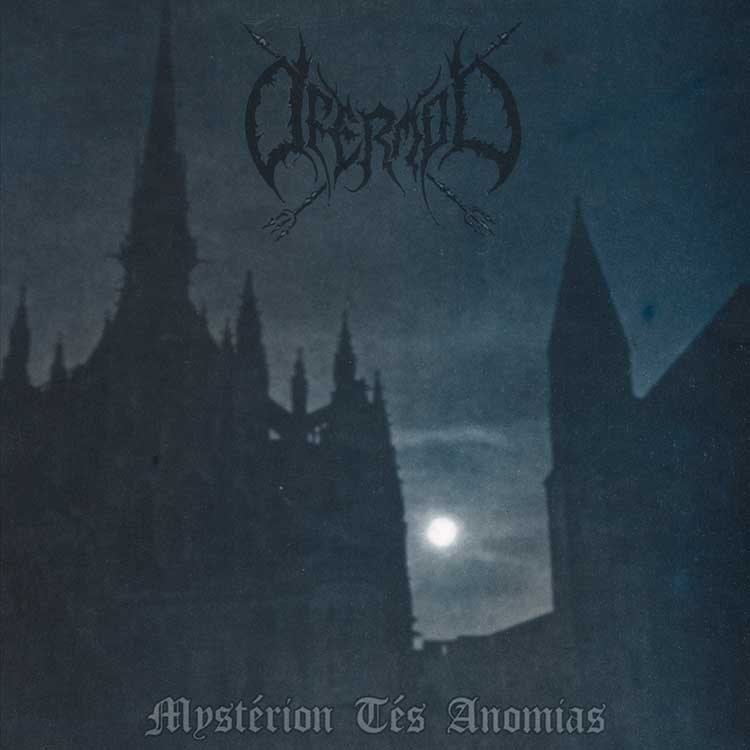
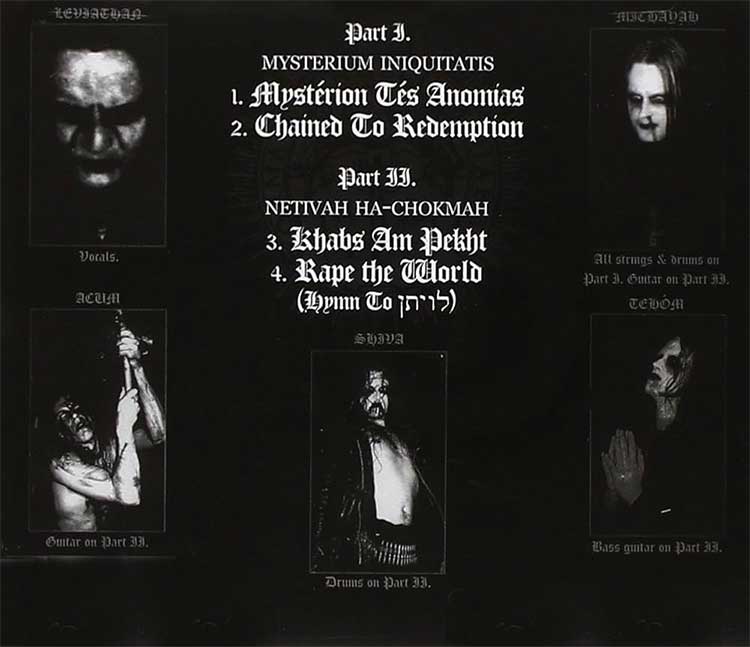

CHRISTIAN BOUCHÉ: When we reissued “Mystérion…”, those familiar with its legacy understood the symbolic weight of the release. In the wider black metal scene, however, OFERMOD remained largely unknown.
The reworked edition of “Mystérion Tés Anomias” – released on CD and vinyl in March 2005 – was dedicated to NoEvDia, which suggests Christian and Mika got along well at this stage.
CHRISTIAN: We maintained a lengthy correspondence by letter. I sensed Mika was deeply committed to OFERMOD’s return – not only artistically, but also in terms of becoming a professional musician. His reputation preceded him; he couldn’t afford to disappoint, so I tried to offer guidance where I could.
What kind of guidance?
CHRISTIAN: I won’t go into details that were, after all, part of private correspondence – but I did give him advice on how to make a living from his art. That’s a very high bar in an underground style of music. Still, others had managed, so it wasn’t beyond reach. Playing live regularly would’ve been a prerequisite; it takes years of consistent hard work to establish a band in the broader scene. The occasional spark of genius is simply insufficient.
OFERMOD’s ideological shift since the devil-worship days of “Mystérion Tés Anomias” manifested itself both visually and symbolically. The inverted crucifix was removed from the logo, and Mika – having adopted the name Michayah, Hebrew for ‘Who is like Yahweh?’ – began referring to ‘the living God’: a left-hand path framing of divinity accessed through transgression rather than Christian piety.
CHRISTIAN: Mika underwent many changes during those years, but that’s not for me to comment on. This diversity of interests within NoEvDia was one of the label’s strengths. I didn’t expect Rostén to be familiar with Georges Bataille’s Acéphale, and Mika never questioned me about my knowledge of the Kabbalah.
log in to keep reading
The second half of this article is reserved for subscribers of the Bardo Methodology online archive. To keep reading, sign up or log in below.
Related reading