Necropolis Records VII
2025-11-06
by Niklas Göransson
Amid upheaval and resurgence, The Past Is Alive tethered Necropolis to the movement’s deepest roots. The archivist’s fire burned in homage to a band whose early stirrings altered the course of underground metal.
PAUL TYPHON: Having an American band like USURPER on the roster was a milestone in itself. They were die-hard metalheads, well-organised and – most importantly – keen to tour. Unlike most of Necropolis’ catalogue, people could actually hear the music performed live.
Necropolis Records released the “Threshold of the Usurper” mini-CD in January ‘97. The same month, USURPER appeared on “Headbangers Against Disco Vol. 2” – a three-way split with NIFELHEIM and UNPURE issued by Primitive Art Records.
Apparently, USURPER fired their drummer because he didn’t want to tour, suggesting that the core members had ambitions beyond mere hobby-band status.
PAUL: Yeah, the two main guys – Rick Scythe and Jon Necromancer – were fully committed, dead serious about their music, and always pushing ahead. Even on short notice, they could rent a van, hit the road, and make things happen. Exactly the kind of determination I’d been looking for.
In the fall of ‘97, Necropolis announced a collaboration with Expo of the Extreme, Moribund Records, and House of Kicks: The American Satanic Crusade, a November tour featuring DARK FUNERAL, USURPER, ACHERON, and DESTRÖYER 666.
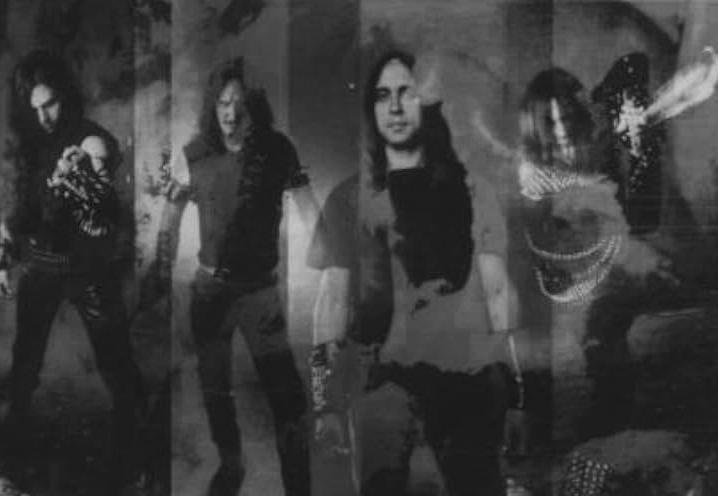
According to a 2022 Echoes and Dust interview with Jon Necromancer, the Crusade nearly collapsed after one of the promoters stole the advance money. ACHERON and DESTRÖYER 666 pulled out, several dates were cancelled – yet USURPER still managed to salvage five shows in what he remembers as a ‘nightmare of a mini-tour.’
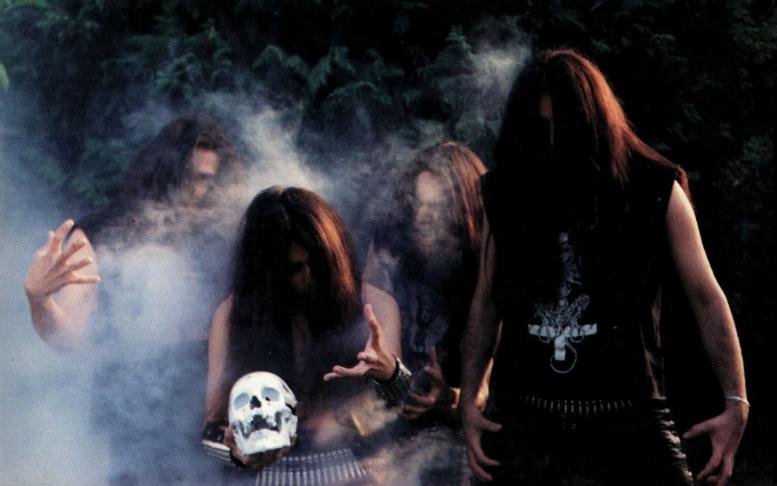
PAUL: When you meet people like that, who live and breathe metal, it’s impossible not to respect them. Everyone dressed in leather, boots, inverted crosses – straight out of a demo-era MORBID ANGEL photo. USURPER lived the metal lifestyle fully, the same way SADISTIC INTENT did.
Described by Paul in contemporary interviews as ‘one of the greatest bands in America’, death metal veterans SADISTIC INTENT had been active for a decade at that point, releasing a slew of demos and EPs. In 1996, founding members Rick and Bay Cortez opened Dark Realm Records in Downey, California.
PAUL: The Florida bands used to say, ‘We wear shorts because it’s so hot’; fucking SADISTIC INTENT never did. Always leather pants, no matter the weather. They were part of the scene from the very beginning, went to school with Tom Araya’s brother, and knew Jim from DARK ANGEL.
In 1997, after the failed attempt to revive INCUBUS, Necropolis signed SADISTIC INTENT. An announcement teased “The Second Coming… of Darkness” as arriving in the foreseeable future, promising it’d be worth the wait.
PAUL: The notion of releasing their debut album felt huge. Anyone who’s seen these guys play knows they’re one of the greatest fucking live acts of all time. In some ways, SADISTIC INTENT could’ve been like USURPER – an American band built to tour and keep pushing forward.
PAUL: USURPER had a distinct HELLHAMMER and CELTIC FROST foundation – but also tapped into this black/thrash current that was emerging as its own thing. Hervé released a lot of it through Osmose: Scandinavian bands like BEWITCHED, INFERNÖ, GEHENNAH, and so on.
GEHENNAH’s debut, “Hardrocker” – released in 1995 by Primitive Art Records – had a profound impact on the Swedish underground.
In an era heavily permeated by the austere black metal mindset, GEHENNAH reintroduced a strong emphasis on metalhead culture. Less focus on winter, solitude, and razorblades – more on drinking, headbanging, and general hellraising. Needless to say, the sudden influx of denim vests and preference for BULLDOZER over BURZUM did not sit well with everyone.
Primitive Art’s seven-inch series “Headbangers Against Disco” – a slogan coined by GEHENNAH – came out of this cultural shift. The band was soon scooped up by Osmose, who released their second album, “King of the Sidewalk”, in 1996.
PAUL: Something was definitely stirring. It would’ve been around then I heard the GUILLOTINE demo; Hervé expressed interest too, but I managed to sign them first. I’d say Necropolis helped kick that whole movement into gear with bands like GUILLOTINE, DEATHWITCH, and CRANIUM.
GUILLOTINE was founded in 1995 by two members of NOCTURNAL RITES. Paul also signed fellow Swedes DEATHWITCH – featuring Nicklas Rudolfsson from RUNEMAGICK and SACRAMENTUM – as well as CRANIUM, a side-project of DAWN guitarist Fredrik Söderberg, involving members of AFFLICTED and RETALIATION.
A later Necropolis biography framed these acquisitions as part of a decisive reorientation where the label ‘fully dedicated itself to resuscitating the darker side of ‘80s death/thrash’.
PAUL: Those signings reflected my passion for the underground energy that was so prevalent when I first moved to the Bay Area in 1988. Then, about a decade later, this new black/thrash hybrid started generating fresh excitement again.
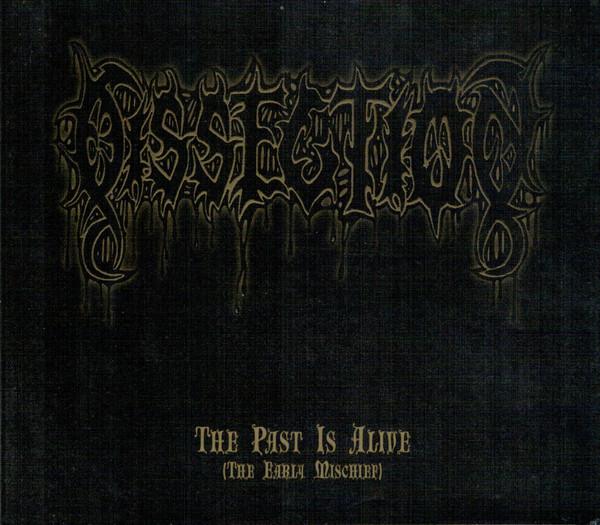
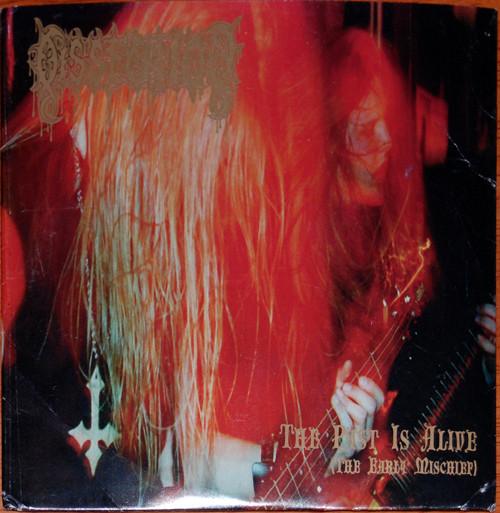
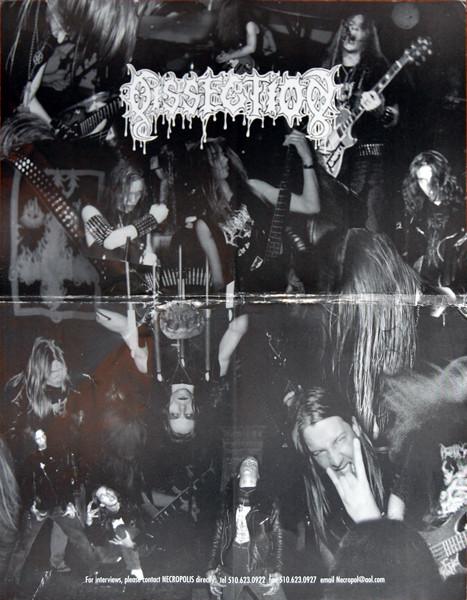
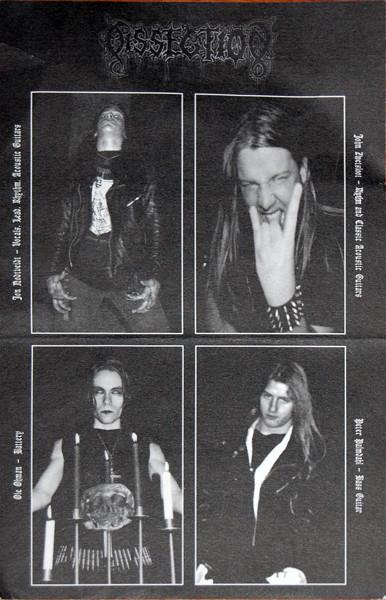
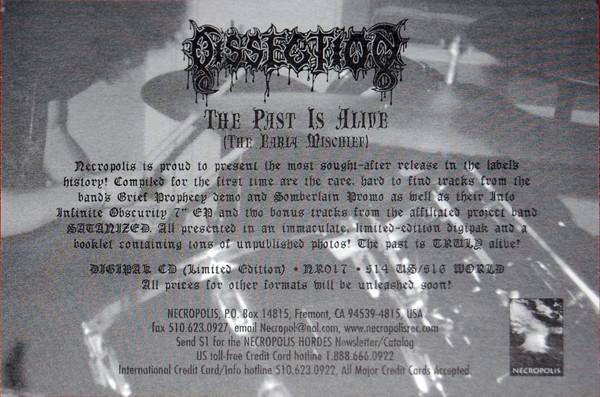
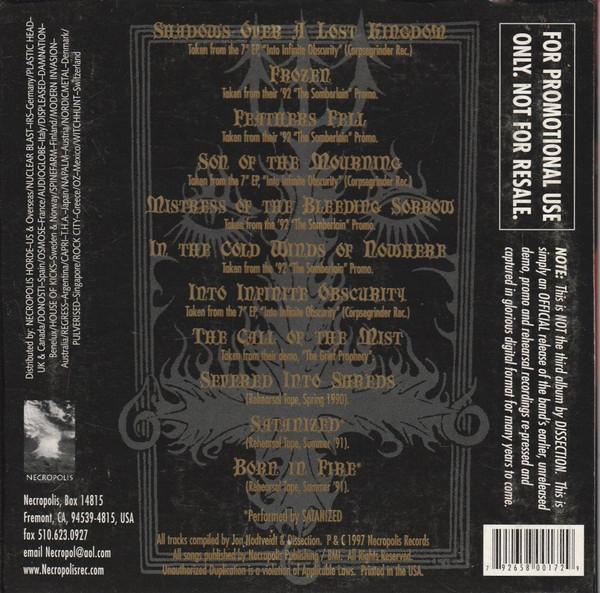
DISSECTION’s “The Past is Alive (The Early Mischief)”, a long-running compilation project, finally saw the light of day on July 20, 1997. In ‘90s interviews, Paul often referred to them as his favourite band – so this must have been especially rewarding, particularly after the No Fashion deal for “The Somberlain” fell through and they signed with Nuclear Blast.
PAUL: Jon Nödtveidt and I stayed in contact, and I’d constantly harp on him about their old tapes. It’s become a theme, as you know: I’ve always preferred demo recordings over albums. I love DISSECTION’s debut, but the original versions sound so much more unhinged to me.
Back in March 1992, DISSECTION released “The Somberlain” – a demo comprising four tracks that would later be re-recorded for the album of the same name.
PAUL: Listen to “Frozen”, the way those drums kick in, the background hiss… just magical. Once Jon finally agreed, I told him I wanted the design to reflect DISSECTION’s earliest spirit – to capture that raw, formative essence. We also discussed SATANIZED; I was really interested in doing something there.
SATANIZED was a short-lived project Jon Nödtveidt founded with local musicians – among them Johan Norman and Tobias Kellgren, both of whom would later join DISSECTION. The two tracks from their “Rehearsal ‘91” tape appear on “The Past is Alive…”.
PAUL: Jon provided all this incredible archival material – lots of old photos, like the one of Peter Palmdahl’s inverted cross, and all sorts of cool memorabilia. I’m pretty sure he mailed me the original hand-drawn DISSECTION logo. Very exciting, but I was a bit nervous about recouping my investment.
Necropolis’ previous demo reissues hadn’t exactly been flying off the shelves – but as existing recordings, they were at least relatively cheap to produce.
PAUL: DISSECTION’s name was on the compilation – which probably annoyed Nuclear Blast – but since these were demos, no one knew how it would perform. By that point, I didn’t care; those recordings are fantastic, and everyone deserves to hear them. Jon, on the other hand, saw it more as a way to raise funds for M.L.O.
After moving to Gothenburg from Strömstad, Jon fell in with a small circle of committed occultists who would become the Misanthropic Luciferian Order.
PAUL: Jon asked for the money in advance – a fair amount, comparable to what you’d pay to record a bigger band – so I wired him what would’ve been their royalties. Everything he did was designed to further his cause, similar to what BURZUM or MAYHEM might’ve done if they’d had the financial means.
By the mid-1990s, disillusioned with what he saw as empty posturing within the black metal scene, Jon distanced himself from the ‘record collectors and pretenders’ he felt were diluting its essence.
Talking to Ika Johannesson for Blood, Fire, Death: The Swedish Metal Story, Jon said M.L.O.’s ideological intensity resonated deeply with him, offering what he saw as a far more serious and actionable form of Satanism than that of his former peers in the True Satanist Horde.
PAUL: It’s interesting how the Norwegian scene sorted out who was ‘true’ and who wasn’t – and then Sweden followed suit. Our earlier conversations about Satanism had been more exploratory; suddenly, Jon’s tone became unwavering. He talked openly about stockpiling firearms and wanting to take more decisive action.
On July 22, 1997 – two days after “The Past is Alive…” was released – Jon and the leader of M.L.O. killed a thirty-six-year-old Algerian homosexual who’d approached and followed them as they headed home in the early morning hours. Both men were arrested in December that year.
PAUL: Considering what those guys got up to, I can’t say I was shocked. Still, I knew Jon on a personal level, and he influenced a lot of my thinking – so when the news broke, it hit hard. Not only due to what happened, but because I’d already sensed that shift in him.
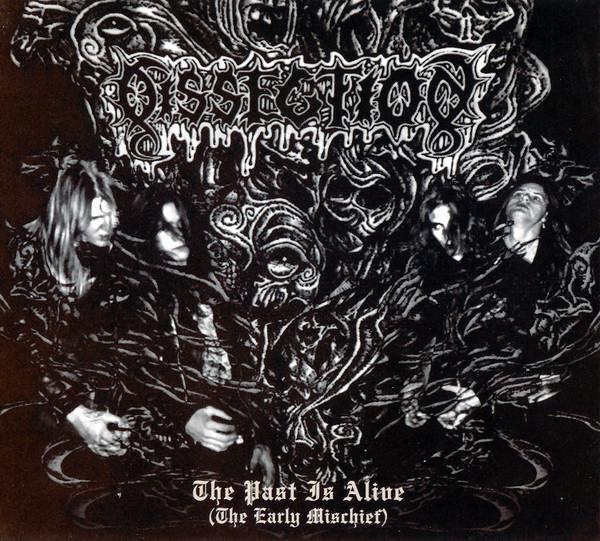
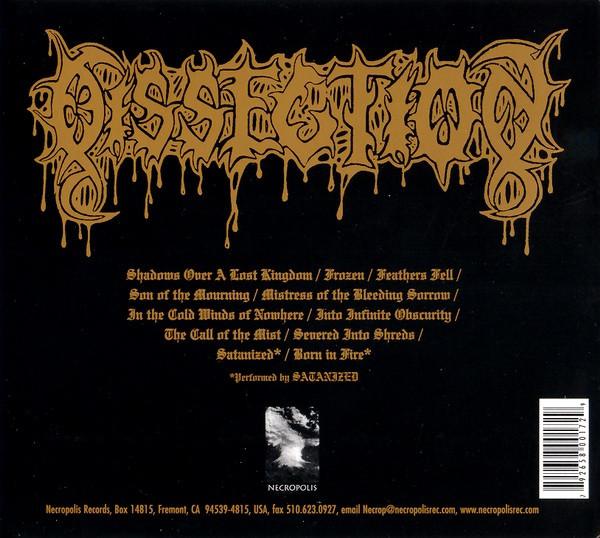
In February 1998, Necropolis announced plans to re-release “The Past is Alive…” with a revamped layout and a second picture-disc edition, citing ‘peculiar circumstances’ surrounding Jon’s arrest.
PAUL: Leading up to the first edition, some American salesman told me all about this incredible Czech pressing plant, GZ. Maybe it’s different now, but the two or three thousand copies we received looked awful. Disappointed, I decided to repress it at the place Osmose used.
This stirred up some grumblings, since the first edition had been promoted as ‘extremely limited.’
PAUL: The difference was night and day – exactly as it should’ve looked from the start. But yeah, that’s where the controversy started. Jon wasn’t in touch with the other members, so I sent copies to everyone. I assumed the advance would be sufficient to cover any future issues, not realising it had all been spent on weapons.
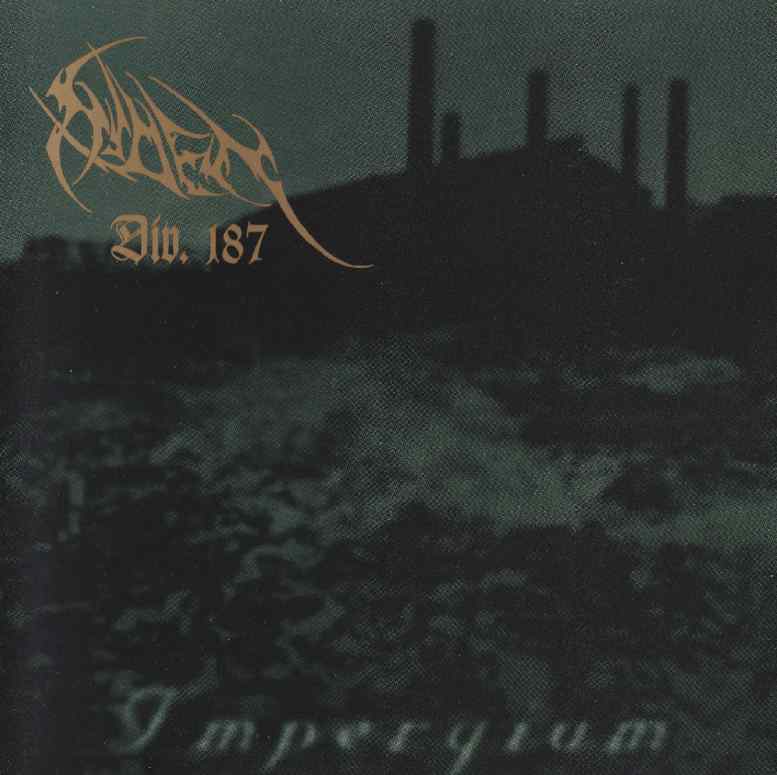
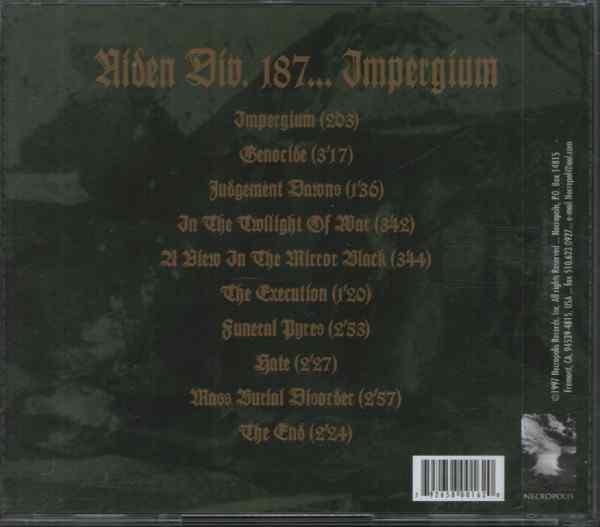

September ‘97 saw the release of NIDEN DIV. 187’s debut, “Impergium”. Formed by DAWN vocalist Henke Forss and members of RETALIATION, THY PRIMORDIAL, and A CANOROUS QUINTET, the band first surfaced with the self-released 1996 demo “Towards Judgement”, which Necropolis reissued soon after.
PAUL: I really believed in that band and sent out roughly a thousand promo copies of “Impergium” to various radio stations. We’d done similar campaigns before, but this time our goal was to chart on college radio and be seen in CMJ Magazine.
log in to keep reading
The second half of this article is reserved for subscribers of the Bardo Methodology online archive. To keep reading, sign up or log in below.
Related reading