Liber Ketola XXIV
2026-07-15
by Niklas Göransson
With Mörk magi, Timo Ketola undertook his first book design. Tommie Eriksson’s guide to practical magic carried a printer’s discipline into every page, and drew its author back towards a metal underground he had long since abandoned.
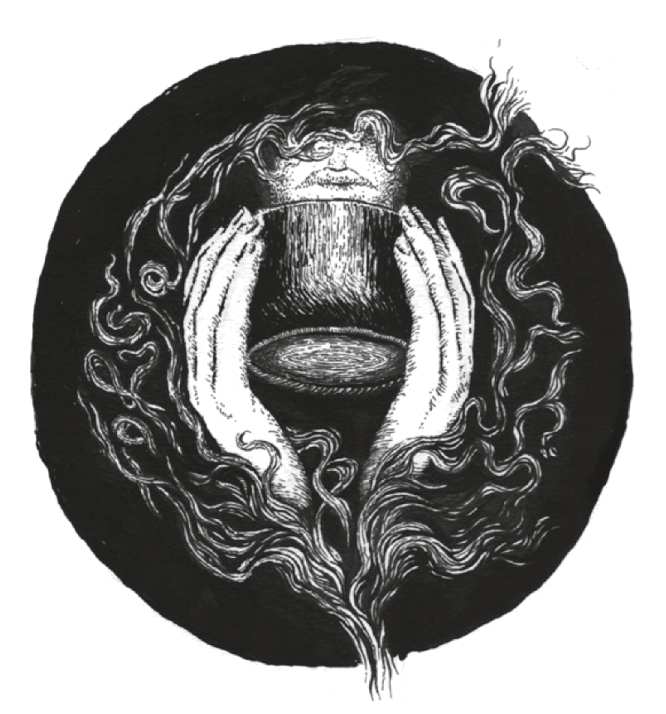
Saturnalia Temple artwork by Timo Ketola
TOMMIE ERIKSSON: After the South American tour we did in ‘95, Christofer started talking about winding up THERION. His focus was shifting towards a completely different band: THELI. We began rehearsing a few songs, with him on guitar and me behind the kit.
Having left NOCTURNAL RITES in 1993 to pursue magic more seriously in Stockholm, Tommie already knew Christofer Johnsson both as a fellow musician and through Dragon Rouge. Two years later, that connection led him into THERION’s European tour with ANNIHILATOR, followed by a South American run.
According to Christofer, THELI was initially conceived as a fallback plan. If THERION failed, he would retreat into his other great musical passion: ‘70s hard rock – a lineage running straight back to Tommie’s own earliest influences.
TOMMIE: I was supposed to contribute as a songwriter as well, so I recorded loads of riffs. THELI could’ve become a very interesting collaboration, but plans change. That’s something you learn to accept as a musician.
By autumn 1995, THELI had two completed songs: “Cult of the Shadows” and “Where the Lilies Grow”. THERION, meanwhile, appeared to have reached a dead end. The previous album, “Lepaca Kliffoth”, sold only 12,000 copies – barely above the threshold for being dropped by Nuclear Blast.
Doubting they would ever bankroll his grandiose vision for the next full-length, Christofer phoned label boss Markus Staiger to announce he was folding THERION. Staiger, who’d been so impressed by Johnsson’s songwriting that he had contacted Megarock Records the year before about buying out the band’s contract, told him to go into the studio, do whatever needed doing, and send along the bill.
TOMMIE: Christofer told me, ‘Okay, THELI as a band won’t happen – but you can join me in THERION as lead guitarist instead, and we’ll make the “Theli” record together.’ He offered me full membership: writing songs, being part of everything. That could have turned into a proper career.
With the South American chaos still fresh in mind, and a desire to return to magical pursuits, Tommie declined. In fact, he stepped away from music entirely for the next six months, focusing instead on meditation and yoga.
TOMMIE: Besides, I didn’t think Christofer and I could coexist creatively in the same band. He’s an ideologue and a songwriter – so am I. Sometimes that works, but I doubted it would in our case. Had I joined THERION, we’d have fallen out sooner rather than later.
It must have been pretty entertaining to watch Christofer go from ‘now I’m winding up THERION’ to driving Nuclear Blast to the brink of financial ruin over a three-month studio stay in Hamburg. As it turned out, Markus Staiger’s bravado rested on blissful ignorance of what it would actually cost to hire and record two choirs and assorted classical musicians.
In Bardo Methodology #4, Christofer recalled consoling a panic-stricken Staiger, who rang ‘almost choking from terror’ once the final invoices landed. Undeterred – and well aware he’d be a laughingstock if “Theli” flopped – Christofer swore a ceremonial oath that THERION would become the best-selling act in Nuclear Blast’s history.
TOMMIE: When I heard “Theli”, my first thought was, ‘This can absolutely become big.’ Christofer has always had a gift for absorbing influences – mixing and picking from different piles until the result is genuinely interesting and… I won’t say easy listening, but the kind of music likely to sell.
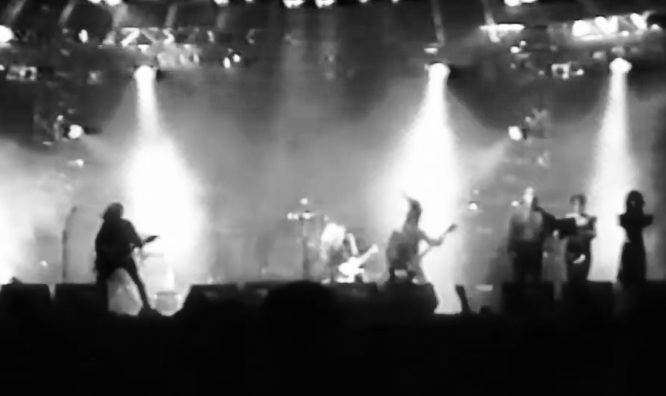
Released in August 1996, “Theli” became an immediate success, outselling its predecessor twice over within the first month. Despite having declined full membership, Tommie joined THERION for several extensive tours and was later brought in as lead guitarist on the follow-up album.
THERION’s sixth full-length, “Vovin”, doubled the sales of “Theli” and made the band Nuclear Blast’s best-sellers, fulfilling Christofer’s oath to Staiger. He later described the gamble in explicitly mystical terms: the ‘visionary and unhinged esoteric warrior personality’ had overtaken his rational side, and being prepared to sacrifice everything for the vision was itself a magical act that generated power.
TOMMIE: How much the vow actually played into it is difficult for me to say, because there was already an enormous drive in THERION – musically, creatively, and business-wise. All the pieces were in place. Christofer had spent a lifetime sharpening his songwriting, and now Europe’s biggest metal label stood behind him, along with first-rate management. Everything you could need.
By this point, the machinery around the band was not merely professional but initiatory. Christofer had maintained an active magical practice since joining Dragon Rouge in 1991, while the order’s founder, Thomas Karlsson, wrote most of THERION’s lyrics.
TOMMIE: Yeah, that’s why playing with THERION still made sense to me. Even though I’d given up on the business side, I could stand behind the whole thing. The three of us were locked into a kind of interplay: Christofer wrote the music, Thomas gave it these very advanced occult lyrics, and I helped bring everything to life on stage. For a few years, it felt like a rewarding expression of the Draconian current.
For instance, “Theli”-era crowd favourite “To Mega Therion” invokes Thagirion – after which Tommie named his first black metal project – alongside Sorath, Baphomet, the Great Beast, and the opening of the Dragon’s eye. Delivered in operatic grandeur, these words were anything but atmospheric decoration: a compressed Draconian cosmology transformed into a festival anthem. A symphonic metal audience was, without necessarily realising it, being sung the Qliphoth.
TOMMIE: Performing “To Mega Therion” with all those choirs from a festival stage in front of 50,000 people was immensely powerful. I know some metalheads regard THERION as a bit kitsch – here’s the band that essentially gave rise to the whole symphonic metal genre. But at the time, it felt like a pure magical expression. For me, that’s exactly what it was.
By Tommie’s final major THERION undertaking – a two-month tour alongside MOONSPELL in late 1998 – he had watched the band transform from one of Nuclear Blast’s weakest-selling names into its flagship act. And yet, standing in the middle of the very success he’d helped build, Tommie was done with life as a full-time touring musician.
TOMMIE: I can appreciate the MOTÖRHEAD romanticism of being on the road forever. Touring puts you in a very particular headspace – this Jack Kerouac-like archetype of stream-of-consciousness wandering, constantly in motion, passing through places and expressing whatever creativity you carry inside. I got to live that properly. And then I felt I was done.

KOSTA PAPAVASSILOU: One of the first times I visited the Dragon Rouge temple in Stockholm, Tommie turned up just before the meeting started. He’d been on tour with THERION and only came by to drop something off, if memory serves. Either way, that was how we met.
When Tommie returned from the MOONSPELL tour in late October 1998, KAAMOS guitarist Kosta Papavassilou was still new to Dragon Rouge. He had arrived through Saibot – a fellow metalhead in his community-college philosophy class.
TOMMIE: Yeah, this was at the place we had on Drottninggatan back then – down in the cellar of the Strindberg tower. As I recall, Kosta and I didn’t talk much at first; it took a while before we got to know each other. Timo came along a few months later.
KOSTA: Tommie was a very active person, not only in his own practice but also as someone who taught and led meetings. Once I started attending regularly, it wasn’t uncommon for him to guide the meditations and various magical workings – alternating with Thomas Karlsson and a few others.
TOMMIE: Different personality types approach this work in their own way. What set Kosta and Timo apart was the seriousness they brought from day one, combining practice, intellect, and social presence – all the pieces required. You could tell these were solid people, the kind who might actually make something powerful and lasting out of it.
Earlier in the conversation, Kosta described this as the beginning of a total commitment to the practical side of Draconian magic. He and Timo, as he put it, did not merely ‘dip our toes in the Typhonian currents’ but ‘dove head-first straight into the Qliphoth, with everything that entails’.
KOSTA: I think Timo and I were both so curious about whether it ‘worked’ that we couldn’t go on with our lives without answering the question. And to me, it’s obvious you can’t ‘prove’ any of this – it simply doesn’t belong to the rational. Perhaps to the intellectual, if you picture mind maps and suchlike laid over transcendent or spiritual worlds: dimensions, however one chooses to see them.
Timo, by his own account, had some difficulties at the start – particularly with Kundalini exercises. Kosta’s reading is that Timo was too logic-driven and would tangle himself up trying to rationally understand phenomena which are essentially intuitive.
TOMMIE: Some people are more theory-driven and have to work for quite a while before reaching practical results. Others get there quickly because they throw themselves straight into it. But if reckless abandon is your way in, theory must follow. You need structure eventually, or the experience won’t lead anywhere meaningful.
KOSTA: Still, you can’t arrive at it by deduction, as a school of philosophy would: ‘This ought to work, therefore it must exist.’ In fact, I’d say cold rationality is the natural enemy of religiosity and spirituality. When people encounter phenomena beyond their understanding, most religions tell them to rely on faith rather than reason. Which might sound like a cheap way out, but I think there’s something to it.
TOMMIE: For the more theoretically inclined, it can take real work to break through logic and reach an inner core – a genuine experience of some kind. Bluntly put, it cuts both ways: either you’re a control freak and must learn to let go, or you’re already open but lack the required discipline. It goes back to every system in the end: the connection between the in-breath and the out-breath, solve et coagula, light and dark. An archetype you find in the cosmos, and in people too.
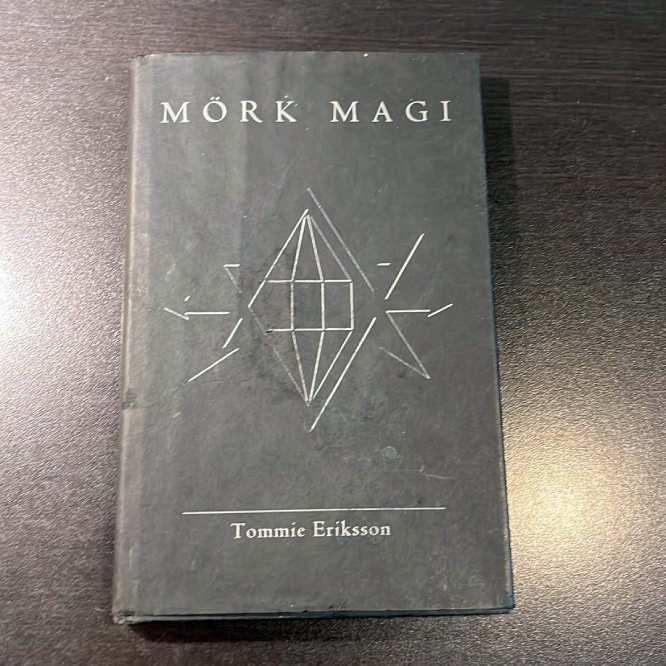
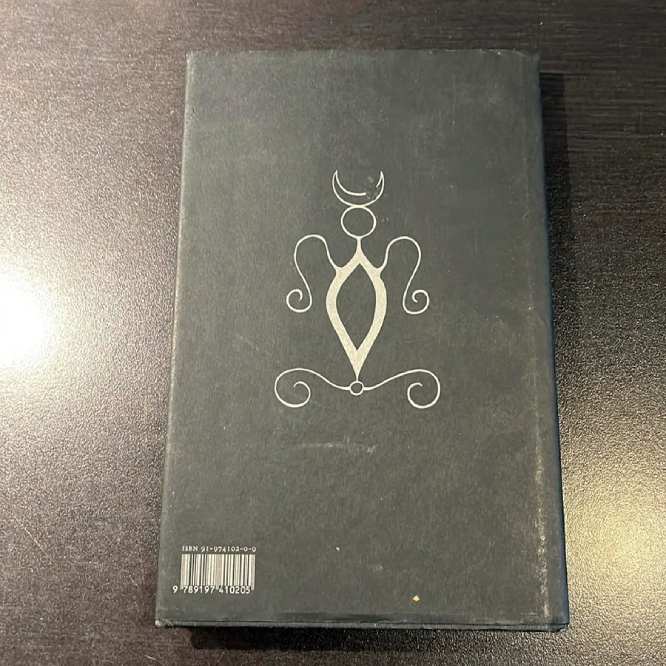
TOMMIE: It was on New Year’s Eve 1999 that I made my decision. I thought, ‘I’ll take a year and write this book.’ At which point my friend Stefan told me he had long been considering starting an esoteric publishing house. So, he founded Ouroboros Produktion in order to release Mörk magi.
What was your main motivation for writing it?
TOMMIE: I’d sensed the need for a serious, accessible book about practical magic – the kind of written instruction I would’ve wanted ten years earlier, one that stripped away the unnecessary. Most of the available literature was impenetrable for anyone starting out in esoteric work, trying to make their way through Éliphas Lévi, Crowley, or Papus.
Éliphas Lévi and Papus belong to the Hermetic strand of the Qabalistic tradition: the Tree of Life read in its luminous aspect. Crowley inherited that lineage and transformed it into Thelema, but it was his one-time secretary, Kenneth Grant, who mapped its reverse. Through the Typhonian Trilogies, Grant presented the Qliphoth as a workable magical geography meant to be actively explored.
TOMMIE: Kenneth Grant is perhaps a little more accessible, but still hard going for beginners. In any case, by then I’d got to know Timo well – and having seen what he’d done with Dauthus, I began to grasp how extraordinarily dedicated, singular, and skilled he was. I asked him to design my book.
KOSTA: Timo was both a fanzine editor and an artist at heart. He progressed from comics to album layouts and, eventually, to the discipline of book design. Beyond his boundless enthusiasm for all kinds of printed media, he believed profound writing deserved a certain dignity in print.
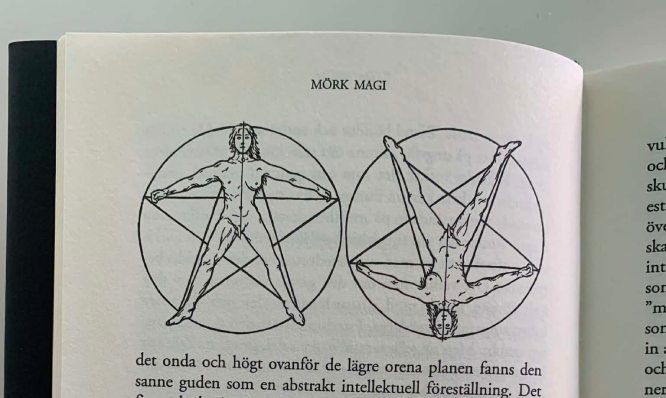
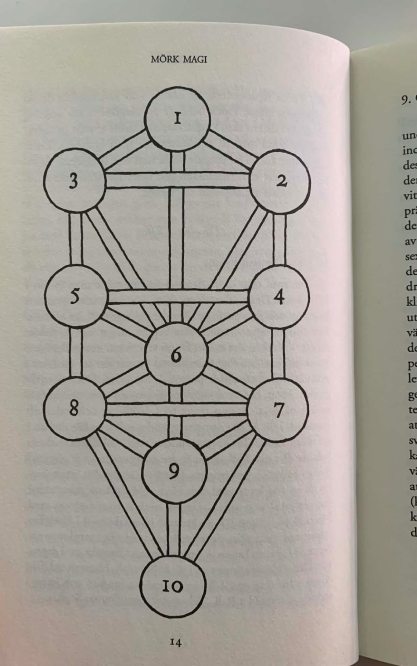
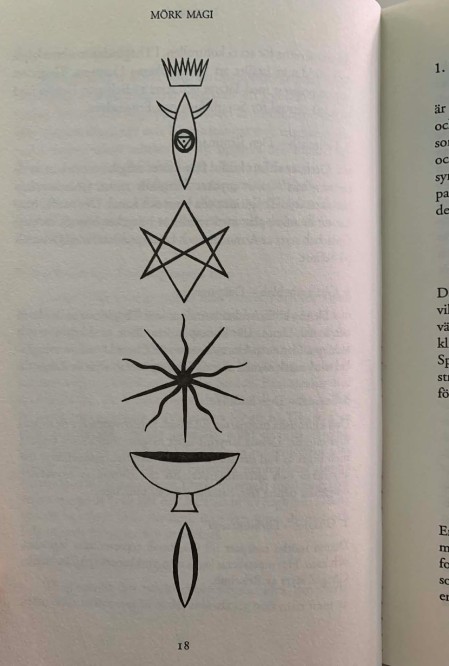
TOMMIE: Maybe in part because Mörk magi was Timo’s first book design, he poured his heart and soul into it and made a conscious effort to be as easy to work with as possible. Later collaborations weren’t always quite as smooth – but this one, as I recall, went brilliantly.
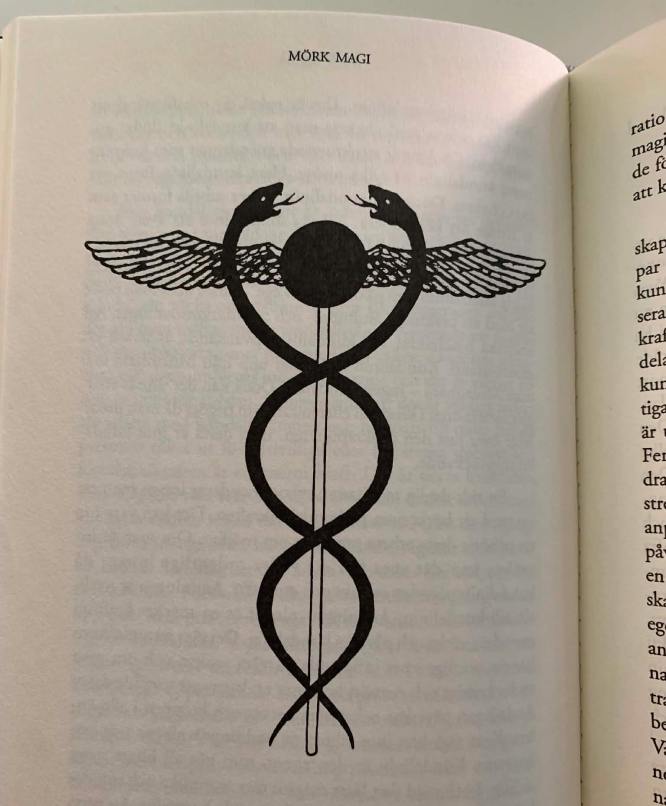
For Mörk magi, Timo handled the entire visual presentation – the cover, typography, and a number of illustrations.
TOMMIE: Timo already seemed to have a good grasp of typography – which, I now know, he owed largely to his local printer, Haninge Tryckeri. The publisher, Ouroboros, was serious too: not a word about saving on the budget. Timo could do everything exactly the way he wanted, down to the specific printing methods and paper stock.
The 145-page book was published in hardcover by Ouroboros Produktion in July 2001.
KOSTA: Fundamentally, I think Timo found it fascinating to contribute art to an actual book that would go to print. To receive a paid commission not only to design but also to decorate a written work – especially one bringing together so many subjects close to his heart – must have felt like a real prestige assignment.
One of the interior illustrations is a caduceus – a winged staff with twin serpents coiling around it and facing each other across a central orb – which, in esoteric tradition, also functions as a glyph of Kundalini. There is a certain irony in Timo hand-drawing the very force Kosta says he repeatedly tried to reach through reason rather than experience directly.
KOSTA: I doubt he related to it as a spiritual practice in itself, even though the subjects he was illustrating certainly had that dimension. But in the best case, perhaps it helped him absorb some of these concepts more deeply – because when you render a symbol visually, you’re essentially impressing it on the subconscious.
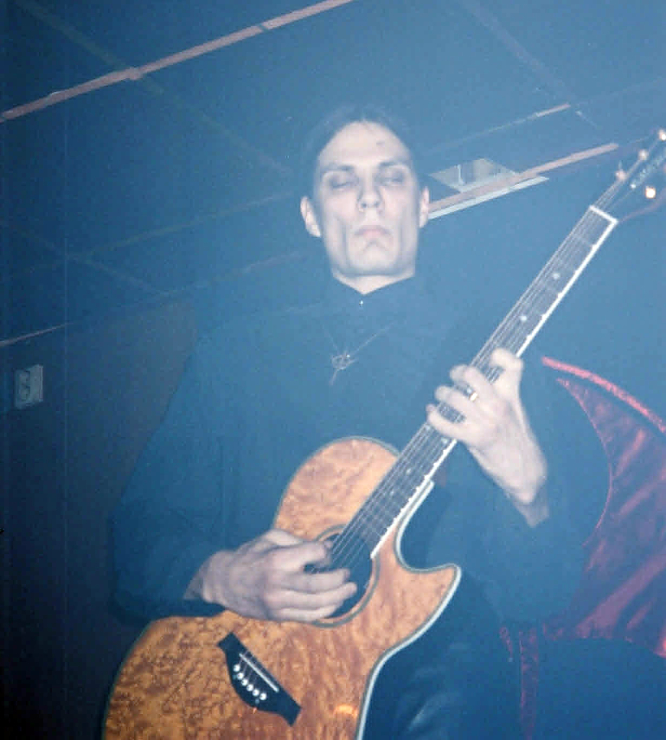
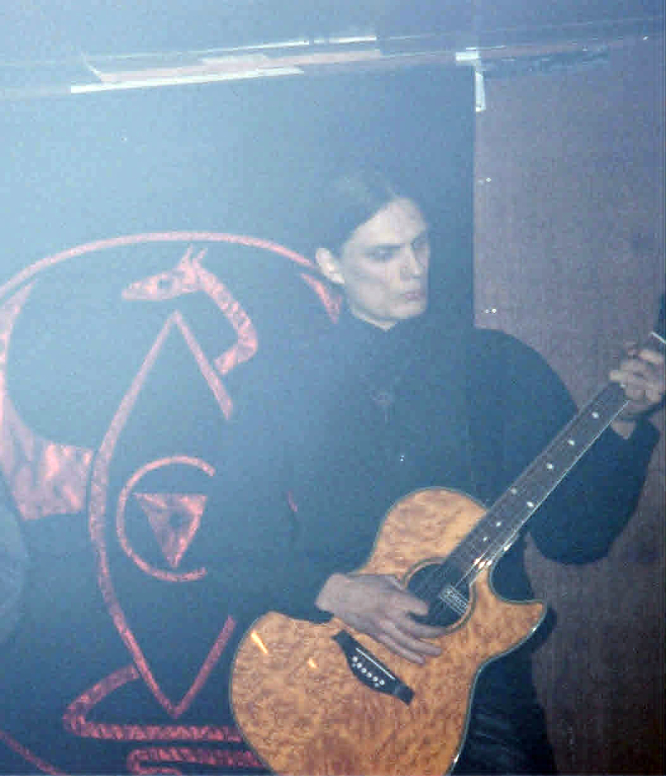
TOMMIE: After spending almost the entire ‘90s playing and touring, I’d grown quite jaded. Somewhere around then, I remember thinking, ‘Okay… was this really all?’ If you’re completely out of touch with the underground, it’s easy to develop a negative outlook and convince yourself that metal is finished.
KOSTA: When Timo and I came along, Tommie had turned into something of a hermit – he’d withdrawn, wasn’t out socialising or going to gigs. He mostly sat at home, writing, studying, practising magic, immersed in the metaphysical side of things.
TOMMIE: I hadn’t found anything especially compelling in metal for quite some time, so I started looking elsewhere – more experimental music, alternative sounds. I built a home studio and tried my hand at dark ambient and various forms of electronica.
In 2002, Tommie began developing new SHADOWSEEDS material at his home studio, Der Bunker.
TOMMIE: I’d bought loads of analogue synthesisers and put together a studio designed for that kind of music. I worked with both computers and magnetic tape; hard-disk recording had finally become good enough to use without much trouble. I didn’t have amplifiers or a drum kit in there – it was all geared towards electronic and experimental sounds.
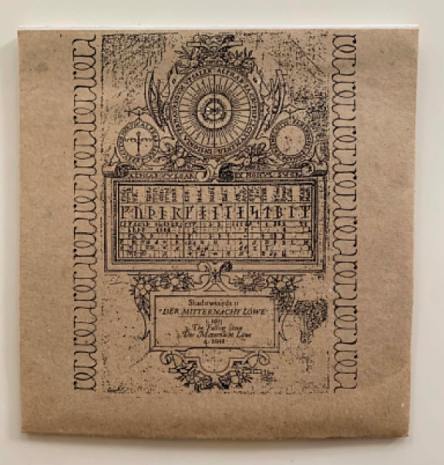
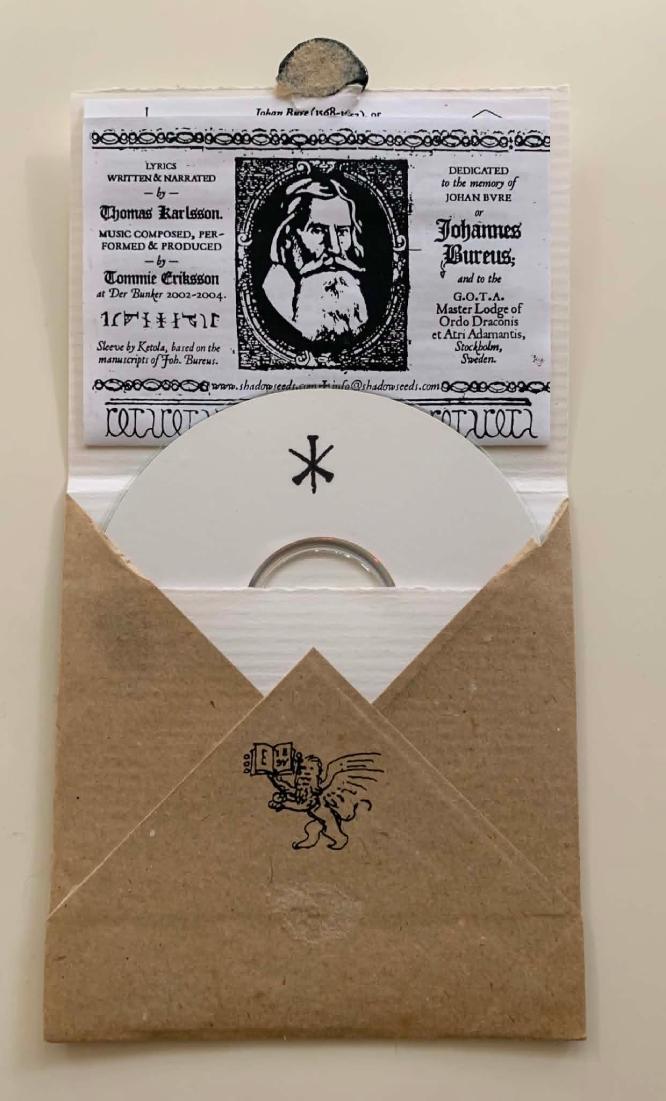
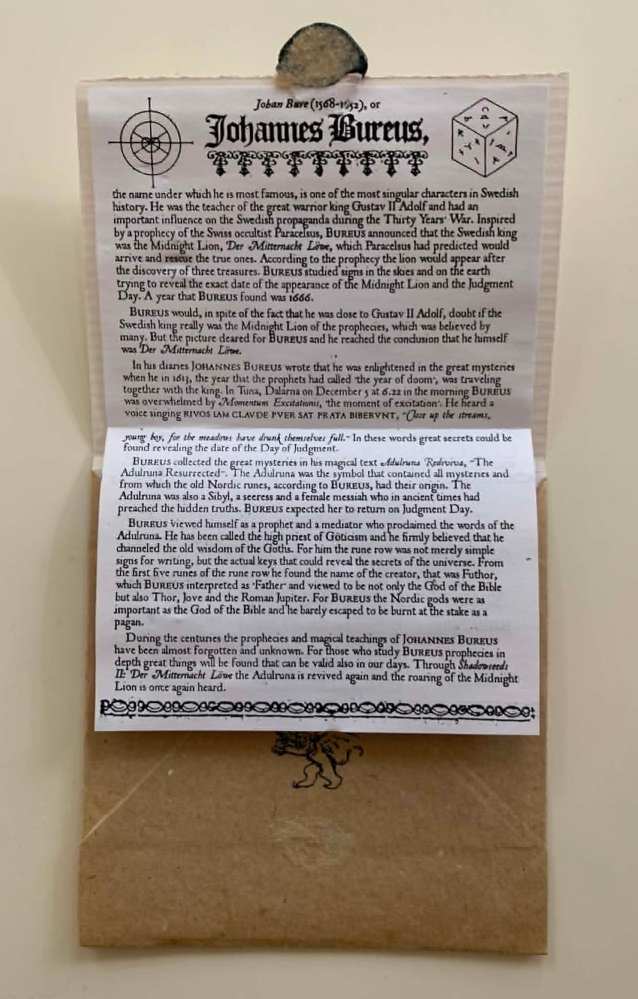
Two years later came “Der Mitternacht Löwe”, a four-song SHADOWSEEDS demo dedicated to the runologist Johannes Bureus, a foundational figure in Swedish esotericism. Only one track appears to have survived online: “The Falling Stone”. With Thomas Karlsson’s intense narration, it retains the pulsing, ritualistic quality of the more experimental “Dream of Lilith” material, but now set against a BLOOD AXIS-like industrial backdrop rather than metal.
TOMMIE: Yeah, I’d say “The Falling Stone” is fairly representative of the demo – and of the equipment I had at the time. It’s been a long while since I listened to “Der Mitternacht Löwe”, but I believe there’s another track in a similar vein, followed by two built more around acoustic guitar, percussion, vocals, and some effects.
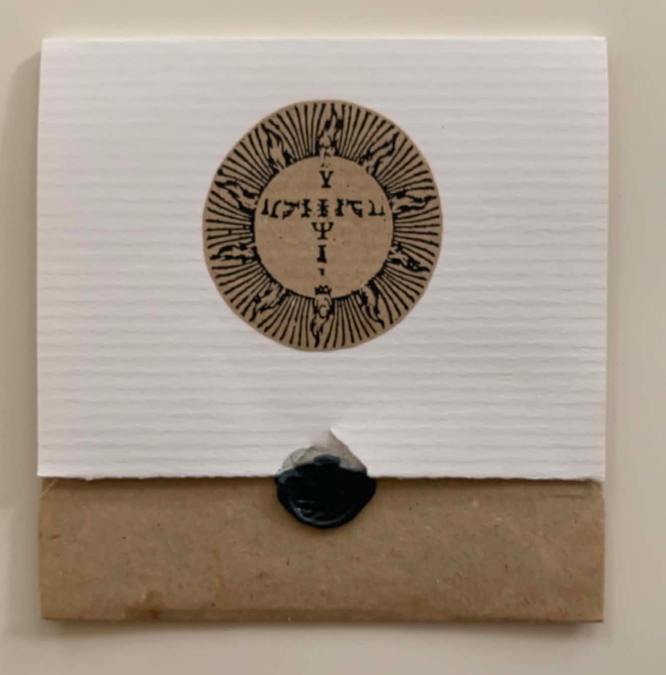
Self-released by the band, “Der Mitternacht Löwe” featured artwork and design by Timo and came in a hand-assembled heavy-paper sleeve, closed with a wax seal.
TOMMIE: Timo made the whole package from thick paper, folded into a square envelope for the disc. He glued everything together and wax-sealed each copy by hand. I believe we produced three runs of thirty-three, distinguished by different symbols. Most were sold or given away, but I still have a number of covers and discs lying around. Timo even left me the stamp, so in theory I could finish them.

KOSTA: Tommie later told me that when Timo and I came along, it inspired him. We were the kind of people he no longer thought existed in metal – real firebrands. Not only in our devotion to magical work, but in the passion we brought to the music. I think we reawakened a spark he’d lost.
log in to keep reading
The second half of this article is reserved for subscribers of the Bardo Methodology online archive. To keep reading, sign up or log in below.
Related reading