Liber Ketola XVIII
2026-06-03
by Niklas Göransson
When Timo Ketola heard Teitanblood’s instrumental rehearsal tape on Walpurgis Night 2007, crooked crankshafts began turning in the darkest inferno of Hell. Within hours, he had committed to the cover, the full layout, and a Dauthus 1899 release.
KOSTA PAPAVASSILOU: Something Timo said during one of his visits home really stuck with me: ‘Kosta, have the streets of Brandbergen started mocking you yet?’ I remember thinking, ‘What the hell does that even mean?’ I’d never experienced anything like it.
In autumn 2005, aged thirty, Timo left Stockholm for Tuscany. The move was initially provisional: he kept the flat in Brandbergen, leased it out, and put much of his belongings into storage.
KOSTA: He said, ‘I just felt like everything back home kept mocking me. I couldn’t stay.’ I’ve thought about this many times since – that is why he had to get out. Timo wasn’t the only one, though; pretty much all my childhood friends hated Brandbergen. I was the last of us still living there.
Over the following years, Timo stayed at a Capuchin monastery in Tuscany, working through Italy’s apprenticeship programmes in various ancient crafts.
KOSTA: The more time Timo spent at the Tuscan monastery and got to know the country, the further Portugal receded as a final destination. After a year or two, he reached the point where he was ready to sell his apartment and settle in Italy permanently.
In preparation for the relocation, Timo offloaded more than half of his considerable fanzine collection – along with shirts and demo tapes – on Erik Danielsson.
ERIK DANIELSSON: It was a big deal to me, almost like a passing of the torch. By then, Timo had probably realised that my passion for underground metal wasn’t some fleeting phase. I recognise the impulse myself – when you’ve hoarded too many relics and finally find someone worthy of taking them on.
NASKO: At first, I thought Sepulchral Voice might be a fitting label, but they were releasing the NECROS CHRISTOS debut – an amazing album, though very studio-clean and polished. Then I started wondering, ‘Maybe TEITANBLOOD is more of a Nuclear War Now! kind of band?’
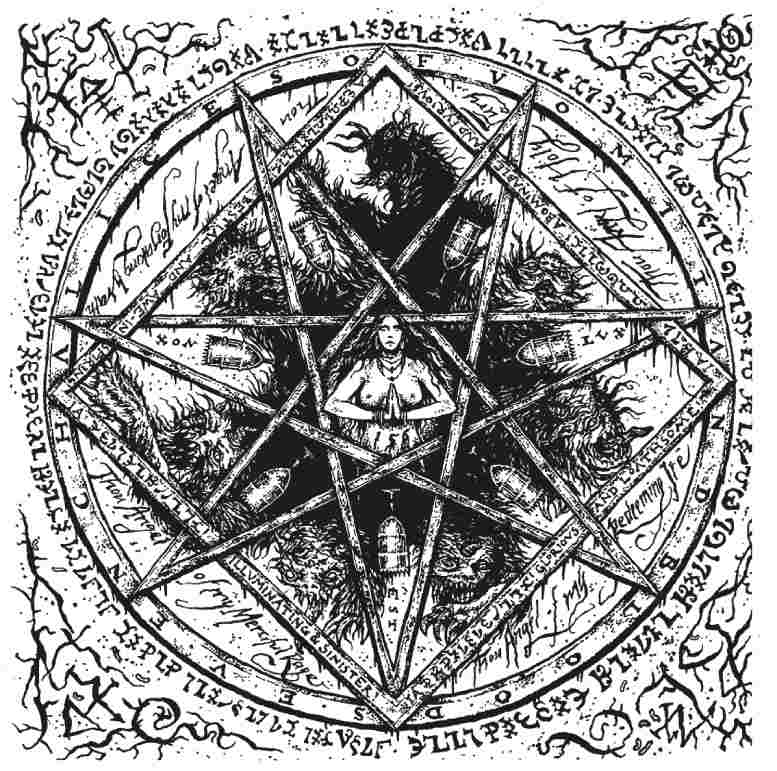
Sepulchral Voice Records released NECROS CHRISTOS’ debut full-length, “Trivne Impvrity Rites”, in early 2007. Around the same time, after some initial hesitation, Timo tentatively agreed to take on the cover artwork for TEITANBLOOD’s upcoming album, “Seven Chalices”.
TIMO KETOLA: When Nasko first asked me, in early 2006, I said, ‘Mm, perhaps – let’s see.’ Talking about it again the following year, I kind of felt we had something coming our way.
On the afternoon of April 30, 2007 – Walpurgis Night – Timo formally committed to the cover. In his first email to Nasko of the day, he noted how the death of Dauthus meant he could now ‘tap that vein for TEITANBLOOD’.
NASKO: We had been talking about a potential collaboration ever since the DISSECTION tour, so I was very excited. By then, after four years of friendship, Timo and I were exchanging emails almost daily. I thought, ‘Okay, now it’s time to pour everything we’ve discussed into this, without limits.’
Nasko had just sent Timo a tape with instrumental rehearsal recordings of the first two TEITANBLOOD songs written after the NECROS CHRISTOS split: “Seven Chalices of Vomit and Blood” and “Infernal Dance of the Wicked”. Timo had yet to hear them.
NASKO: This material sounds to me essentially like the NECROS split track. Sure, Jakub’s drumming gave it a more rabid, aggressive feeling – but the spirit, the compositions, the heaviness, and the aesthetics all came from the same place. While they were definitely stronger songs, I could never have expected Timo’s reaction.
A few hours later – in the self-described ‘feverish final stage’ of his much-delayed DEATHSPELL OMEGA artwork duties – Timo decided to sample the rehearsal tape. That alone is almost as notable as the ensuing reaction, given how particular he was about what he listened to while working.
NASKO: Yes, Timo could be both drained and inspired by music. He would often draw while listening to the release in question – and considering what “Fas…” sounded like, I cannot imagine how its artwork and the TEITANBLOOD rehearsal collided within him on such a deeply emotional level.
‘I turned on the songs you sent me’, Timo writes, ‘and I would like to take this opportunity to explain a couple of things. The first is that you are fucking it’ – followed by a thousand-word rant, complete with several bursts of multiple exclamation marks, essentially extolling TEITANBLOOD as the death metal messiah.
TIMO: Yeah, it was a memorable night when I heard those songs – especially the first, still-instrumental version of “Infernal Dance of the Wicked”. A significant moment, one that set a bunch of crooked crankshafts turning in the darkest inferno of Hell. Can’t deny it.
NASKO: To be honest, back then I didn’t understand Timo’s enthusiasm the way I do now, twenty years later. At first, I was just like, ‘Huh? This is an instrumental rehearsal tape.’ Re-reading those emails today, knowing more about his views on music and so on, they make far better sense.
TIMO: By 2007, you could find ‘primitive death metal’ bands a dime a dozen, most with as little clue as the majority of any genre. NECROS CHRISTOS and DROWNED had made things considerably more dangerous in the preceding years, but it was exceedingly rare to hear feverishness like in those tracks.

What seemed to affect Timo most was the material’s raw, unfiltered intensity: something visceral and alive, which he contrasted with bands abandoning the chaotic force of their demos in favour of cleaner, more controlled studio recordings.
As such, he wanted to be certain he’d understood Nasko correctly – ‘although this is only a rehearsal, it’s supposed to be representative of the sound on the album?’ The prospect electrified him. Across ‘twenty years of death metal history’, he argued, almost nothing came close. The production was ‘so dirty you can hear pieces falling off the guitars’, yet it never collapsed into a blur, and the drums ‘sound like DRUMS’.
NASKO: We were fully determined to record the album in our rehearsal room with Juan’s Tascam Portastudio. I mean, these days metal bands in Spain have Moontower Studios – but back then, there was nothing like it. Either way, we had neither the money nor any interest in going to a studio.
TIMO: I’d have been deeply disappointed if they’d done that. Every band trusts their choice of studio engineer, sure – but those rehearsal tracks had a primal energy I’ve barely ever heard on an album. They’ve got the relentlessness and hellfire of an early NIHILIST tape, or any classic death metal demo.
NASKO: I do remember Timo insisting on this quite a lot. He kept citing his favourite bands as examples – ‘I worship their first release, but going into a professional studio really fucked things up for them.’ He’d often invoke “Abominations of Desolation” versus “Altars of Madness” to illustrate his extreme prejudices about recording methods.
TIMO: It had become an endlessly recurring phenomenon. Someone puts out a demo, I tell them it sounds fucking great, the band agrees – and then they release a pristine, clean debut album anyway. I’d insisted to bands like KAAMOS, until I was blue in the face, that they’d secure their place in the annals of death metal by combining intelligence and power with more filth and perversion.
NASKO: I wasn’t thinking in those terms. I didn’t have any educational background, or even interest, in these matters. The recording side always fell to Juan, who handled the tracking and mixing – all of that – both for PROCLAMATION and TEITANBLOOD.
TIMO: The way I see it, in the rehearsal room you’re working to make the sound audible: wringing clarity out of the murk. Whereas in the studio, you start with sterility and have to actively hunt for darkness. Essentially, the same goal approached from opposite directions. And maybe it’s not just difficult but barely possible to add that much hell to a professional recording?

Aside from the cover artwork, Timo immediately committed himself to handling the full layout – whether Nasko’s offer still stood or not – and even proposed releasing “Seven Chalices” through his own label, Dauthus 1899.
NASKO: I have to say, at the time I wasn’t even aware that Timo had a label. But I’ve always followed my instinct, so I immediately went, ‘Okay, let’s do it.’ Only afterwards did I start thinking, ‘Wait, what has he actually released?’ Then Timo said, ‘I’m going to offer NoEvDia to co-release this’, which I understood more as them helping with things like distribution, logistics, and manufacturing.
CHRISTIAN BOUCHÉ: “Seven Chalices” was clearly a Dauthus project, though ideally he wanted NoEvDia on board as well. I don’t remember hearing any rehearsal recordings, but what has stayed with me to this day is Timo’s sky-high enthusiasm for TEITANBLOOD.
It’s notable how Christian essentially signed a band based purely on Timo’s fervour over an instrumental rehearsal jam. Recorded on an analogue eight-tracker, the production is organic and raw – and some parts sound really fucking heavy. That said, I doubt I’d ever have imagined “Seven Chalices” as the end result of this bare-bones tape.
CHRISTIAN: Timo knew I enjoy reading, and that I’m susceptible to a properly presented written argument. He sensed TEITANBLOOD would redeem years of useless so-called death metal. The depth of his artistic connection with Nasko – and the sheer energy he poured into the project as a result – came through clearly. To him, history was in the making, and it’s hard to fault his prediction.
Equally noteworthy is how far TEITANBLOOD stood from the rest of NoEvDia’s roster. At the time, Christian had little interest in anything adjacent to the emerging ‘war metal’ sound.
CHRISTIAN: My thinking was that one must broaden one’s horizons in order to conquer untrodden lands – and preferably seek out the most demanding and challenging of those paths. I couldn’t see how the bestial sound, the death metal end of it especially, might be reinvented.
In an earlier part of this series, Christian described how he’d once filed BEHERIT and BLASPHEMY away as a lineage he appreciated but saw little evolutionary potential in – until Nasko prompted him to reconsider. That conversation took place in person, in Paris, during the autumn of 2007.
NASKO: There’s an interesting coincidence around this trip in relation to my personal life. I had just left my previous job to start a new position – one that ended up shaping my entire professional career for the next seventeen years. So, Paris was kind of a stop in between.
NASKO: I think we first went to Montmartre Cemetery, walked around there, and then headed down into the catacombs… but I honestly don’t remember what I said about black and death metal. I can only assume I was being myself – describing how I saw this movement, the importance of music, lyrics, ideas, and inspiration.
CHRISTIAN: While Nasko’s exact words are long gone from my memory, I can say this: my stance was entirely unbalanced. I viewed rigid musical tradition as dead weight to be shed on the ascent toward more radical territories. Knowledge of that history is mandatory, of course – but one must have the inner strength to summon something worthy of being added to it, rather than merely mimicking what came before.
NASKO: Back then, you’d think of NoEvDia bands as having a carefully planned, professional approach to their music. TEITANBLOOD, on the other hand, was brutal and dirty – just as ambitious and monumental, but moving in a different direction. So what exactly I said that made Christian see things differently, I couldn’t tell you.
CHRISTIAN: In retrospect, my thinking was deeply flawed, as terrific bands like TEITANBLOOD, REVENGE, PORTAL, and QRIXKUOR have proven time and again. Note, though, that my reasoning still holds when it comes to heavy metal: “Painkiller” came out thirty-six years ago, and the genre has neither surpassed nor reinvented it.
“Painkiller”, JUDAS PRIEST’s twelfth album, was released in 1990. After their late-’80s synth-and-MTV phase left them looking dated against the younger thrash bands, PRIEST stripped everything back and came out faster and meaner than ever.
CHRISTIAN: Amusingly, this was a question I used to put to my comrades, including the KATHARSIS brothers – and M. gave the right answer. I asked him, ‘Name the last truly game-changing, genre-defining record in heavy metal.’ ‘“Painkiller”, of course’, he said, after thinking it through for a minute. Black and death metal, on the other hand, have kept pushing boundaries over the years, which is hardly surprising. In a sense, it’s often at the fringes of art innovation occurs, and I suspect that comes from the type of personalities drawn to the extremes.
NASKO: But if we summarise – I guess I met Christian’s standards for the kind of people he wants to work with, even if our music differed from the other NoEvDia bands. Maybe the closest reference would be KATHARSIS, which makes sense, since they’ve been a clear influence on TEITANBLOOD in many aspects.
TEITANBLOOD recorded “Seven Chalices” in November 2007. The entire undertaking followed a deliberately stripped-down approach: a low-tuned guitar with thick strings running through an old Marshall, Nasko’s beaten-up bass, and a handful of cheap microphones for the drums. The vocal session was fuelled by ‘Johnnie Walker Black Label and Diamanda Galás played backwards with no lights of any kind’.
NASKO: I knew the songs end-to-end and where the vocals should go, but they were completely improvised. So, just to add a little fire, I drank whiskey. I was fascinated by Diamanda Galás – “Saint of the Pit” and “The Divine Punishment” blew me away. Her vocal performance has always been inspiring, especially the way she texturises her voice, how far she can push it. You’ll notice that in “Salvation” too, or even in some KATHARSIS material.
As promised to Timo, the album was recorded on the same analogue eight-tracker used for the rehearsal tape: a Tascam Portastudio 414 mkII belonging to guitarist Juan Carlos Deus.
NASKO: Juan had very determined, purist views about black metal, and my involvement in OFERMOD and closeness to bands like WATAIN or KATHARSIS caused constant friction between us. As PROCLAMATION grew more popular in the underground, he really didn’t appreciate having a live vocalist with ties to NoEvDia.
By 2007, PROCLAMATION were gathering momentum. Their debut album, “Advent of the Black Omen”, had come out through Nuclear War Now! and Ross Bay Cult – and the month before the TEITANBLOOD recording, they’d played a sold-out, four-hundred-capacity Berlin show alongside NECROS CHRISTOS, GRAVE MIASMA, and BESTIAL RAIDS.
NASKO: Juan also hated the idea of NoEvDia being involved in the release of “Seven Chalices”, but he wasn’t the decision maker in TEITANBLOOD. We recorded the whole album in one evening, and Juan left the band – literally walked out. I clearly remember Jakub and me looking at each other like, ‘Where did this guy go? The last song isn’t even finished.’
Which one?
NASKO: “The Abomination of Desolation” was the last song we recorded, but I can’t remember whether the guitar parts were even completed. Either way, Juan‘s disappearance raised additional concerns: who will extract and mix the materials from the Portastudio tapes? Who can handle the intros?

In April 2008, a few months after the TEITANBLOOD recording, another NoEvDia title began taking shape as Mika ‘Belfagor’ Hakola – fresh out of prison – entered Endarker Studio in Norrköping.
NASKO: I only learned OFERMOD had been reactivated once NoEvDia announced “Tiamtü”. I’d lost touch with Mika by then and knew nothing, so I immediately started wondering: ‘Did he re-record “Pentagrammaton”? How was it done?’ And so on.
Given Christian’s earlier experience financing a recording session where the band’s founder fled a rehabilitation facility only to overdose in the studio, he’d have been forgiven for walking away from OFERMOD entirely. Instead, he committed to releasing their debut album, “Tiamtü”.
NASKO: I’m clueless, to be honest. I didn’t know Christian that well at the time, and I can’t fathom what could have happened after the “Pentagrammaton” episode to make him sink more money into another recording session. Perhaps Timo, Erik, or maybe even Ynas intervened on Mika’s behalf.
CHRISTIAN: Well, Mika will always be the man who wrote “Mystérion Tés Anomias”, so I wanted to give OFERMOD another chance. Music history is full of debacles that later turn into marvels, is it not? I’d also heard reassuring reports from Sweden, suggesting he was fully functional and committed to delivering a complete album this time.
Going into the 2005 “Pentagrammaton” session, Christian remained blissfully unaware that its creative force was effectively incarcerated. As such, I can’t help but wonder whether he knew of the plans for “Tiamtü”: no demos, no rehearsals, and every instrument played by Mika himself, despite not having touched a drumkit in years.
CHRISTIAN: It really is the case that I learned most of the details, whether concerning “Pentagrammaton” or “Tiamtü”, only after some delay. I am a very goal-driven person, which probably comes through in how I communicate: as long as you deliver, I’m largely indifferent to the road taken.
The man who walked into Endarker that spring bore no resemblance to the wreck behind “Pentagrammaton”. The year inside had stripped away much of the chaos; physically fit and mentally sharp, Mika was unrecognisable from the heroin years. The result spoke for itself: he nailed almost every part on the first take – a feat corroborated by the studio’s owner and producer, Devo Andersson.
NASKO: I mean, this is really hard to believe, and it tells you a lot about Mika’s level of genius – being able to play every instrument, first on “Mystérion…”, and then again on “Tiamtü” many years later, after going through all these escapades.
CHRISTIAN: I wasn’t surprised when Mika delivered a very solid album with “Tiamtü” – that had been the plan from day one. The anomaly, as far as I’m concerned, was the failure to realise “Pentagrammaton”.
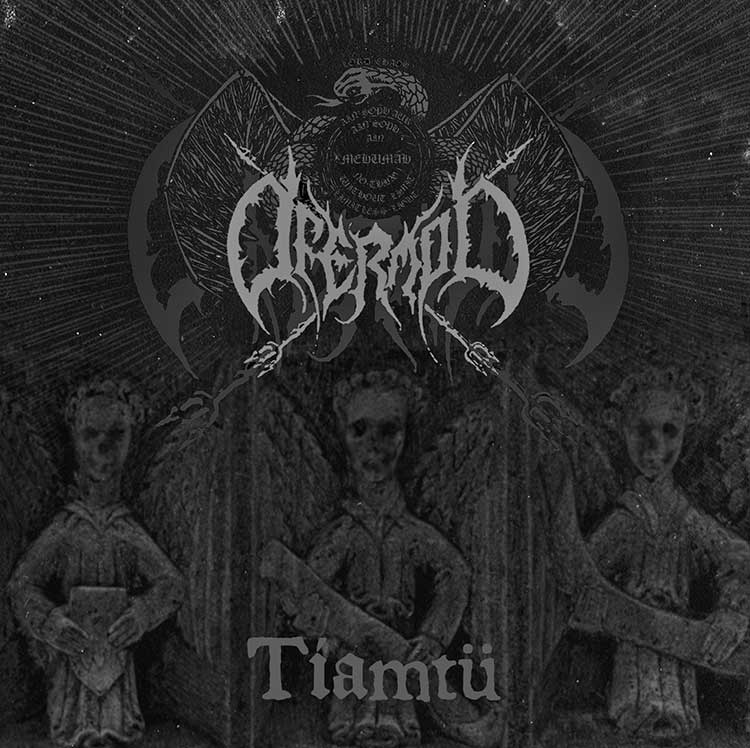
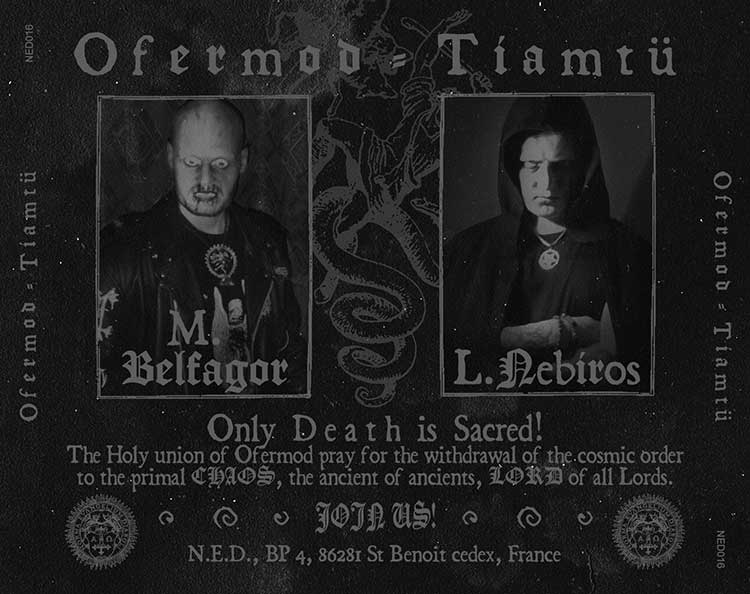
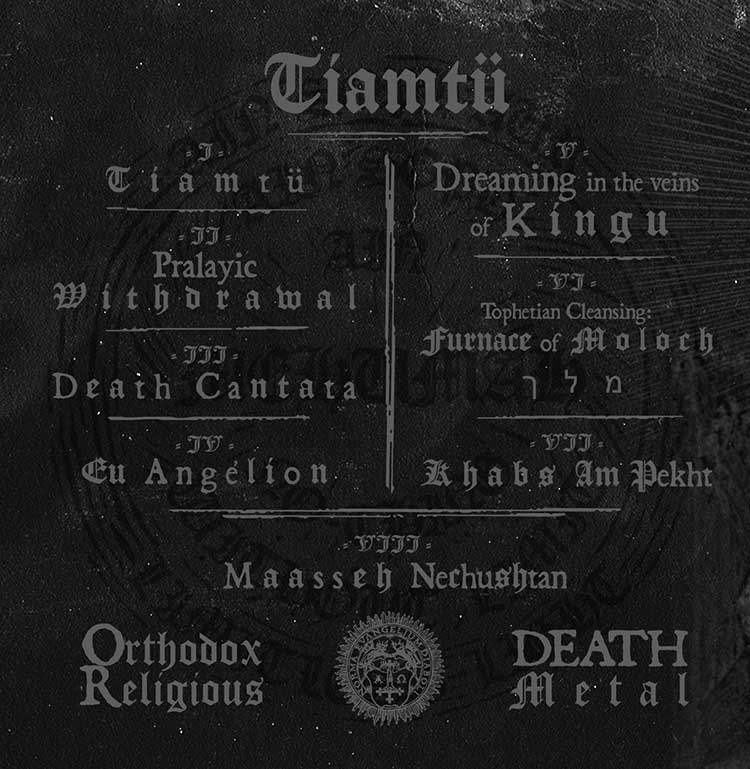

Some of the material on “Tiamtü” was originally written for “Pentagrammaton” – did the new versions live up to what you’d first envisioned?
CHRISTIAN: I don’t remember comparing the two; I simply took “Tiamtü” as an independent entity. And I probably felt a degree of accomplishment, in that there seemed to be a solid foundation for a new OFERMOD chapter to begin. Mika was more focused now, with plans to take his band on stage.
NASKO: I presume that, after “Pentagrammaton”, Mika must have thought, ‘Okay, this is not getting released, so I’ll just dismember the album’ – cutting it into pieces, like what was done to Osiris. But I think the comparison with “Tiamtü” is incomplete unless you also add NEFANDUS’ “Death, Holy Death” to the equation.
NEFANDUS – Mika’s earlier band, founded in 1993 and dormant since 1996 – was revived in 2008 and recorded their second album, “Death, Holy Death”, at Endarker. Several tracks contain “Pentagrammaton” riffs: “Twofold Star of Saturnalia Solstice” lifts two passages from “Persisting to Die in Thee”, “Behind the Red Lotus” draws on “The Becoming of Pentagrammaton”, and “Alike God” and “Theli – Opposer of Life” both borrow from “The Birth of a Man God”.
NASKO: In “Alike God”, you can tell Mika couldn’t play Tore’s drum signatures properly. I remember this part because I wasn’t able to nail the lyrics at the right timing. Whenever I’ve recognised “Pentagrammaton” material, I thought Mika did a great job restructuring and combining ideas. Even on the latest OFERMOD album – the first song has riffs from “A Likeness to Yah”, which really tells us about his talent, how he pivots and reworks things.
The song “Tiamtü” is largely unchanged from its “Pentagrammaton” incarnation – but on the 2008 album, it serves as both title track and opener.
NASKO: Great song, but it’s quite slow and droning for an album opener, which I think puts you off a little. “Pentagrammaton”, on the other hand, started with the same kind of “Mystérion Tés Anomias”-style sinister intensity as “Khabs am Pekht” – through “Persisting to Die in Thee”. And actually, you can hear parts of that one in the second track on “Tiamtü”.
log in to keep reading
The second half of this article is reserved for subscribers of the Bardo Methodology online archive. To keep reading, sign up or log in below.
Related reading