Liber Ketola XVII
2026-05-27
by Niklas Göransson
By 2006, Dissection’s Reinkaos had consumed the better part of a year of Timo Ketola’s life – his most ambitious project yet, and the one that left him contemplating an end to album artwork altogether.
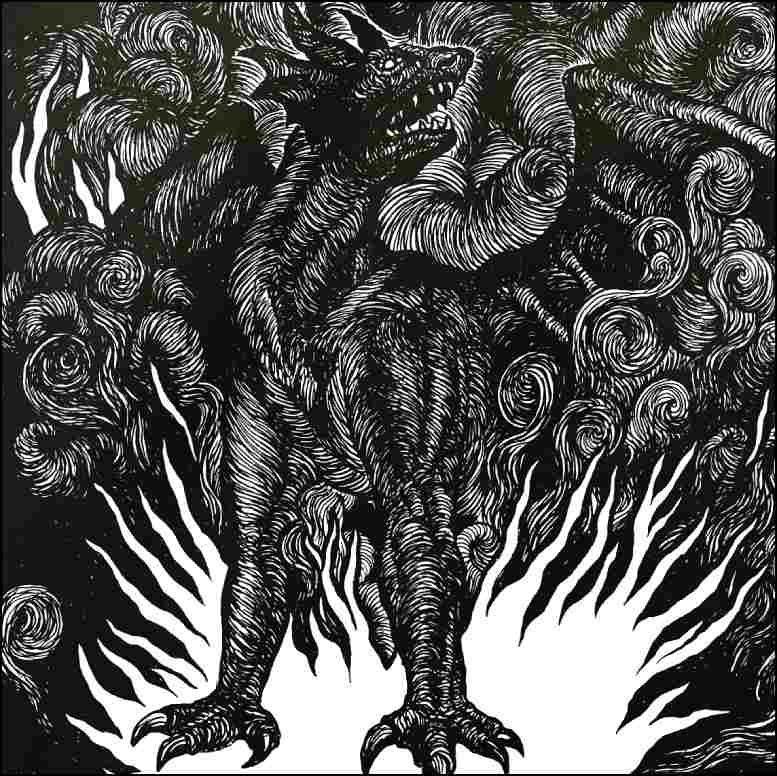
TIMO KETOLA: The Appendix was mostly sold through distros; Hiberica and Nuclear Winter had master print files, so I didn’t have to mail copies to them. I picked up mine at Haninge Tryckeri the day before leaving Sweden, so it became a very concrete farewell to both Brandbergen and Dauthus.
In October 2005, after collecting the Appendix from the local print shop that had produced everything Dauthus-related since the beginning – fanzine issues, vinyl booklets, flyers – Timo left Sweden for Italy.
KOSTA PAPAVASSILOU: Timo initially set his sights on Portugal, but they’d discontinued their apprenticeship programmes for handicrafts. That tradition was dying out across Europe, which is why he turned to Italy – one of the few places where he could still learn the trade.
In the first months following his move, Timo stayed at a Capuchin monastery in Tuscany. Over the years that followed, he studied a range of handicraft disciplines.
CHRISTIAN BOUCHÉ: Timo was interested in all sorts of ancient crafts – bookbinding, traditional printing techniques, sculpting and bronze casting, that sort of thing – but I don’t remember the order in which he took them up.
ERIK DANIELSSON: The only specific thing I recall regarding Timo’s apprenticeship is that an older man from the village tutored him in metalwork. He made a bronze bust, among other things.
TYLER DAVIS: He was also involved in furniture restoration, and even some metallurgy – foundry work, pouring metal into moulds to make figures and the like.
ERIK: Learning all these ancient crafts through old-fashioned, traditional methods – Timo was absolutely ecstatic. It felt as though he had suddenly stepped into a dream, surrounded by everything he’d been longing for.
NASKO: Aside from book restoration, he also took up sculpting – I believe he cast some bronze busts. I’m not entirely sure what else; Timo and I remained in regular contact, but we hadn’t grown especially close yet.
NASKO: Regardless of Timo’s involvement, my core vision was to create a TEITANBLOOD album consisting of six or seven songs bound together by a continuous thread – intricate not only in the music, but also in the lyrics and imagery. Plan B, let’s say, would have been to ask Drakh from KATHARSIS again.
The KATHARSIS frontman first contributed artwork to Nasko’s fanzine Final Solution and TEITANBLOOD’s 2004 demo “Genocide Chants to Apolokian Dawn”. Two years later, Drakh provided the cover illustration for the TEITANBLOOD and NECROS CHRISTOS split seven-inch.
In late 2005, after recording their contribution to the split, TEITANBLOOD began developing new material. Nasko also revisited the idea of an artistic collaboration with Timo, who was by then deep in the final stages of DISSECTION’s “Reinkaos”.
NASKO: I clearly remember him saying, ‘Sorry, but this is becoming a very long project, and I’m getting worn out and am considering taking a break from artwork altogether – even album covers.’ Of course, if he’s working with DISSECTION, it makes sense he would decline something like TEITANBLOOD.
ERIK: “Reinkaos” must have been the most ambitious project he’d taken part in up to that point – with detailed illustrations for almost every song. We got back from the Rebirth of Dissection Tour in December 2004, and Timo and Jon began working on the art concepts soon afterwards, completing them gradually, piece by piece. I remember it clearly because I was the one who assembled everything.
Timo handled all the illustrations, while Erik was responsible for the layout.
ERIK: Timo didn’t quite feel he had the energy for that side of things – he simply wanted to be the artist. And Jon was the perfect client, just as I imagine Kosta must have been on “Lucifer Rising”, and perhaps Rostén and myself to some extent on “Salvation” and “Casus Luciferi”. It makes all the difference when people know exactly what they want, right down to the smallest detail.
How long did the process take in total?
ERIK: Roughly a year. There were many meetings – Timo, Jon, and I going through the material together, with Set often present as well. What’s remarkable is how much the visual concept shifted along the way. It eventually settled into a very stripped-down black-and-white aesthetic, but that wasn’t the original intention at all.
What was the initial plan?
ERIK: If memory serves, the early discussions revolved around the booklet resembling some kind of medieval grimoire with real magical sigils and lyrics presented almost as instructions – essentially a manual of black magic. But as things progressed, we gradually moved away from that into what “Reinkaos” ultimately became. It was a fascinating transformation to witness.
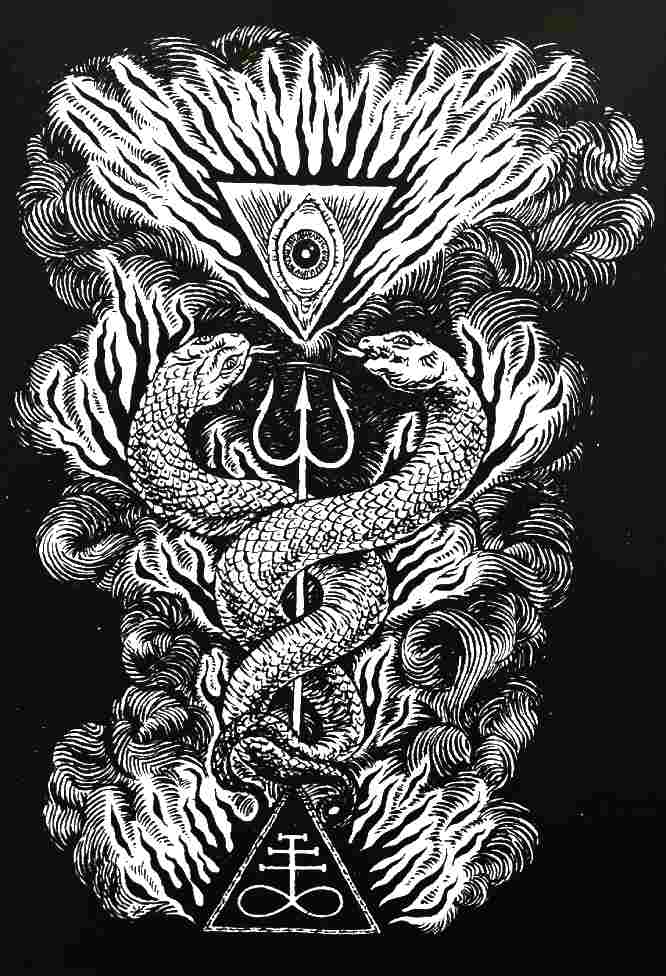
ERIK: Maybe today I wouldn’t react quite as strongly, but at the time I’d never really encountered those kinds of aesthetics before. Timo’s earlier woodcut-style illustrations had tended to appear in messier, cut-and-paste “Casus Luciferi”-type layouts. Here, they became part of a coherent and sinister whole. Truly elite – especially when you factor in the music itself and everything surrounding the album.
Meanwhile, work on OFERMOD’s “Mystérion Tés Anomias” and “Pentagrammaton” layouts was accompanied by lively discussions about spiritism. Until then, Mika ‘Belfagor’ Hakola had explored primarily Hermetic Kabbalah, and he credits Timo with opening his eyes to the Qliphothic tradition. DISSECTION’s lyrics, by contrast, were already deeply rooted in similar currents.
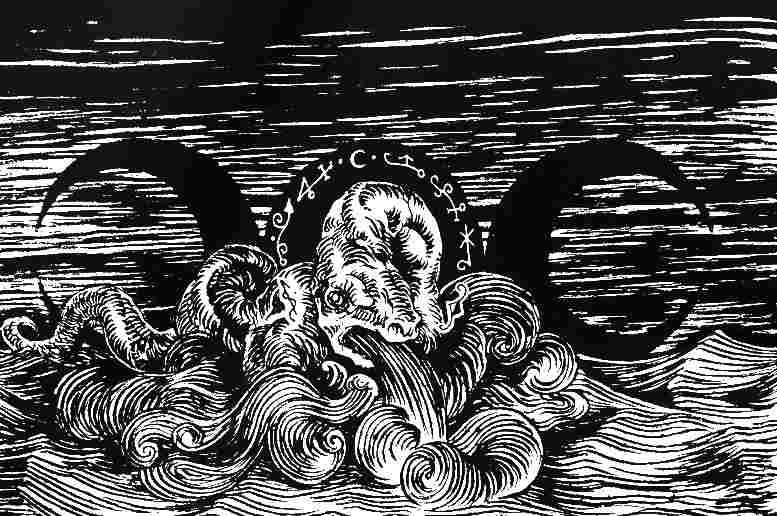
ERIK: Timo and Jon may have approached the Qliphoth from slightly different angles, but there weren’t really any disagreements – rather a shared theoretical understanding of the system and, presumably, comparable practical experience. Timo was also very particular that everything should be symbolically correct and faithful to tradition. I clearly remember them discussing the “Dark Mother Divine” illustration, how the three phases of the moon ought to be arranged and what each represented.
The “Dark Mother Divine” illustration depicts Lilith – in the Qliphothic framework, the gateway into the realm beyond the Sephirothic Tree of Life – in dragon form, rising from primordial chaos-waters and crowned by the cycle of the ‘sinister moon’. The three lunar phases correspond to the cyclical feminine invoked in the lyrics: ‘virgin, mother, whore and crone’.
ERIK: But really, there were lengthy discussions of that sort surrounding every single motif. I imagine Jon would’ve had a harder time communicating his vision at such a degree of symbolic precision with someone like Joe Petagno – one of the artists he’d initially considered commissioning for “Reinkaos”.
Joe Petagno – interviewed by Timo in Dauthus #2 – is the American artist behind MOTÖRHEAD’s iconic Snaggletooth mascot, with a portfolio spanning LED ZEPPELIN, PINK FLOYD, and extreme metal acts such as MARDUK and AUTOPSY.
ERIK: For Timo, the ambition was perhaps a little… I wouldn’t say higher, but somehow different. The work carried an even deeper underlying seriousness than before – something he appreciated and could relate to. At the same time, it placed him under enormous pressure, simply because so many elements had to come together exactly as Jon envisioned them. So I can absolutely understand why Timo ended up feeling burnt out towards the end.
It’s been quite some time since I last leafed through the sleeve, so I had to refresh my memory. I’d forgotten just how ambitious and detailed the booklet is – probably because I subconsciously associate the album with its austere, minimalist cover.
ERIK: I think we consciously aimed for exactly that – an epic yet simple design, allowing you to immerse yourself in all the illustrations and finer details inside. The cover went through a great deal of back and forth, and for a while other artists were involved as well. As I recall, it was one of the last pieces to fall into place.
Did Timo involve himself in your layout work at all?
ERIK: No, he had his hands full, focusing entirely on finishing the illustrations. I remember him struggling to pull everything together. Jon kept introducing new ideas along the way, some of them fairly ambitious. ‘Oh, fuck, that’s right: we also need a gatefold image of Death standing before an omega symbol, set against a starry sky.’
Aside from Timo’s hand-lettering, the booklet is set in a sharp, modern typeface, giving it a more contemporary feel than his work typically conveys.
ERIK: That came from the band – they wanted it to feel contemporary, anchored in the present. There was no requirement for an old-fashioned or weathered look. Timo would certainly have pulled all of this off brilliantly, but perhaps it wasn’t entirely his aesthetic.
Was this your first professional collaboration with Timo outside WATAIN?
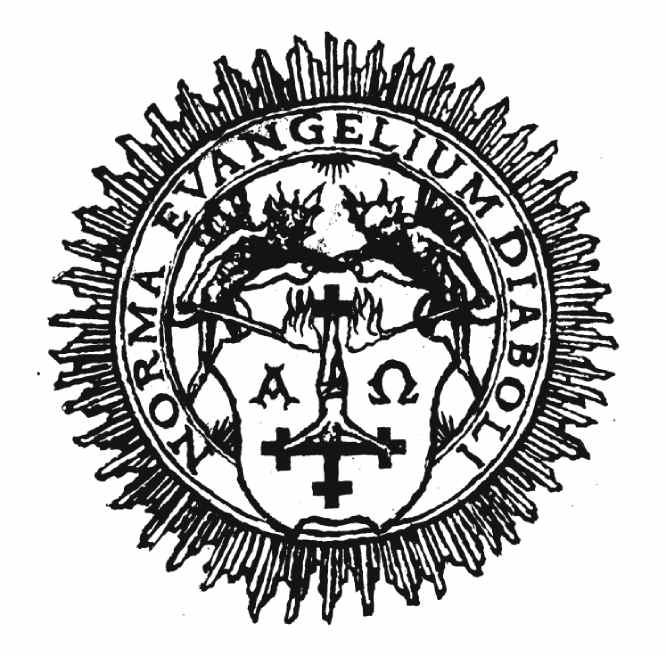
ERIK: Yes, I think it may have been. Wait, no – to be precise, the Norma Evangelium Diaboli logo was probably the first thing we put together for someone else. When Christian founded NoEvDia, he and I kept up a continuous dialogue about the kind of label he envisioned, the common thread linking its bands, and so on.
Norma Evangelium Diaboli was initially conceived as a collective effort rather than a conventional label – a structure in which a few key individuals would each contribute their own distinctive qualities. The idealism ran deep enough that new bands required the blessing of those already on the roster before they could join.
ERIK: I took it upon myself to create the NoEvDia logo. Then I probably showed it to Timo – a bit like a cautious pupil presenting homework to his mentor. He said, ‘This definitely has potential, but it needs to be massacred if it’s going to look organic.’ So that more hands-on process was Timo’s contribution.
NoEvDia sigil by Timo Ketola and Erik Danielsson
ERIK: Several major labels expressed interest in DISSECTION, but Jon was really fucking sceptical about working with their ilk again. He wanted some kind of underground profile surrounding “Reinkaos” – to keep it unsoiled by agendas he couldn’t relate to. And there, NoEvDia stood out as the perfect alternative.
Following negative experiences with No Fashion and Nuclear Blast, Jon Nödtveidt committed to self-releasing “Reinkaos” through the band’s own label, Black Horizon Music. The vinyl edition became a collaboration between Black Horizon, The End Records – which also handled the American CD release – and Norma Evangelium Diaboli.
CHRISTIAN: I’m unsure of the exact details, but Erik probably mentioned his growing involvement, and I would certainly have expressed an interest in supporting the project however I could. DISSECTION was a very inspiring band, as you well know, and I considered it an honour that they chose to work with us.
ERIK: NoEvDia was fairly established by then. Timo worked closely with them, so we knew the production side would run smoothly. More importantly, the label had begun acquiring an elite aura – much like Shadow Records or Deathlike Silence. And Jon, discerning as ever, surely recognised that potential.
The collaboration also extended to DISSECTION’s first two albums, “The Somberlain” and “Storm of the Light’s Bane” – originally released by No Fashion and Nuclear Blast respectively, but now reissued across all formats through Black Horizon Music.
ERIK: I believe the rights to “Storm of the Light’s Bane” had reverted from Nuclear Blast to Jon by then. “The Somberlain”, on the other hand, was a different matter. There is still something of a question mark surrounding that deal, since DISSECTION signed to No Fashion before Tomas Nyqvist sold his label catalogue to House of Kicks without consulting the bands.
“The Somberlain”, DISSECTION’s 1993 debut album, is estimated to have sold over 100,000 copies, yet the band never saw a cent. According to a 2016 Bardo Methodology interview with Tomas Nyqvist, after completing his prison sentence, Jon and a companion visited Sound Pollution – the House of Kicks storefront in Stockholm – and retrieved the rights in person.
ERIK: Yes, correct. And that companion was Bård Faust, who’d joined DISSECTION on drums following his own release from prison. So, the Sound Pollution crew suddenly had two recently paroled murderers marching into their office, demanding documents.
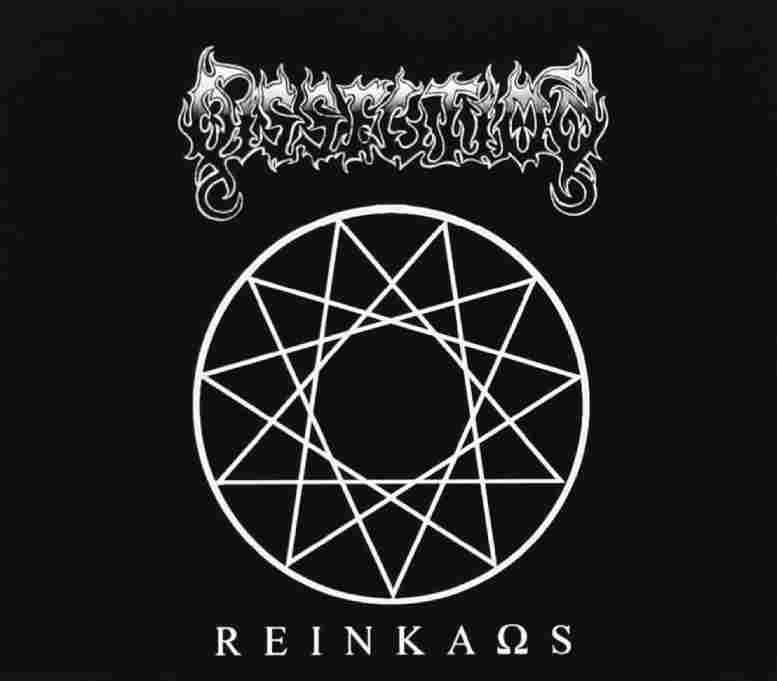
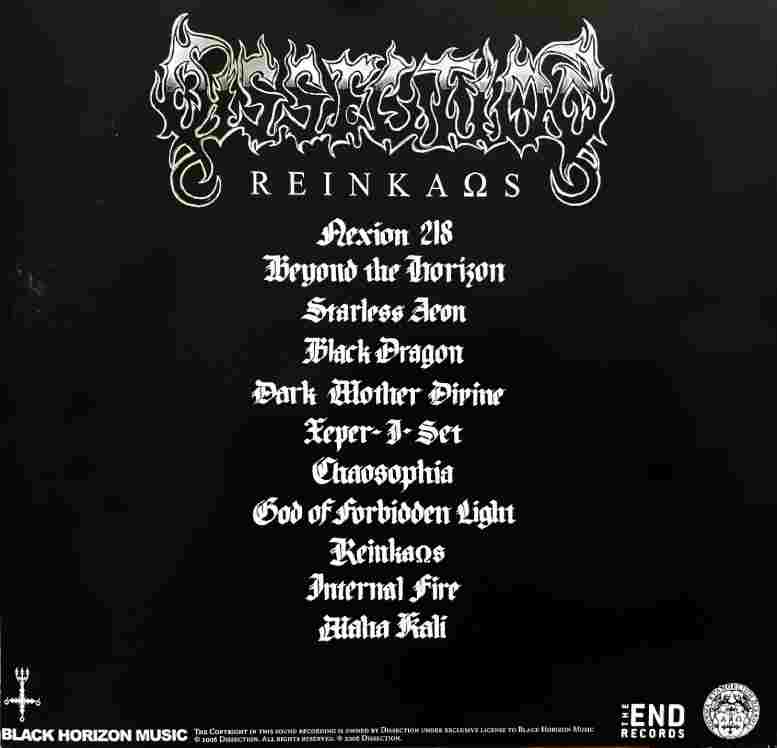

“Reinkaos” was released in March 2006, with the vinyl edition appearing alongside other NoEvDia milestones from that year, such as ANTAEUS’ “Blood Libels” and KATHARSIS’ “VVorldVVithoutEnd”.
By then, the initial 2003 arrangement with The Ajna Offensive as NoEvDia’s exclusive North American distributor had evolved beyond simple distribution – the label was now issuing US editions of key titles like FUNERAL MIST’s “Salvation” and DEATHSPELL OMEGA’s “Si Monvmentvm Reqvires, Circvmspice”.
CHRISTIAN: Tyler’s handling of the “Kénôse” LP demonstrated that Ajna could be trusted with something as ambitious as a record featuring a forty-page booklet – which, to the best of my knowledge, was a first within black metal. Furthermore, our personal interactions confirmed for me what a rare individual he is.
ERIK: When WATAIN signed with Season of Mist, we requested a clause granting NoEvDia the rights to the vinyl edition of what became “Sworn to the Dark”. And somewhere around then, once they’d come into contact, I think Michael Berberian had the sense to realise that Christian is really fucking sharp and very serious.
Until then, the label’s reach had been built entirely through Christian’s personal relationships and shared ideological ground. But in 2006, he signed a deal with Season of Mist – a much larger French outfit – that marked NoEvDia’s introduction to the more conventional infrastructure of commercial metal distribution.
CHRISTIAN: If I remember correctly, Tyler had some bad luck with distributors, and a number of initiatives misfired. As a result, we’d hit a glass ceiling in the US market – and that soon became problematic, as many of our bands were in a ‘let’s conquer the world’ state of mind.
End All Life Productions continued operating alongside NoEvDia, albeit at a slower pace. In 2003, the label issued a MÜTIILATION compilation, a DEBAUCHERY EP, and albums by S.V.E.S.T. and DIAPSIQUIR. A year of silence followed before being broken by “From the Entrails to the Dirt” – the split album featuring DEATHSPELL OMEGA’s twenty-minute epic “Mass Grave Aesthetics”.
2006 saw a return to form, with albums from both longstanding label affiliates such as MÜTIILATION and DIAPSIQUIR, as well as younger acts like HERESI and BLACKLODGE. Notably, E.A.L. also signed Austria’s ABIGOR, whose guitarist and co-founder, the late P.K, Christian had interviewed for the first issue of his fanzine a decade earlier.
CHRISTIAN: Some of our bands sought to remain strictly underground, others wanted wider distribution while still being reluctant to reach toward more mainstream spheres, and then there were those who’d hoped to maximise the exposure of their art. All positions which can be credibly defended, and none is necessarily right or wrong.
Given Timo’s proximity to both DEATHSPELL OMEGA – often considered part of the collective’s outer orbit – and NoEvDia, I’m curious what he thought of this arrangement.
CHRISTIAN: Not much. I probably explained my rationale for doing so, which, in its primary sense, wasn’t commercial in nature, but tied to an iron will to conquer new territories simply to make our words heard. And Timo was close to WATAIN, who were growing quickly.
ERIK: There was a steep learning curve when it came to retaining control. You can’t let yourself be seduced by the idea of, ‘Oh, how nice – someone else can handle this now.’ Because we noticed fairly quickly where that led: suddenly there’d be some hideous fucking advertisement for our record slapped next to another band releasing an album the same week. So, I soon learned to keep close track of these things personally.
log in to keep reading
The second half of this article is reserved for subscribers of the Bardo Methodology online archive. To keep reading, sign up or log in below.
Related reading