Liber Ketola XXVIII
2026-08-12
by Niklas Göransson
By 2009, the currents Timo Ketola had helped nurture were spreading well beyond the circles that bred them. His own attention was fixed on what might happen if Teitanblood’s wall of noise met the slow, hypnotic minimalism of Saturnalia Temple.
CHRISTIAN BOUCHÉ: By 2009, many newcomers were jumping on the bandwagon, attempting to emulate their forebears – but for entirely different reasons. They hadn’t undergone the same mental process; for most, it was simply a matter of adopting an established sound and aesthetic. The originators, by contrast, sought to channel something vital, with no existing template to follow.
In February 2009, six years after “Salvation”, Norma Evangelium Diaboli issued FUNERAL MIST’s long-awaited successor, “Maranatha”, as the label’s fourteenth catalogue entry. A US edition, courtesy of The Ajna Offensive, followed two months later.
CHRISTIAN: “Maranatha”, in all its excess, lived up to every expectation. It was laden with Rostén’s recognisable riffs and vocal patterns, expressing the quintessence of his artistic identity, yet also introduced new elements from angles no one could have anticipated. FUNERAL MIST is at once traditional and disruptive.
That union of fierce traditionalism and adversarial intent lay at the heart of what became known as orthodox black metal. First articulated in the late-’90s work of OFERMOD, MALIGN, and FUNERAL MIST, the current was carried forward and expanded during the early 2000s by bands such as DEATHSPELL OMEGA, KATHARSIS, and WATAIN.
CHRISTIAN: From the moment a larger-than-life impulse becomes an objectively definable movement – in terms of sound, themes, aesthetics, and attitudes – a growing mass of bands will emerge, eroding the vital surge of what had been a singularity. No current escapes this, spiritual or artistic. It reminds me of something Max Weber called the routinisation of charisma.
Weber had prophets in mind rather than bands: once a movement built around exceptional personal authority needs to endure, that charisma must harden into rules, institutions, and established roles.
CHRISTIAN: It would be wrong to suggest the ‘orthodox black metal’ wave produced no worthwhile successors. Of course it did, and bands of genuine merit continue to emerge under its influence, even in 2026. In one sense, such continuity is positive, since the themes explored within the current are also of great personal interest to me.
TYLER DAVIS: You know, the word ‘orthodox’ implies dogma, yet the founding impulse was never a crystallised doctrine so much as an organic explosion. Those approaching it from the outside saw the result without recognising how intuitive the process had been, then began imposing rules, codes, and methods that didn’t apply to its originators. Somewhere along the way, part of the original force became diluted.
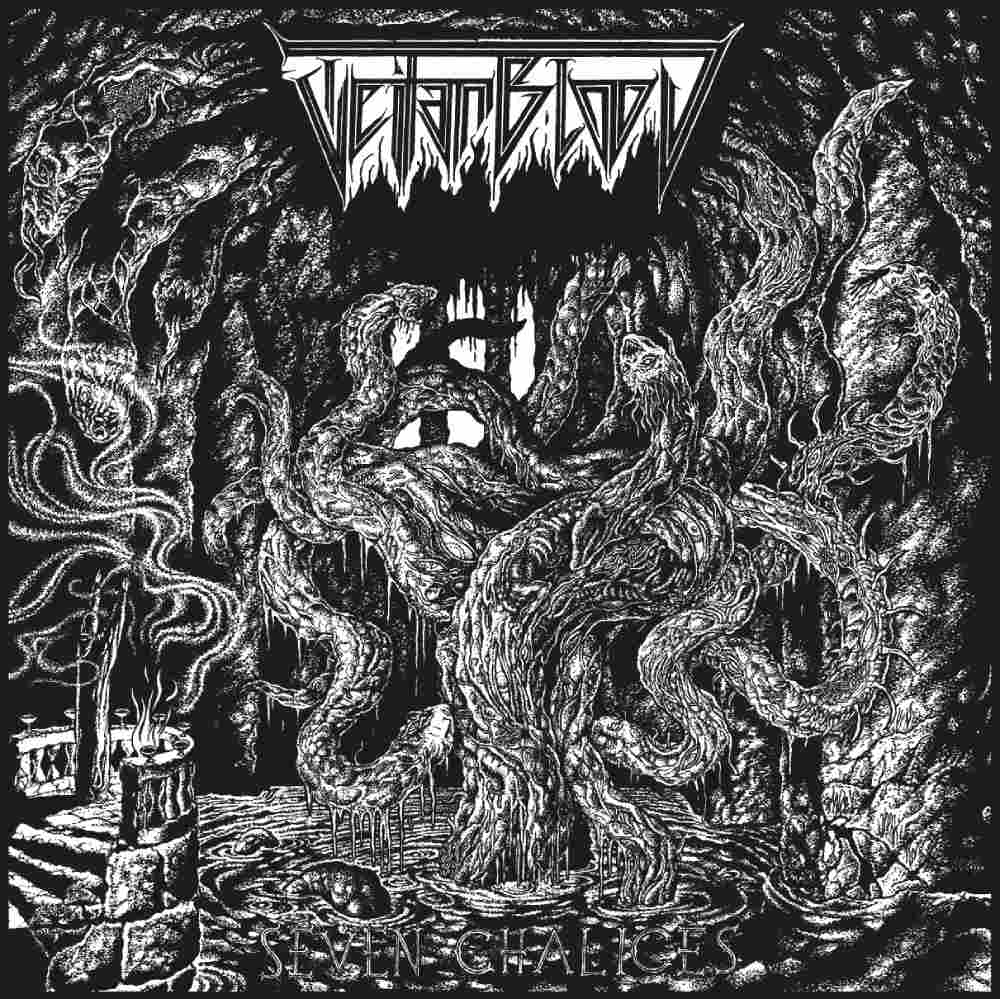
CHRISTIAN: Even though “Seven Chalices” was met with a growing chorus of approval, I’d say it took a while before word of mouth crowned it a masterpiece – and as the record responsible for reviving a certain sound. The visual side, of course, placed it in a category of its own.
TYLER: Leading up to the release, I remember Christian expressing some disbelief at Nasko’s confidence in TEITANBLOOD – particularly the number of different shirt designs he wanted to produce.
CHRISTIAN: My faith in TEITANBLOOD’s qualities was immense, but I had entirely underestimated the demand for merchandise. In the early years of NoEvDia, we barely printed shirts at all. Every design needed a profound meaning and a very good reason to exist, rather than simply reproducing an album cover because that is what people do.
TYLER: Now, The Ajna Offensive has never been known for merch, but I’d say the “Seven Chalices” shirts outsold the vinyl and CD by about three to one. It was absolutely insane, so Christian and I both ended up eating our words over that initial scepticism.
CHRISTIAN: It took Nasko’s vision to make me realise that the depth of Timo’s visual work allowed us to explore this dimension in ways I had not anticipated. And I’d argue that every TEITANBLOOD design from those years met the criterion I just described. Still, Tyler and the band printed a great deal more than we did, since I considered merchandising peripheral.
Timo’s visual framework gathered TEITANBLOOD’s occult, mythological, and religious references into a dense, interconnected diagram. Musically, “Seven Chalices” emerged partly from Nasko’s rediscovery of early CARCASS, REPULSION, TERRORIZER, and NUCLEAR DEATH, while carrying forward a cause articulated through Dauthus and embodied by bands such as KAAMOS and REPUGNANT – what Timo called ‘our conspiracy to re-conquer death metal’.
TYLER: If there was a paradigm shift, it went completely over my head – then again, I wasn’t paying much attention. “Seven Chalices” sold well, and the death metal folks I knew praised it. But I didn’t go down online rabbit holes or keep track of its influence on other bands.
NASKO: I followed the reactions closely and never expected such an enthusiastic response from the underground. If I recall correctly, the vinyl edition of “Seven Chalices” caused quite a fuss on the Nuclear War Now! forum, where the thread stayed active for some time.
Which reminds me – “Seven Chalices” must have brought plenty of new customers to both the NoEvDia and Ajna mail-orders.
TYLER: By that point, I’m sure it did. But, you know, people weren’t exactly contacting me to announce, ‘Oh, I usually order from’… let’s say, N.W.N! or Hells Headbangers. Full Moon Productions was probably on the wane by then, and Necropolis had long since closed.
CHRISTIAN: Perhaps a few, but bear in mind that NoEvDia was not running a retail-oriented mail-order then, unlike in the early E.A.L. days – or now, for that matter. We accepted direct orders, of course, but anyone hoping to fill a cart with war metal would’ve come away disappointed; we carried almost nothing beyond our own catalogue and a handful of labels like Ajna.
NASKO: Once Tommie and I came into contact, our exchanges went well beyond just translations – we discussed music and many other shared interests. At that point, because of everything Timo had told me about him, he did seem fit to cover the hole Juan left behind.
Having first entered TEITANBLOOD’s circle as a Sanskrit consultant, Tommie Eriksson – a multi-instrumentalist and self-taught studio engineer – was now being considered for a far more extensive role.
TOMMIE ERIKSSON: Nasko’s plan, as I understood it, was that I’d step into TEITANBLOOD on both rhythm and lead guitar. There’d be solos, possibly bass as well, but more importantly: producing and recording. And this is where Timo and I were fully aligned.
NASKO: I had identified an immediate need for someone to handle the two areas I was completely ignorant about: guitars and production, both of which were previously delegated. Of course, I wrote all the riffs for “Seven Chalices” – but on my bass. So, Timo suggested Tommie.
TOMMIE: I’ve always believed that extreme metal comes full circle when the production is primitive. By then, I’d studied “Seven Chalices” closely and formed a clear vision: ‘Pair TEITANBLOOD’s music with a powerful, organic drum sound and a rotten guitar tone, and we’ll get an insane collision of worlds.’
In theory, the combination is intriguing: TEITANBLOOD’s suffocating wall of noise, built layer upon layer, set against the stripped-back, hypnotic minimalism of SATURNALIA TEMPLE’s “UR” – another record Timo knew intimately.
TOMMIE: On “Seven Chalices”, I believe they used a Marshall Valvestate, whereas I had in mind something like my old Laney Klipp on the fuzz channel – dirty, but in a very different way, probably closer to SATURNALIA TEMPLE. Picture TEITANBLOOD walking into a BLACK SABBATH studio session in 1971.
NASKO: I don’t remember exactly now, but there was a certain clarity in the SATURNALIA TEMPLE production that I really liked. I could imagine adapting some of this organic, filthy, heavy character to TEITANBLOOD, at least from an intuitive point of view. The old SABBATH sound is fascinating, especially the drums, but the question is whether it works in a rabid blastbeat context.
TOMMIE: There’s nothing duller than modern drum production in extreme metal. It just clatters – completely pointless. Instead, take old VADER, MORBID SAINT, or “Mental Funeral” (AUTOPSY): rough, almost rehearsal-room drums, yet everything sounds so bloody fast and dangerous because you can hear each individual hit.
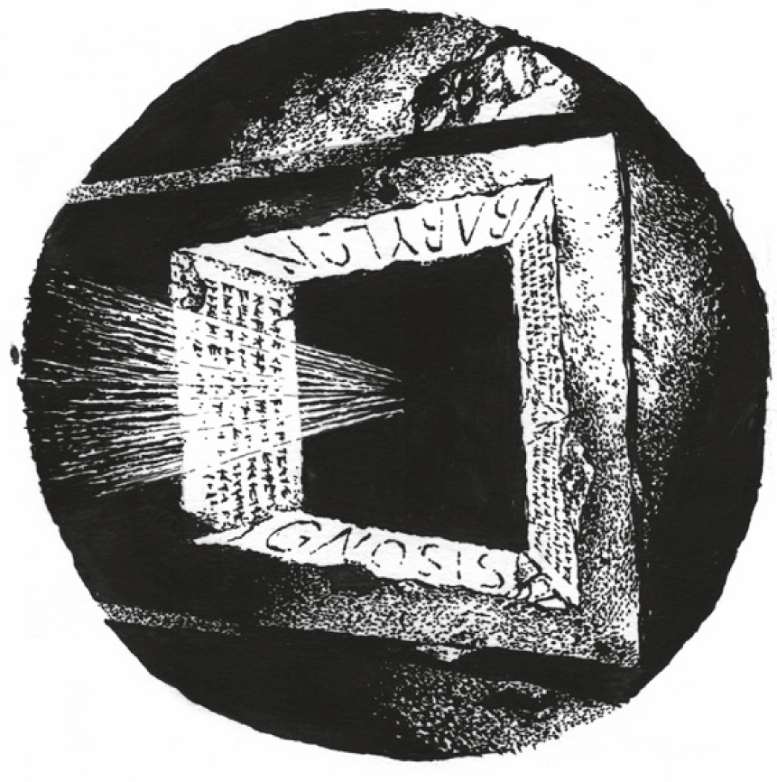
Saturnalia Temple - Babylon Gnosis artwork by Timo Ketola
KOSTA PAPAVASSILOU: Tommie and I are similar in that we’re both fairly methodical people who appreciate structure and planning. Nasko, on the other hand – much like Timo – becomes intensely passionate and feverish when inspiration takes hold. He wants to create and get things done instantly.
At the height of the “Seven Chalices” firestorm, that shared intensity could generate as many as thirty emails between Timo and Nasko in a single day.
KOSTA: I remember Tommie being somewhat taken aback: ‘Shit, this is turning into a full-time job. By the time I’ve read the first email, three more have arrived.’ Each one packed with instructions like, ‘Now you must learn these extremely tricky, totally illogical riffs.’
TOMMIE: <laughs> Yeah, there may be something to it. Then again, the pace had been pretty intense when Timo and I worked on the books, with plenty of emails flying back and forth. Very early on, though, I noticed how strong Nasko’s vision was – he knew exactly what he wanted.
Working remotely could establish the principle; the sound itself had to be found in a room. Nasko and TEITANBLOOD drummer Jakub flew to Stockholm and joined Tommie in Brandbergen, where SATURNALIA TEMPLE now rehearsed in KAAMOS’ former space.
NASKO: I loved the fuzz sound of Tommie’s amp, which apparently once belonged to someone in DOOM, the hardcore punk band. As a big fan myself, I was very excited to hear my riffs coming through it. I remember showing Tommie some of the new TEITANBLOOD material, but… in the end, we couldn’t quite get the basics down.
TOMMIE: Every guitar tone I tried was met with, ‘Nah… no… no… definitely not.’ After a while, Nasko noticed an old bass amp stowed in a corner. ‘Aha!’ He plugged it in and set the equaliser sliders alternately high and low until the whole row zigzagged. Distortion pedal on top, and: ‘Yep, this is how it should sound.’ And I just thought, ‘Bloody hell… okay.’
NASKO: These days, after multiple tests, I know our style of riffing simply doesn’t work with fuzz – at least not the way a band like DOOM would use it. Which is why, when we set up using the same equipment and sound as SATURNALIA TEMPLE and tried to play the fast riffs, nothing worked. We decided to postpone the recording.
What recording?
NASKO: The idea wasn’t only to establish whether Tommie was a good fit as a guitarist, but also to see what an actual recording might sound like. In the end, we settled for some BATHORY and VENOM covers. Two guitarists in a room can experiment and develop things, but once a drummer is present, you want to actually play something.
TOMMIE: I soon realised that Nasko only needed someone to help him execute what he already had in mind. I began to think, ‘I doubt I’ll have much creative input here, musically or in the production.’ See, I am an ideologue and a songwriter; those are my strengths. I’m not especially good at carrying out other people’s ideas – or perhaps I simply lack the energy for it.
Timo’s reasoning for selecting Tommie was aesthetic: they agreed on how music should sound, on production, and on the visual language binding it all together. But his matchmaking overlooked one crucial fact: TEITANBLOOD already had a visionary. When Christofer Johnsson offered Tommie full membership of THERION in 1995, he declined on identical grounds – two ideologues in the same band meant an eventual clash of wills.
NASKO: The more people inserting their opinions into the creative process, the more friction occurs. Even with the drums, I would always provide instructions: ‘Fast there’, or, ‘Slow part here.’ The songwriting was completely tyrannical, down to the smallest detail. ‘This is exactly how it must be!’ At that point in time, I left absolutely no wiggle room for anyone else.
TOMMIE: I also knew I wouldn’t have time to record several guitar tracks for every song while simultaneously handling the production. By then, SATURNALIA TEMPLE had started taking off, and loads of other things in life needed my attention. Nasko was learning guitar anyway, so I thought, ‘He just needs to keep practising, and he’ll be able to handle everything himself.’
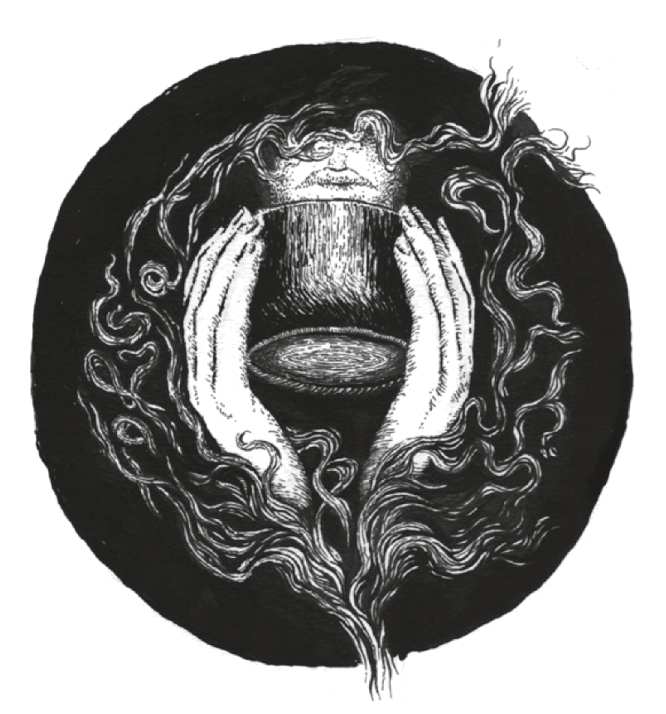
Saturnalia Temple artwork by Timo Ketola
KOSTA: I love that first SATURNALIA TEMPLE record we made together. There’s a certain nerve, or whatever you want to call it, running through “UR”. Even today, it feels genuinely dangerous – much of which I attribute to the magical work we carried out before rehearsals, and the creative energies it unleashed.
“UR” first appeared as a self-released CD in 2007. The following year brought a digipak edition through PsycheDOOMelic and a cassette from Nuclear Winter, before Monumentum Records issued the LP in 2009. Timo designed each incarnation.
TOMMIE: “UR” had a particular hypnotic quality, like very slow breathing. I wrote most of the material and brought it to the rehearsal room, where we worked it over together. Once this process was running, two further songs grew out of the collective effort – and being written that way, they may have gone somewhere rather different.
KOSTA: I haven’t heard either song in an eternity, but they’re a little more up-tempo, right? I think the material simply came out that way. I remember showing Tommie a riff I’d been working on for some time, and he went, ‘Fuck, that’s really good! We should use it.’
The riff opens “Babylon Gnosis”, which, like its companion piece “Forgotten Cults”, moves away from the formative SATURNALIA TEMPLE sound. Where “UR” was slow and mesmeric, these songs are mid-tempo, with more frequent shifts. Tommie would later describe the songwriting ambition as krautrock meeting GRAND FUNK RAILROAD, only to be crushed by AUTOPSY.
TOMMIE: I wanted to capture those ‘60s and ‘70s sounds somehow, but run them through the lens of “Mental Funeral”. Even when I draw heavily from a particular influence, though, the result rarely resembles its source. BLACK SABBATH is impossible to escape, naturally, and you can probably hear some BATHORY and early DARKTHRONE. What I don’t think many people realise is how profoundly inspired I am by bands like THE DOORS, THE ALLMAN BROTHERS BAND, and KILLING JOKE.
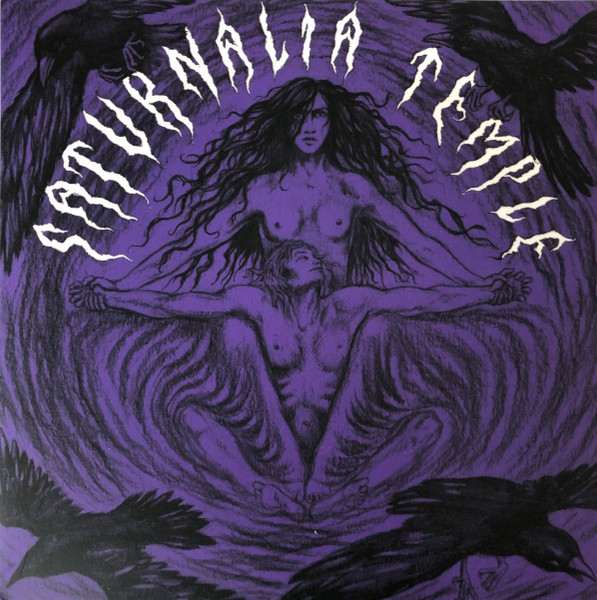
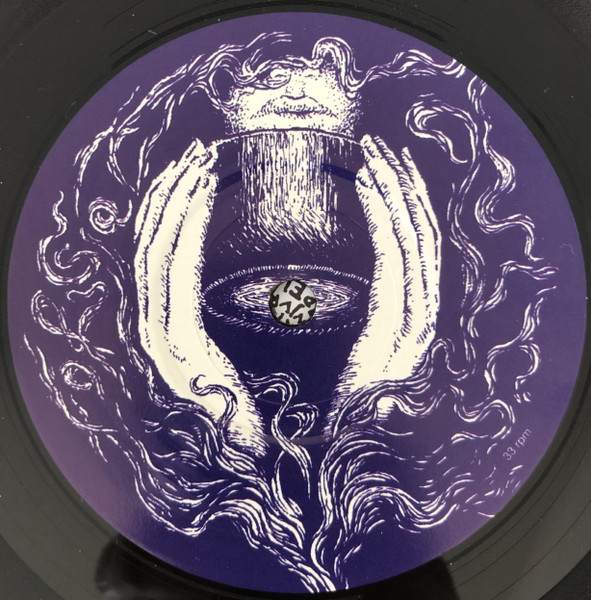
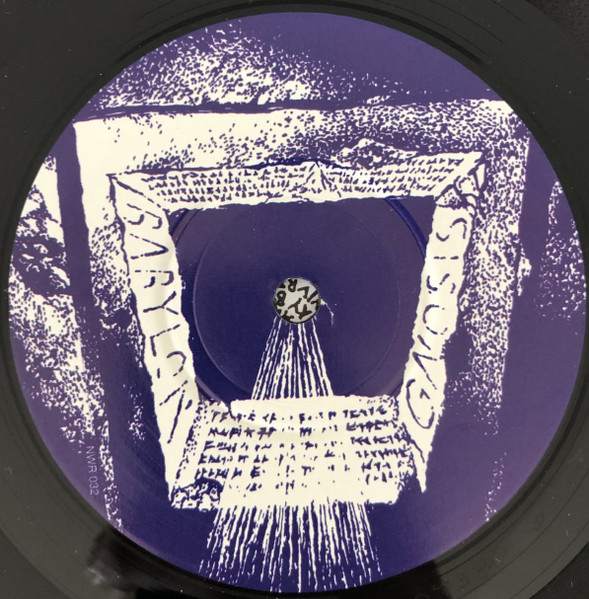
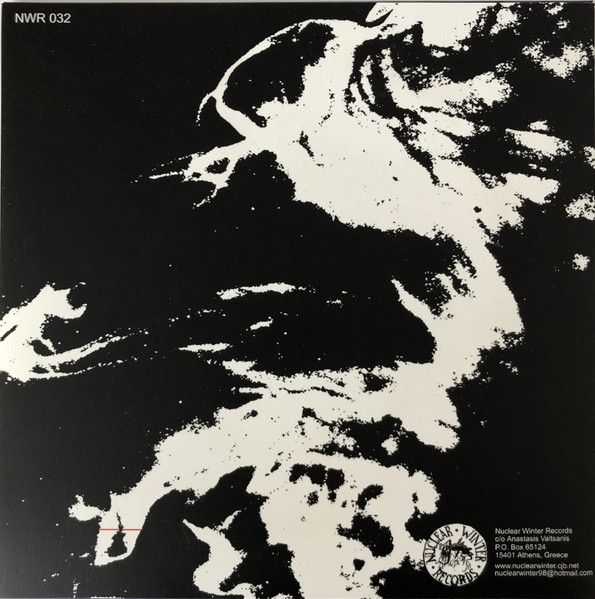

TOMMIE: I honestly can’t remember who first put me in touch with Anastasis, but I can imagine Kosta sent him our self-released CD, which led to the Nuclear Winter cassette edition of “UR”. The offer for a SATURNALIA TEMPLE seven-inch followed soon afterwards.
Nuclear Winter, run by DEAD CONGREGATION frontman Anastasis Valtsanis – a longstanding contact of both Timo and Kosta – released the two new SATURNALIA TEMPLE songs as a self-titled EP in 2009.
TOMMIE: The cover was based on a drawing by Fidus, the German artist – I asked Timo to interpret it. For the rest, I gave him entirely free hands to channel whatever fit the music. I remember finding it fascinating how much importance he placed on the vinyl labels; he essentially turned them into components of the artwork.
log in to keep reading
The second half of this article is reserved for subscribers of the Bardo Methodology online archive. To keep reading, sign up or log in below.
Related reading