Liber Ketola XXV
2026-07-22
by Niklas Göransson
In 2006, Saturnalia Temple set out to weave group magical practice directly into sound. As the band took shape in Kaamos’ former rehearsal room, Timo Ketola was close at hand, giving the music its visual form.
TOMMIE ERIKSSON: For many years, I worked consciously at merging music and mysticism. At first, mainly through experimental electronic sounds – but around the mid-2000s, partly thanks to Timo and Kosta, I felt drawn back to metal with renewed inspiration and a desire to compose from a magical foundation.
One day in 2006, after a seven-year hiatus from metal since leaving THERION, Tommie picked up an electric guitar and began chasing whatever the instrument drew out of him.
TOMMIE: I just let things flow and ended up with the riffs for “Dreaming Out of Death”. First, I brought in a drummer, Paul – a practitioner of magic himself, which made him a good fit. We’d go into a rehearsal room and simply allow the music to take shape. Then Kosta came along.
Kosta entered the picture just as KAAMOS, his principal musical undertaking of the past several years, had come to an end. The still-unnamed trio took over the band’s former rehearsal room in Brandbergen and began developing their concept there.
KOSTA PAPAVASSILOU: Tommie and I had talked about playing together even before this – one idea in particular: what would it sound like to fuse group ritual with musicianship? If the same people raised the energies and played the instruments, perhaps we could weave that current directly into the material.
TOMMIE: Before jamming, we’d gather at Kosta’s to prepare. I remember the three of us walking down from his apartment to the rehearsal room in complete silence. We got there, plugged in, and started playing straight away – without so much as a glance at one another.
KOSTA: The idea was that we all came from backgrounds in group magical practice – not necessarily together, but each of us knew what it felt like to touch a shared source, so to speak. Once we got to know one another as musicians, we arrived at a kind of hive mind, and the songs more or less experimented themselves into being.
KOSTA: Despite his gradual relocation to Italy, Timo was present for much of the band’s beginnings – both beforehand at my place and then in the rehearsal room itself. By 2006, he and I had already spent untold hours there over the years, going all the way back to A MIND CONFUSED a decade earlier.
That Brandbergen rehearsal complex holds more underground history than most venues. When A MIND CONFUSED dissolved and KAAMOS took shape in the space SATURNALIA TEMPLE now inherited, SVARTSYN were recording “…His Majesty” in their own room on the other side of the wall. The same building also housed the semi-professional studio where KAAMOS recorded the material that moved Timo to launch his label – and next door stood Haninge Tryckeri, the printer responsible for every Dauthus issue.
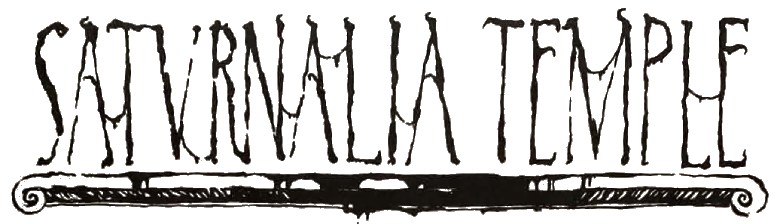
KOSTA: There was some kind of whiteboard in the rehearsal room, and I clearly remember Timo sketching what later became the SATURNALIA TEMPLE logo while we were jamming.
TOMMIE: Yeah, now that you mention it, I do have a faint memory of Timo drawing our first logo on the whiteboard and then transferring it to paper.
KOSTA: Fuck. When you think back on it… wow. We’d go into that room carried by the magical work and everything driving it, play the songs – and there sat Timo, catching the inspiration for what a logo for this music should look like.
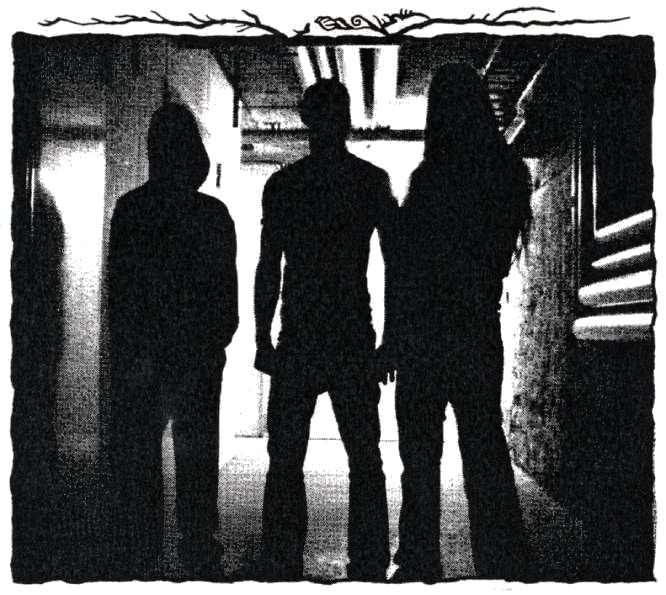
Timo also took SATURNALIA TEMPLE’s first band photo – by the look of it, in the corridor outside their rehearsal room.
TOMMIE: I wanted something suggestive and slightly intimidating, and Timo achieved that through very simple means – shadows and unusual angles. It’s utterly brilliant, pure art. He approached photography much as I do production: by doing the opposite of what our peers would do. Timo could place three people in a dreary industrial corridor and create a living, breathing image.
The band name Timo scrawled on the whiteboard carries two references, the first planetary. Writing on his website, Institute of Musical Alchemy, Tommie describes Saturn as the principle of separation: the force that divides an undifferentiated whole into distinct forms.
TOMMIE: Saturnalia was also a Roman midwinter festival built around inversion. For a time, the ordinary social order would be turned upside down: slaves assumed the role of rulers, while their masters played at servitude. You find similar forms of ritual reversal in winter-solstice traditions across the world.
The gods changed, but the urge to overturn the world remained. For instance, medieval Christmas customs appointed a Lord of Misrule – often a servant or minor official temporarily empowered to command his superiors – while the Feast of Fools allowed junior clergy to elect a mock bishop, upending the ordinary church decorum.
TOMMIE: The superficial academic reading reduces this to people fearing the sun might disappear, but I think it goes deeper. The rite concerns death and rebirth – the sense that society itself must periodically be renewed, so you overturn the existing order. You engineer the upheaval, and something new emerges from it. That’s why the name fits.
KOSTA: The whole thing had somewhat of an alchemical-laboratory feel. We didn’t really know where it would lead; it was more of a rewarding thought experiment built around subjects we cared about deeply. Since everyone involved practised magic, it felt natural to collaborate on that level and then pour whatever emerged into the music.
Do you think that gave the music any qualities KAAMOS lacked?
KOSTA: Not necessarily. Back in the KAAMOS days, I’d do magical workings and, if inspiration came, pick up the guitar and write riffs afterwards. But since I was the band’s only practising occultist, I could hardly say, ‘Listen up, boys – today we’re gathering at my place for a pre-rehearsal ritual!’ That’s probably where SATURNALIA TEMPLE differed most.
TOMMIE: As more of these strange riffs surfaced, I realised we could carry on as a proper band, built on that same instinctive, magical approach to composing. In some respects, this project became the antithesis of logical songwriting – a refusal to force anything consciously into being. It’s simply about doing.
Timo spent much of his life circling a similar paradox: years dedicated to mastering a craft can obstruct the very instinct on which the work depends, until the trained hand must consciously make way for the unconscious.
TOMMIE: Even in production and mixing, I try not to become theoretical or logical. You learn the basic technical principles first, then forget them and rely on instinct. I work that way a great deal, to keep the pure core intact. Remove nothing; what might register as a mistake or limitation can just as easily strengthen the whole. Timo and I were completely aligned on how music should sound and feel.
Timo’s position on underground music production was characteristically absolute. Anything ‘too polished’ would be met with instant dismissal; flaws and sonic disorder were often considered the source of a recording’s power. Excessive clarity did more than smooth away the rough edges, he argued – it closed the imaginative space within a recording.
TOMMIE: To me, the modern studio is like a food-processing plant: you feed in something real and grind it down to a grey, quivering mass. This must then be made edible again, so you cram in loads of flavour enhancers and colourings and shit, and out plop the bloody chicken nuggets. That’s how I hear so many supposedly accomplished, perfectly produced albums.

KOSTA: The biggest musical departure from KAAMOS must have been the structure and pacing. SATURNALIA TEMPLE’s material is long and monotonous, focused on atmosphere instead of hurrying towards some hook or pre-chorus. It’s like a serpent winding through a cosmic ocean – nothing but motion. The destination matters less than the movement itself.
TOMMIE: The songs really do have lives of their own – you can almost hear the entity writhing beneath the distortion. If the music is meant to host something real, compelling, and powerful, then it should be a little difficult to take in.
KOSTA: Despite the unfamiliar approach, my greatest asset was probably the previous ten years I’d spent arranging metal music, so I had a decent grasp of song structure. It’s not as though I arranged the material outright; my input tended to be along the lines of, ‘Couldn’t we play that riff a few more times, then go straight into this part instead of inserting a break?’
TOMMIE: At first, Kosta found it challenging to play these extremely simple riffs at such a slow pace, but he soon latched onto the idea. He took a more active role in the arrangements and also wrote some really good material. The opening of “Mount Meru Is Tall”, for example – that’s Kosta’s riff.
KOSTA: After a lifetime of playing almost nothing but death metal, it was exciting to suddenly make music outside those frames. Then again, it isn’t that fucking far removed, because “UR” sounds like HELLHAMMER dipped in a hell of a lot of acid.
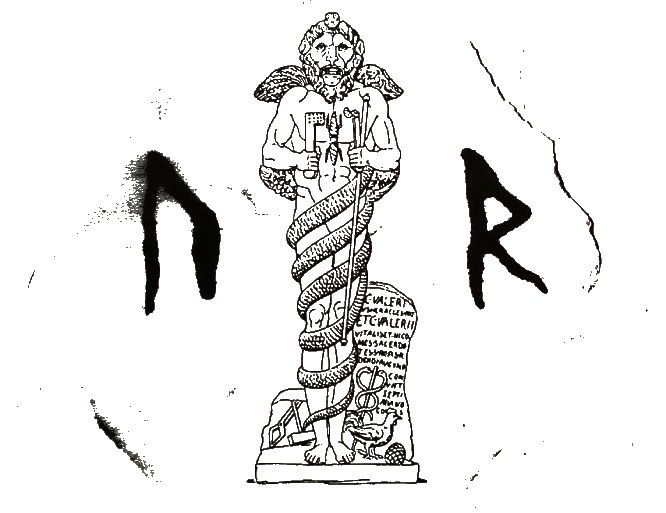
In early 2007, SATURNALIA TEMPLE recorded “UR” – five songs tracked live, with both guitars and drums captured together in single takes.
TOMMIE: Nailing a fifteen-minute song like the title track is quite demanding, but we’d rehearsed a great deal by then. When starting a band, you must first get to know one another as musicians. We actually completed the recording once, only for the system to crash and force us to redo everything. As I recall, the second version turned out better anyway.
Using essentially the same equipment as on SHADOWSEEDS’ “Der Mitternacht Löwe” a few years earlier, Tommie then overdubbed the bass, guitar solos, and vocals. Rather than shaping the soundscape through mixing, he concentrated on getting each element right at source.
TOMMIE: When I first learned to record music in rehearsal rooms during the early ‘90s, everything came down to mic placement. I’d keep moving my three or four microphones around until I found the sound we wanted. It was about understanding the space and making the most of the available equipment.
On “UR”, Tommie placed a dynamic microphone close to his amplifier and a condenser mic roughly a metre away. The former captured the speaker cabinet directly, while the latter also included the surrounding space, such as reflections bouncing off the walls a fraction later. Blended together, they gave the guitar depth and natural ambience before any effects were applied. Tommie’s track was then hard-panned to one side, Kosta’s to the other.
TOMMIE: In one speaker, you hear my rhythm guitar – bass-heavy and noisy, running through a Laney Klipp with fuzz – and on the opposite side is Kosta’s Mesa Boogie. Listen to “UR” in headphones and you get two radically different guitar sounds that nonetheless meet in the middle. His tone is sharper, closer to death metal; mine is just abrasive ‘70s chaos.
Do you usually have a rough idea of what the solo should do before recording, or is it more a matter of intuitive discharge?
TOMMIE: Write a solo? That goes against my principles. I’ve never planned one in advance – it would feel completely wrong. Especially since the guitar, for me, is a form of magical staff. Through several long processes, I’ve de-musicalised the instrument – killed it multiple times over – so my relationship to it is entirely instinctive, outside logical thought.
Earlier in the conversation, Tommie described the moment NECRONOMIC became NOCTURNAL RITES in 1991 as his first ‘musical death’. Having recognised that technical display was obstructing the songs, he handed the guitar to Fredrik Mannberg and moved behind the drum kit.
TOMMIE: Then, in 1993, during a magical process, I realised the guitar still held a strong ego connection. I was only eighteen, but it had already become a symbol of this futile pursuit of skill – improving in order to shine in the eyes of others – which needed to be destroyed alchemically. So, I walked into the forest and ceremonially threw my guitar away. I went back and fetched it afterwards, of course.
During the thirteen years between that ceremonial severing and SATURNALIA TEMPLE, Tommie never stopped making music – but his own creative work no longer revolved around the electric guitar.
TOMMIE: By 2006, I’d completed another cycle in my relationship with the instrument. The guitar was no longer so much an expression of musicianship as an extension of myself. When I play, I don’t think about what I’m doing; the process is entirely instinctive. Once I reached that point, I thought, ‘At long last, after all these years, I can use it exactly as it should be used.’
Unless I’ve missed something, SATURNALIA TEMPLE was also the first time Tommie took on vocal duties.
TOMMIE: I don’t have much vocal talent, and I’ve always known it: hence why I’d never fronted a band before. But SATURNALIA TEMPLE doesn’t require ordinary singing. It’s either growling, which is easy enough, or these spaced-out chants – one foot in a kind of ceremonial intoning, the other somewhere in psychedelic music.
Like what?
TOMMIE: SPACEMEN 3 and SPIRITUALIZED were big influences, especially that vocal style where the singer sits at the periphery, drifting across the soundscape – more an effect than a narrator. I had no idea how it would turn out, which was interesting in itself: simply throwing myself in without overthinking things.
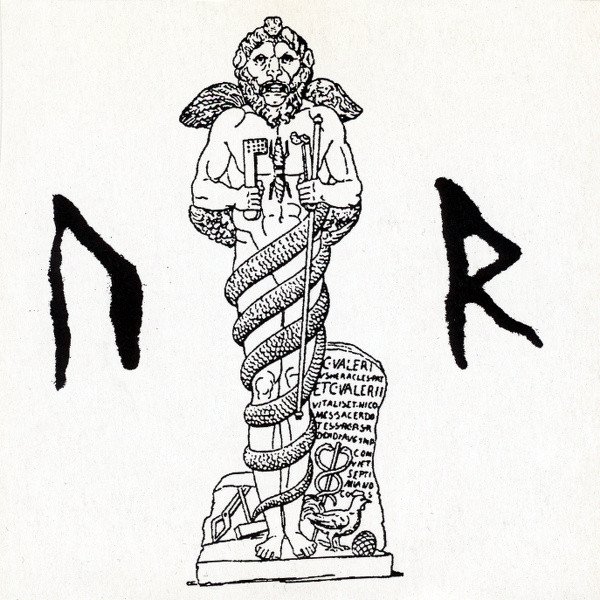
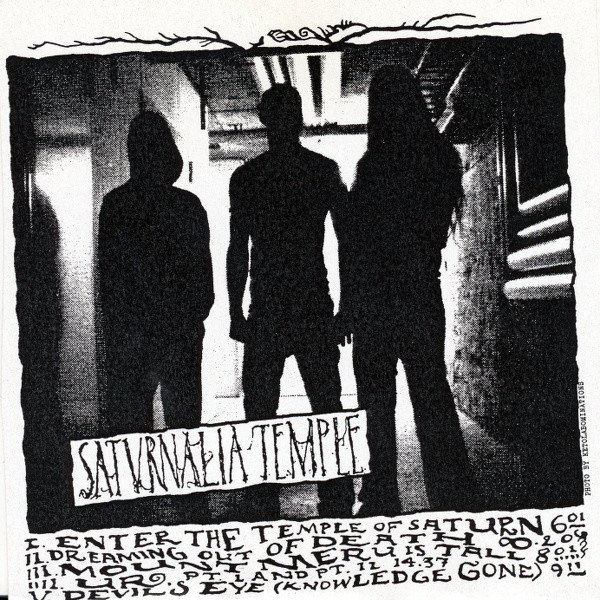

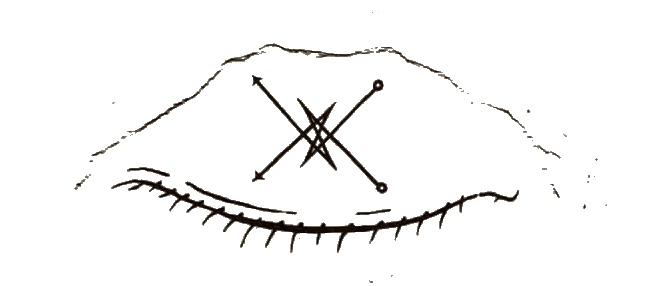
SATURNALIA TEMPLE’s debut release, “UR”, was self-issued on CD in 2007. As with Tommie’s book “Mörk magi” six years earlier, Timo assumed responsibility for the entire visual presentation – layout, illustrations, and photography.
KOSTA: Since Tommie was the driving force behind SATURNALIA TEMPLE, he dealt directly with Timo. Honestly, I found it refreshing to be involved in a band without having to deliberate over every last detail – typefaces, or choosing between thirty-eight different shades of purple, red, or white. I could simply say, ‘You know what? I don’t care. I’m going to play this riff instead.’
TOMMIE: I gave Timo complete freedom to take the design wherever he felt it needed to go. By then, we knew each other very well, and he’d been deeply immersed in our music from the beginning. He intuitively grasped the visual form it required. I remember him turning up at rehearsal one day and showing me the result; it was perfect.
log in to keep reading
The second half of this article is reserved for subscribers of the Bardo Methodology online archive. To keep reading, sign up or log in below.
Related reading