Liber Ketola XXIX
2026-08-19
by Niklas Göransson
Lucifer Rising had marked Timo Ketola twice – first the film, then a recording that guided one of the most powerful experiences of his life. Years later, The Ajna Offensive closed the circle, handing him the visual presentation of the soundtrack itself.
TOMMIE ERIKSSON: What I remember now is mostly the musical discussions surrounding TEITANBLOOD, but I know Nasko also expressed an interest in magical practice. I imagine that’s where the idea of him translating Thomas’ book came in – because we were hoping to make our material more widely available.
Kabbala, kliffot och den goetiska magin by Dragon Rouge founder Thomas Karlsson originally appeared in 2004, courtesy of Ouroboros Produktion. The Italian publishing house Atanòr issued La kabbala e la magia goetica two years before The Ajna Offensive published Qabalah, Qliphoth and Goetic Magic in 2007. By the time Nasko began work on a Spanish version, around the release of “Seven Chalices”, a German translation was already underway.
TOMMIE: Over the weekend of the TEITANBLOOD rehearsal in Stockholm, I introduced Nasko to Thomas, and the two of them started corresponding. Whenever an opportunity arose to publish the book in another language, we pursued it. Nothing came of it in this instance – Nasko probably realised he didn’t have the time. Translating that amount of text is a hell of a job, speaking from experience.
TYLER DAVIS: By then, Timo was part of The Ajna Offensive in so many ways – through his insights, our connection, the inspirations we shared, and what we envisioned for the future. Whenever I had a book idea, I ran it past him. Musically, I mostly did my own thing, but when it came to literature, he and I were very much in sync.
The Ajna Offensive published Qabalah, Qliphoth and Goetic Magic first as a standard hardcover, followed by an exclusive edition bound in brown leather and limited to seventy-two copies.
TYLER: The standard version came out first because, as you can imagine, it took Timo quite a while to hand-bind all seventy-two of them <laughs>. Had we waited for the leatherbound edition, it would’ve stalled our momentum.
Both editions sold out within months. With interest continuing to build ahead of a new pressing, Tyler decided to establish a dedicated publishing arm.
TYLER: I remember talking with Timo at length about what to call it. I didn’t want the book-publishing entity to be entirely separate from the music side, but it still needed its own coherence. We did some brainstorming, which is how we ended up retaining the Ajna name.
In the spring of 2009, Tyler launched a website for Ajna Bound ahead of the imprint’s first title: an expanded edition of Qabalah, Qliphoth and Goetic Magic. As part of the promotion, Thomas Karlsson travelled to America to speak at the Esoteric Book Conference in Seattle.
TYLER: Since Timo and I were in close daily collaboration, he got rights of first refusal on pretty much every project I had coming up. “The Lucifer Rising Suite” tied in perfectly with everything we’d been discussing – books, films, music, occultism – and brought all those different threads together in a single venture.
KOSTA PAPAVASSILOU: Remember the first KAAMOS gig, the one with IMPERATOR at Apromus? Yeah – 2000, when Tilmann came over. The same day, there was some kind of occult film festival at Kulturhuset in Stockholm, organised by… what the hell is his name now? ‘Sweden’s most famous Satanist’ <laughs>. Carl…
Abrahamsson?
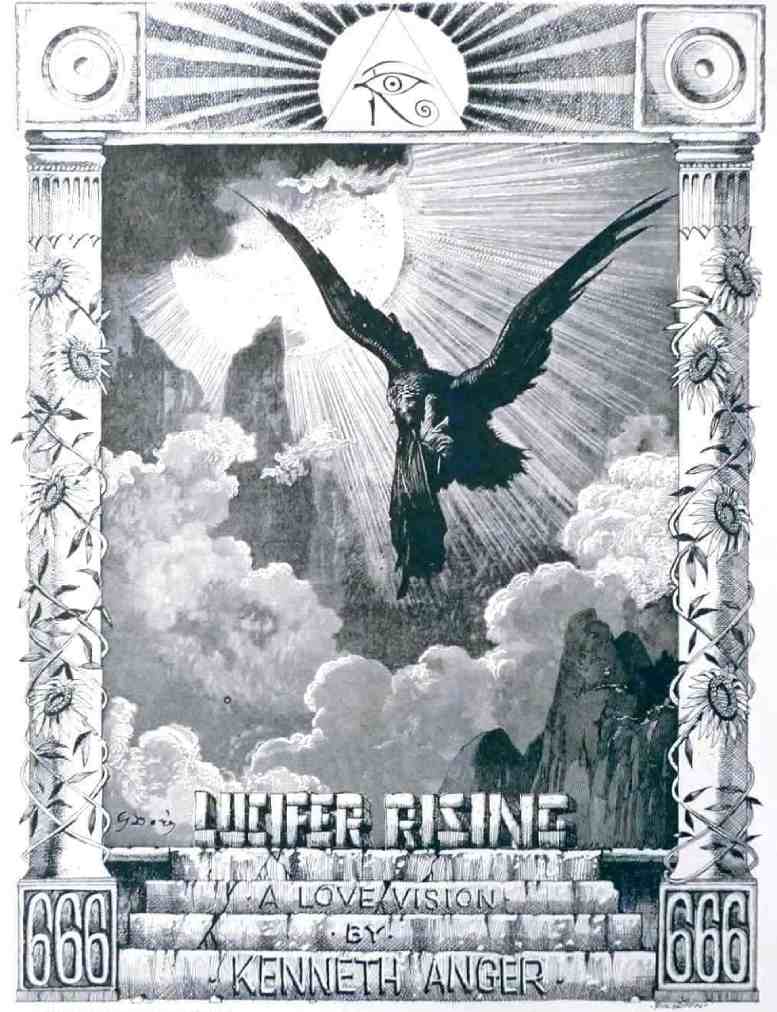
KOSTA: Exactly. I got my bandmates to set up our gear at the venue and went over to Kulturhuset in the middle of the day. I saw several films, Lucifer Rising among them, and was spellbound from the very first frame. What can I say? It’s Kenneth Anger – a true artist and a visionary.
Anger had been a Crowley devotee since adolescence, and his film was an attempt to depict the Thelemic reading of Lucifer: as the light-bearer and herald of a new aeon, not the Devil. He began shooting in San Francisco in 1966, lost the footage, and started over at sun-worship sites in Egypt, Germany, and England. A rough cut existed by 1972, yet the finished twenty-nine minutes remained unreleased until 1980.
KOSTA: Back then, there was barely any information online about forgotten countercultural relics; you had to rely on your personal network. Either Timo or I got hold of a VHS copy, and we watched it together at my place in Brandbergen. And wow – again, those visuals combined with the music… just astonishing.
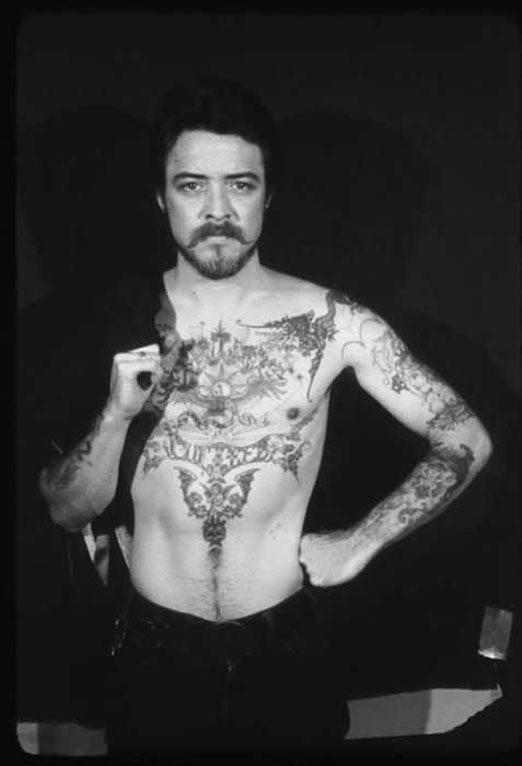
The film’s original Lucifer, cast by Anger in 1967, was Bobby Beausoleil – a Haight-Ashbury musician who took the part on condition that he also provide the score. They fell out within a year. LED ZEPPELIN guitarist Jimmy Page inherited the commission and spent three years on music the filmmaker ultimately rejected.
Beausoleil, by then serving a life sentence for murder, wrote to Anger from Tracy Prison and offered to finish what he’d started. He formed THE FREEDOM ORCHESTRA with fellow inmates, built instruments and electronic equipment in the prison workshop, and delivered the master in 1979.
KOSTA: Being total music nerds, Timo and I immediately started wondering whether the soundtrack could be obtained separately. The original vinyl was long gone, virtually impossible to find – but a few years later, flipping through a mail-order catalogue, I came across a listing for a new double-CD edition.
Released in 2004 through Beausoleil’s own Arcanum Entertainment, the reissue paired his Lucifer Rising soundtrack with a second disc of earlier and alternate material. Its centrepiece was the only surviving tape of THE MAGICK POWERHOUSE OF OZ, the ensemble Beausoleil had assembled for Anger’s first attempt at the film, alongside two ORKUSTRA excerpts and a late-’70s FREEDOM ORCHESTRA prison jam.
KOSTA: I bought it for the film soundtrack, so I listened only to the first disc. The second contained a collection of old sessions I barely paid attention to. By then, though, we’d started tripping together and were still experimenting with different kinds of music.
Around the turn of the millennium, after taking up magical practice and meditation, Kosta and Timo set about finding music that could shut out the mundane world. This listening collection predated the psychedelics and carried over intact.
KOSTA: Still inexperienced, we asked ourselves, ‘What do we have that might work as the soundtrack to a trip?’ From the early days, there was S.P.K. and Diamanda Galás, NEPTUNE TOWERS, and Cold Meat acts like ARCANA and RAISON D’ÊTRE. Then, one time on psilocybin mushrooms – for whatever reason – Timo suggested we give the bonus disc a try.
Where the completed Lucifer Rising score is a continuous, keyboard-driven psychedelic-rock suite, its 1967 precursor – as performed by THE MAGICK POWERHOUSE OF OZ – is more experimental, with horns and flute layered over electric guitars and drumming that verges on free jazz.
KOSTA: From the very first notes, it became a full-on auditory theatre – like watching an Edgar Allan Poe play with your ears. The visual journeys through our respective inner cosmos might not have been identical, but Timo and I were completely bonded in the sense that this music directed the trip.
At sufficient dosage, psilocybin dissolves the partitions between senses. Hearing and seeing begin trading information the brain normally keeps apart – at which point music ceases to accompany the trip and starts generating it.
KOSTA: That’s when I truly grasped the potential of such substances: how they will leave you changed forever. It may well have been one of the most powerful experiences we’d ever shared. And because so much of it was owed to this recording, it took on a weight that only spiritual insight can bestow.
Awestruck by an experience the music had guided so completely, Kosta and Timo felt compelled to learn more about its composer. Only then did they discover the circumstances under which Beausoleil completed the Lucifer Rising score, and that he remained in a California prison.
Further research uncovered the detail that seized Timo most powerfully: Beausoleil had seen almost none of Anger’s footage, yet was startled afterwards by how closely sound and image corresponded. Working on “Seven Chalices” a year or so later, he adopted the same principle, constructing its entire visual language without hearing the finished recording.
KOSTA: We found one particularly interesting article in some strange Austrian publication… ah, Aorta! An underground magazine covering everyone from Leni Riefenstahl to Varg Vikernes. I think we actually ordered that issue through Ajna – and then it turned out Tyler is friends with the man himself.
TYLER: I first contacted a few of those people – Squeaky, Sandra, and others – back in the early ‘90s, when I was deep-diving into Manson memorabilia, artefacts, and whatever else could still be found out in the world. We stayed in touch, which is how the piece in Descent #3 came about.
Lynette ‘Squeaky’ Fromme and Sandra Good belonged to the commune around Charles Manson, and both remained loyal long after the trials. Bobby Beausoleil had moved within the same circle. He was arrested on August 6, 1969 – three days before the Tate killings – for the murder of Gary Hinman.
TYLER: At some point, I came across a catalogue listing for art prints by Bobby Beausoleil. I think there were two or three different pieces available, and… don’t ask me why, but I ended up choosing one depicting a mermaid <laughs>. That’s also how I discovered the Lucifer Rising soundtrack – the progression was basically Manson, then Bobby’s artwork, and finally the music.
Was the original soundtrack LP on Lethal Records still in circulation then?
TYLER: No, it had been sold out for years by the time I went looking. Without the internet as a practical way of tracking these things down, finding a copy was pretty difficult. I may have come across a bootleg cassette, or perhaps I’d seen the film by then – I honestly can’t remember.
What did you think when you first heard the score?
TYLER: Oh, it’s a perfect soundtrack; Bobby nailed it. An utterly timeless piece of work, still incredibly evocative – almost like something you’d expect from Klaus Schulze.
What did you make of the film itself?
TYLER: You know, all the mythology and context surrounding Lucifer Rising gives it this larger-than-life presence. Had I seen it cold, without knowing anything beforehand, it might’ve made a stronger impression. I understand its cultural importance and what it represented at the time, but I don’t revisit the film nearly as often as some people do.
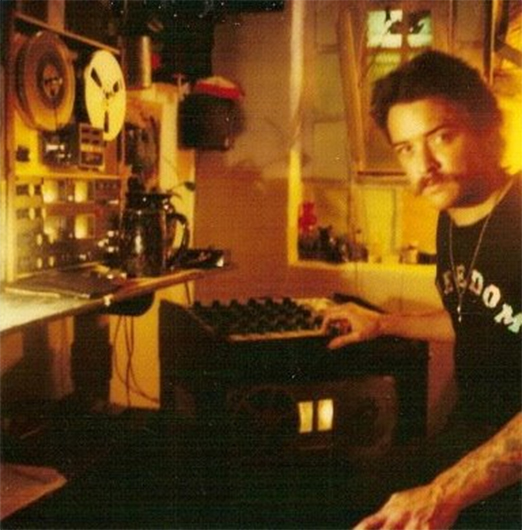
TYLER: In 2006, a friend of mine, Dennis, visited Bobby at the prison in Pendleton and wrote a pretty great little article about it. Afterwards, he approached me with the idea of reissuing the Lucifer Rising soundtrack through Ajna.
Dennis Dread is a Portland-based illustrator who has drawn covers for DARKTHRONE and AUTOPSY, among others. The Pendleton account appeared in his art fanzine, Destroying Angels. When he next visited Beausoleil at Eastern Oregon Correctional Institution, Tyler made the seven-hour drive to join him and begin discussions for “The Lucifer Rising Suite”.
TYLER: Bobby was then transferred to Salem, which sits between here and Portland – much closer to me – so visiting him became far easier. He is also a prolific talker on the phone, so we made extensive use of those fifteen-minute calls. And if you know anything about Bobby, his ideas can grow pretty quickly. In the end, we had enough material for four records.
What was the original plan?
TYLER: Initially, it was going to be a single LP. Then someone Bobby knew, who’d been involved with THE MAGICK POWERHOUSE OF OZ, discovered a whole batch of tapes in a closet, all recorded around the same period. Overnight, the project went from a straightforward vinyl reissue to this extravagant undertaking.
But these rediscovered ‘60s tapes – isn’t it the same material that appeared on the 2004 double CD?
TYLER: I’d have to double-check. I just remember some comment about somebody having recently discovered all this material in a closet, but I would need to go back and verify. Maybe that is simply what Bobby said to convince me it needed to happen again in a larger, more glorious, Luciferian fashion.
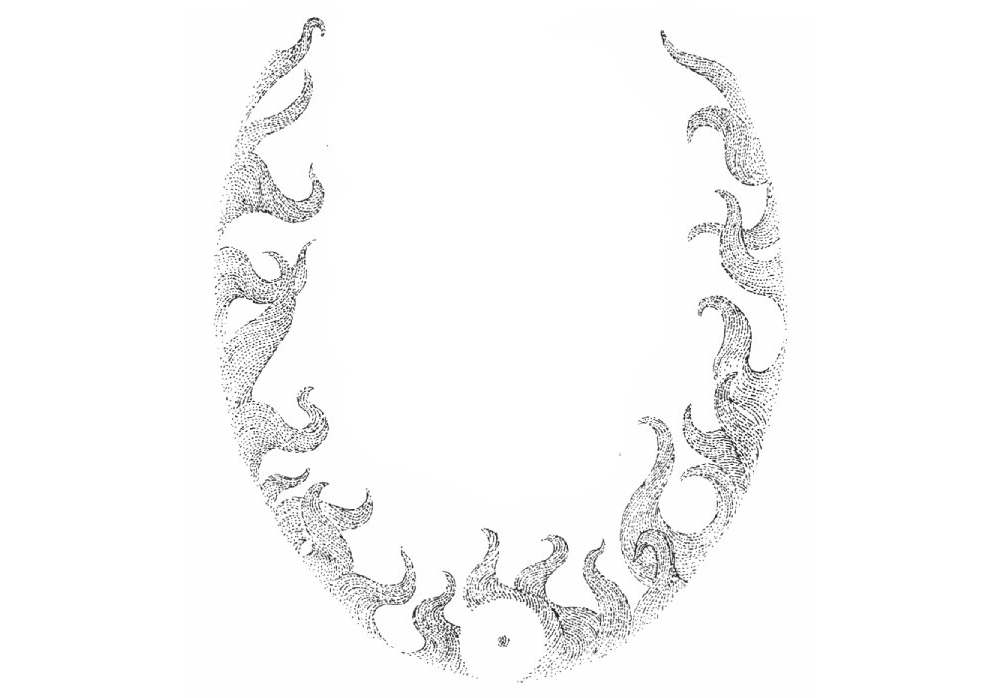
Artwork by Timo Ketola
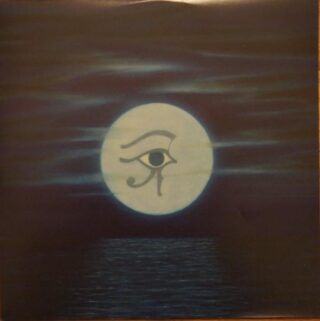
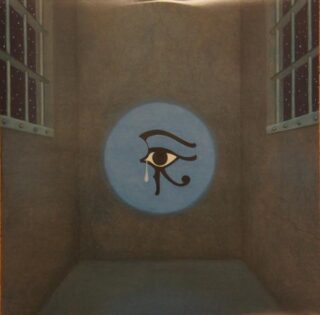
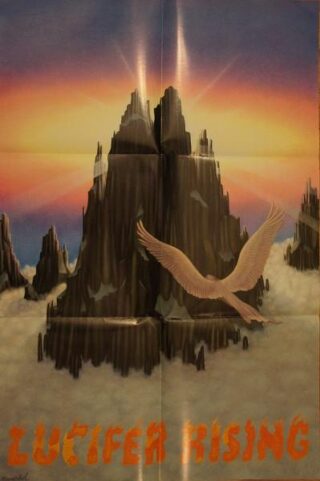
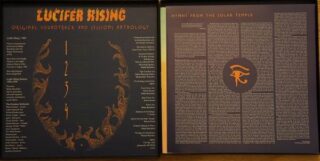
A July 2008 update on the Ajna Offensive website reported that Beausoleil had completed eight pieces for the inner sleeves, plus a larger work intended as a poster, part of which would also serve as the cover. Dennis Dread, originally hired to design the whole box, was now down to the back panel artwork – whereas his layout replacement, Timo, sat brainstorming arrangements of text and images.
TYLER: I certainly remember bringing Timo into the project, but I have no idea when. I was hoping you could answer that with your maniacal research.
The earliest surviving correspondence in my archive is a letter Timo sent to Beausoleil on February 28, 2009, ten days after TEITANBLOOD’s “Seven Chalices” finally went to print. Apologising for a silence stretching back to October, he explained that changes to the box set’s front cover had stalled the process. With the revised artwork now in hand, he was ready to resume the title lettering and layout.
TYLER: I don’t recall what target dates we initially had in mind. I noted fifteen different cover options Timo came up with. And you can imagine the effort involved in getting supplies for Bobby’s nine separate pieces – each side of the inner sleeves, plus the poster – when you’re at the mercy of the prison system and its commissary.
The 1967 THE MAGICK POWERHOUSE OF OZ session went into the anthology too – did Timo ever mention how much it meant to him?
TYLER: I’m sure he must have. We talked quite a bit about Bobby, Lucifer Rising, Kenneth Anger, and all those related subjects – especially while working on the sleeve. Timo held Bobby in very high regard: for his music and artwork, and undoubtedly for the perseverance he’d shown under such difficult circumstances.
Bobby replied on March 18, having recovered from a flu outbreak sweeping the prison and begun clearing his correspondence backlog. Included was a corrected version of the liner notes – the final booklet component Timo needed. ‘So it is all, finally, in your hands’, he wrote, adding that Dennis Dread had visited a few weeks earlier with a mock-up of the front cover.
TYLER: Dennis ended up with both covers, front and back, as a kind of gift for helping orchestrate the release. It was a slightly strange arrangement, since Bobby’s own artwork runs throughout the interior. You might expect it to have gone the other way, but in the end most of Bobby’s work remained inside the set.
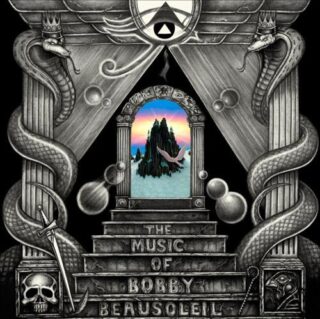
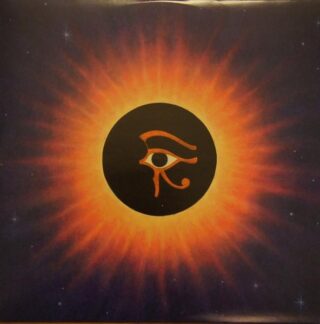

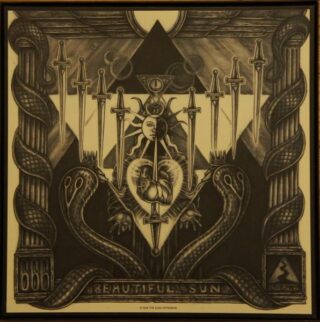

How much of the finished box came down to Timo?
TYLER: Probably most of it. I had complete faith in him when it came to the visual side – the overall design, the aesthetic decisions, all those little details: the stippled flames inside the box lid, the calligraphy along the spine, and so on. “The Lucifer Rising Suite” wasn’t tied into any distribution network at that point, so there were no hard deadlines or penalties hanging over me, which gave me the freedom to work at Timo’s pace.
log in to keep reading
The second half of this article is reserved for subscribers of the Bardo Methodology online archive. To keep reading, sign up or log in below.
Related reading