Liber Ketola XXXI
2026-09-02
by Niklas Göransson
For Lawless Darkness, Watain turned to two artists shaped by very different traditions. Timo Ketola approached the work through magic and religion; Zbigniew Bielak brought the precision of architecture and historical illustration.
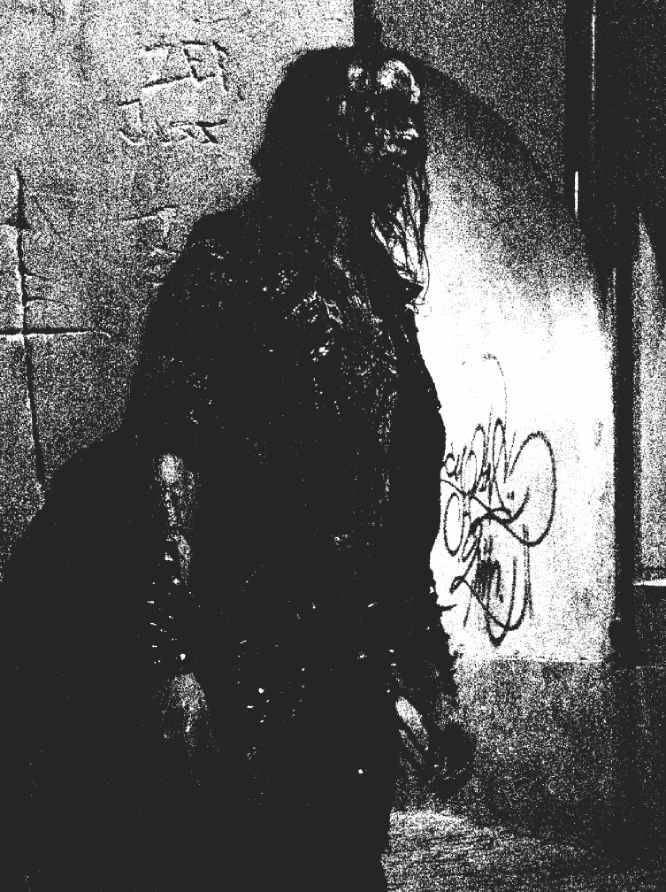
Photo by Timo Ketola, 2010
ERIK DANIELSSON: Leading up to “Lawless Darkness”, Timo was certainly keen to carry the collaboration into our fourth album. But if I’m being honest, you could probably say we were pushing to have him involved far more than he desperately wanted to be part of another WATAIN record.
On the eve of WATAIN’s tenth-anniversary show in December 2008, the band declared the coming year a period of songwriting, effectively putting live activity on hold. From the outset, Timo was to oversee the album’s entire visual presentation – both artwork and layout. Beyond the cover and lettering, the commission included individual illustrations based on each of the ten songs.
ERIK: I’ve always felt that one of the best ways to approach an album – to really know what it is you’re trying to say – is for every song to have a clearly defined concept. Translating something like this into an illustration isn’t necessarily straightforward, though, which became a challenge in itself.
In late 2009, while work on “Lawless Darkness” continued, WATAIN were contacted by a Polish artist named Zbigniew Bielak.
ERIK: Bielak showed me a few organ illustrations he’d made for a Polish encyclopaedia, as well as an ABSU piece he was working on at the time, and they were absolutely fantastic. What else? Oh, I remember some kind of architectural work – a vault, or maybe part of a church – that he sent me a photo of.
By then, Bielak – who worked as an architect – had spent the past four years producing illustrations for encyclopaedias and popular-science publications in Kraków.
ERIK: It looked spectacular; instantly recognisable as the work of someone extremely talented. The way he expressed himself also left a strong impression. Bielak is an eccentric, and he has an excellent grasp of old-school black and death metal; I’d say that combination made me consider taking things further.
What was the first step?
ERIK: He sent us some test pieces which, despite showing obvious potential, weren’t particularly good. I remember thinking something like, ‘Clearly, you can’t do this on your own – you need very precise instructions.’ I probably didn’t put it to him quite so bluntly, but that’s what I thought.
Instead, Erik sent Bielak the lyrics to “Lawless Darkness”, along with the same song-specific guidelines previously given to Timo.
ERIK: Unless I’m mistaken, he started with “Death’s Cold Dark” – and it turned out fucking great. I was completely blown away, and it just kept going from there. Timo, meanwhile, continued working on the cover.
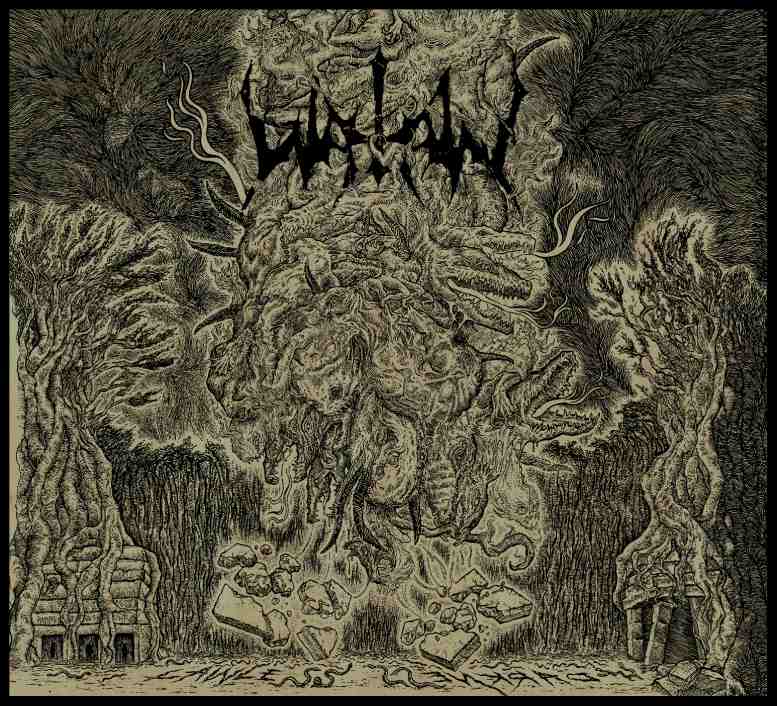
In February 2010, while WATAIN were still recording “Lawless Darkness” at Necromorbus, Timo emailed Erik a thorough update on the cover. First on the agenda was the logo: he planned to transfer a correctly sized print onto the drawing, then redraw it slightly imperfectly to give it an organically embedded look. As a horror example of the opposite approach, he cited Erik’s old SABBAT cover.
ERIK: Wait, what SABBAT cover? The “Sabbademonical…” tape? Oh right. I’d probably made some kind of cut-and-paste collage, scanned it, and then added the logo digitally on the computer. Which, to be frank, I didn’t give much further thought. But Timo certainly did <laughs>.
This must have been a severe aesthetic trauma if he was still dwelling on it seven years later.
ERIK: Indeed, he truly felt that something had gone catastrophically wrong there. Timo was deeply set in his ways when it came to methods and workflow – a character trait I always appreciated and admired about him.
Furthermore, Timo dismissed Erik’s reference image of a Native American cave settlement – the central figure was so gigantic that the grottos risked looking like ‘squirrel holes’. Instead, he chose Angkor Wat-style temples, which gave a human contrast to the inhuman. The rest of the email is essentially Timo critiquing his own sketch: the pillar needed to be fuller and rounder, the trees required a wider perspective, the jungle should envelop the viewer, and he wanted more organisms, teeth, and horns.
He also shared some thoughts on the ground beneath the centrepiece, having decided it should be ‘full of snakes’. Judging by the finished artwork, that reptilian element eventually took the form of the album title, its second half reversed into a symmetrical construction.
ERIK: The title looked really fucking good aesthetically – the words were the same length, and both ended with a double S. There was something visually appealing about it we wanted to use. In the end, though, this became one of Timo’s cover ideas that sounded better in theory than it worked in practice.
How did Timo’s mode of communication differ from Bielak’s?
ERIK: Not all that much. They were two of a kind, really – artists to the core, each in his own way. Timo came from a traditional background in magic and religion, whereas Bielak is… how do I put it? He definitely had esoteric interests, and we talked a lot about symbolism and so on, but I’d say his approach draws far more on black and death metal than on spirituality.
What did Timo have to say about Bielak’s inclusion?
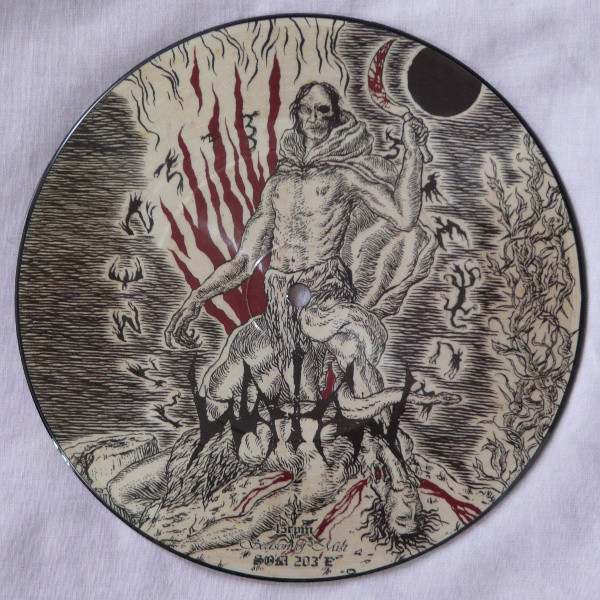
ERIK: I think he held off reacting until he’d actually seen something. I vividly remember Timo slaving away over the “Reaping Death” illustration. He sent it to me, I forwarded it to Bielak – and the very next day, Bielak submitted his own version. It was just phenomenal, one of the best illustrations in the entire booklet. When I showed it to Timo, he replied in capital letters: ‘WHAT THE HELL? WHERE DID THAT COME FROM?’
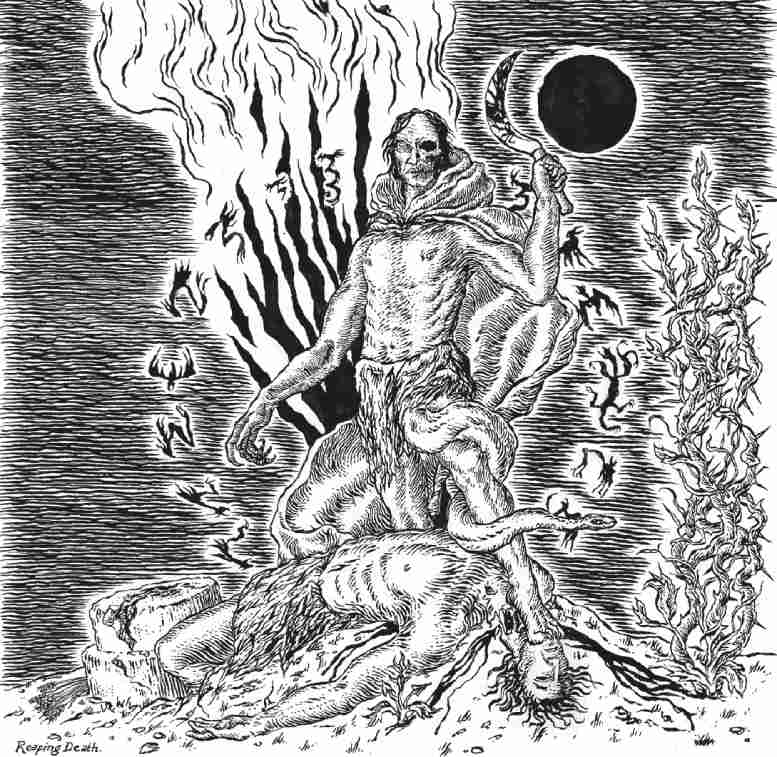
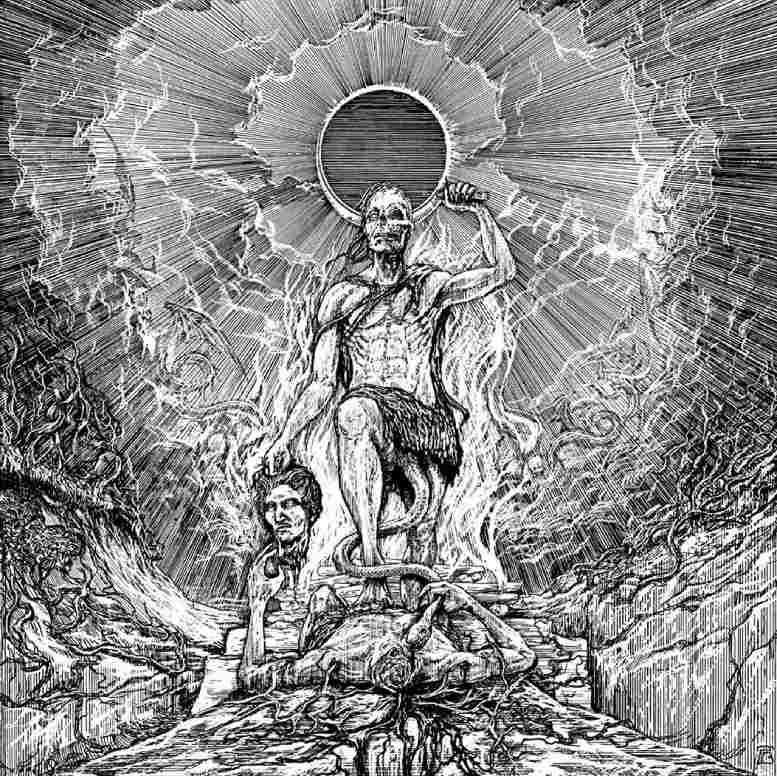
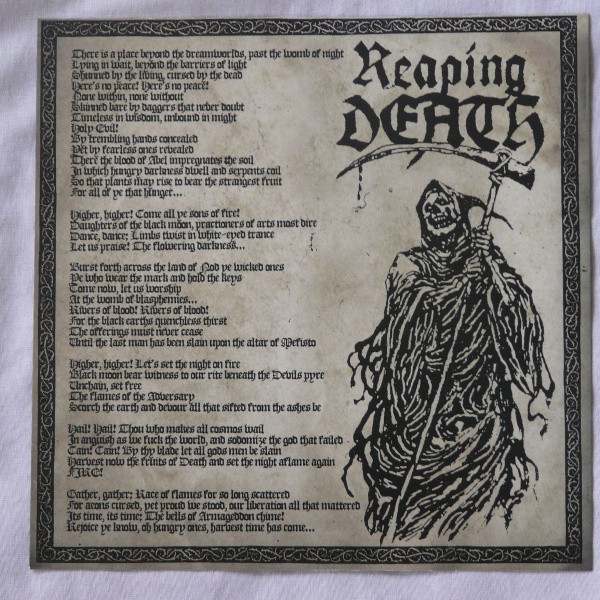
This reshuffled the division of labour. Bielak was now entrusted with the individual song illustrations, leaving Timo to concentrate on the cover; his completed “Reaping Death” image instead found a home on the single of the same name.
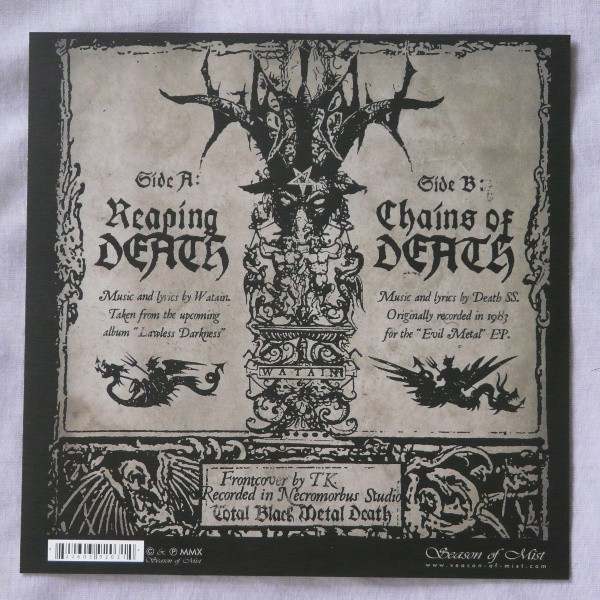
With WATAIN due to perform a BATHORY tribute at Sweden Rock Festival that June, “Reaping Death” – alongside their rendition of “The Return of Darkness and Evil” – was issued in April 2010 as a special digisleeve CD distributed through Sweden Rock Magazine #70.
ERIK: After we confirmed the tribute set, the Sweden Rock editor, Martin Carlsson, called and suggested we record a BATHORY cover to include with the magazine, which led to that single. Then, in true Carlsson fashion, he somehow convinced me it would be a brilliant idea to interview Boss.
Börje ‘Boss’ Forsberg, founder of Black Mark Production and father of the late Quorthon, was famously reluctant to speak about BATHORY. Even their family connection had been kept secret throughout the band’s lifetime, and interviews – particularly after his son’s death in 2004 – were exceedingly rare.
That Boss agreed to speak on record for Sweden Rock, openly and with the family’s blessing, was a triumph in itself. Alas, Erik’s return as an interviewer – his first since abandoning the fourth issue of Hellish Massacre seven years earlier – did not proceed entirely without complication.
ERIK: I did the interview over the phone – it went really well, and we developed a good connection. I saved the recording, and then somehow managed to delete everything in the project before saving it again under the same filename. Basically, I replaced the original with an empty file. I seem to remember calling you afterwards to help me sort it out.
To no avail, sadly. Along with a wealth of BATHORY trivia, Erik had erased a conversation in which a grieving father revisited his son’s death and shared memories of their final exchanges. Asking Boss to reconstruct all of that from scratch would’ve been a fairly ghastly proposition.
ERIK: It was absolutely horrific, actually. I still have the recording of my second attempt, and you can hear me trying to explain what happened right at the beginning. Fucking hell, I cringe just thinking about it.
Luckily, Boss seems to have taken the mishap in stride. Beyond subjecting himself to a second painful trawl through his memories, he agreed to appear at Sweden Rock Festival in person and introduce WATAIN before their tribute set.
ERIK: I think he understood our intentions were genuinely fan-driven – that all we wanted was to perform a powerful homage to a legend and a pioneer. Everyone we knew loved BATHORY, of course, but this wasn’t necessarily the case among the younger generation. Aside from Blackmoon’s old tribute album, little had been done to honour Quorthon.
“In Conspiracy with Satan: A Tribute to Bathory” – released in 1998 through former DARK FUNERAL guitarist Blackmoon’s Hellspawn Records – had done just that. With contemporary heavyweights such as MARDUK, OPHTHALAMIA, SATYRICON, UNANIMATED, and EMPEROR interpreting BATHORY classics, it introduced many younger metalheads to Quorthon’s 1980s catalogue.
ERIK: I have to say, it really felt like something happened after the Sweden Rock single and our tribute show, both of which got a lot of attention. That’s exactly what we hoped for – making people aware of a band they ought to know more about. Same as with the DEATH SS cover.
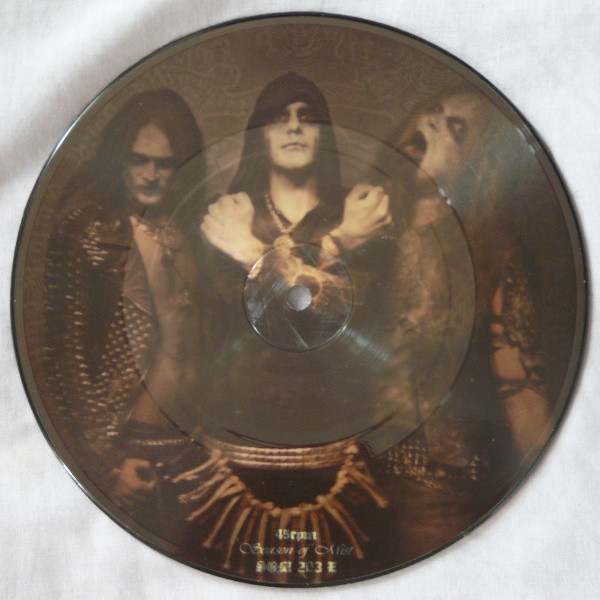
Talking to Headbanger Zine in 2006, asked why WATAIN invested so heavily in the visual side, Erik responded that every band who’d succeeded in creating ‘magic with their metal’ had paid careful attention to each individual aspect of its being. The first example he gave was DEATH SS.
In 2010, that reverence became an explicit homage when WATAIN covered “Chains of Death” for Season of Mist’s vinyl and CD editions of the “Reaping Death” single.
ERIK: Above all, we had this passion for bands like TORMENTOR, Japanese SABBAT, IMPERATOR, and ORDER FROM CHAOS – lesser-known acts that still achieved incredible things. DEATH SS were about as obscure as you could possibly get, while at the same time being absolutely huge in Italy.
As early as a 1982 Rockerilla interview, Steve Sylvester was presenting DEATH SS as something fundamentally different from acts that adopted sinister make-up onstage only to return to ordinary life afterwards. He described rock as inseparable from imagery, with DEATH SS using characters, scenery and choreography – yet insisted this went beyond mere theatre because the occult conviction behind it was genuine.
Whatever the reality behind those claims, the rhetoric is extraordinarily early; some of it anticipates ideas Euronymous and Dead would articulate almost a decade later. But for years, DEATH SS stayed remarkably obscure outside their homeland.
ERIK: DEATH SS were just right in every possible way, and there was so much mystery around the band. I’ve always felt this whole business of covering songs is largely about shining a light on what inspired us – bands we think deserved more credit than they got at the time.
Among old-school Italian metalheads, this lack of recognition was often attributed directly to ‘the Curse’. Legend has it that Paul Chain, DEATH SS’ original guitarist, turned to sorcery for vengeance after being ousted from the band. Ever since, merely uttering either ‘DEATH SS’ or ‘Paul Chain’ aloud supposedly invites anguish and hardship.
Back in February 2004, WATAIN were opening for MORTUARY DRAPE in Milan, accompanied by a contingent of Swedes. Before boarding our flight, a friend from Gothenburg told us about the lore surrounding DEATH SS – including the Curse. So, when the promoters, Vittorio of Nihil Productions and his right-hand man, known only as Il Colonnello, collected us at the airport, we decided to test the theory. To everyone’s amusement, they immediately protested.
ERIK: My strongest memory is sitting in the passenger seat next to Vittorio, driving down the highway. One of the first things out of my mouth was something like, ‘Tell me everything you know about DEATH SS, at once!’ – at which point he turned bright red and became noticeably nervous. Seconds later, a truck came thundering past and clipped the wing mirror. And Vittorio basically went… ‘See, what did I say?’
What really struck me, having grown up in secular Scandinavia, was the man’s complete lack of surprise. To him, it seemed like the most natural thing in the world: invoke the Curse, and misfortune follows.
ERIK: I’d have to say this came at the perfect time – it really was a period of actively seeking out curses and revelling in sinister currents. Back then, we wanted to engage with every conceivable form of negative energy, so I basically saw it as confirmation that we were on the right track.
Undeterred, at WATAIN’s soundcheck, Erik tested the microphone by chanting, ‘DEATH SS, DEATH SS, Paul Chain’, despite the sound engineers’ protests. A couple of hours later, during the opening song, the hosts once again appeared vindicated. Aside from the tenth-anniversary show, this is the only time I can recall WATAIN actually stopping a concert and walking off.
ERIK: Hmm… no – I don’t think that had ever happened before, actually. It was an incredibly chaotic gig, with fucking atrocious sound. That’s basically what I remember. Wasn’t there some kind of electrical fault?
I believe Ynas became the first Swede to entertain the notion of respecting local custom surrounding the Band That Shall Not Be Named. Presumably, the change of heart came after being electrocuted by his own bass.
ERIK: <laughs> Who knows how these things are connected? It could also be traced back to Ynas’ general disposition towards the world.
The interruption proved temporary, and WATAIN eventually returned to finish the set. The following evening, our hosts took us to what was supposedly the finest dining in their local area, only to find the establishment closed – despite Il Colonnello having booked a table by phone that very afternoon. Without the slightest hint of irony, they blamed the Curse.
The same explanation resurfaced a couple of hours later, when the envelope containing the band’s merch and gig money vanished from the replacement restaurant. By that point, the entertainment value seemed to have diminished somewhat for Erik.
ERIK: You know, it might very well have. Especially with a pretty severe hangover thrown into the equation, as I recall. One simply has to learn to respect the Curse.
Six years later, WATAIN recorded a DEATH SS cover. Had the Curse finally loosened its grip by then, or was that part of the appeal?
ERIK: Hard to say; I haven’t really experienced anything like it since. By then, perhaps it had taken a firm enough hold that we’d simply started working together instead. Maybe the rules change once you surrender yourself completely to DEATH SS.
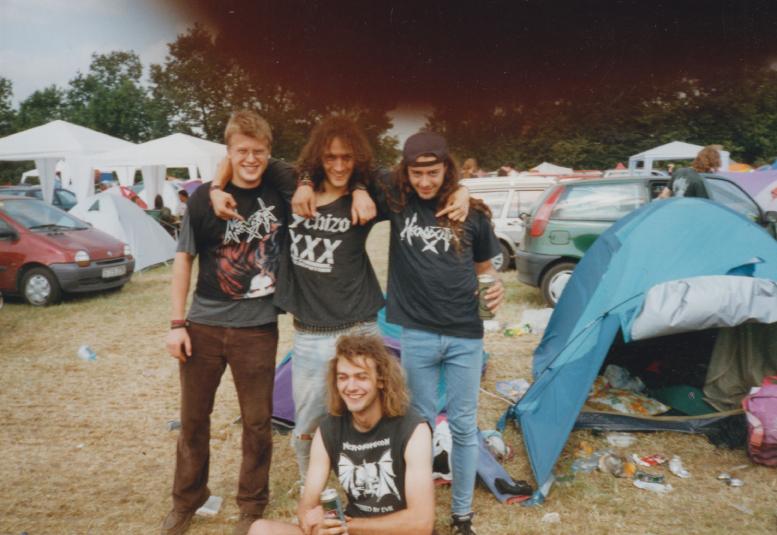
ERIK: Bielak and I had the artwork as a joint project, but at the same time, we were getting to know each other. As we eventually realised, I’d actually met him once before, completely by chance – at Wacken in 1999, when Håkan and I went down for the MAYHEM and DESTRUCTION reunion shows.
ZBIGNIEW BIELAK: This was during my archaeological ‘80s demo-tape and obscure deathrash era. A bunch of friends and I would go to Wacken and hang out with these Milanese dudes. We were just coming alive, suffering some brutal morning repercussions from the previous night’s binge; half-stoned and half-awake, we went to watch MAYHEM.
A number of consequential introductions took place at Wacken Open Air that year. For instance, it’s where Erik first crossed paths with Sînn of HIRILORN – the connection through which he and Christian Bouché would eventually come to correspond.
BIELAK: In the queue, I saw a pair of extremely well-dressed miniature heavy metal guys from Sweden. Scanning my surroundings through this stupor, but still with an inquisitive eye, I noticed these beautiful SARCÓFAGO and CARNAGE logos on Erik’s jacket, hand-drawn with a silver pen. So I think I complimented him on that.
ERIK: Håkan and I were standing in line, about to go through security, when this short-haired guy came up to us. Judging by his appearance, you wouldn’t have thought we had anything in common whatsoever – but he pointed at the IMPERATOR logo on my jacket and said he was from Poland.
BIELAK: Actually, Håkan had the IMPERATOR shirt, while Erik wore the jacket I’d spotted. It’s been twenty-something years, so I can’t say exactly what, but I also recall a NIFELHEIM element. They were young, cocky, and very entertaining to look at, so it was an interesting meeting.
ERIK: We had a brief conversation in the queue, but nothing more came of it – until a decade later, working on “Lawless…” together. So, that was a little strange. Those phone calls were also about establishing a certain degree of trust, which matters when entering into something as intimate as creating an album cover.
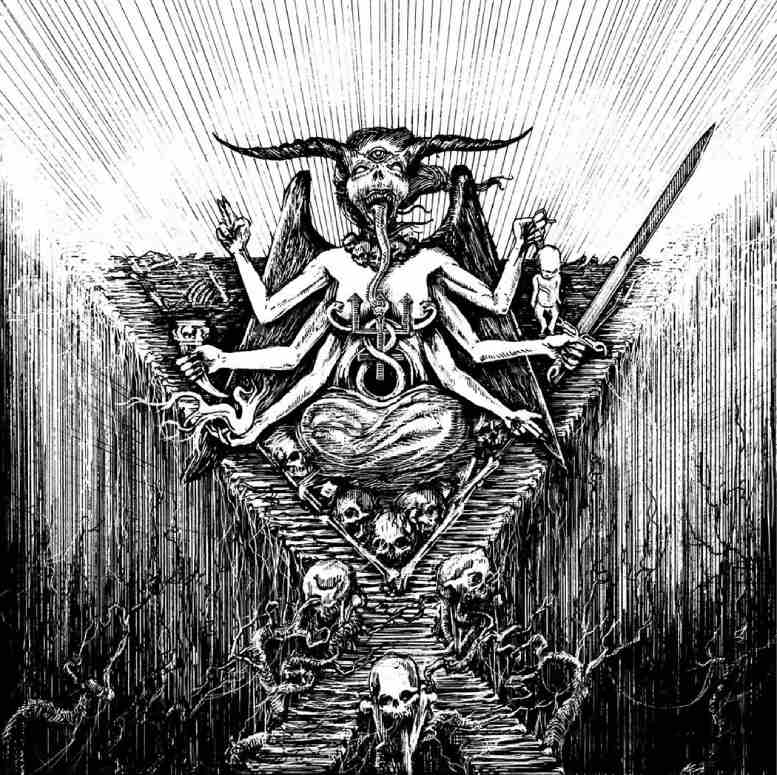

BIELAK: I grew up in an architect’s house, surrounded by all manner of plans. Having been exposed to the visual language of architectural drawings and technical blueprints inked on vellum so early certainly had a profound impact on my sense of aesthetics. I don’t have much in the way of abstract sensibilities, but the purity of exquisitely meticulous linear art, once you take it out of its utilitarian context, is still sort of like Piet Mondrian on LSD.
Did you have any aspirations of becoming an artist as a child?
BIELAK: The aspirations came from my parents, who were pushing me towards an artistic route. They even organised an exhibition for me – which is a fantastic idea if you want to traumatise a five-year-old. It was a pretty horrible experience, I guess, because it effectively killed any inclination I had to manifest myself artistically.
Once Bielak discovered heavy metal in elementary school, his attention shifted almost entirely to music.
BIELAK: I just delved into the world of metal without looking back or particularly missing the artistic side. Drawing only returned when I began preparing for the architecture entrance exams, which was quite mundane in itself: you were expected to draw compositions of wooden furniture, so I became rather proficient at depicting tables and chairs. Not terribly exciting.
At university, drawing became a working tool – those linework skills now applied to real projects, as a means of communicating ideas.
BIELAK: You had to develop a certain prowess with meticulous linework, ink pens, rapidographs – all those tools that architecture, and engineering crafts more broadly, have used for ages. Well, maybe not ages considering this relatively modern toolset, but come to think of it, manual drawing has been the principal means of communicating and then executing architectural ideas for something like three thousand years. Nevertheless, once I started exercising it in practice, I found I was really fond of it.
log in to keep reading
The second half of this article is reserved for subscribers of the Bardo Methodology online archive. To keep reading, sign up or log in below.
Related reading