Liber Ketola XXX
2026-08-26
by Niklas Göransson
Come the late 2000s, Watain had carried their world far beyond the underground that first sustained them. Yet as the stages grew larger, the band turned inward – into a reality governed by its own laws, with Timo Ketola firmly embedded within.
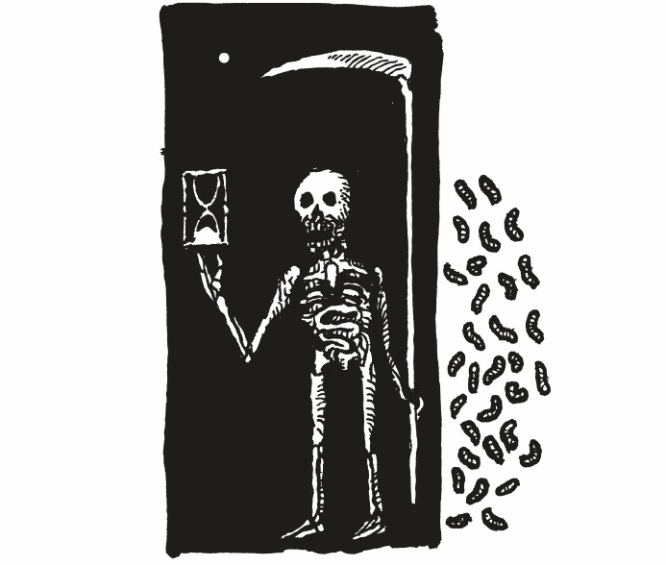
Watain artwork by Timo Ketola
ERIK DANIELSSON: Our live presentation followed a simple principle: what you saw onstage should, to the greatest extent possible, represent the music itself. There had to be this seamlessness between the two; that was always my goal. And as we kept experimenting and gradually learned how to use the stage, the possibilities expanded.
CHRISTIAN BOUCHÉ: Seeing WATAIN live several times during the early years told me all I needed to know about where they were headed. Their stagecraft probably developed organically, but the ambition already showed. With an imagination fuelled by the achievements of Erik’s ‘80s idols, it was only a matter of time before the band began building on that legacy.
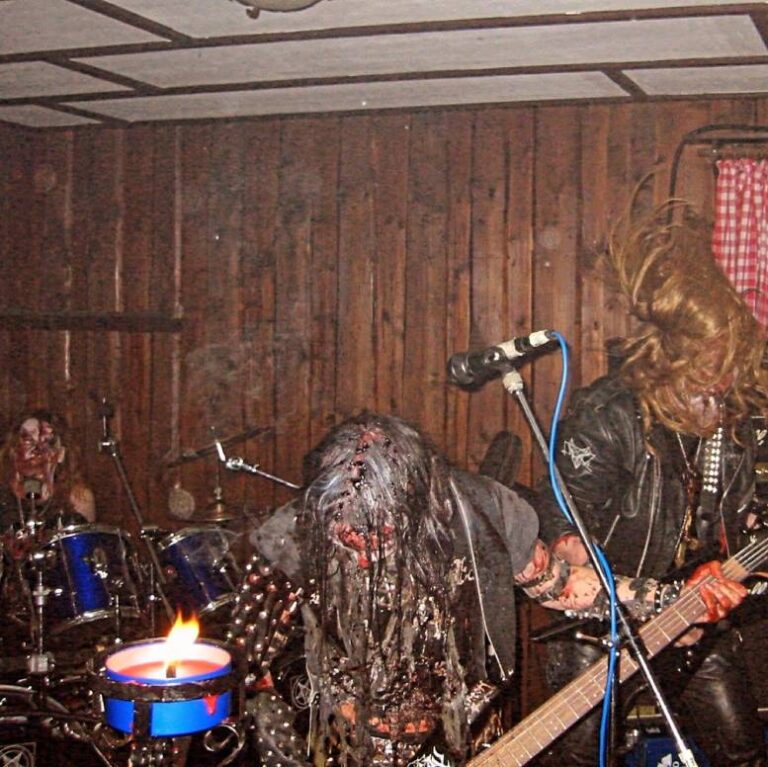
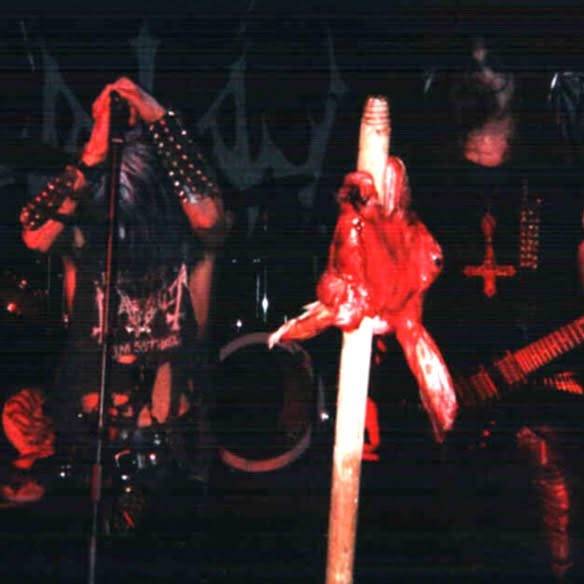
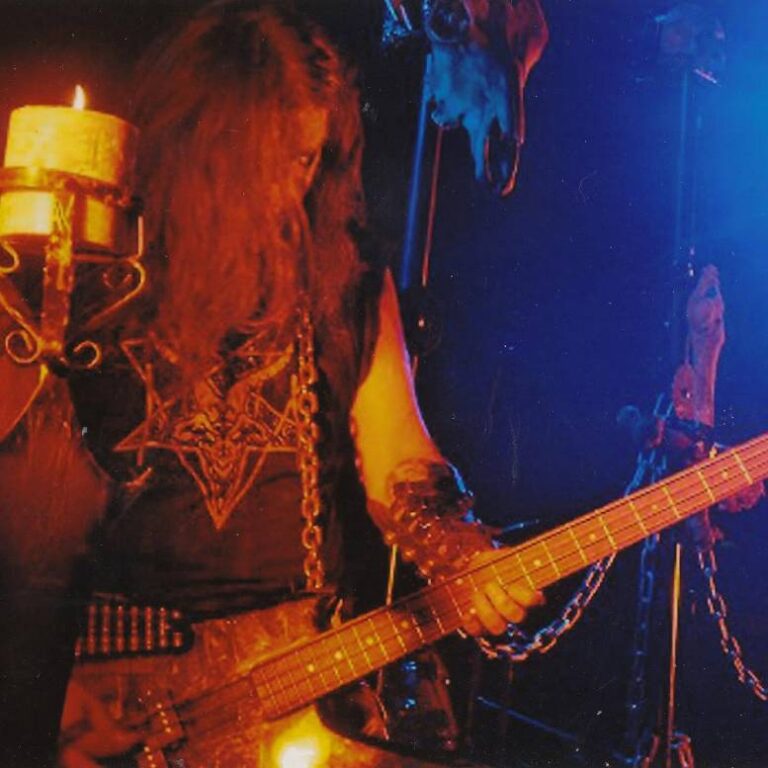
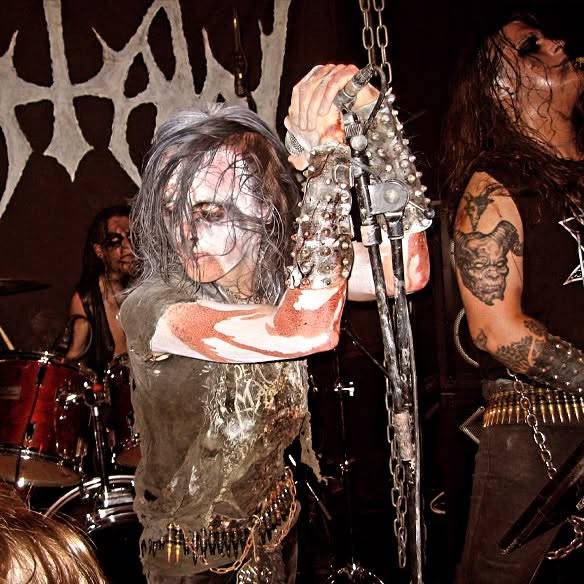
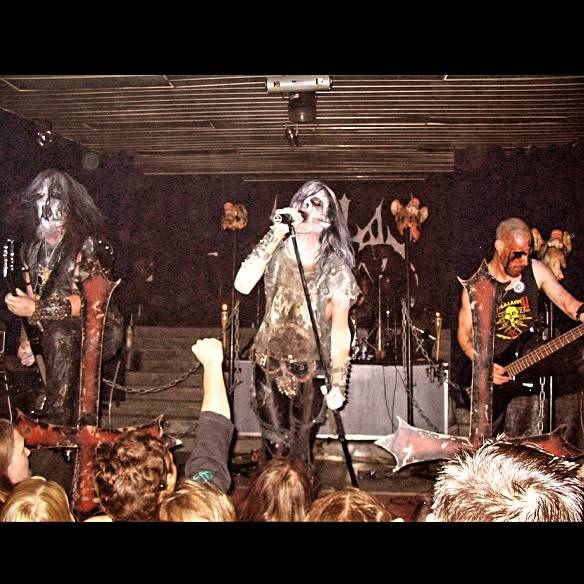
In the years following their 2003 “Casus Luciferi” album, WATAIN’s stage production continued to evolve. What started with two steel crucifixes came to include chains, poles, torches, and various expired animals.
ERIK: We’ve never sat down with a blank sheet of paper and designed a set for an upcoming tour. It was more about building on what we already had: seeing which elements worked, stripping away anything redundant or meaningless, and keeping whatever still felt relevant.
None of these individual components was unprecedented – DARK FUNERAL, for example, had played with pigs’ heads impaled on inverted crosses as early as 1995. WATAIN stood apart in the way everything combined into a coherent sensory assault: their concerts targeted not only the ears and eyes, but also the sense of smell.
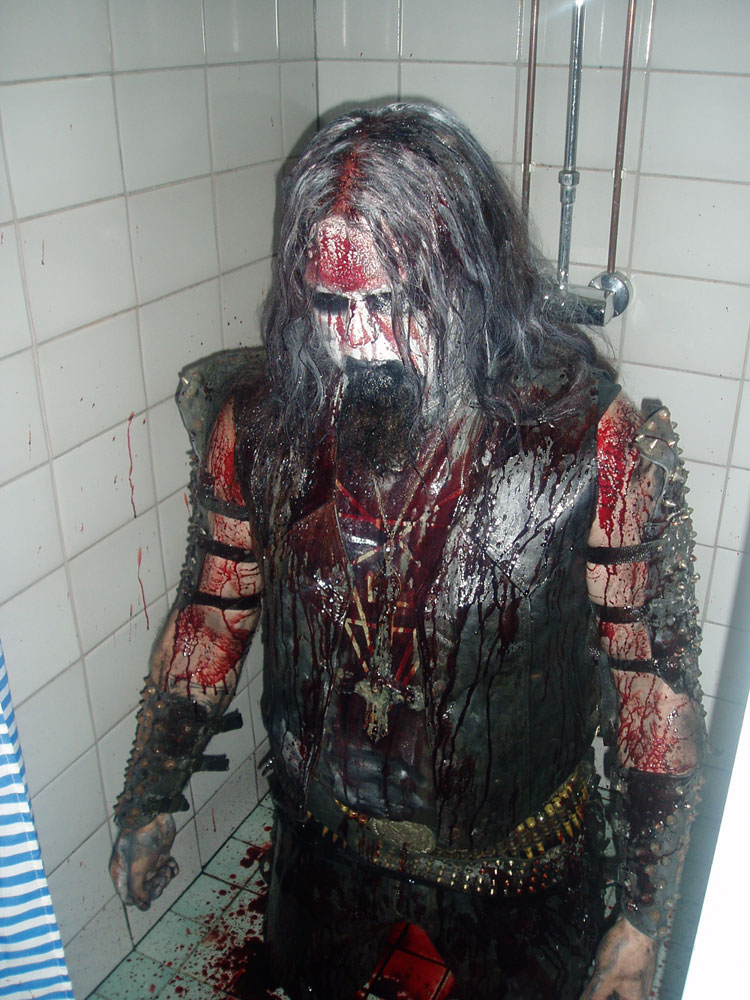
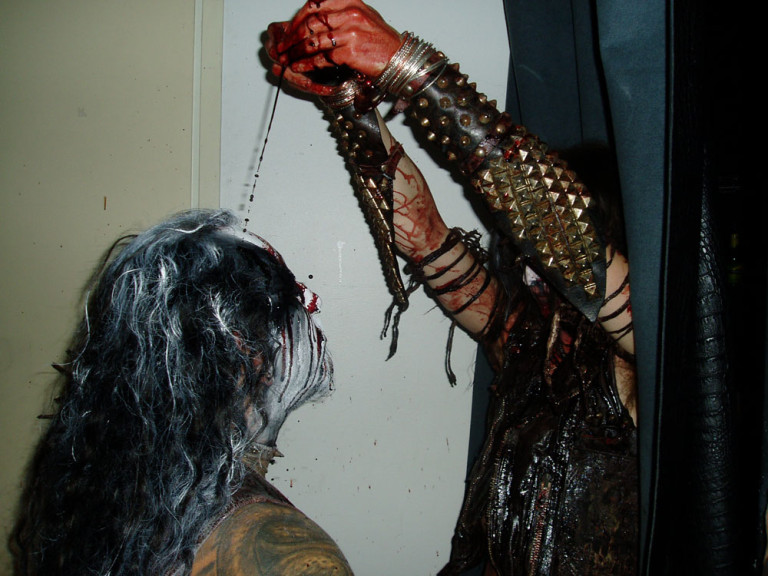
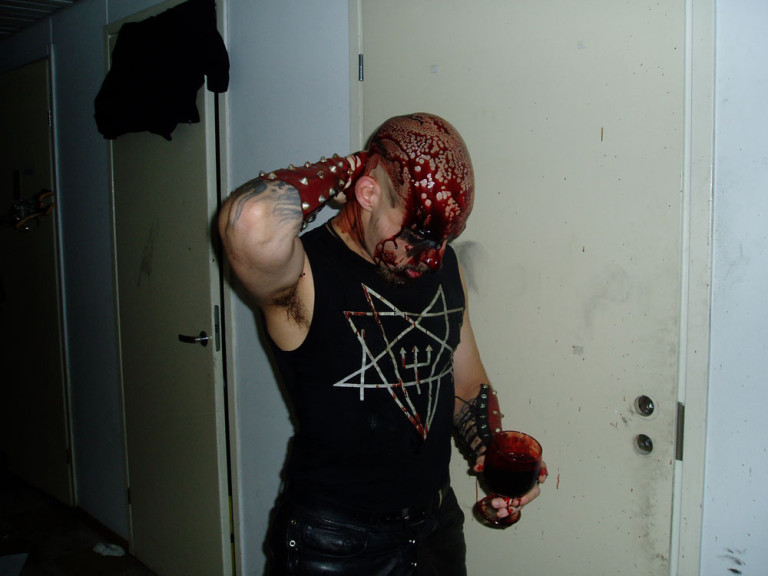
ERIK: I’d say this came quite instinctively – and above all, very organically. The stench of decay emerged by accident during the DISSECTION tour, when the blood we’d brought began to putrefy, and it immediately became part of the whole thing. Same with our stage clothes starting to rot and attracting maggots. None of it was deliberate; it just happened.
Did you ever consult Timo about your live presentation?
ERIK: Not really. Timo and I realised early that our collaboration worked best with printed material and layouts. Musically, we had plenty of common ground, but there were aspects of WATAIN he couldn’t fully get behind. On the live side, though, he came along for the DISSECTION tour, where much of this took shape, and he thought it was fucking great.
In August 2005, nine months after the Rebirth of Dissection tour, WATAIN introduced another element during two shows in Finland and Russia: a beastly contraption known as the ‘blood machine’.
ERIK: I had a pedal onstage that I could press, and the machine would spray blood through garden hoses we’d threaded into pigs’ heads mounted on the steel crucifixes. But it was extremely homemade, built by our tour captain, Johan. I have no fucking idea how it worked. Safety regulations weren’t a concern at the time, and I suppose that’s what went wrong in Linköping.
By the time WATAIN played their first Swedish headline show – a legendary evening in Linköping organised by Martin Hallin of N.C.O. and Claudio Marino of Artax Film – the band was attracting attention well beyond the metal underground. In a later Sweden Rock Magazine interview, Erik recalled how recent exposure through outlets such as Vice had drawn what he described as an ‘early hipster wave’, so when the blood machine unexpectedly ‘exploded’ during the intro, panic ensued.
Instead of being released in controlled bursts throughout the set, the entire supply of rotten blood poured through the pigs’ heads and over the front rows at once. Ika Johannesson and Jon Jefferson Klingberg’s Blood, Fire, Death: The Swedish Metal Story describes a stench so intense that people immediately started vomiting and fled into the street. In a 2011 Göteborgs-Posten feature on the authors, the Linköping concert was singled out as the point after which ‘the great WATAIN hype’ began.
ERIK: By then, WATAIN shows had been pretty bloody for a while, so we mostly just gazed out over the audience and thought, ‘Right, that looks the way it’s supposed to.’ I think Linköping became such a big deal simply because a few cultural personalities and journalists were there, and their testimony apparently carried more weight than the average metalhead’s.
The following month, in March 2006, Tyler Davis travelled to Sweden with the express purpose of convincing WATAIN to let The Ajna Offensive release their next album in the US.
ERIK: I’d say Tyler is probably one of the contacts I value most highly among these kinds of connections you make in the underground that later develop into actual friendships. Personality-wise, he and I have a lot in common; we get along extremely well.
Wasn’t one of your conditions for signing with Ajna that Tyler had to cough up an original copy of COVEN’s “Witchcraft Destroys Minds & Reaps Souls”?
ERIK: <laughs> Yeah, exactly; there were a few creative stipulations buried in the fine print. I’ve still got that LP.
Around the same time, Erik and Christian Bouché of Norma Evangelium Diaboli met in Paris. “Casus Luciferi” had concluded WATAIN’s contractual obligations to Drakkar Productions, and they were now weighing their options, having recently been solicited by Season of Mist.
CHRISTIAN: On the one hand, there remained the question of selecting a suitable label; at the time, Erik still had strong reservations about working with major record companies. On the other, the prospect of touring extensively and expanding their audience by joining more mainstream bills was becoming an increasingly prominent consideration.
WATAIN had also been offered a slot as openers on an upcoming European run with KREATOR and CELTIC FROST, and securing the place required a substantial payment.
CHRISTIAN: I assured Erik we would go out of our way to help WATAIN if they decided to sign with NoEvDia. But looking further ahead, I believed it lay in the band’s best interest to consider new alliances better equipped to meet their ambitions. In this instance, Season of Mist was offering what’s called tour support: a recoupable advance, recovered from future merchandise or record sales. That’s something we had never done before.
WATAIN ultimately signed with Season of Mist, under an agreement reserving the vinyl release for Norma Evangelium Diaboli. “Sworn to the Dark” appeared on CD in February 2007, followed shortly by the NoEvDia LP and a North American compact disc through The Ajna Offensive.
The KREATOR and CELTIC FROST tour duly followed, after which WATAIN joined a reformed ANGELCORPSE for eleven East Coast dates – their first shows on American soil. Tyler came along; by his own estimate, it took him two months to recover from a fortnight in a bus full of chain-smokers and rotting animal carcasses.
ERIK: Most outsiders who’d taken on similar roles for WATAIN – promoters, tour managers, and so on – would look at us with a mixture of horror and fascination. Tyler, on the other hand, almost expected things to be a certain way: ‘This is black metal. Extreme music for extreme people.’ We welcomed that attitude.
Didn’t you and Pelle visit the Ajna compound afterwards?
ERIK: Yes. Tyler lives in this absolutely incredible sort of wizard environment, fairly remote in the Oregon mountains – a magnificent self-built cabin with a huge library, animal skulls everywhere, and a garden full of illegal plants. Every time I’ve ended up there, it’s been a very dear reunion. Somehow, the place feels like a sanctuary on earth.
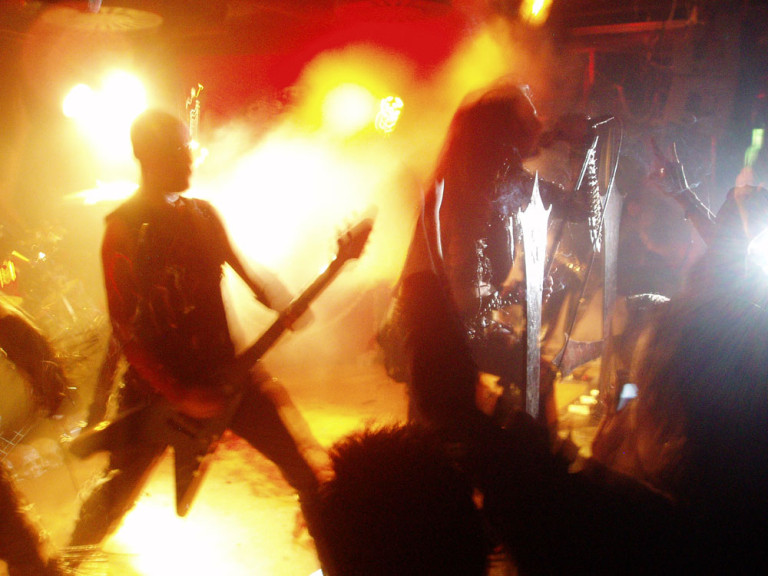
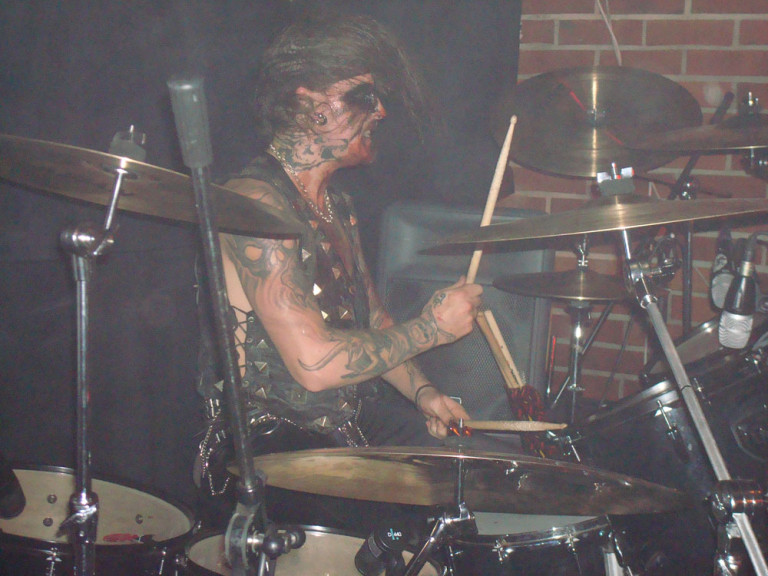
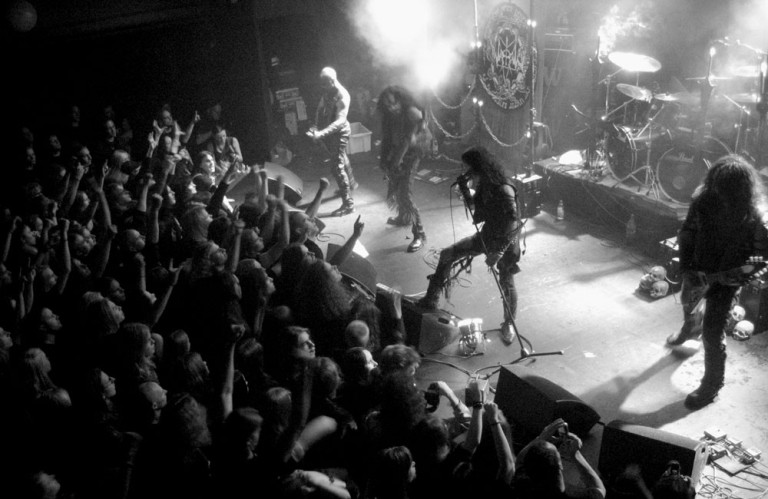
WATAIN made their name as a live act through mid-2000s shows in settings intimate enough for the aesthetics to reach full impact: medium-sized venues and underground festivals, with the audience up close. In the summer of 2008, they took the W.E.T. Stage at Wacken Open Air amidst sponsor banners, barricades, and safety protocols – a long way from a basement in Linköping.
ERIK: Those are entirely separate situations, with a completely different dynamic between the band and the audience. If you’re headlining a club show, they’ve specifically come to see you play. At a festival, people might catch your set out of mild curiosity or almost by accident, without knowing who’s onstage.
By 2008 – going back to their very first tour, supporting UNPURE six years earlier – WATAIN had plenty of experience playing to rooms where much of the crowd was there for someone else.
ERIK: We’d learned quite a lot from being on the road. Whenever the audience is more of an idle spectator – rather than an active participant, stirring up the energy into something shared – you turn all your focus inward, towards the stage. That’s probably how we survived those situations in the beginning, and then got good at them.
In September 2008, the month after Wacken, WATAIN set out on a mini-tour of Finland with NIFELHEIM, carrying a live production of increasingly pyromaniacal ambition.
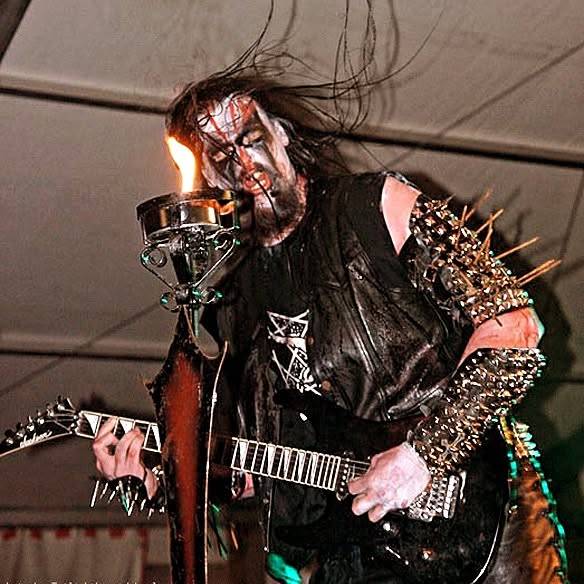
ERIK: We bought a couple of flamethrowers from a company in Poland and simply went for it. I don’t think we bothered informing any of the promoters in advance – Johan would just set them off in venues with far too low ceilings without a care in the world. Going forward, I seem to remember that causing the occasional problem.
The following month, WATAIN returned to North America for their first US tour as headliners – advertised as the occasion when the ‘full artillery’ would finally be shipped across the Atlantic.
ERIK: Before we really understood what it meant to haul all these steel constructions around, we insisted on bringing the full live production everywhere. Obviously, it’s fucking great while you’re onstage – but also insanely expensive. There are still gaping black holes in our finances from some of those tours overseas.
What did you ship over for this one?
ERIK: The chains were bought in the US – the rest came with us. We had a set of steel pillars, banners, and a variety of homemade stage decorations Johan built. Our altar was along as well, but I don’t think we took any pyro over.
In December 2008, WATAIN closed the two-year Fuck the World Tour with a tenth-anniversary show in their hometown of Uppsala. The stage presentation was more ambitious than ever.
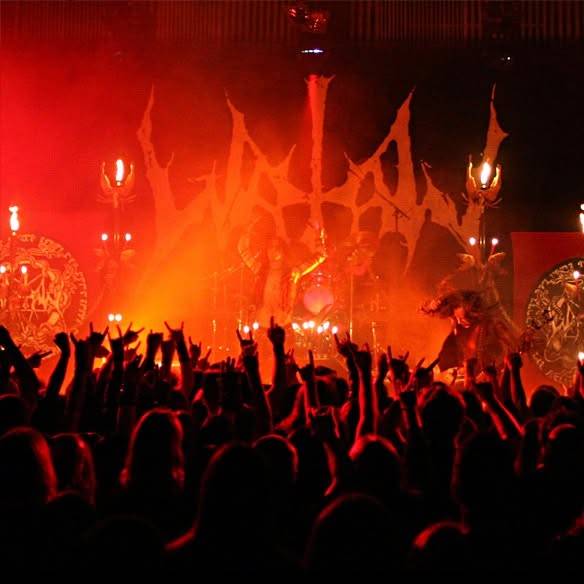
ERIK: By then, we’d introduced the tridents that have stood burning on either side of the drum kit at every show where we’ve been allowed pyro ever since. And also the fire bowls, which are… what would you call them? Sort of like Olympic flames, or some kind of temple vessel about the size of an LP.
Before being converted to run on gas, the bowls were simply filled with petrol and set alight.
ERIK: There might have been some oil in them as well — but it certainly worked, in the sense that they burned. On the altar, I had shot glasses filled with a mixture of black powder, magnesium, and sulphur; throwing one into a bowl would send a pillar of flame all the way to the ceiling. Which, of course, produced an unbelievable amount of smoke, set off the fire alarm, and brought the concert to a halt.
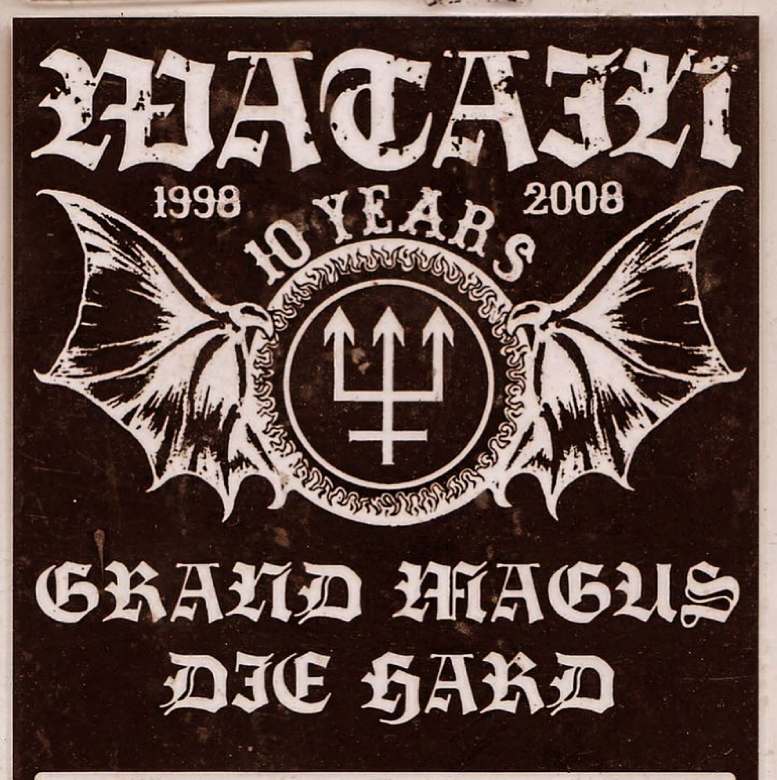
Ahead of the tenth-anniversary show, WATAIN announced that 2009 would be devoted entirely to composition. More than two years had passed since they recorded “Sworn to the Dark” – an album written while the band was gaining momentum, but before it became a full-time touring operation.
ERIK: At this point, there still weren’t any particularly elaborate plans or agendas dictating things. “Lawless Darkness” was our last album that wasn’t scheduled around upcoming tours. Basically, we told the label, ‘We’re going to write music now – you’ll hear from us when it’s done.’
When work on the album began, Erik was living in a cottage outside Leksand in central Sweden. He composed alone during the week, then travelled the 250-odd kilometres to Stockholm to meet WATAIN guitarist Pelle Forsberg and drummer Håkan Jonsson at their rehearsal space in Enskede gård, known as Wolf’s Lair.
ERIK: I had a recording setup where I could add digital drums and track several layers of guitar on top of each other. Still rather primitive, but at least it let me work from home. I didn’t have another job, so I spent days and nights up there with very little else going on beyond a few layout commissions.
Erik had also begun building a design portfolio of his own. Over the course of 2009, he handled album layouts for NECROPHOBIC, THE DEVIL’S BLOOD, and UNANIMATED.
ERIK: NECROPHOBIC and UNANIMATED meant a lot to me, so getting those assignments felt like a big deal. But I was starting to realise that my strongest contribution in an album-design context is probably closer to art direction. I’d have preferred simply telling them which artists to work with rather than trying to do everything myself.
These commissions were carried out under the Trident Arts name – was there any plan to develop it into a design brand?
ERIK: Not at all. I’d simply become accustomed to doing things the WATAIN way: everything needed its own logo, a clearly defined framework, and some proper thought behind the presentation. Trident Arts was basically just a natural extension of how I already worked.
Had you improved enough to operate fully independently?
ERIK: Looking at how those records turned out – not my proudest moments – I certainly wouldn’t say I’d learned anywhere near enough. Luckily, Timo was always very approachable; you could ask him anything design-related, and he’d happily launch into enormously detailed explanations.
In the earliest stages of “Lawless Darkness”, Timo was meant to handle the entire package – both artwork and layout.
ERIK: That almost went without saying. By then, we’d surrounded ourselves with this tight-knit group of longtime collaborators. Tore (Necromorbus Studio) worked on every WATAIN record, Johan handled all aspects of touring, and Timo had become a major part of the band’s universe through his many contributions.
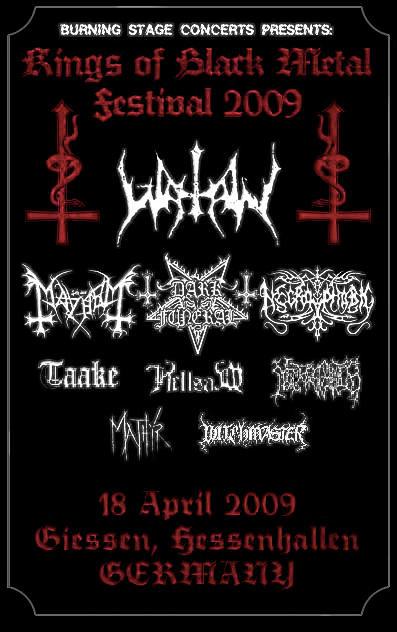
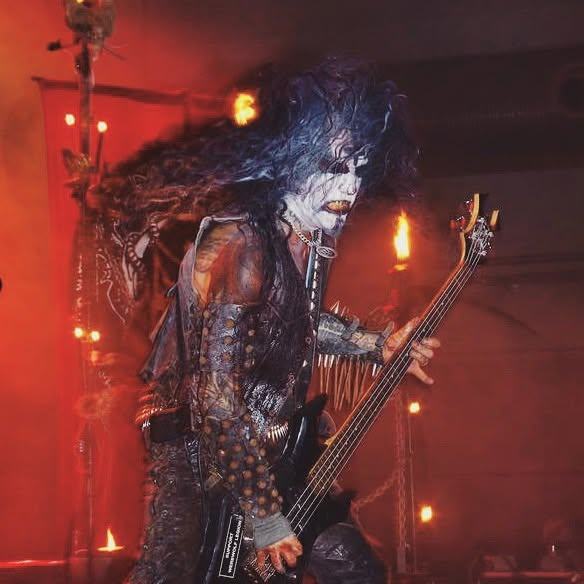
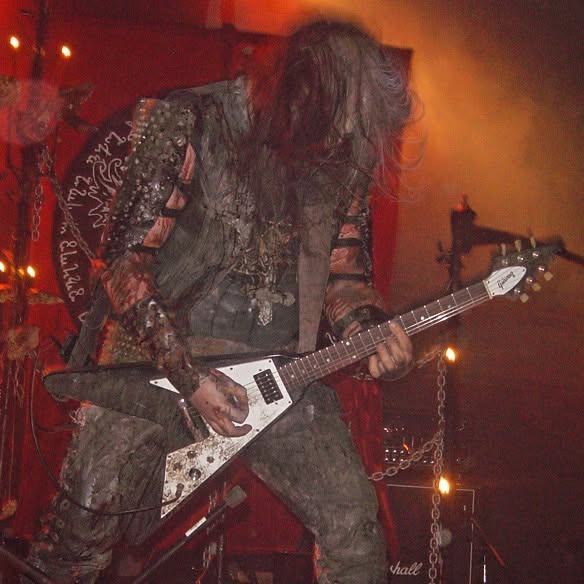
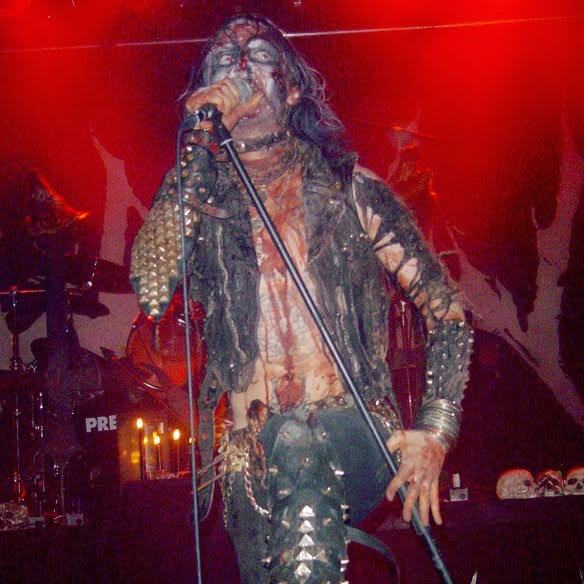
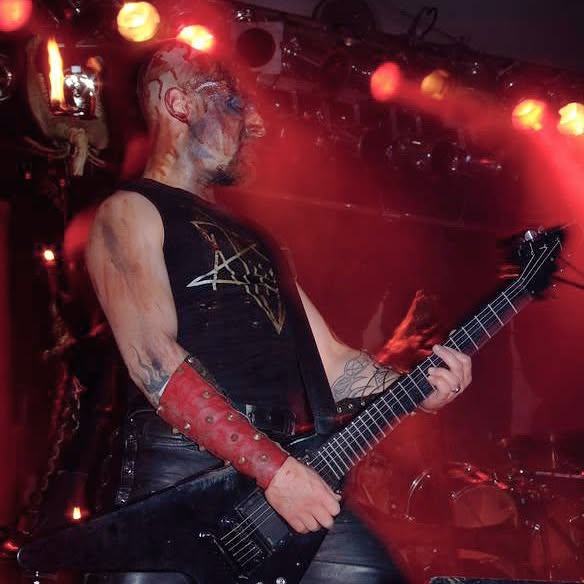

In April, WATAIN played their sole gig of 2009 at Kings of Black Metal, an indoor festival in Gießen, Germany. Four months without live activity had presumably allowed for some reflection – though it must still have been surreal to find themselves headlining above MAYHEM and DARK FUNERAL.
ERIK: The main reason we took the show was that it seemed like a good chance to demonstrate a point: ‘This is exactly what we’re talking about. Carry on the way DARK FUNERAL and MAYHEM do, and eventually you’ll be billed below the younger, hungrier bands.’
By then, the pyrotechnic arsenal had expanded considerably – but unlike in Uppsala, proceedings continued uninterrupted.
ERIK: We had preposterous amounts of fire, and everything went really fucking well. But it wasn’t a rock-star gig in any sense, more like, ‘The marauders are headlining’ – which I suppose became obvious when it came to sharing the backstage <laughs>. Weren’t you there for that?
As the main attraction prepared to take the stage, MAYHEM lingered in the dressing room, unwinding after their own set. When WATAIN began covering themselves in putrid blood, the unsuspecting Norwegians became intimately acquainted with the band’s increasingly notorious olfactory qualities.
Despite literally vomiting, Hellhammer stayed in good spirits, clearly finding the whole thing amusing – especially the reaction of his bandmate Necrobutcher, who went fucking mental. Being lectured on black metal aesthetics taken too far by a founding member of MAYHEM was probably not in anyone’s cards for the evening.
ERIK: Yeah, that one definitely counted more in Hellhammer’s favour. It was quite telling of their respective personalities – and of how our contact and relationships developed afterwards.
The scene you emerged from was, to a great extent, a counterreaction to veteran bands losing their way. By the time WATAIN were being billed above them, did you still feel much affinity with that formative milieu?
ERIK: We’d taken a step back from what once felt like ‘our’ black metal scene. As part of that, I’d say we also began turning inward, into the WATAIN universe – which was becoming quite substantial in itself. We had Wolf’s Lair and a fairly large circle of friends around us; I think we consciously moved more towards, ‘This is our reality now.’
Wolf’s Lair, WATAIN’s Stockholm rehearsal space – inherited from REPUGNANT in autumn 2006 – occupied a civil-defence shelter adjacent to Enskede gård metro station. They initially shared the concrete bunker with INSISION; when the latter moved out, their old room became a private bar.
ERIK: By then, I’d started losing track of the wider underground scene. The black metal movement we became part of – or made ourselves part of – during those first years had turned into something else. A lot of it simply didn’t interest me anymore. And when these blatant WATAIN references began turning up in other bands, it was excruciating.
log in to keep reading
The second half of this article is reserved for subscribers of the Bardo Methodology online archive. To keep reading, sign up or log in below.
Related reading