
Liber Ketola XXXVIII
2026-10-21
by Niklas Göransson
For Timo Ketola and Antti Litmanen, music, magic, and art formed a common language. As their friendship deepened through visits across the Baltic, Antti’s own work moved towards the ritual experiments that gave rise to Arktau Eos.
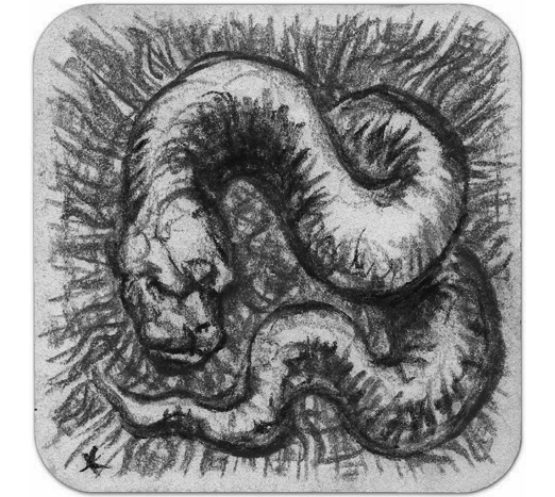
ANTTI LITMANEN: Only as an adult did I realise I’d spent most of my childhood in a house right where the suburbs turned into countryside. Perhaps that explains it: I’ve always been drawn to environments and mindscapes of transformation – liminal realities, both within the natural world and beyond.
As a teenager, Antti was already immersed in esoteric literature – including the works of Carlos Castaneda, which introduced him to notions such as ‘places of power’.
ANTTI: I’d say there’s usually a reason why things are built on specific sites. I’m not necessarily all-in on theories about ley lines and sacred alignments – but, I mean, how oblivious would we have to be to feel nothing in a place that’s stood the test of time and weather for centuries?
Since first writing to THERION’s Christofer Johnsson, Antti had become a regular visitor to Stockholm. In the summer of 1998, he joined Christofer, Tommie Eriksson, and Dragon Rouge founder Thomas Karlsson – by then also the band’s lyricist – on a road trip to explore caves and ancient sanctuaries.
ANTTI: Christofer had a new car, so we decided to drive down to Germany, hang around for a week or two, and check out places that interested us. We stayed in Hagen because Thomas knew someone local – his future publisher, Holger – and THERION recorded at Woodhouse Studio there, right? I remember meeting Siegfried Bemm, who ran it.
In January 1998, THERION had completed “Vovin” at Woodhouse in Hagen – a city on the southeastern edge of Germany’s Ruhr region, known as the gateway to the Sauerland.
ANTTI: We made this magical mystery tour of places like Externsteine in the Teutoburg Forest and Felsenmeer in Hemer – both connected with all these legends that found their way into Wagner’s operas. I also remember visiting a cave known as Leichenhöhle, a burial or sacrificial site.
Was this the trip when you visited Tilmann Benninghaus from DROWNED?
ANTTI: No, that would’ve been during a BABYLON WHORES tour around the same time, when a bunch of us stayed with him for the Berlin date. Mikko Mattila (Isten) had sent us one of DROWNED’s tapes, “Conquering the Azure”, so I’d already taken an interest in his music.
For Tilmann, such visits offered a welcome change. He had long felt somewhat isolated: the local metal underground, as he saw it, was largely proletarian in character, and showed little appetite for engaging with music on an intellectual or spiritual level.
ANTTI: I remember us discussing the German occult scene, like the Fraternitas Saturni order. Back then, you could still visit bookshops where original material from that milieu was widely available, so we’ve kept exchanging messages, photocopies, and so on – right up to today.
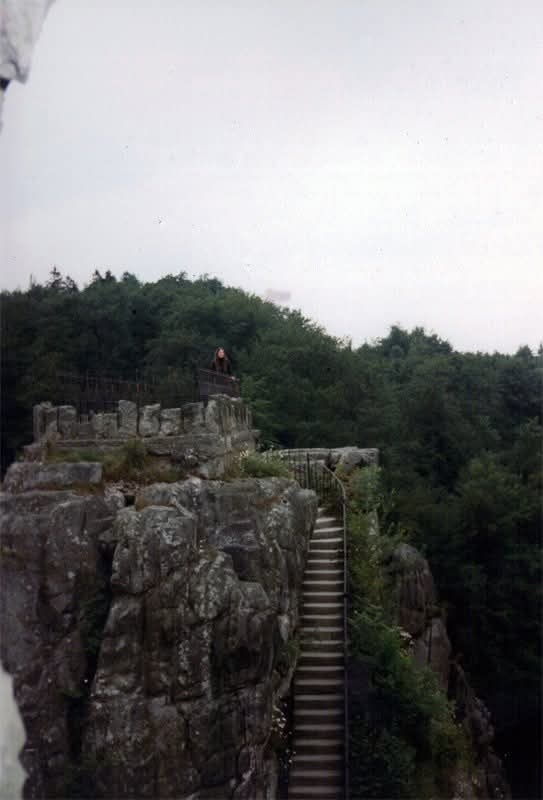
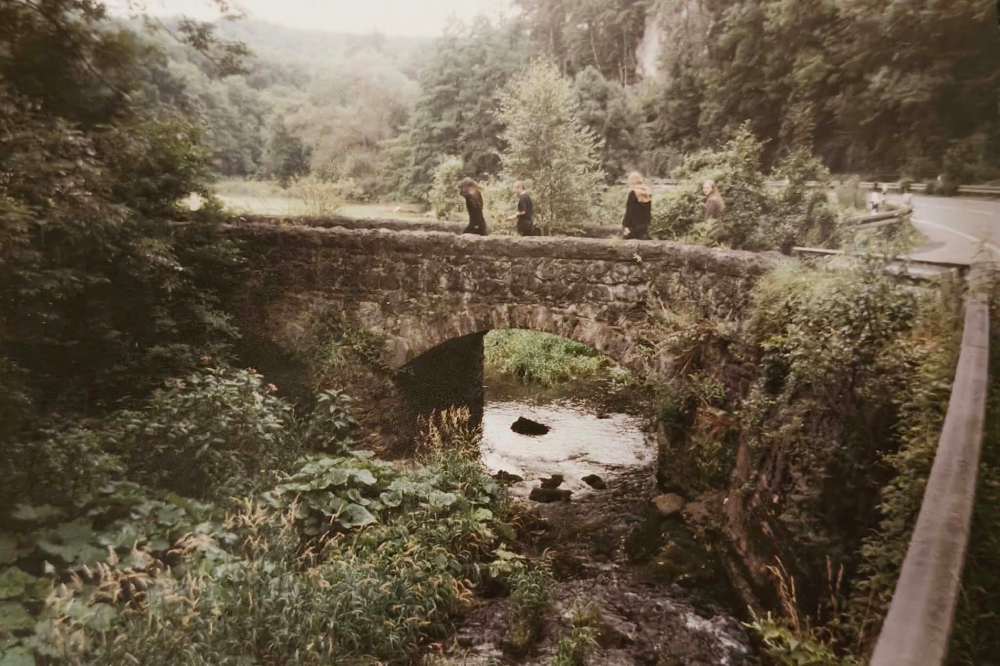
ANTTI: The Swedes were remarkably intense and driven in their magical practice, and I quickly noticed how disciplined Christofer was as a musician – an observation THERION’s later career would abundantly confirm. I didn’t realise how close the band came to folding entirely; it’s fair to say we could’ve taken a page out of his book.
At the time, BABYLON WHORES were preparing to release their “Deggael” mini-CD through Misanthropy’s Heroine imprint.
ANTTI: I gave the guys copies in Sweden, much to everyone’s puzzlement. Unbeknownst to us, they’d recently decided to call a future THERION album “Deggial”. A true coincidence – no one copied anyone, just to be clear. Great minds think alike?
Another mind was heading the same way; a few months after the road trip, Timo joined Dragon Rouge. By then, he had already taken the overnight ferry east several times to visit Antti, whom he’d first met in Stockholm.
ANTTI: Timo moved in the same circles, maybe a little later than me. That gave us a common language – or several, really: music, magic, and art, all meshed together in strange ways. I also remember his burgeoning interest in photography during those late ‘90s years.
Around 1997, Timo enrolled in a media course, largely to qualify for student grants. The darkroom was the only part he truly valued: a place to experiment with exposure times and develop his own film.
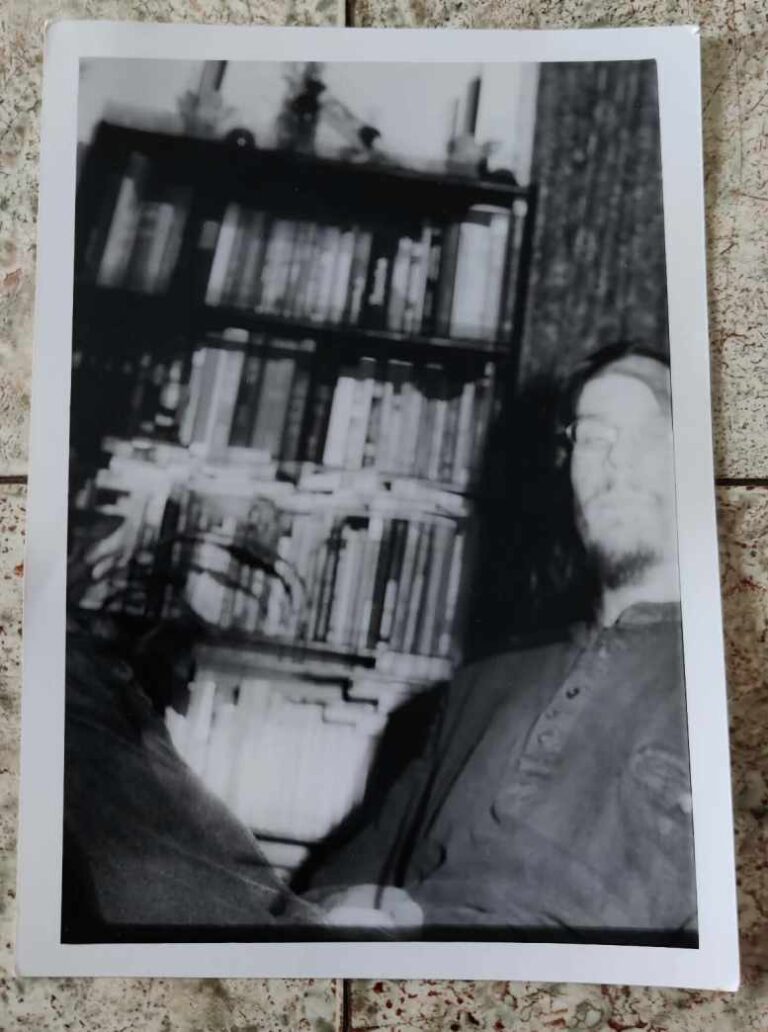
ANTTI: Every so often, I’d get photos from his Helsinki visits in the post – me, my cat, et cetera. Some looked like experiments in film processing; he somehow managed to achieve all sorts of strange effects. Then, in ‘99, he came over to photograph MORTE MACABRE.
MORTE MACABRE brought together members of Swedish progressive rock bands ANEKDOTEN and LANDBERK. Their 1998 album “Symphonic Holocaust” combined original material with Mellotron-heavy arrangements of ‘70s horror scores. The quartet made a rare live appearance at the Helsinki Progrock Festival over Easter 1999.
ANTTI: I didn’t come along, no. I often thought – as many others have remarked – that he seemed to be on some sort of personal mission. You kind of knew when to leave Timo to his own devices, like, ‘Okay, this is important to him, and I’m not desperately needed here.’ MORTE MACABRE was one of those occasions, really.
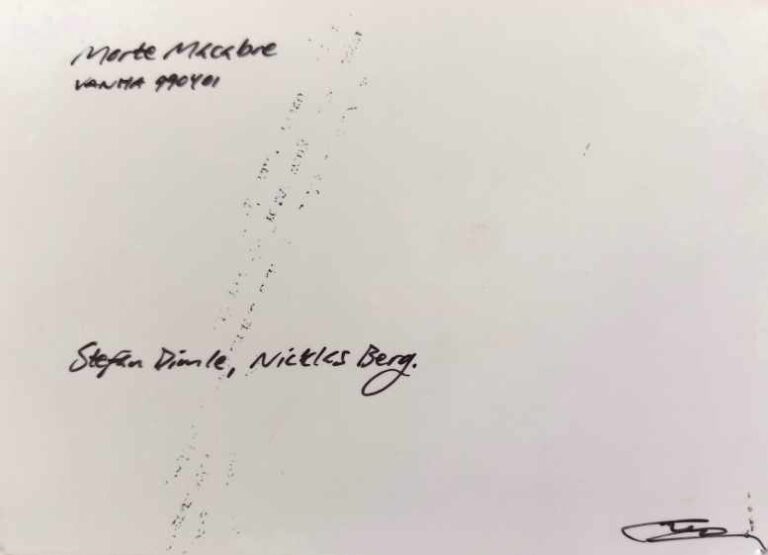
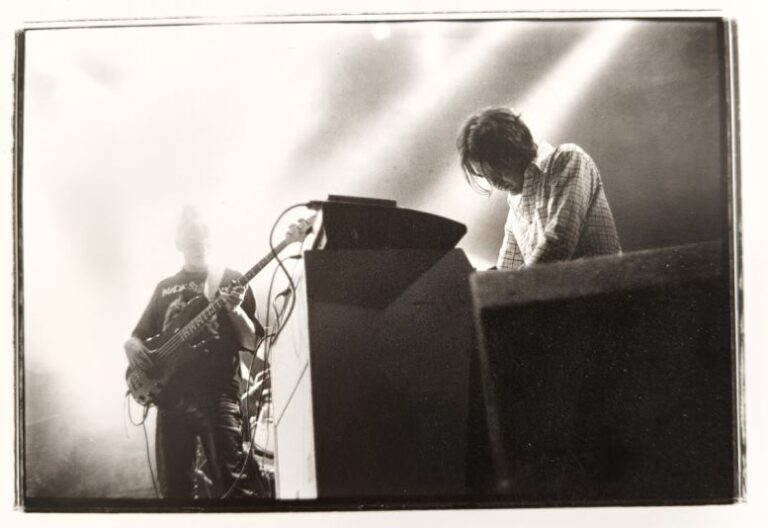
TIMO KETOLA: Perhaps someone remembers my concert review? Morgan Håkansson wasn’t terribly impressed that I went over to see MORTE MACABRE instead of catching MARDUK’s first Stockholm show in an eternity, on the very same weekend. It was a night of fond reunions, seeing the zombie from House of Kicks standing beside a barefoot Reine Fiske.
Timo’s write-up describes the set as ‘hypnotic, slow, and melancholic’, and the title-track encore bringing ‘general ecstasy’ – aside from the ‘fuckwit in his cousin’s EMPEROR shirt’ who complained that the songs only repeated themselves. The unshod guitarist and House of Kicks’ old mannequin shared the stage with ANEKDOTEN’s Nicklas Berg and Peter Nordins, plus Fiske’s LANDBERK bandmate Stefan Dimle.
TIMO: Has Stefan Dimle given any interviews apart from the one in the MÖRK GRYNING guy’s fanzine? I’d find it enormously interesting to read a proper deep dive into his backstory. Over the years, he would’ve witnessed a thing or two in the Stockholm scene through the shop.
The shop was Mellotronen, which Dimle ran in Stockholm’s Old Town. Specialising in progressive rock, psychedelia, and ‘70s rarities, it became Sweden’s prime source for pretty much any music with a Mellotron in it.
TIMO: They were adorably oblivious to metal as late as the end of the ‘90s, when you could pick up a shrink-wrapped VOIVOD debut and the first four MANOWAR albums in mint condition for bargain prices. Numerous strange musicians must have passed through – remember, both Euronymous and Jon Nödtveidt loved “Riktigt äkta”.
The dark, wistful Swedish-language folk-prog of LANDBERK’s 1992 debut became highly revered in black metal circles. Unisound producer Dan Swanö recalled that DISSECTION drummer Ole Öhman wanted his drums on “Storm of the Light’s Bane” to sound somewhere between IRON MAIDEN and LANDBERK. Furthermore, the melody from the “Riktigt äkta” opener “I nattens timma” resurfaces in “At the Fathomless Depths”.
TIMO: I wonder if it was through the Norwegian label Colours that Euronymous got wind of “Riktigt äkta”? The second LANDBERK album is also very good, but by the third, “Indian Summer”, it had suddenly become completely average radio rock, as I remember it. And MORTE MACABRE ended up far too short-lived, sadly.
Mellotronen also operated as a record label, releasing new music alongside reissues of Swedish ‘70s prog. The imprint issued MORTE MACABRE’s debut in 1998, but the rumoured follow-up never materialised.
TIMO: Although most of “Symphonic Holocaust” consists of covers, they’re incredibly well done, with an atmosphere of their own compared to the incomparable Italian originals. And the epic, eighteen-minute title track is simply too good to have been a one-off. A shame, truly.
ANTTI: During one of my Stockholm visits, Timo mentioned having recently finished a new issue of his ‘zine. In characteristic fashion, he wasn’t making a big fuss about it, but I said, ‘Oh, I’d love to see your work.’ We arranged to meet the following afternoon, before my ferry left for Finland.
Published in late 2002, Dauthus #3 included Timo’s review of the MORTE MACABRE concert more than three years earlier.
ANTTI: I remember us sitting on some steps around Slussen when he handed me my copy – coated in blood and stapled shut. That thing certainly had an aura about it, but it probably took a few days before I pried it open and realised, ‘Wow, okay, this is clearly the work of an obsessive.’
You’d known Timo for several years by then – did the issue give you a fuller sense of his interests and way of thinking?
ANTTI: Well, Timo had always struck me as thoughtful and obviously very talented. But the depth of his dedication and the craftsmanship he brought to everything became clear to me piece by piece – through conversations and offhand comments, bits of paper he’d illustrated, or even a throwaway drawing on an envelope.
At the time, BABYLON WHORES had recently released “Death of the West” and were still talking publicly about a fourth album.
ANTTI: We had written a few songs – long since discarded, lost to the mists of time – and planned to record them when, all of a sudden, the band ran out of steam. With everything up in the air and nothing creative happening anymore, we cancelled the studio booking.
In 2003, as BABYLON WHORES wound down, Antti contributed guitar leads to the closing track of “Man’s Ruin Revisited” by THE BLACK LEAGUE, fronted by Taneli Jarva, formerly of IMPALED NAZARENE and SENTENCED.
That same year, Jarva introduced Antti to an old friend from his hometown, Oulu, in northern Finland: Anti Haapapuro, also known as Anti Ittna H, a musician active in metal, dark ambient, and experimental circles, who had recently launched the label Aural Hypnox.
ANTTI: Anti handed me one of his label’s early releases. Having been out of the loop for a bit, I was intrigued to hear such uncompromising, clearly focused music being made here in Finland. I’d already started thinking about moving beyond the traditional band format to explore something driven by more spiritual aspirations. But I’d never known a musician who understood the technical side, let alone someone with the right mindset.
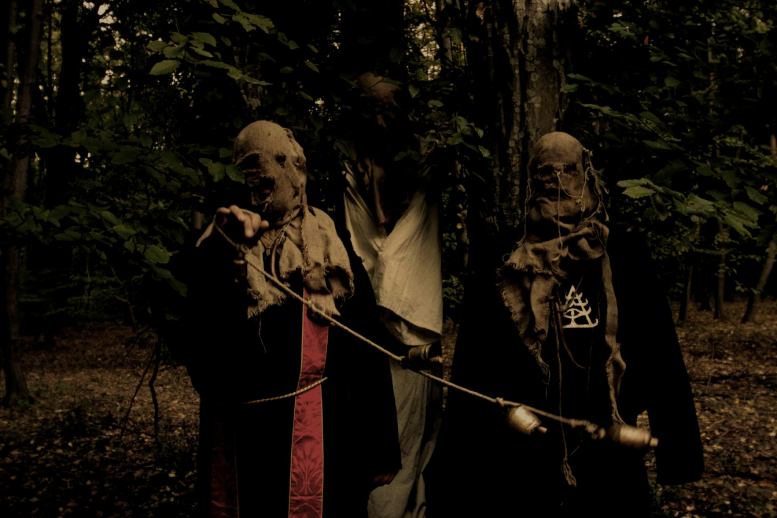
The two stayed in touch, and as talk turned to collaboration, Antti began making regular trips north. Meanwhile, Aural Hypnox released several titles by Haapapuro’s projects HALO MANASH and AEOGA, as well as his friend Jaakko Vanhala’s solo venture ZOÄT–AON. Haapapuro and Vanhala had also been producing ritual ambient together as I.CORAX since 1998.
ANTTI: Our musical collaboration emerged as a kind of joint magical pursuit – or a coven, if you will. From the outset, Anti and I established a sort of rudimentary cosmology as a framework and operated within it very deliberately and ritualistically. We recorded many of those early workings.
How would you categorise those recordings?
ANTTI: I don’t even know if ‘experimental’ is right, but we tried to find an appropriate term and eventually settled on ‘elemental music’ – mainly to differentiate it from your run-of-the-mill dark ambient. There weren’t many recordings of actual rituals back then.
Can you think of any?
ANTTI: Beyond ethnographic documentation, ZERO KAMA, I suppose, or maybe records like “Ars Regia” by AIN SOPH – great stuff, very monotonous and hypnotic. You only need a single melody if the notes are just right, you know? They’ve got that unmistakable aura of the real thing.
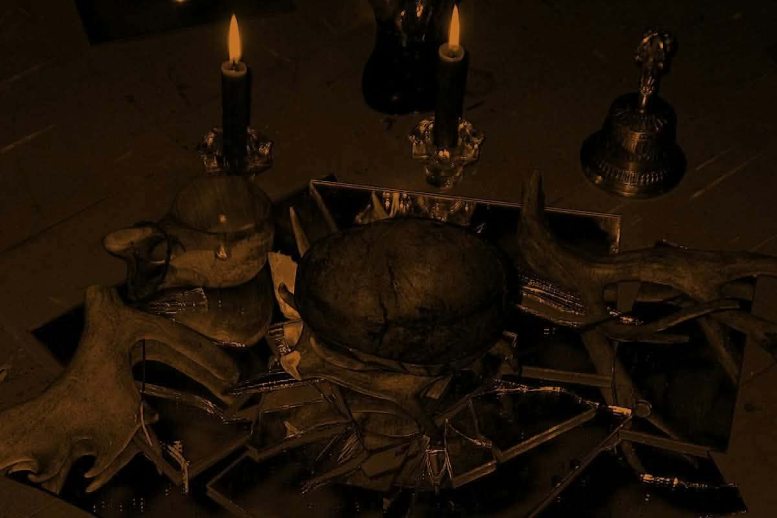
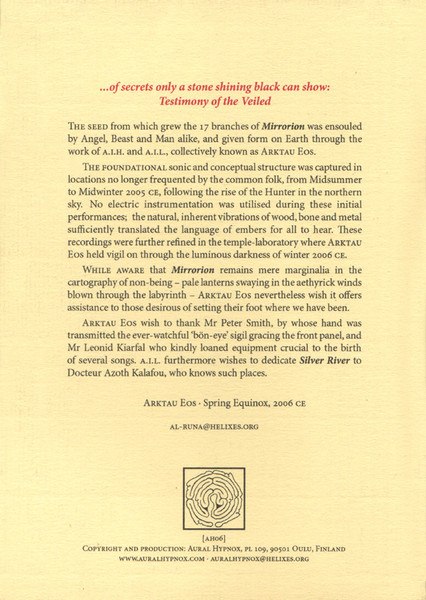
ANTTI: We had our dedicated temple laboratory, decorated with the emblems of “Mirrorion”. Those early sessions gave the album its structure, but over the following months – I was visiting Oulu every few weeks or so – Anti and I went out looking for places that augmented the feelings and images evoked by the original recordings.
How did those sites shape the sessions?
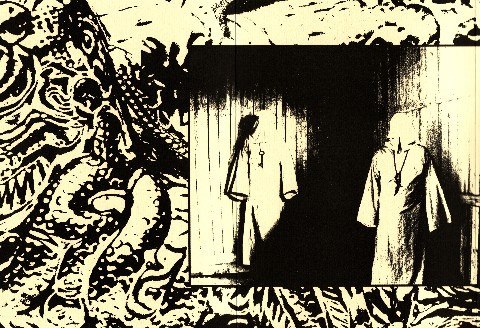
ANTTI: Sometimes the surroundings themselves suggested what instrumentation to use. A location might even provide the instruments if we hadn’t brought any – percussion on wooden boards or whatever. Some takes were actually made inside a house scheduled for demolition the very next day.
The album’s physical edition includes photographs of the duo in ritual garb inside the doomed building.
ANTTI: So, Anti and I became the last living beings to set foot in there. You can’t necessarily pick out every field recording, but the layers are present. In fact, “Mirrorion” is so densely woven that I couldn’t even tell you who contributed what. It’s all melded together in a witch’s cauldron; a bit of overkill, really.
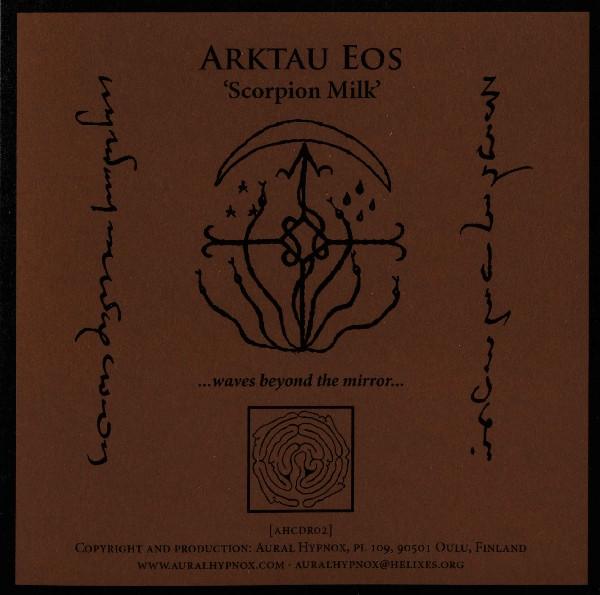
That sense of excess also led to the spontaneous creation of “Scorpion Milk”, described by Aural Hypnox as ‘the candle-bearer who responds to no call but silence itself’. Its single ambient piece was performed and mixed live onto analogue reel-to-reel tape, using ‘70s electronica, a few acoustic instruments, and the occasional chants and whispers.
ANTTI: Listening to our initial recordings, we became convinced that this seething mass of currents and ideas running through everything had to be somehow… not tamed, but maybe distilled? The result was a kind of companion album, cousin, or even an antidote to “Mirrorion” – very focused, very minimal.
ANTTI: Anti and I decided to let the final, day-long “Mirrorion” session inaugurate this new project of ours, which still had no name. We weren’t entirely sure of its compass or what that world would contain; it gradually revealed itself over time.
With the completion of “Mirrorion” came a name: ARKTAU EOS. The duo adopted pseudonyms – A.I.H. and A.I.L. – that revealed about as little as their robed photographs.
ANTTI: By then, I was so tired of the usual band dynamics, all the external stuff surrounding them, and the self-aggrandisement that comes with marketable personas, clever one-liners, interviews, and so forth. I seized the chance to start over, stripping away everything extraneous, even in terms of personality.
What did you have in mind for the visuals?
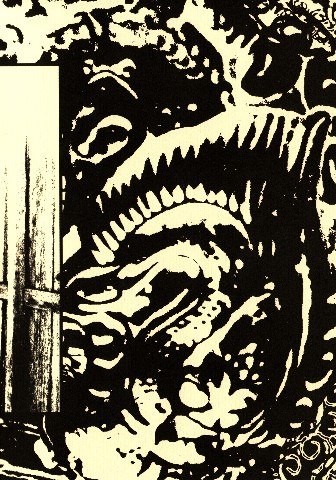
ANTTI: We wanted primordial elements – simple, yet obviously deep – that we felt could speak to anyone receptive, regardless of cultural background. So, universal symbols: circles, crosses, and so on. We tried to give everything structure while leaving enough wiggle room for the observer to project his own dreams or intuitions onto it without distorting our original intent.
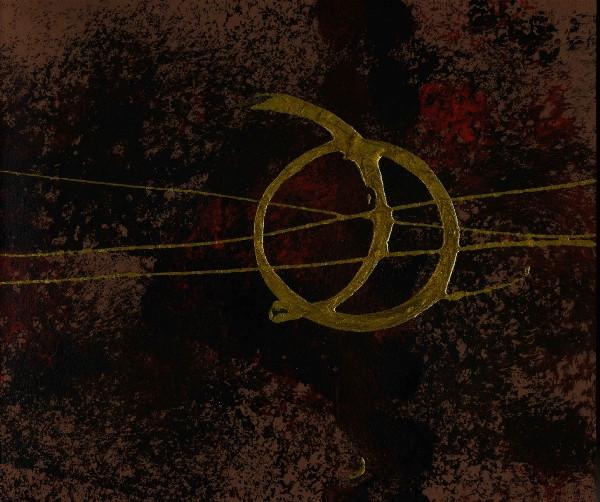
One Peter Smith is credited with the ‘bön-eye’ you still use today – who is he?
ANTTI: A British artist who also designed the Threshold House logos and was heavily involved in the emergence of Lovecraftian occultism. I received the sigil by post one day; he’d channelled it while listening to a rough mix of our album. ‘Perfect’, we thought.
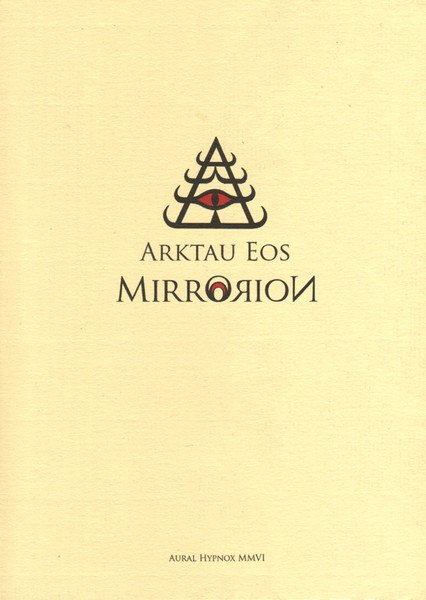

ANTTI: Looking back, it’s almost uncanny how seamlessly everything came together. Partly because of all the deliberation and planning beforehand, but I think it also helped that nothing else was distracting us at the time. We could sustain a sort of tunnel vision, dwelling in the world of “Mirrorion” throughout the entire period.
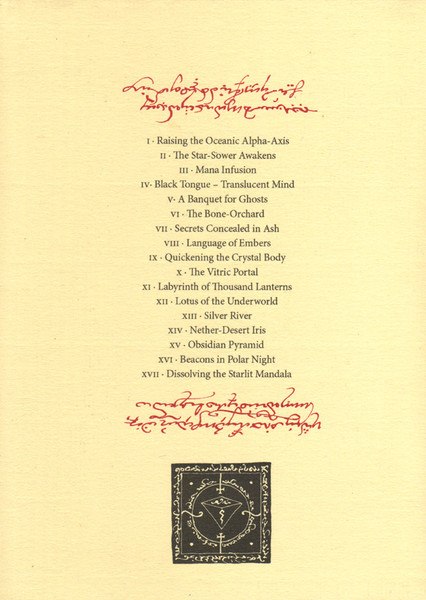
“Mirrorion”, billed as ARKTAU EOS’ debut, appeared on the summer solstice of 2006 alongside its ‘shadowy companion’, “Scorpion Milk”. Aural Hypnox describes the former as a ‘challenging, complex work’ whose seventeen chapters can serve as ‘singular gateways’ or form a complete journey.
ANTTI: Think of our works as wedges – if you see a strange door, you can pry it open with the record and slip further inside. Neither of us believes in spelling everything out for people; we try to leave room for imagination and creativity, because that’s how you actually connect, not by following a set of coordinates.
In early interviews, ARKTAU EOS likened their records to journal entries or cryptic notes left for fellow travellers on the same trail, rather than maps or guidebooks.
ANTTI: It goes back to those primordial symbols: ideally, you give people enough to orient themselves, but not so much that it turns into a show of influences, a way of flaunting your knowledge, or an exercise in handholding. Anyone who’s genuinely interested, or who can somehow put this music to their own use, will get it without us pointing out the obvious.
log in to keep reading
The second half of this article is reserved for subscribers of the Bardo Methodology online archive. To keep reading, sign up or log in below.
Related reading